Review · BERLIN
Third Reich Berlin: Hitler and WWII Walking Tour
Berlin’s Nazi past is not tucked away in one museum. It is spread across government buildings, memorials, bombed sites, and ordinary city streets. This three-hour walking tour ties those places together, from the Reichstag fire and Nazi ministries to the final Soviet assault and Hitler’s bunker.
I like two things right away: the route gives you context that is hard to gather alone, and it includes both famous sights and less obvious locations such as Goebbels’ former propaganda headquarters. Guides including Maria, Ru, Paul, Chris, and Ciarán are praised for clear storytelling and thoughtful answers. The main drawback is simple: you are outdoors for most of three hours, walking roughly 5,000 steps, so cold or wet weather can change the experience.
Key points to know before you book
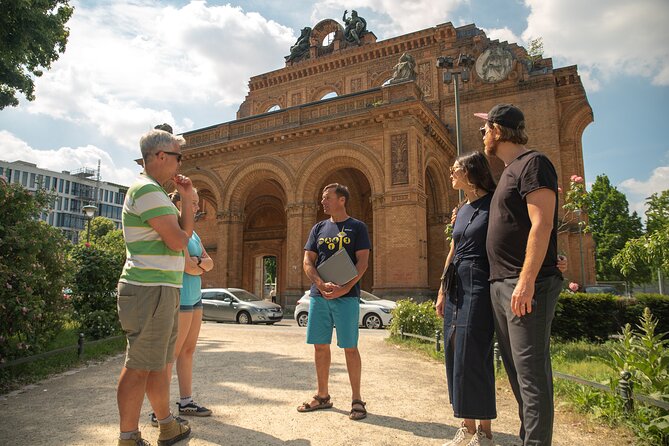
- Hitler’s bunker site: You stand above the location of Hitler’s final headquarters, with the former Reich Chancellery nearby.
- A route through Nazi power: See the Reichstag, Wilhelmstrasse, Göring’s Air Ministry, Goebbels’ propaganda offices, and the Topography of Terror.
- History beyond battle dates: The guide covers resistance figures, propaganda, daily life under dictatorship, and the damage done by Nazi racial policy.
- A serious memorial route: The walk includes the Holocaust Memorial, Trains to Life Trains to Death, and the Soviet War Memorial in Tiergarten.
- Good value for central Berlin: At $24.07 per person, the tour costs less than many museum visits while covering a wide area with a guide.
- Plan for the pavement: Wear comfortable shoes and warm layers. The tour has a maximum of 25 people and is offered in English.
Why this Berlin history walk works
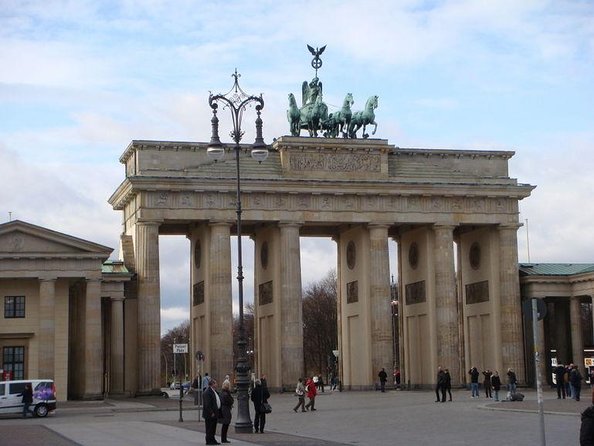
A map can show you where the Reichstag, Brandenburg Gate, and Checkpoint Charlie are. It cannot easily explain how those places connect to the Nazi seizure of power, the war, and Berlin’s final battle in 1945. That is the real value here.
The guide builds a chain of events as you walk. You begin with the Nazi rise to power and the erosion of democracy, then move through the machinery of dictatorship, resistance to Hitler, the persecution of Jewish people, and the violent end of the regime.
I especially like that this is not only a battlefield tour. You hear about air raids, propaganda, government offices, and the pressures faced by ordinary Berliners. That wider view helps you understand the Third Reich as a system, not just as a collection of military events.
The guides are central to the experience. Maria is praised for combining warmth with a large amount of historical detail. Ru is described as a strong storyteller who links events together. Paul is noted for presenting difficult material with both care and energy. Chris, including Chris from Toronto, is praised for fitting a lot of information into a short period.
Ciarán is a good example of the tour’s useful approach. His explanations are clear, his pace is comfortable, and he answers questions without burying the group in unnecessary detail. For a complicated subject, that matters.
More History Walking Tours in Berlin
- Berlin: Third Reich & Cold War Guided Walking Tour
★ 4.9 · 8,378 reviews - Berlin’s Best: 2 Hour Walking Tour Third Reich and the Cold War
★ 5.0 · 5,486 reviews - Berlin: Third Reich, Hitler, and WWII Walking Tour
★ 4.9 · 1,757 reviews
Starting at Friedrichstrasse Station
The tour begins at Reichstagufer 17, near Berlin Friedrichstrasse Station. Arrive 15 minutes early so you can find the guide and settle in before the group sets off.
Friedrichstrasse is a practical starting point because the first explanations place the rest of the route in context. You get an outline of Nazi Berlin, the final Battle of Berlin, the main buildings you will see, and the role of the Reichstag.
Do not expect a long indoor introduction. This is an outdoor walk, and the early stop is brief. The guide uses the city itself as the classroom, pointing out how the modern streets overlap with the old centers of power.
Trains to Life, Trains to Death
This memorial recalls the deportation of Jewish people from Berlin to Nazi concentration camps. It is a small stop in terms of time, but its subject is enormous.
The memorial focuses attention on the human cost behind government orders and military campaigns. It is useful here because the tour does not let the story remain at the level of buildings and officials. You are reminded that Nazi policy reached into homes, families, train stations, and daily life.
The stop lasts about 10 minutes. Because it is a solemn memorial, the guide’s tone matters. The best approach is quiet, direct, and respectful rather than theatrical.
The Reichstag and the collapse of democracy
The Reichstag is one of Berlin’s most familiar buildings, yet its role in 1933 gives it a sharp historical edge. The fire was used by the Nazis as a reason to suspend civil liberties and tighten their grip on the state.
At the other end of the war, the building became a symbol of defeat. Soviet forces raised their flag over the Reichstag during the final battle for Berlin in 1945.
I find this pairing especially effective. The same building helps explain both the destruction of German democracy and the military end of Nazi rule. You see why the Reichstag is more than a photo stop.
The tour does not include admission inside the building. The visit is an exterior stop of about 15 minutes, so do not book this walk expecting a dome visit or an indoor Reichstag tour.
More History Walking Tours in Germany
- Berlin: History of the Third Reich Guided Walking Tour
★ 4.7 · 791 reviews - Berlin Historical Highlights Walking Tour
★ 4.9 · 657 reviews - Berlin Private Complete History All Day Walking Tour
★ 5.0 · 474 reviews - Berlin: Cold War Walking Tour on Berlin Wall Route
★ 4.8 · 437 reviews
Soviet memorials and the final battle
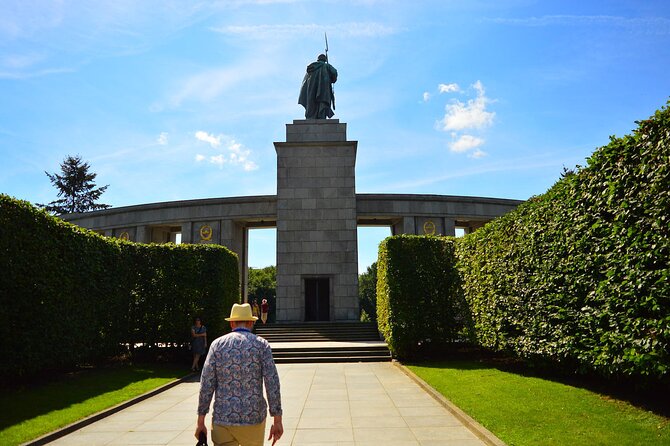
At the Soviet War Memorial in Tiergarten, the focus shifts to the Red Army soldiers who died in the Battle of Berlin. The memorial includes a large Soviet soldier statue and a military cemetery.
The site can feel imposing, and the guide helps place it within the final weeks of the war. You learn about the Soviet assault and the human cost of taking Berlin. The memorial also prompts a useful reminder: defeating Nazism came at a terrible price, and the end of the war did not erase the suffering caused by years of conflict.
This stop takes around 15 minutes. It is not simply a monument to victory. It is also a burial site, so give yourself space to take in the setting.
Brandenburg Gate and the use of symbols
The Brandenburg Gate is now linked with reunification, but its earlier political use was far darker. Under Hitler, the gate served Nazi propaganda and public displays of power.
This stop helps explain how architecture and public space can be used to shape political messages. The Nazis did not need to build every symbol from scratch. They could take an existing landmark and attach it to their claims of authority.
The stop is short, around 10 minutes, but it adds meaning to a place you may already have planned to visit. The gate is also close to other central sights, making this tour a useful way to see it with more than a postcard explanation.
The Academy of Arts and Albert Speer’s vision
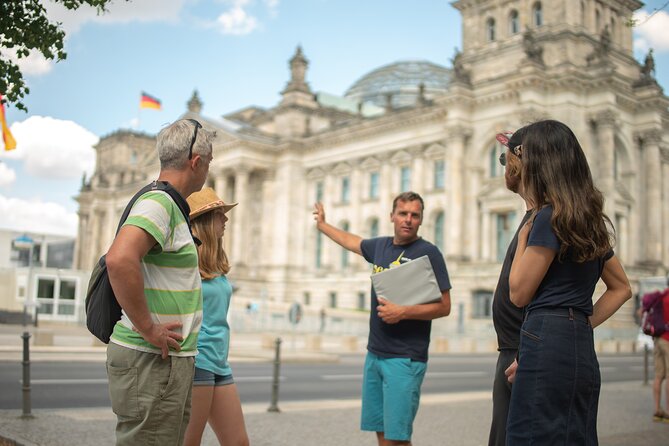
The Academy of Arts brings architecture and culture into the story. The tour connects the area with Albert Speer, Hitler’s chief architect and armaments minister, whose monumental designs reflected the regime’s desire to project power.
This is a useful correction to the idea that Nazi rule was driven only by soldiers and police. Architecture, art, ceremony, and public presentation all helped the regime create an image of strength and permanence.
The stop lasts about 10 minutes. It is more about interpretation than a dramatic surviving Nazi interior. If you want a focused lesson on Speer’s architecture and the way the arts served political aims, listen closely to the guide here.
The Holocaust Memorial
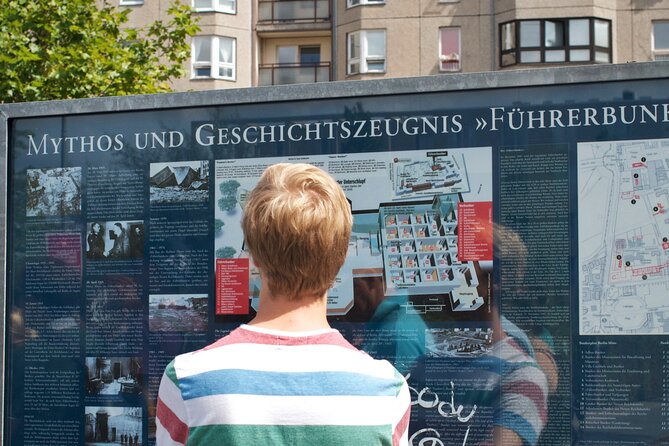
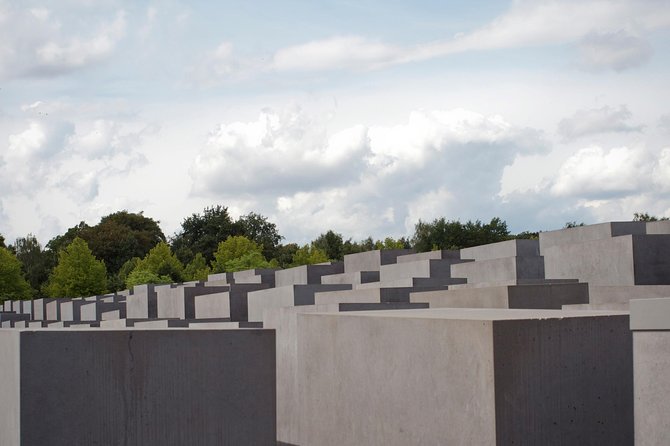
The Memorial to the Murdered Jews of Europe is made up of 2,711 concrete slabs set across an open field. The paths rise and fall, and the effect changes as you move through them.
The memorial does not offer a simple story or a single statue to look at. Its design creates uncertainty and disorientation, encouraging you to reflect rather than rush through. The tour’s short visit introduces the memorial within the wider story of Nazi persecution.
You may want extra time here after the tour ends. The scheduled stop is about 10 minutes, enough for an explanation and a first look, but not enough for a slow, private visit. The memorial is free to enter, and it is worth returning if your schedule allows.
Hitler’s bunker and the former Reich Chancellery
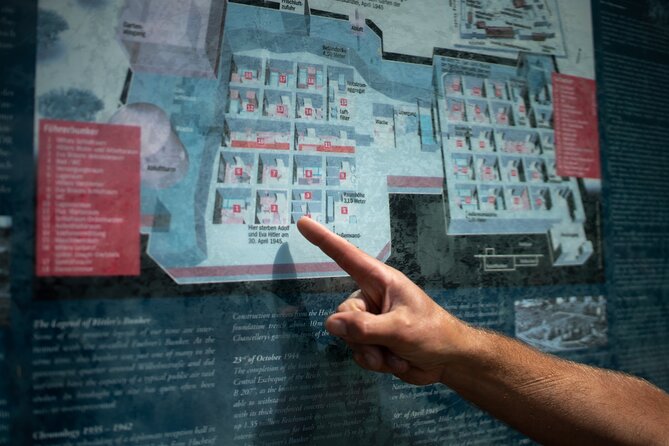
The bunker site is one of the most anticipated stops, but it is not a preserved underground attraction. You stand above the location where Hitler spent his final days and died in April 1945.
The site is deliberately plain. The former Reich Chancellery, built under Speer, is gone, and the bunker itself is not open as a museum. That lack of spectacle is part of the point. The location does not glorify Hitler or turn his death into a shrine.
One guide, Eran, reportedly used the location’s sign as a late reveal, explaining the significance only after the group had reached it. That approach can make the stop more striking, since the ordinary setting gives little away.
Allow your guide to supply the detail here. You will hear about the final days underground, the collapse of Nazi command, and the battle raging above. This is history best handled with restraint, not sensationalism.
Wilhelmstrasse and the machinery of dictatorship
Wilhelmstrasse was the administrative center of Nazi Berlin. The street held important government offices, including the Foreign Ministry, Reich Chancellery, and Ministry of Propaganda.
This is where the tour makes the link between speeches and decisions. Policy toward Jewish people, military plans, diplomatic moves, and the running of the dictatorship were handled through offices that occupied real buildings on this street.
Much of the old area was destroyed or altered after the war, so you should not expect a perfectly preserved Nazi district. That is also what makes a guide useful. The story is often found in the relationship between surviving structures, empty spaces, and modern redevelopment.
Göring’s Air Ministry and Goebbels’ propaganda office
On Niederkirchnerstrasse, you see Hermann Göring’s former Air Ministry, the Reichsluftfahrtministerium. The building housed the Luftwaffe and reflected Göring’s place near the top of the Nazi hierarchy.
The building helps explain the scale of the regime’s war machine. It was not only a military headquarters. It was also a public symbol of authority, designed to project order, control, and power.
The route also covers Goebbels’ propaganda headquarters. This brings the story back to words, images, speeches, and mass persuasion. The guide explains how propaganda shaped public opinion and supported the regime’s policies.
These stops are exterior visits, each lasting about 10 minutes. You will get much more from them if you focus on the guide’s explanation rather than expecting a dramatic interior tour.
Resistance to Hitler
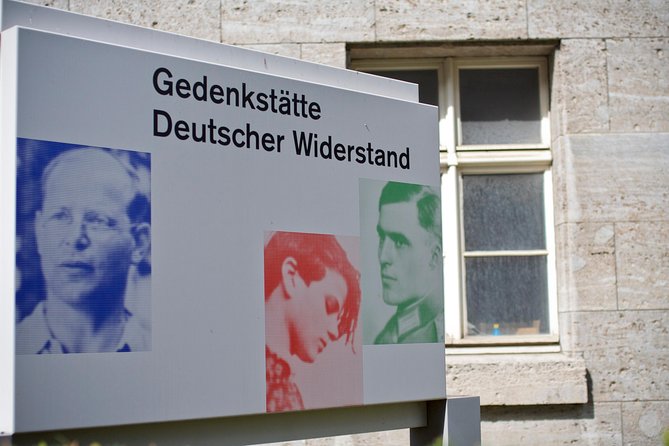
The walk includes resistance figures such as Henning von Tresckow, Hans Oster, and Claus von Stauffenberg. Their stories complicate any simple picture of Germany as a country acting with one mind.
You learn about opposition within the military and government, including the risks faced by people who tried to remove Hitler. The tour also connects these figures with memorials to Nazi opponents.
This part is particularly valuable for visitors who know the broad outline of the 20 July plot but not the wider network around it. The guide places the resistance in the political and military crisis of the war, rather than presenting it as an isolated act of heroism.
Topography of Terror and the end of the route
The tour ends at the Topography of Terror on Niederkirchnerstrasse, near Checkpoint Charlie. The museum and memorial occupy the former site of the SS and Gestapo headquarters.
Its focus is Nazi repression, persecution, and the Holocaust. Exhibits use photographs, documents, and personal accounts to show how the SS and Gestapo enforced state terror.
Ending here makes sense. The walk begins with political power and ends at the institutions that carried out violence. You can continue into the museum after the tour if you want more detail, though admission to the walking tour itself does not include a museum visit.
The location is convenient for continuing your day. Checkpoint Charlie is nearby, and the area has strong public transport links.
Price, pace, and practical value
At $24.07 per person, I consider this good value if you want a guided introduction to Nazi Berlin. You cover a large central area, visit major memorials, and get a connected explanation rather than isolated facts.
The tour lasts about three hours and can include up to 25 people. That is large enough to create a group feel, but still manageable if the guide handles stops well. The strongest feedback centers on guides who speak clearly, answer questions, and keep the story moving.
There are limits. The price does not include hotel pickup, indoor Reichstag admission, or museum entry. You are paying for the walking route and the guide’s interpretation, not a package of tickets.
The walk is brisk in places. One useful estimate is around 5,000 steps between points of interest. Wear comfortable shoes, and bring water. In cold weather, use several warm layers. A winter tour has been enjoyed in temperatures as low as minus 7 Celsius, but that does not mean the cold is easy to ignore.
Some guides may pause at a nearby coffee shop, but coffee and cake are not included benefits of the tour. Treat any refreshment stop as a practical break, not part of the formal package.
Who should book this walk?
I would choose this tour if you are visiting Berlin for a short stay and want a strong historical framework before exploring museums alone. It suits adults, history fans, and teenagers who can handle serious material. One family found that a 15-year-old who had not studied much history stayed engaged, especially when the guide connected past events with the fragility of democracy.
You do not need to be an expert. In fact, the tour may be most useful if you know the names Hitler, Goebbels, Göring, and Stauffenberg but need the events put in order.
I would think twice if you dislike long outdoor walks, have limited mobility, or want access to preserved Nazi interiors. Most stops are outside, and the most famous bunker site is only a marked location above ground.
The tour is offered in English. Confirmation arrives at booking, service animals are allowed, and most people can participate. Free cancellation is available until 24 hours before the start time. Changes or cancellations inside that window are not accepted for a refund.
Should you book the Third Reich Berlin walking tour?
Book it if you want clear connections between Berlin’s buildings, memorials, and the final Battle of Berlin. The route covers more ground and gives more context than you are likely to gather by wandering alone.
The best reason to go is the guide. Maria, Ru, Paul, Chris, Ciarán, and the other named guides are praised for clear explanations, strong storytelling, patience, and a sensitive approach to painful history. You cannot choose a specific guide in advance from the information provided, so book for the route and format rather than a particular person.
Skip it if you need an indoor experience or prefer to explore at your own pace. Otherwise, $24.07 is a fair price for three hours of serious, well-connected history in central Berlin. Bring good shoes, dress for the weather, and leave time at the end for the Topography of Terror or Checkpoint Charlie.
FAQ
How long does the Third Reich Berlin walking tour last?
The tour lasts about three hours.
Where does the tour begin?
It begins at Reichstagufer 17 in Berlin, near Friedrichstrasse Station. You should arrive 15 minutes before the scheduled start.
Where does the tour end?
The tour ends at the Topography of Terror, Niederkirchnerstrasse 8. It finishes very close to Checkpoint Charlie.
What language is the tour offered in?
The tour is offered in English.
Does the tour enter Hitler’s bunker?
No. You stand above the former bunker location, near the site of the old Reich Chancellery. The bunker is not presented as an underground interior attraction.
Is admission to the Reichstag or museums included?
No. The walking tour includes the local guide and the three-hour walk. Reichstag admission and museum entry are not included.
How far do you walk, and what should you wear?
The route can involve roughly 5,000 steps between points of interest. Wear comfortable shoes and dress for the weather, especially in cold conditions, since the tour is mainly outdoors.
More WWII and D-Day Tours in Germany
- Clash of Titans: Battle for Seelow Heights WW2 tour
★ 5.0 · 71 reviews - Berlin Half-Day World War II Walking Tour
★ 4.5 · 48 reviews - Path of Resistance: Berlin’s Hidden Holocaust Stories
★ 4.9 · 43 reviews - Berlin: Nazi History Walking Tour
★ 4.8 · 33 reviews
More WWII and D-Day Tours in Berlin
- Hitler’s Germany: Berlin During the Third Reich & WWII
★ 4.8 · 476 reviews - Private Walking Tour Berlin Third Reich Hitler and World War II
★ 5.0 · 360 reviews - The History of Berlin: WWII PRIVATE Walking Tour With Locals
★ 5.0 · 209 reviews - Berlin: Guided Bike tour of the Berlin Wall and Third Reich
★ 5.0 · 160 reviews
Just added around Berlin
- Berlin Food & Cultural Tour: Must-Try German & Berliner Classics★ 5.0 · 51 reviews
- Berlin Half-Day World War II Walking Tour★ 4.5 · 48 reviews
- Small-Group Historical Bike Tour in Berlin★ 4.5 · 103 reviews
- Historic center of Berlin – Tour in Italian★ 5.0 · 143 reviews
- Berlin Cold War & World War II Third Reich Walking Tour★ 4.5 · 30 reviews
- Private Taxi Tour City East & West History and Architecture 3-4h★ 5.0 · 42 reviews
- Berlin Wall and Cold War Bike Tour in Small Groups★ 5.0 · 114 reviews
- Private Tour: Jewish Heritage Walking Tour of Berlin★ 5.0 · 29 reviews
Berlin History Tours, compared.

Berlin: Third Reich & Cold War Guided Walking Tour
Read our review →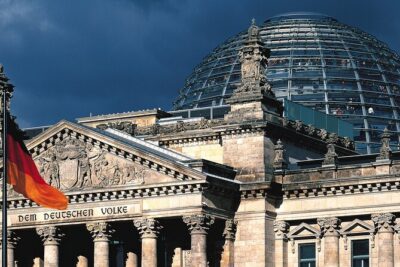
Berlin’s Best: 2 Hour Walking Tour Third Reich and the Cold War
Read our review →
Berlin: Third Reich, Hitler, and WWII Walking Tour
Read our review →
Berlin: 3-Hour World Heritage Cruise to Potsdam
Read our review →
Cold War, Berlin Wall, Spies and the East Side Gallery
Read our review →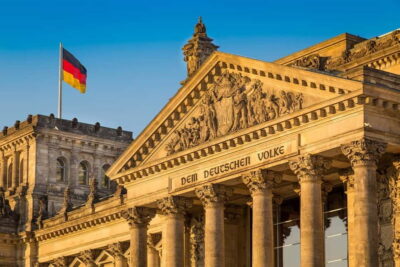
Berlin: History of the Third Reich Guided Walking Tour
Read our review →