Review · BERLIN
Berlin Cold War & World War II Third Reich Walking Tour
Berlin’s past is not tucked away in one museum. It is marked into streets, empty spaces, memorials, watchtowers, bunkers, and surviving pieces of wall. This tour connects those scattered clues, moving from the Reichstag and the Nazi era to the Battle of Berlin, Hitler’s bunker, and the divided city of the Cold War.
I like the broad historical sweep, which helps you see how World War II and the Cold War fit together instead of treating them as separate chapters. I also like the chance to ask questions along the way. Guides Miguel and Arthur receive special praise for clear explanations, patience, humor, and useful tips on restaurants, bars, and books.
The main consideration is the pace and scale. The tour is advertised at about six hours, while some experiences have run closer to two and a half to three and a half hours, and the group may include as many as 100 people. Bring good shoes, expect outdoor walking, and confirm the exact route and duration when booking.
Key points to know before you go
- A full sweep of Berlin’s 20th-century history: The route links the Third Reich, the Battle of Berlin, the Nazi surrender, the Soviet occupation, East Germany, and the Berlin Wall.
- A walking tour with several city crossings: You visit major sights and less obvious traces of war, though the route may feel ambitious for one day.
- Guides make the difference: Miguel and Arthur are singled out for their historical knowledge, humor, patience, and willingness to answer follow-up questions.
- Many stops are outdoor visits: The tour includes memorials, wall remains, a flak tower, a watchtower, and street-level historical sites.
- Good value for a first orientation: At $35.64 per person, the tour can save you hours of planning, but it is not a substitute for full museum visits.
- Pack for a long day outside: Comfortable shoes, weatherproof clothing, water, and snacks matter because beverages and food are not included.
Berlin’s past is written across the city
This is a useful tour for understanding why Berlin can feel like several cities at once. The grand government quarter, damaged wartime districts, Communist border crossings, and painted wall fragments all belong to different chapters, yet they sit within one urban fabric.
The guide’s job here is less about showing you one famous building and more about helping you connect places to events. A good explanation can turn a plain street corner into a site linked to escape attempts, military defeat, forced conscription, or the collapse of a political system.
That approach suits me because Berlin’s historical sights are often separated by ordinary modern buildings. You may not always see a dramatic ruin. Instead, you get a marker, a surviving section of wall, a tower, or a change in the street plan. The guide supplies the missing context.
The experience is sold as a six-hour tour beginning at noon, but the supplied information also describes versions lasting roughly two and a half to three and a half hours. That difference matters. Ask at the meeting point how long your particular departure is expected to last, especially if you have evening plans.
More History Walking Tours in Berlin
- Berlin: Third Reich & Cold War Guided Walking Tour
★ 4.9 · 8,378 reviews - Berlin’s Best: 2 Hour Walking Tour Third Reich and the Cold War
★ 5.0 · 5,486 reviews - Third Reich Berlin: Hitler and WWII Walking Tour
★ 5.0 · 3,301 reviews
Starting at the Reichstag
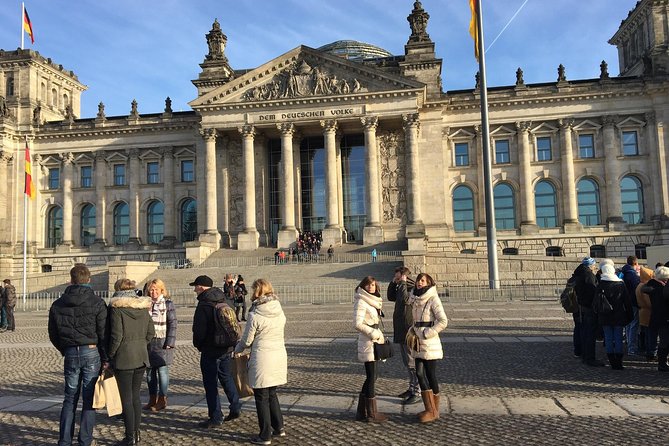
The tour begins at Generator Berlin Alexanderplatz, at Otto-Braun-Straße 65, and includes the Reichstag Building as an early stop. The Reichstag is an effective opening because it links modern democratic Germany with the political crisis that allowed Hitler’s dictatorship to take hold.
You should expect about 30 minutes at this stop, with the guide explaining the building, major events, famous figures, architecture, and the wider story of Berlin. The focus is not simply on taking a photograph of the facade. It is on placing the building within Germany’s political past and present.
Admission is listed as free, but this does not mean every part of the building is entered. The description presents it as a historical stop, so plan for an exterior explanation unless your guide says otherwise.
From World War II to the Battle of Berlin
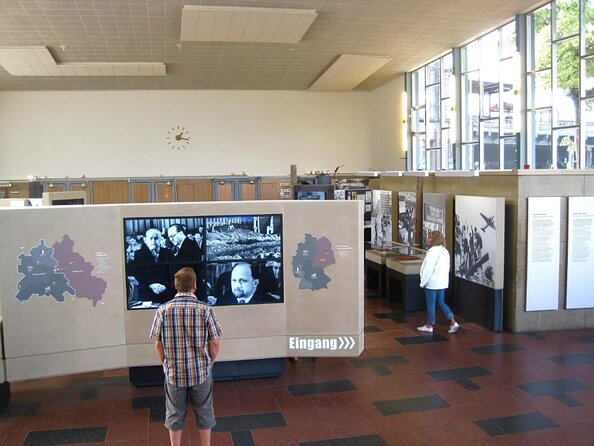
The next sections are built around wartime sites and memorials. The Museum Berlin-Karlshorst is listed as a stop, along with Humboldthain Flak Tower and parts of Prenzlauer Berg. These locations give the tour a useful range: military history, surviving wartime structures, and the marks left on ordinary neighborhoods.
The Karlshorst stop is listed at 30 minutes. It is tied to the end of the war and the events surrounding Germany’s surrender. One useful feature of the tour is the attempt to match major historical moments with actual places, since Berlin’s wartime story can be hard to visualize from a textbook alone.
At Humboldthain, the focus shifts to the flak tower. The guide points out details that you might otherwise walk past. The stop is not just about military architecture. It also shows how Berlin’s wartime scars remain part of the present city.
Prenzlauer Berg brings the story closer to streets and neighborhoods. The guide discusses traces of the Battle of Berlin, when fighting reached the capital in 1945. This can be one of the more valuable parts of the route because it shifts attention away from famous political leaders and toward the city where civilians and soldiers experienced the final battles.
The tour also promises stories and urban legends. Treat those as storytelling extras, not equal to established historical fact. A strong guide should make clear where documented events end and local lore begins.
The Berlin Story Bunker and Hitler’s final days
The Berlin Story Bunker stop covers the site associated with Hitler’s notorious underground headquarters. The subject is difficult, but it is important to understand the final stage of the Nazi regime and the collapse of its leadership.
This is not a place to expect a grand preserved interior. The value comes from the explanation of what happened beneath Berlin and how the city dealt with the physical remains afterward. The guide can also help separate the actual site from the myths that have gathered around it.
The stop is listed at 30 minutes. That is enough for a focused talk, but not enough for a full study of Nazi Germany. If you want detailed coverage of the dictatorship, persecution, resistance, or the Holocaust, you will need additional museum visits.
That limitation is worth keeping in mind. This tour gives you a connected outline and memorable locations. It does not provide the same depth as spending several hours in a dedicated museum with documents, photographs, and personal testimony.
More History Walking Tours in Germany
- Berlin: Third Reich, Hitler, and WWII Walking Tour
★ 4.9 · 1,757 reviews - Berlin: History of the Third Reich Guided Walking Tour
★ 4.7 · 791 reviews - Berlin Historical Highlights Walking Tour
★ 4.9 · 657 reviews - Berlin Private Complete History All Day Walking Tour
★ 5.0 · 474 reviews
The Palace of Tears and the divided city

At the Palace of Tears, the subject changes from wartime dictatorship to the everyday reality of East and West Berlin. The name refers to the emotional farewells that took place at a border crossing, where people leaving East Berlin said goodbye to family and friends.
The stop is listed at about 20 minutes, followed by more Cold War sites, crossings, escape points, and East Berlin landmarks. This part of the tour helps explain that the Berlin Wall was not merely a concrete barrier. It cut through neighborhoods, families, workplaces, and daily routines.
A short explanation at a border crossing can make the political system easier to understand. You learn how movement was controlled and why escape attempts carried such grave risks. The guide also discusses stories of horror and triumph connected with people who tried to get across.
This section will suit you if you want the human side of Cold War history. It may feel too brief if your main goal is a detailed political study of East Germany. Still, the route offers a useful first look before you visit a dedicated museum or memorial on your own.
Berlin Wall Memorial and the evidence left behind
The Berlin Wall Memorial is one of the most important stops. Unlike a small decorative fragment, a memorial site can help you understand the wall as a system of barriers, guard areas, restricted zones, and controlled movement.
The stop is listed at 30 minutes. The guide explains the wall, East German Communism, escape attempts, and the changes that followed its fall. You should expect visible reminders of the former border rather than a fully preserved Cold War city.
One strength of walking this area is that you can see how the wall once divided real urban space. A map or photograph explains the politics, but standing where streets were blocked gives the story a more direct sense of scale.
The tour description also points to sites away from the most famous wall attractions. That can make the day more interesting, though it also means you should not expect every stop to be a polished attraction with clear signs and indoor facilities.
Teufelsberg, East Side Gallery, and a changing Berlin
The route includes Teufelsberg, the East Side Gallery, and an East German watchtower. These stops show three different ways the wall era remains visible: repurposed Cold War structures, public art, and preserved border equipment.
Teufelsberg is listed as a 30-minute stop. The guide connects it with major Cold War landmarks and less obvious wall-related sights. Because the information provided does not specify exactly what you enter or how much time is spent there, ask about the planned visit before you go.
The East Side Gallery gets about 20 minutes. Its painted sections are among Berlin’s most recognizable wall remnants, and the artwork shows how a former instrument of repression became a public symbol after reunification.
The short time allocation means you should think of the gallery as a guided introduction, not an art tour. If you want to study the murals, photograph them carefully, or read their stories, you will likely want to return independently.
The DDR Watch Tower offers another angle. Rather than focusing on a large memorial, the guide shows where the wall once stood and explains the control system, escape stories, and forced conscription. The stop is listed at 20 minutes.
Together, these sites help you see that the wall was not one uniform object. It included different barriers, observation points, crossings, and controlled spaces. That is useful context for anyone who has only seen photographs of the famous painted sections.
What the guiding is like
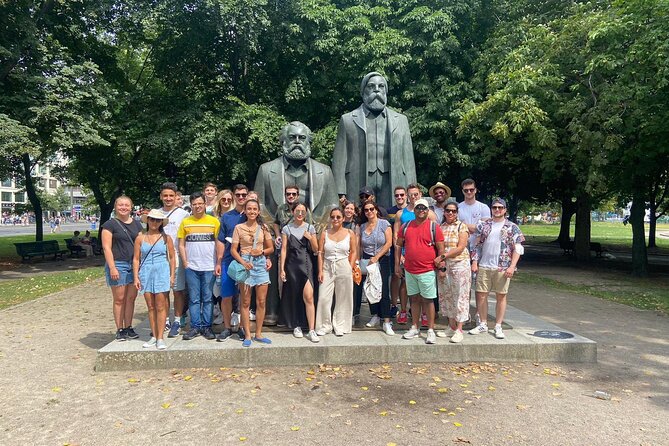
The guide can make or break a history walk. The strongest reports about this experience point to Miguel and Arthur, who are described as friendly, funny, patient, and well prepared. Miguel is also praised for restaurant, bar, and book suggestions, which is handy when you want to keep exploring after the tour.
You can ask follow-up questions. That matters because a group talk can otherwise become a one-way lecture. One of the more useful features described is the guide’s ability to go further when someone asks about a specific event or location.
The tone appears informal rather than academic. Humor is part of the presentation, but the subjects include dictatorship, war, death, divided families, and failed escapes. You should expect a guide who tries to make the material approachable without turning it into light entertainment.
Because the maximum group size is 100, the experience may feel less personal on a busy departure. A large group also makes it harder to hear in noisy streets and harder to gather around small sites. If direct conversation with the guide is your top priority, a smaller tour would likely suit you better.
Is $35.64 good value?
At $35.64 per person, this is a fair price for a guided introduction to Berlin’s 20th-century history. You are paying for a local guide, route planning, historical connections, and several hours of structured sightseeing.
The value is strongest if you have limited time or do not know how to arrange the sites yourself. Berlin’s historical locations are spread out, and a guide can save you from treating each one as an isolated photograph.
The value is weaker if you expect museum-level detail, private guiding, or entry to major indoor attractions. Food, drinks, and snacks are not included, and admission is listed as free at the stops. Carry your own water and something to eat.
A possible issue is that the stated duration and actual reported lengths do not match neatly. The published time is about six hours, while some accounts describe much shorter versions. Confirm the timing, transport arrangements, and exact stop order before paying if your schedule is tight.
Shoes, weather, and physical effort
This is a walking tour, and the route covers a lot of ground. The description calls for moderate physical fitness, and the strongest practical advice is simple: wear comfortable shoes.
The tour operates in all weather. Berlin can be cloudy and wet, so take an umbrella or rain jacket and dress in layers. Most of the value comes from being outside at the actual sites, so bad weather will affect comfort even if it does not cancel the activity.
The schedule includes time for drink breaks, but drinks are not supplied. Bring water. You should also plan a snack because six hours outside can feel long, especially if the route runs to its full advertised length.
The starting point is Generator Berlin Alexanderplatz, which is listed as easy to reach. The tour ends back at the meeting point. Confirm the return time before scheduling a train, dinner reservation, or evening show.
Who should book this walk?
I would choose this tour for a first visit to Berlin, especially if you want a clear outline of the Nazi era, the end of World War II, and the Cold War in one day. It also suits history students and families with older children who can manage a long outdoor walk.
The tour may work well for you if you enjoy asking questions. The guides are described as willing to explain details beyond the main talk, and that can turn a general overview into a more personal lesson.
I would be cautious if you dislike large groups, need a fixed end time, or want long visits inside museums. The route covers many subjects, so each stop can only receive a limited amount of attention.
Should you book it?
Book this tour if you want a practical first map of Berlin’s difficult 20th-century past, with a guide who can connect famous sights to less obvious scars in the city. The price is reasonable, and the mix of Nazi, World War II, East German, and wall history gives you a useful base for exploring further.
Skip it if you want a specialist tour devoted only to Hitler, the Battle of Berlin, or the Berlin Wall. For everyone else, bring water, snacks, rain protection, and sturdy shoes, then confirm the actual duration and route before you set out.
FAQ
Where does the tour start?
It starts at Generator Berlin Alexanderplatz, Otto-Braun-Straße 65, 10178 Berlin, Germany.
What time does the tour begin?
The stated start time is 12:00 pm.
Where does the tour end?
The activity ends back at the meeting point.
How long does the tour last?
The stated duration is approximately six hours. Some supplied experience details describe shorter versions of about two and a half to three and a half hours, so confirm the expected length when booking.
What is included in the price?
A local guide is included.
Are food and drinks included?
No. Beverages and snacks are not included, so bring your own or plan to purchase them during a break.
What main historical subjects does the tour cover?
It covers the Third Reich, World War II, the Battle of Berlin, Hitler’s bunker, the Nazi surrender, the Cold War, East Germany, Communism, the Berlin Wall, escape attempts, and the wall’s destruction.
Which landmarks are included?
The route lists the Reichstag Building, Museum Berlin-Karlshorst, Humboldthain Flak Tower, Prenzlauer Berg, Berlin Story Bunker, Palace of Tears, Berlin Wall Memorial, Teufelsberg, East Side Gallery, and a DDR Watch Tower.
How physically demanding is the experience?
A moderate level of physical fitness is recommended. You should expect substantial walking and wear comfortable shoes.
What happens if the weather is bad?
The tour operates in all weather conditions. Dress appropriately and bring rain protection if the forecast is wet.
How large can the group be?
The maximum group size is listed as 100 people.
Can I cancel for a full refund?
Yes. You can cancel at least 24 hours before the start time for a full refund. Cancellations or changes made less than 24 hours before the start time are not accepted for a refund.
More WWII and D-Day Tours in Germany
- Clash of Titans: Battle for Seelow Heights WW2 tour
★ 5.0 · 71 reviews - Berlin Half-Day World War II Walking Tour
★ 4.5 · 48 reviews - Path of Resistance: Berlin’s Hidden Holocaust Stories
★ 4.9 · 43 reviews - Berlin: Nazi History Walking Tour
★ 4.8 · 33 reviews
More WWII and D-Day Tours in Berlin
- Hitler’s Germany: Berlin During the Third Reich & WWII
★ 4.8 · 476 reviews - Private Walking Tour Berlin Third Reich Hitler and World War II
★ 5.0 · 360 reviews - The History of Berlin: WWII PRIVATE Walking Tour With Locals
★ 5.0 · 209 reviews - Berlin: Guided Bike tour of the Berlin Wall and Third Reich
★ 5.0 · 160 reviews
Just added around Berlin
- Berlin Food & Cultural Tour: Must-Try German & Berliner Classics★ 5.0 · 51 reviews
- Berlin Half-Day World War II Walking Tour★ 4.5 · 48 reviews
- Small-Group Historical Bike Tour in Berlin★ 4.5 · 103 reviews
- Historic center of Berlin – Tour in Italian★ 5.0 · 143 reviews
- Private Taxi Tour City East & West History and Architecture 3-4h★ 5.0 · 42 reviews
- Berlin Wall and Cold War Bike Tour in Small Groups★ 5.0 · 114 reviews
- Private Tour: Jewish Heritage Walking Tour of Berlin★ 5.0 · 29 reviews
- Private Walking Tour: Berlin Wall, Cold War and Checkpoint Charlie★ 5.0 · 37 reviews
Berlin History Tours, compared.

Berlin: Third Reich & Cold War Guided Walking Tour
Read our review →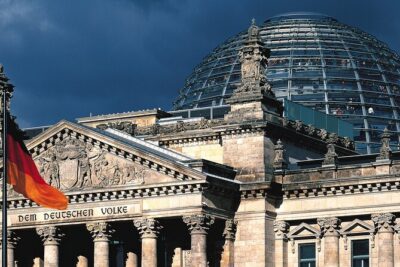
Berlin’s Best: 2 Hour Walking Tour Third Reich and the Cold War
Read our review →
Third Reich Berlin: Hitler and WWII Walking Tour
Read our review →
Berlin: Third Reich, Hitler, and WWII Walking Tour
Read our review →
Berlin: 3-Hour World Heritage Cruise to Potsdam
Read our review →
Cold War, Berlin Wall, Spies and the East Side Gallery
Read our review →
Berlin: History of the Third Reich Guided Walking Tour
Read our review →