
Review · ITALY
SU NURAXI BARUMINI Unesco World Heritage Site
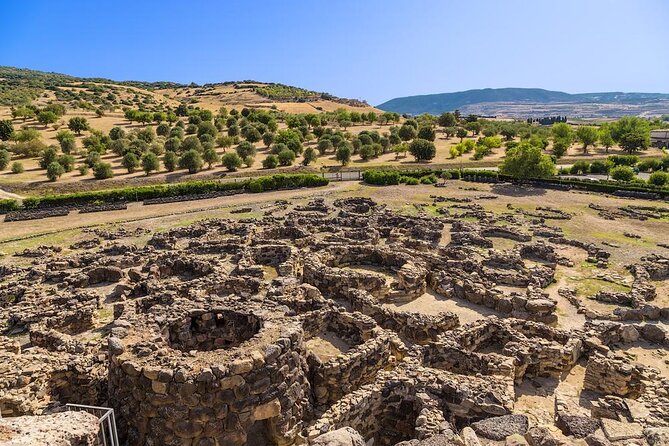
Su Nuraxi is the kind of ancient site that becomes more striking once you enter it. This UNESCO-listed complex is not just a tower viewed from outside. You walk through the old village, squeeze along narrow passages, climb stone steps, and enter a fortress built by Sardinia’s Nuragic people more than 3,000 years ago.
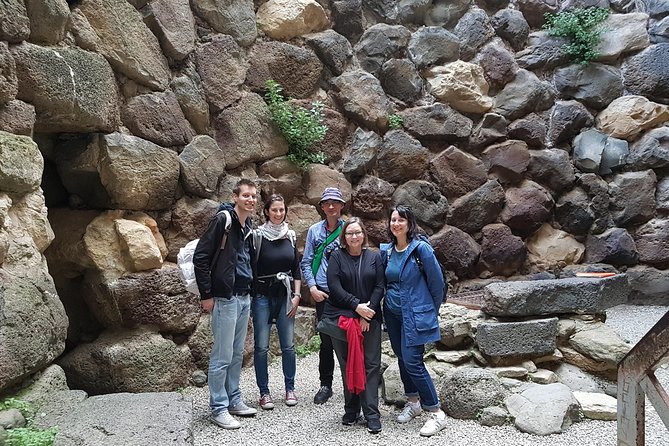
I like the small-group format, with no more than seven people, and the easy pickup from a Cagliari hotel or port. I also like guide Alessandro’s local focus. He brings in Sardinian language, food, geology, plants, and culture rather than treating the ruins as an isolated pile of stones.
The main consideration is physical access. Uneven ground, steep or inclined surfaces, narrow corridors, stairs, and a seven-metre iron ladder are part of the visit. Comfortable closed shoes are required, and anyone with mobility concerns should ask about the route before booking.
Key details before you book
- A 3,500-year-old fortress: Explore Su Nuraxi’s central tower, four side towers, village quarters, courtyards, and meeting hut.
- A genuinely small group: The private air-conditioned van carries up to nine people, with the tour limited to seven participants.
- A guide with local knowledge: Alessandro explains archaeology alongside Sardinian culture, food, language, plants, and towns along the route.
- Simple transport from Cagliari: Hotel and port pickup and drop-off within Cagliari are included.
- A half-day commitment: Allow roughly four to six hours, including the drive each way and the site visit.
- Come prepared to walk: The ruins require closed shoes and comfort with uneven paths, narrow spaces, and stairs.
Why Su Nuraxi is worth the ride from Cagliari
Cagliari has plenty to keep you busy, but Su Nuraxi gives you a very different view of Sardinia. The drive to Barumini takes about 45 minutes, and that time is useful. Rather than sitting in silence, you hear about the island and the places outside the city as they pass your window.
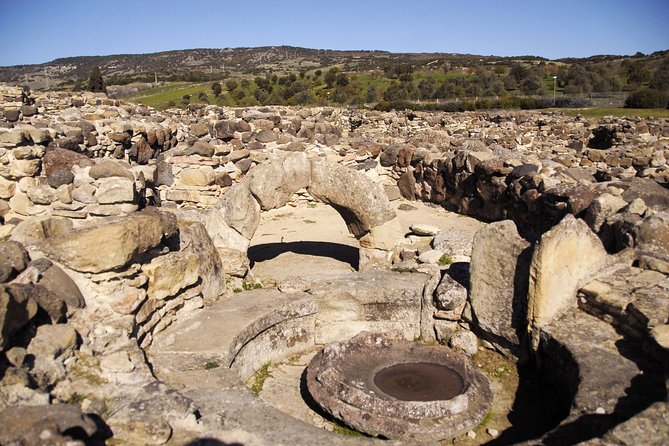
The site itself reaches back to around 1500 BC. That date can feel abstract until you find yourself walking through stone rooms built by people whose world was separated from ours by thousands of years. Later Punic and Roman use added another layer, so Su Nuraxi is not a single-period monument frozen in time.
I especially like the way the visit moves from ordinary life to military power. You begin with houses, courtyards, and communal spaces. Then you enter the central nuraghe, where the thick walls, high towers, and tight passageways make the place feel more like a fortress than a simple archaeological ruin.
More UNESCO World Heritage Tours in Italy:
- Palermo: UNESCO World Heritage Sites Guided Walking Tour
★ 4.8 · 548 reviews - World Heritage Shirakawa-go and Experience Tours from Kanazawa
★ 5.0 · 4,049 reviews - From Tirana: Berat UNESCO Heritage & Belshi Lake Tour
★ 4.9 · 3,863 reviews
The 45-minute journey from Cagliari
Pickup is offered at hotels and the port anywhere in Cagliari at no extra charge. You provide your hotel details when booking, or the name of your cruise ship if you are arriving by sea.
Transport is in a private, air-conditioned nine-seat van. The vehicle matters here because Barumini is outside Cagliari, and arranging a rental car or public transport would add work to a half-day outing. The van also keeps the group together, with the guide available for questions during the drive.
The tour is offered in English, though it may sometimes be operated by a multilingual guide. Alessandro has been singled out for explaining Sardinian culture as well as the archaeology. That wider setting is useful: you are not only driving to a monument, you are seeing how the site fits into the island’s towns, countryside, traditions, and long human story.
Allow four to six hours for the full experience. The visit at Su Nuraxi is listed as about 90 minutes, but the overall outing includes transport and may be extended with optional additions. Start times are scheduled, so have your group ready at the agreed pickup point.
Starting in the ancient village
The first part of the archaeological visit takes place in the village around the nuraghe. This is where the site becomes more human. You see different types of structures rather than one dramatic tower and a blank field of stones.
The round Nuragic houses have central courtyards. These buildings help you picture daily life, shared work, and domestic activity in the settlement. You also see rectangular homes connected with the later Punic and Roman periods, a reminder that Su Nuraxi continued to be used and adapted after the original Nuragic era.
Several structures deserve special attention. One central courtyard house includes what may have been a spa area and a domestic religious space. The interpretation is not presented as absolute fact, which is appropriate for an ancient site where some details remain uncertain.
The large meeting hut is another important stop. It gives the village a communal dimension. Su Nuraxi was not only a defensive structure or a collection of family homes. People gathered, worked, worshipped, and made decisions here, although the exact purpose of some spaces remains open to interpretation.
A guide makes a real difference at this stage. Without context, the walls can look repetitive. With explanations, the arrangement begins to make sense, and you can notice how the village developed around the central fortress.
Entering the five-tower nuraghe
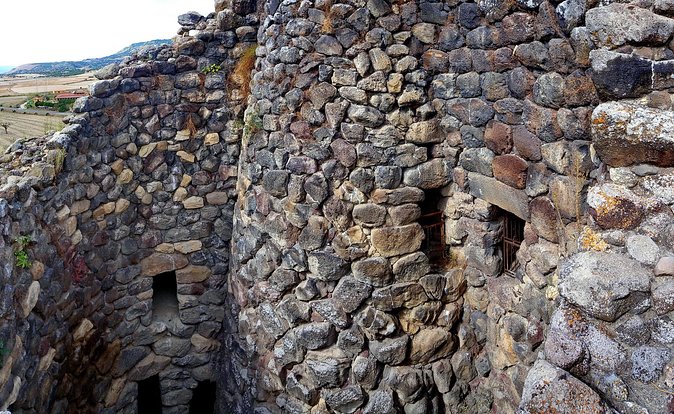
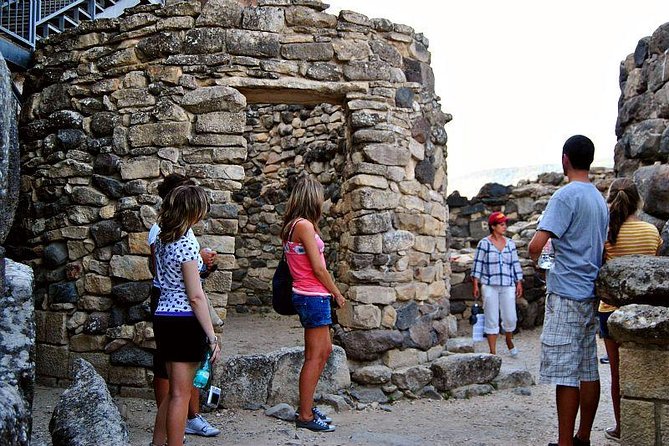
The main nuraghe is the memorable part of the visit. The central tower, called the mastio, originally reached about 20 metres. Four side towers surrounded it, forming a five-tower complex that has the heavy presence of a medieval castle, even though it predates the Middle Ages by many centuries.
You reach the entrance by an iron ladder rising about seven metres to a small opening. This is not a polished museum route. The access is narrow and physical, and the passageways inside are tight. The stone floors can be uneven or inclined, and the stairs may feel awkward if you are unsteady on your feet.
Inside, the scale of the construction is impressive. Thick stone walls and confined corridors show how carefully the towers were built. You move through spaces that once had a practical role, though archaeologists cannot answer every question about how each chamber was used.
The route may require crouching or turning sideways in places. If you dislike confined spaces, ask for a clear description before committing. If you are comfortable with old stone steps and careful walking, the restrictions are part of what makes the visit memorable. You are not simply looking at a fortress behind a barrier. You are moving through it.
Wear closed shoes with a firm sole. Sandals and smooth fashion shoes are poor choices here. Dress for the weather as well, since the tour operates in all conditions and part of the archaeological walk is outdoors.
More History Tours in Italy:
- Pompeii: Entry Ticket and Guided Tour with an Archaeologist
★ 4.8 · 19,459 reviews - Colosseum: Underground and Ancient Rome Tour
★ 4.7 · 12,691 reviews - Pompeii: Small Group Tour with an Archaeologist
★ 4.8 · 12,264 reviews - Pompeii Small Group Tour with an Archaeologist
★ 5.0 · 6,593 reviews
Alessandro’s local angle
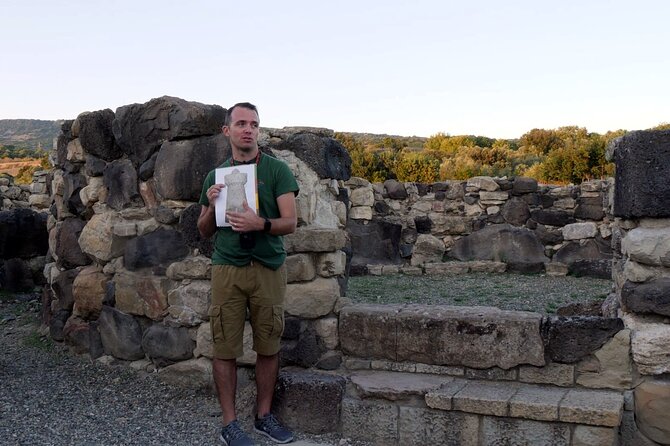
The guide is one of the main reasons this tour works as more than transport to an archaeological site. Alessandro is repeatedly praised for his command of Sardinian archaeology and his pride in local culture. His explanations extend to history, geology, plants, food, wine, and the Sardinian language.
That range helps put Su Nuraxi in context. You can ask about the villages you pass, the terrain around Barumini, or the customs that still shape life on the island. The drive becomes part of the learning rather than dead time between Cagliari and the ruins.
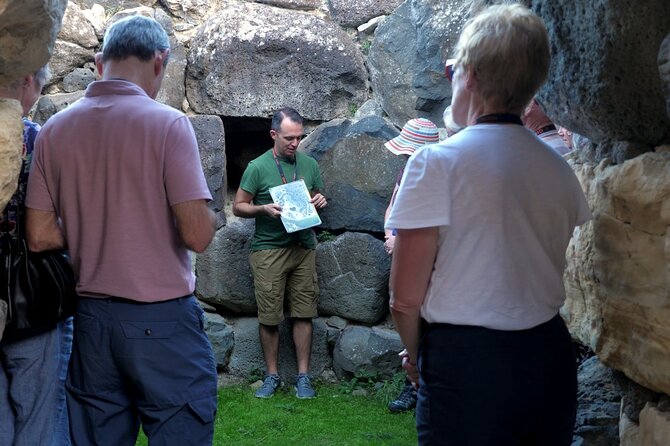
The small group also changes the pace. With a maximum of seven participants, you have a better chance to hear the guide in the narrow rooms and ask follow-up questions. A private or near-private outing can be especially valuable at a complex site, where a large group might bunch up at the ladders and passageways.
Alessandro has also been praised for explaining calmly when English is not easy for everyone. That does not remove the need to confirm language arrangements at booking, but it is encouraging if your group has mixed language skills.
Optional additions beyond Su Nuraxi
The central experience is Su Nuraxi, but the outing can be enriched with other options. Past combinations have included the Giara Plateau, a visit connected with the area’s wild horses, a sightseeing tour of Cagliari, and other archaeological stops such as a Giants’ grave.
These additions are not automatically part of the basic half-day description, so confirm exactly what you are selecting. A Giara option can add a walk through woods and open high ground, with views, local plants, and the chance to look for wild horses. Seeing the animals is not guaranteed. They may be out of sight, and the walk adds time and physical effort.
The Giants’ grave is another possible extension. It may appeal to anyone who wants more prehistoric Sardinian archaeology, though the main Su Nuraxi complex is the stronger draw for most first-time visitors. One possible plan is to focus on Su Nuraxi if you have limited time, then add another stop only if your group wants a longer day.
A Cagliari sightseeing addition can work well at the start or end of a stay, especially if you want local history before heading into the countryside. Ask for the exact duration and extra cost of any option before booking, since the advertised price is for the core experience.
What the $108.84 price means
At $108.84 per person, this is not the cheapest way to reach Barumini. You are paying for a guide, private air-conditioned transport, hotel or port pickup within Cagliari, and a small group rather than a large coach.
That package can offer good value if you do not want to drive, if you are arriving by cruise ship, or if you want the ruins explained in detail. The 45-minute journey each way also becomes useful sightseeing time when the guide is actively talking about Sardinia.
There is one detail to verify before payment. The tour information both says that the archaeological entrance ticket is included and, in the stop description, says admission is not included. Because those statements conflict, ask the provider to confirm the current ticket arrangement and the final amount before you book.
Group discounts are offered, and a minimum of two people is normally required per booking. The child rate applies only when the child shares with two paying adults. The maximum group size is seven, which keeps the experience much more personal than a standard coach outing.
Who will enjoy this tour most
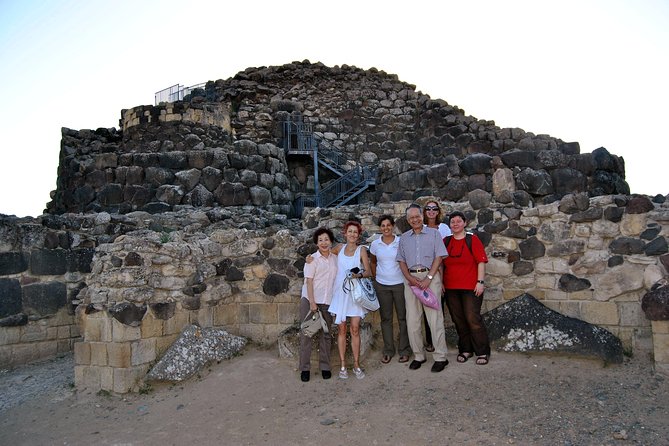
I would choose this tour if you are staying in Cagliari and want one substantial excursion beyond the city without handling transport yourself. It suits couples, families with older children, friends, and small groups who prefer questions and conversation over a fixed audio guide.
It is also a strong choice for anyone curious about how people lived in ancient Sardinia. The houses and meeting hut make the visit more than a photo stop, while the towers provide the visual drama.
The tour is less suitable if you want a completely flat archaeological walk, dislike narrow passages, or have difficulty with ladders and uneven stone steps. The site is not described as wheelchair accessible, and the physical demands should be taken seriously.
Families should also think about the children’s age and patience. The ruins are fascinating, but the route is not a playground, and small spaces require careful movement. Older children who enjoy ancient places may get a lot from the visit.
Practical advice for a smoother visit
Wear closed, comfortable shoes with good grip. Bring weather-appropriate clothing because the tour runs in rain, wind, and sun, and the route alternates between open ground and enclosed stone spaces.
Have your hotel or port information ready when booking. Pickup within Cagliari is free, while collection from resorts in the province, including Villasimius, Costa Rei, Pula, and Chia, is possible for an added transport charge.
The activity is generally suitable for most people, but the guide needs to know about any physical limitation before the day begins. If you are unsure about the ladder, narrow corridors, or stairs, ask for a detailed description rather than assuming the route will be easy.
Free cancellation is available up to 24 hours before the start time for a full refund. Changes or cancellations made less than 24 hours ahead are not accepted for a refund, and the cut-off follows local time.
Should you book Su Nuraxi from Cagliari?
I would book it if you want a well-explained archaeological day with simple transport and a small group. The best features are the chance to enter the towers, the mix of village and fortress remains, and Alessandro’s ability to connect the site with Sardinian culture beyond the ruins.
I would pause only if mobility, confined spaces, or the unclear entrance-ticket wording creates a problem. Confirm the ticket cost, ask about the exact route, and check whether any optional Giara or Cagliari additions fit your schedule.
For an authentic look at Sardinia’s prehistoric past, Su Nuraxi is a strong choice. The stones are ancient, but the visit becomes most rewarding when you take time to consider the people who built, used, changed, and lived around them.
FAQ
How long does the Su Nuraxi tour from Cagliari take?
The full experience takes approximately four to six hours. The drive to Barumini takes about 45 minutes each way, and the archaeological visit is listed at roughly 90 minutes.
Is hotel or port pickup included?
Yes. Pickup and drop-off from hotels and the port anywhere in Cagliari are offered free of charge. Pickup from resorts in the wider province, including Villasimius, Costa Rei, Pula, and Chia, is available for an added transport fee.
How many people can join the tour?
The tour has a maximum of seven participants. Transport is provided in a private, air-conditioned nine-seat van, and at least two people are normally required per booking.
Is the Su Nuraxi entrance ticket included?
The supplied tour details give conflicting information. The inclusions list says the archaeological entrance ticket is included, while the stop description says admission is not included. Confirm this point with the provider before booking.
What should I wear for the archaeological site?
Wear comfortable, closed shoes. The route includes uneven ground, inclined floors, narrow corridors, and stairs, and access to the main tower includes an iron ladder.
Can I cancel for a full refund?
Yes, if you cancel at least 24 hours before the scheduled start time. Cancellations or changes made less than 24 hours before the experience are not refunded or accepted.
Just added around Italy
- Guided Cultural Tour of the Godfather Film in Messina★ 5.0 · 31 reviews
- Guided tour of the Riace Bronzes and the Archaeological Museum of Reggio Calabria★ 5.0 · 44 reviews
- Brescia the Unexpected: History, Local Stories & a drink★ 5.0 · 31 reviews
- Bolognese Cooking Class with Margherita in the Historic Center★ 5.0 · 26 reviews
- Tower and Power, Virtual tour in Medieval Bologna★ 4.5 · 54 reviews
- Bologna historical art walking tour with hidden gems and tastings★ 5.0 · 108 reviews
- Best of Bologna in one day : Food, architecture, art and history★ 5.0 · 27 reviews
- Private or semi-private tour of the historic center of Bologna★ 5.0 · 34 reviews
Italy History Tours, compared.
Pompeii: Entry Ticket and Guided Tour with an Archaeologist
Read our review →
Colosseum: Underground and Ancient Rome Tour
Read our review →
Pompeii: Small Group Tour with an Archaeologist
Read our review →Pompeii Small Group Tour with an Archaeologist
Read our review →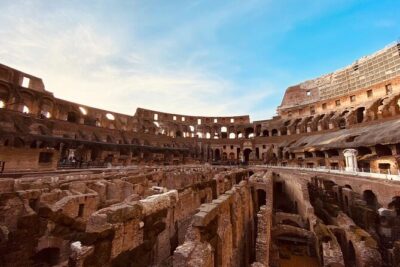
Rome: Colosseum with Arena, Roman Forum and Palatine Guided Tour
Read our review →
Venice: St. Mark’s Basilica Guided Tour & VR History Intro
Read our review →
Colosseum with Arena, Roman Forum and Palatine Hill Guided Tour
Read our review →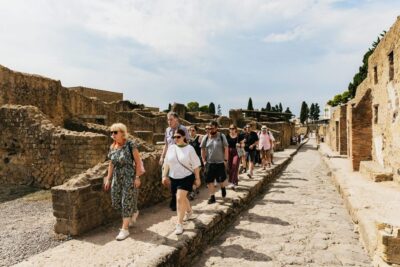
Herculaneum: Skip-the-Line Guided Tour with Archaeologist
Read our review →Browse the lists this tour appears in