Review · BERLIN
Berlin: Third Reich & Cold War Guided Walking Tour
Berlin’s hardest history is spread across ordinary streets, government buildings, memorials, and bits of wall. This two-hour walk from Brandenburg Gate to Checkpoint Charlie gives those places a clear timeline, from Hitler’s rise and the destruction of Berlin to the Cold War and the wall’s fall.
I like the route for two reasons: it covers a lot without requiring public transport, and it puts real places beneath the stories. The preserved Soviet tanks, the empty site of Hitler’s bunker, the former Nazi ministries, and a 200-meter section of the Berlin Wall make the past feel close. The drawback is that two hours is tight, so some stops receive a sharp explanation rather than a long visit.
Key points at a glance
- Brandenburg Gate sets the timeline: Hear how one monument passed from Nazi parade ground to Cold War symbol to image of reunification.
- The route covers about 2 kilometers: It is an easy city walk, but you will spend the full time outdoors.
- The Soviet War Memorial includes Red Army tanks: This is a striking reminder of the Battle of Berlin and the Soviet losses.
- The Holocaust Memorial and Hitler’s bunker site bring difficult history into the present: Neither stop is treated as a light photo opportunity.
- A 200-meter Berlin Wall section connects politics with personal stories: Your guide explains escape attempts and the human cost of division.
- Checkpoint Charlie closes the story: The tour ends where American and Soviet forces once faced each other during the Cold War.
A fast route through Berlin’s darkest chapters
This is not a general city sightseeing walk. It focuses on the Third Reich, the Second World War, the Holocaust, the division of Germany, and the Cold War. You will see some famous Berlin sights, but the point is to understand what happened around them.
The route works because the subjects follow a rough historical order. At Brandenburg Gate, you begin with power and symbolism. Near the Reichstag, you look at the Nazi seizure of power. At the Soviet memorial and Holocaust Memorial, the scale and human cost of the war come into view. The bunker site and former ministries show how the regime operated. The Wall and Checkpoint Charlie then carry the story into the divided city.
I would choose this near the start of a Berlin visit. It helps you get your bearings and gives later museum visits more meaning. One recent guide, Jimmy White, was praised for answering questions and offering useful suggestions for the rest of a stay. That is exactly the kind of benefit you want from an opening walk.
More History Walking Tours in Berlin
- Berlin’s Best: 2 Hour Walking Tour Third Reich and the Cold War
★ 5.0 · 5,486 reviews - Third Reich Berlin: Hitler and WWII Walking Tour
★ 5.0 · 3,301 reviews - Berlin: Third Reich, Hitler, and WWII Walking Tour
★ 4.9 · 1,757 reviews
Starting beneath the Brandenburg Gate
Meet in front of the tourist information point at Pariser Platz 1. Look for the guide with the pink umbrella, a useful detail in a crowded square.
Brandenburg Gate is an ideal starting point because it has carried several meanings in modern German history. Your guide explains its role during Nazi parades, its position beside the divided border during the Cold War, and its place in the celebrations of 1989 and German reunification.
You receive about 15 minutes here, including time for photos. The gate itself is visually familiar, so the value comes from the changing political meaning attached to it. You are not just taking a picture of a neoclassical monument. You are looking at a place once used to project state power and later used to celebrate the end of division.
The Brandenburger Tor S-Bahn and U-Bahn station is the easiest rail connection. It is served by S1, S2, S25, S26, and U5. Buses 100 and 245 also stop nearby.
The Reichstag and the 1933 fire
The walk continues past the Reichstag, Germany’s national parliament building. The stop lasts about 16 minutes and focuses on the Reichstag Fire of 1933, an event that helped Hitler tighten his control over Germany.
This part is useful because it shows how a building can survive several different political eras. The Reichstag endured war damage, the division of Berlin, and years when it was not the working center of a united German government. Today it is tied to parliamentary democracy, but the tour asks you to remember the building’s darker turning points as well.
You will mainly view the Reichstag from outside. If you want to visit the dome or enter the building, that requires separate arrangements and is not part of this walk. Keep that distinction in mind when planning your day.
Soviet tanks in Tiergarten
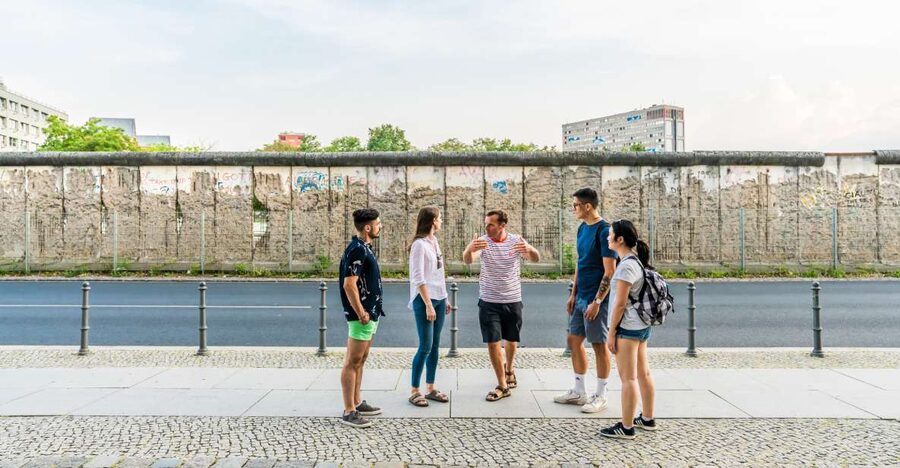
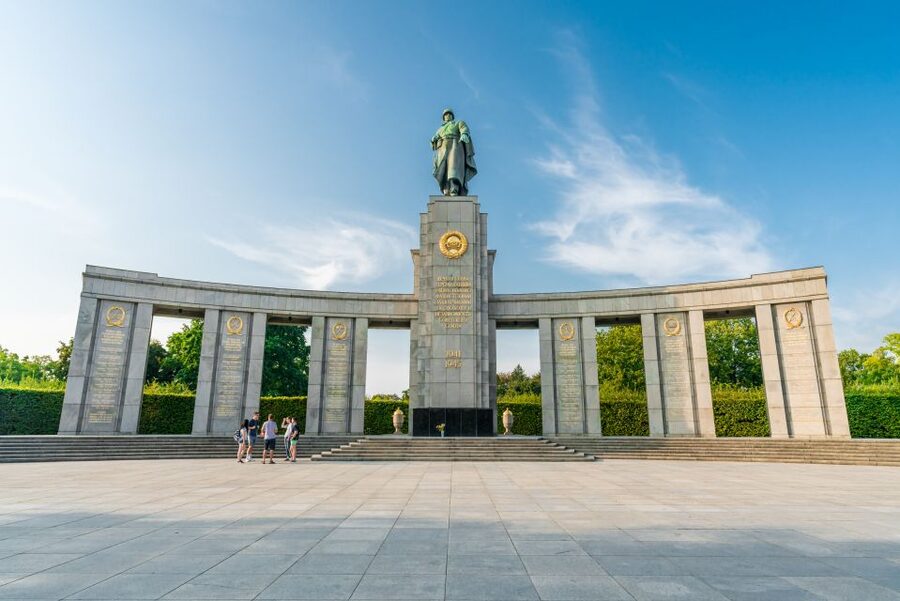
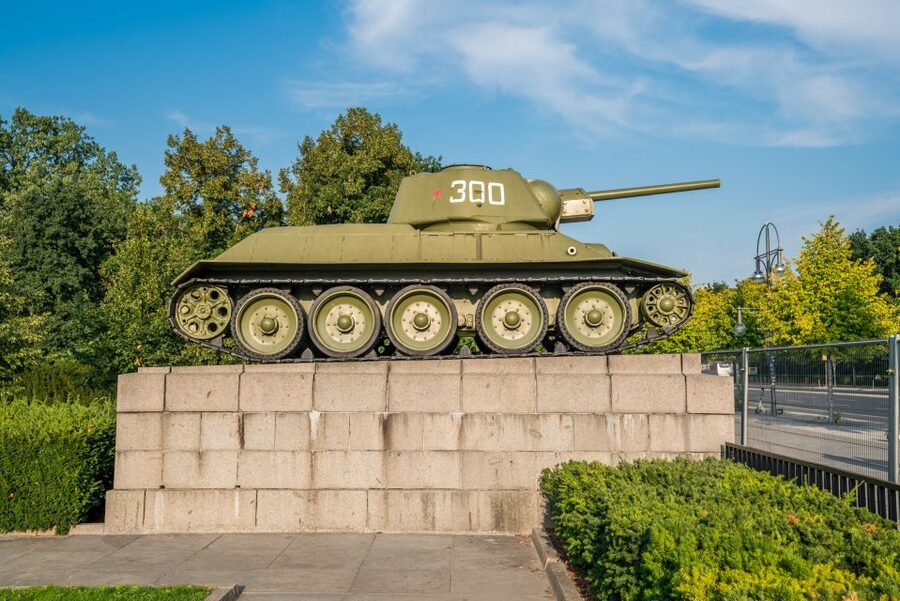
At the Soviet War Memorial in Tiergarten, you encounter preserved Red Army tanks and a memorial to roughly 80,000 Soviet soldiers who died in the Battle of Berlin. The setting is open and spacious, but the tanks make the military cost of the final battle very direct.
I find this one of the most visually effective stops. A date or casualty figure can feel remote. A tank sitting beside the road is harder to ignore. Your guide explains the Soviet role in the defeat of Nazi Germany and the memorial’s place in postwar Berlin.
This stop also adds balance to the route. The tour is not only about Nazi leaders and German institutions. It also addresses the Allied victory and the immense losses suffered by Soviet forces. You will have around 15 minutes for the explanation and photos.
More History Walking Tours in Germany
- Berlin: History of the Third Reich Guided Walking Tour
★ 4.7 · 791 reviews - Berlin Historical Highlights Walking Tour
★ 4.9 · 657 reviews - Berlin Private Complete History All Day Walking Tour
★ 5.0 · 474 reviews - Berlin: Cold War Walking Tour on Berlin Wall Route
★ 4.8 · 437 reviews
The Holocaust Memorial requires a slower mood
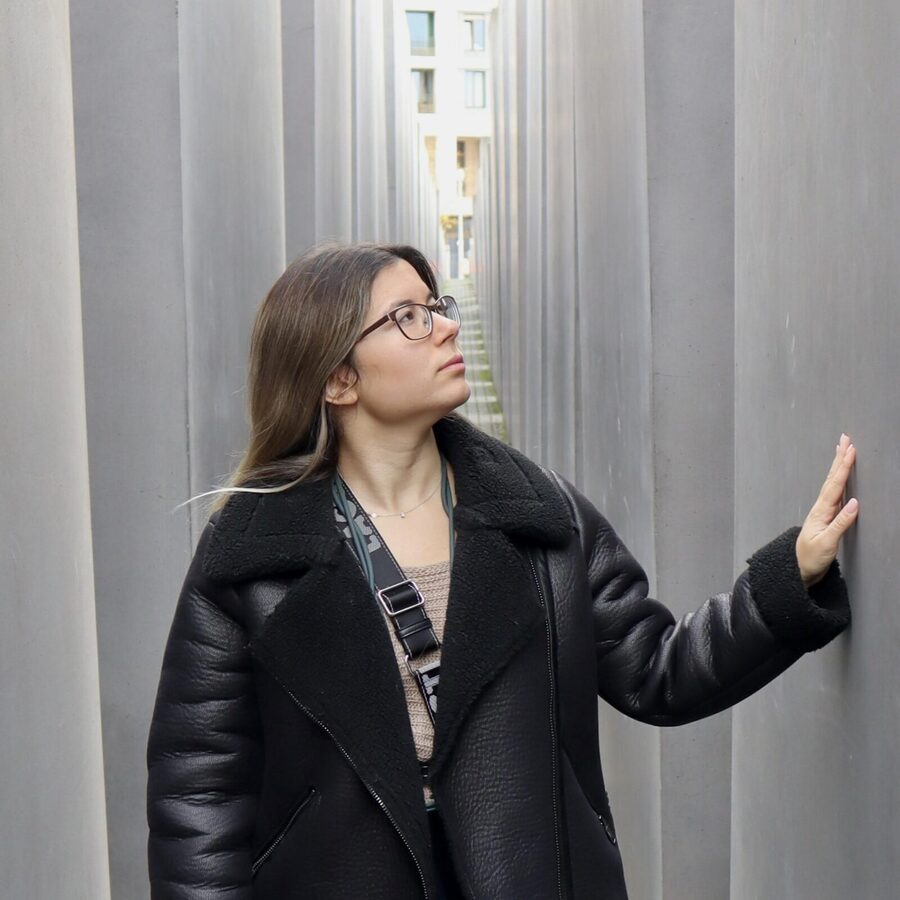
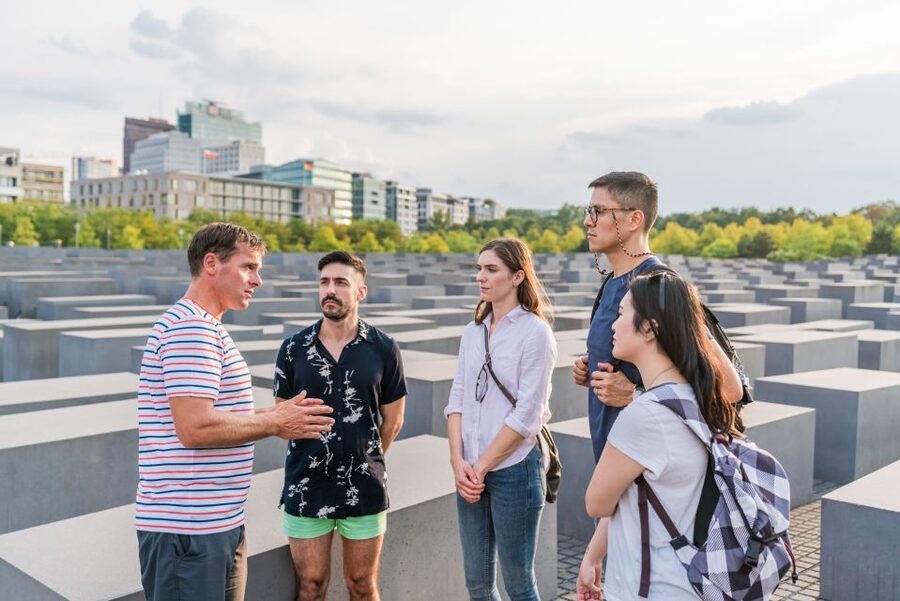
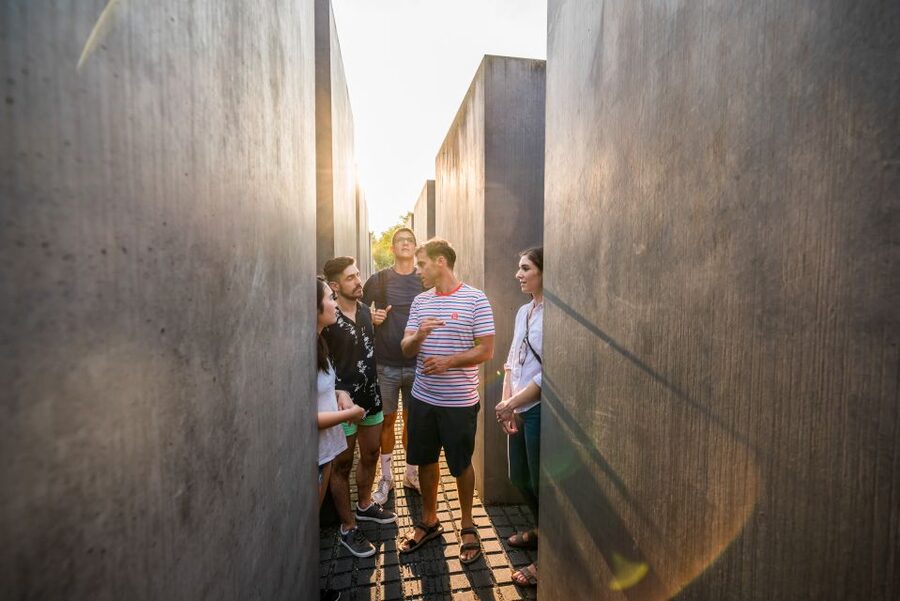
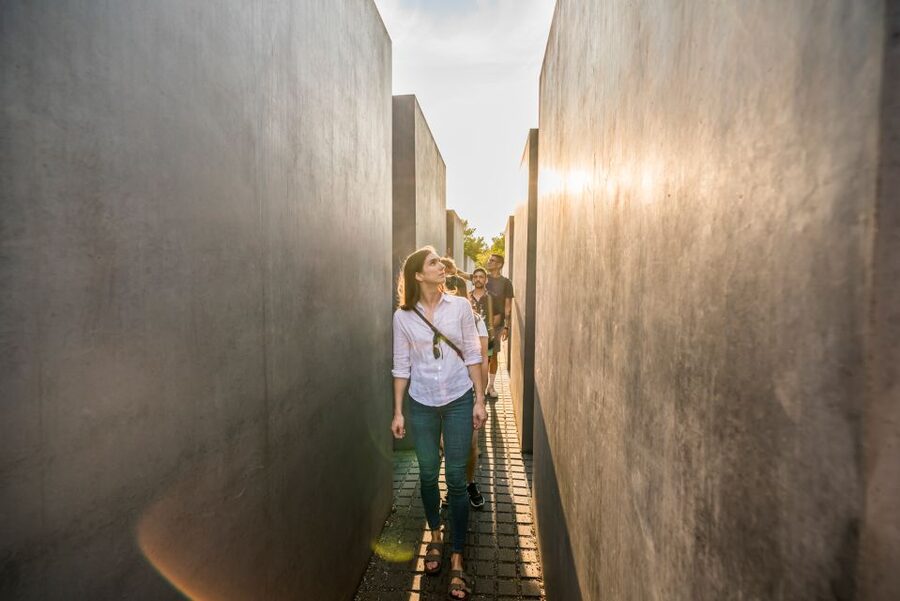
The Memorial to the Murdered Jews of Europe is made up of concrete slabs arranged across an open field. The changing height and spacing create a place that feels disorienting as you walk through it.
The tour includes a guided stop here, but it is worth treating the site with care. Your guide connects the memorial to the murder of six million Jewish people during the Holocaust. The memorial does not recreate the events, and the walk cannot replace the underground information center, but it gives you a serious introduction to the public memory of the Holocaust in central Berlin.
This is not a stop for loud conversation or rushed selfies. Listen to the explanation, take in the physical design, and leave room for your own response. The subject is difficult, and the guide must keep the tone respectful while still making the history understandable.
Hitler’s bunker site and the end of the Third Reich
The tour then reaches the site of Hitler’s bunker. There is no grand ruin to enter and no dramatic underground chamber open to the public. The importance of the stop comes from knowing what happened beneath this unremarkable part of the city.
Your guide explains that Hitler spent his final days there as the Third Reich collapsed. The plain surroundings are part of the lesson. The site does not look like a monument, and that absence can make the story more unsettling.
This stop works best when your guide provides context rather than spectacle. The focus is on the final days of the regime, the fall of Berlin, and the difference between historical importance and present-day appearance.
Detlev-Rohwedder-Haus and the machinery of power
Nearby, you see the former Ministry of Aviation, now known as Detlev-Rohwedder-Haus. Under Hermann Göring, it was linked to the Nazi state. In 1949, the building became associated with the birth of East Germany.
That change of use gives the stop unusual value. One building connects the Nazi dictatorship with the creation of the German Democratic Republic. You can see how Berlin’s political symbols were not wiped clean after 1945. The same streets and structures were reused by new governments with new claims to power.
You stop outside for an explanation and photos. This is a good example of why a guided walk helps. Without the political background, the building could easily pass as another large government office.
Topography of Terror and the Nazi terror system
At the Topography of Terror, the route reaches the former headquarters of the SS and Gestapo. This is where the Nazi regime’s system of persecution and terror was organized.
The setting is stark, and the subject is heavy. Your guide explains how these institutions helped enforce Nazi rule, rather than presenting the dictatorship as the work of one man alone. That distinction matters. It helps you understand the role of police, administrators, military leaders, and state offices in carrying out persecution.
The stop lasts about 15 minutes. If you want a longer look at the documentation center and its displays, plan to return separately. The walking tour gives you orientation and context, but it cannot cover the full evidence held inside.
A 200-meter piece of the Berlin Wall
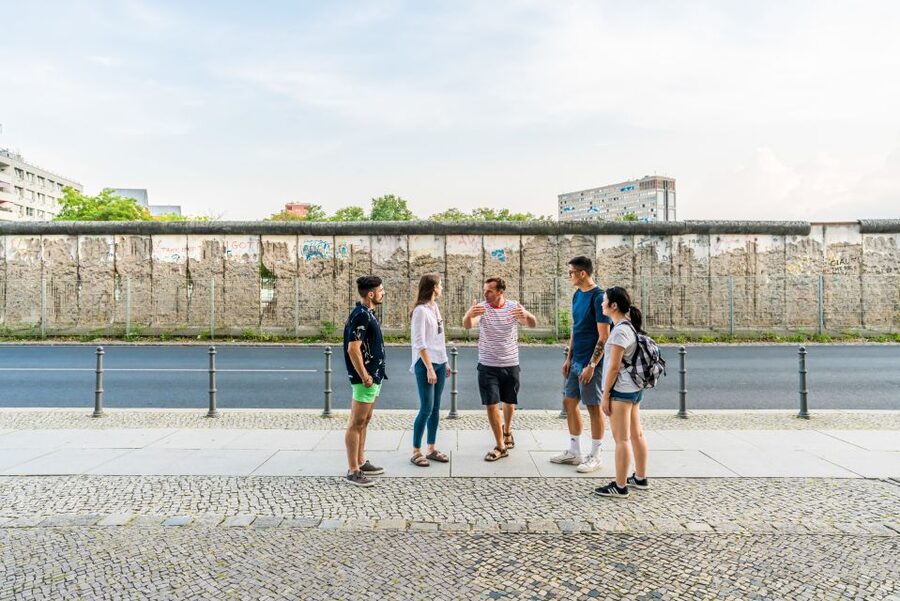
The Cold War section becomes most tangible at a 200-meter stretch of the Berlin Wall. Here, your guide shifts from wartime dictatorship to the division of Berlin into East and West.
You hear about people who risked everything to cross the border, the danger of escape attempts, and the effect of the wall on families and daily life. The route also explains why the wall was built and what its fall meant for Berlin and Germany.
I like this part because the wall is not treated as a simple photo backdrop. Its length, surface, and position help you picture a barrier that cut through streets and communities. The wall’s fall in 1989 is also presented as a human event, not just a date in a textbook.
The walk covers roughly 2 kilometers overall. It is not a strenuous hike, but you should wear comfortable shoes. Since the tour runs in all weather, winter visitors need serious warm clothing, and everyone should carry water. One January group completed the route in temperatures near minus 8 degrees Celsius, while another walked in snow and slippery conditions. The guides kept the route moving, but cold weather changes the feel of an outdoor history tour.
Checkpoint Charlie closes the Cold War story
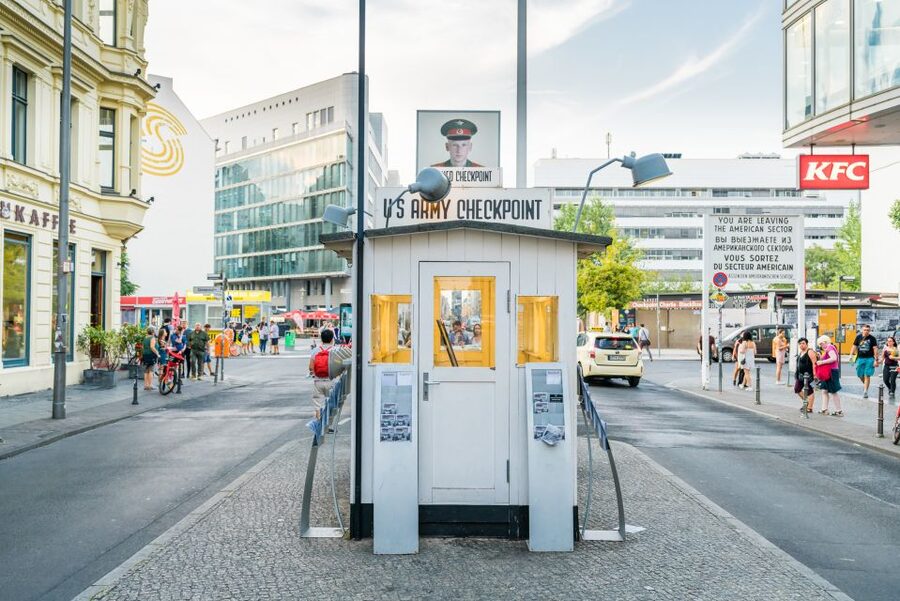
The final stop is Checkpoint Charlie, once a crossing point between the American and Soviet sectors. Your guide explains the tense confrontation in which American and Soviet tanks faced each other and discusses escape attempts connected with the border.
Checkpoint Charlie is one of Berlin’s most famous Cold War locations, but it can also feel crowded and commercial. That is why the explanation matters. The tour separates the modern photo opportunity from the serious history of surveillance, restricted movement, and the danger faced by people trying to leave East Germany.
The tour finishes here, which is handy for continuing your day. You can stay in the area, visit nearby museums, or use public transport to reach another part of Berlin. The route does not return to Brandenburg Gate, so plan your next stop from Checkpoint Charlie rather than from the starting point.
How the guides handle a difficult subject
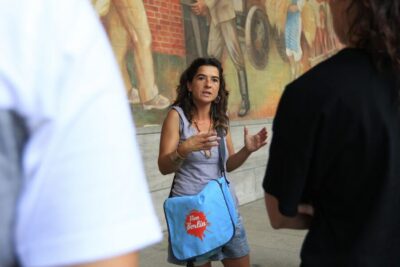
The quality of this experience depends heavily on the individual guide. Recent departures have included guides named Maggie, Mikey, Ciaran, Ben, Ariel, Hannah, Jimmy, and Jasper. You should not assume you will receive a particular person unless your booking specifically confirms it.
The strongest guiding style combines clear facts with room for questions. Maggie, Mikey, Ciaran, and Ben were each singled out for energy, warmth, or the ability to explain complicated material in a direct way. One guide used family photographs and personal stories to connect Berlin’s past with living memory. Another kept the group engaged with humor while remaining respectful.
That balance is important. The subjects include dictatorship, mass murder, war, political repression, and failed escapes. A guide who is too theatrical can make the experience feel cheap. A guide who only lists dates can lose the group. The best approach, reflected in the strongest departures, is calm, human, and open to questions.
Price, pace, and group choices
At $23 per person, the tour offers strong value if you want a structured introduction to modern Berlin. You visit many major historical sites without paying separate admission fees, and the guide supplies the connections that are hard to get from a map or self-guided walk.
The tradeoff is time. Two hours sounds generous, but the route includes nine major stops, walking between them, photos, and questions. You will get a useful account of each place, but not a full museum visit or a long discussion at every site.
Shared group and private options are available. A private tour may suit you if your party wants to set the pace or ask many questions. Check the language carefully when choosing an option. German and English are offered, but the shared and private formats do not always have the same language choices.
The activity is wheelchair accessible, and the route is outdoors. Tours run in all weather and on public holidays. Cancellation is free up to 24 hours before the start, and you can reserve now and pay later, which helps if your Berlin plans are still shifting.
Who should book this walk
I would recommend it to first-time visitors who want a clear overview of Berlin’s 20th-century history. It is also a good fit if you have only a short stay and want to see the Reichstag, Holocaust Memorial, bunker site, Wall, and Checkpoint Charlie in one organized route.
History-focused families can benefit from the guide’s question-and-answer format, though parents should decide if the Holocaust and Nazi terror material suits younger children. The route also works well for adults who have read about the Third Reich or Cold War but want to place events on an actual city map.
You may want something else if you prefer long museum visits, quiet reflection, or a narrow focus on one subject. This is a brisk outdoor introduction. It gives you the framework, then leaves you to return to the Topography of Terror, Holocaust Memorial information center, or other museums for more detail.
Should you book it?
Book this tour if you want a strong first look at Berlin’s Nazi and Cold War history for a modest price. The route is efficient, the sites are powerful, and the best guides make difficult material clear without turning it into a performance.
Skip it if you dislike walking in poor weather or already know these sites well. For everyone else, especially on a first visit, it is a useful way to understand why modern Berlin looks and feels the way it does.
FAQ
How long does the Berlin Third Reich and Cold War tour last?
The tour lasts two hours, although the exact pace can vary. Some departures may run slightly longer if the guide allows extra questions or discussion.
How far do you walk?
You should expect to walk approximately 2 kilometers during the tour.
Where does the tour begin?
Meet at the tourist information point at Brandenburg Gate, Pariser Platz 1. Look for a guide carrying a pink umbrella.
Where does the tour finish?
The tour ends at Checkpoint Charlie.
Which languages are available?
The tour is offered in German and English. Shared and private options may not always offer the same language choices, so check the selected option carefully.
Is the tour wheelchair accessible?
Yes, the activity is wheelchair accessible.
Does the tour run in bad weather?
Yes. Tours operate in all weather conditions and on public holidays.
What should I bring?
Wear comfortable shoes and bring water, an umbrella, and a camera. Warm clothing is especially important in winter because the tour takes place outdoors.
Can I cancel the booking?
You can cancel up to 24 hours before the tour for a full refund. Reserve now and pay later is also available.
More WWII and D-Day Tours in Germany
- Clash of Titans: Battle for Seelow Heights WW2 tour
★ 5.0 · 71 reviews - Berlin Half-Day World War II Walking Tour
★ 4.5 · 48 reviews - Path of Resistance: Berlin’s Hidden Holocaust Stories
★ 4.9 · 43 reviews - Berlin: Nazi History Walking Tour
★ 4.8 · 33 reviews
More WWII and D-Day Tours in Berlin
- Hitler’s Germany: Berlin During the Third Reich & WWII
★ 4.8 · 476 reviews - Private Walking Tour Berlin Third Reich Hitler and World War II
★ 5.0 · 360 reviews - The History of Berlin: WWII PRIVATE Walking Tour With Locals
★ 5.0 · 209 reviews - Berlin: Guided Bike tour of the Berlin Wall and Third Reich
★ 5.0 · 160 reviews
Just added around Berlin
- Berlin Food & Cultural Tour: Must-Try German & Berliner Classics★ 5.0 · 51 reviews
- Berlin Half-Day World War II Walking Tour★ 4.5 · 48 reviews
- Small-Group Historical Bike Tour in Berlin★ 4.5 · 103 reviews
- Historic center of Berlin – Tour in Italian★ 5.0 · 143 reviews
- Berlin Cold War & World War II Third Reich Walking Tour★ 4.5 · 30 reviews
- Private Taxi Tour City East & West History and Architecture 3-4h★ 5.0 · 42 reviews
- Berlin Wall and Cold War Bike Tour in Small Groups★ 5.0 · 114 reviews
- Private Tour: Jewish Heritage Walking Tour of Berlin★ 5.0 · 29 reviews
Berlin History Tours, compared.
Berlin’s Best: 2 Hour Walking Tour Third Reich and the Cold War
Read our review →
Third Reich Berlin: Hitler and WWII Walking Tour
Read our review →
Berlin: Third Reich, Hitler, and WWII Walking Tour
Read our review →
Berlin: 3-Hour World Heritage Cruise to Potsdam
Read our review →
Cold War, Berlin Wall, Spies and the East Side Gallery
Read our review →
Berlin: History of the Third Reich Guided Walking Tour
Read our review →