
Review · ROME
Private Rome Food Tour in the Historic Centre with 8+Tastings
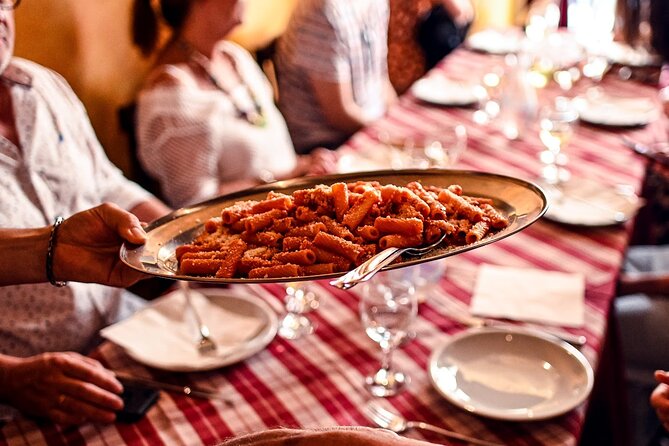
Rome’s historic center is best understood one bite at a time. This private food walk links eight or more tastings with Campo de’ Fiori, the Jewish Ghetto, grand Renaissance architecture, ancient ruins, and Piazza Navona’s Four Rivers Fountain. Your guide chooses the dishes and handles the ordering, so you can focus on eating and looking around.
I like the private format, which gives your group room to ask questions and request restaurant tips. I also like the broad menu: two pizzas, supplì, Roman pasta, cured meats, cheeses, cannoli, gelato, and a secret dish offer more than a quick snack crawl. The main caution is the price, listed at $405.14 per person, so this makes the most sense for a group that values personal guiding and a full meal-sized experience.
Key points at a glance
- Eight or more tastings: Expect two kinds of homemade pizza, supplì, cold cuts, cheeses, two Roman pastas, cannoli, gelato, and a secret dish.
- Private English-speaking guide: Your group takes the tour alone, with guides such as Rocio, Ludovica, Massi, Robbie, or Edoardo having led similar experiences.
- Historic-center route: Walk from Sant’Agnese in Agone near Piazza Navona to Largo di Torre Argentina.
- Food with context: The walk connects local dishes to Campo de’ Fiori, the Jewish Ghetto, Renaissance Rome, fountains, and ancient temples.
- A filling three-and-a-half hours: Wear comfortable shoes and arrive hungry. This is closer to a meal than a handful of samples.
- Dietary planning matters: Contact the provider before booking, since some dietary restrictions may not be possible to accommodate.
Why this route works for a first taste of Rome
Food tours can fall into two camps. Some are mainly restaurant crawls, with little sense of place. Others are walking tours with a token pastry at the end. This one tries to do both jobs, using Rome’s central streets as the thread between tastings.
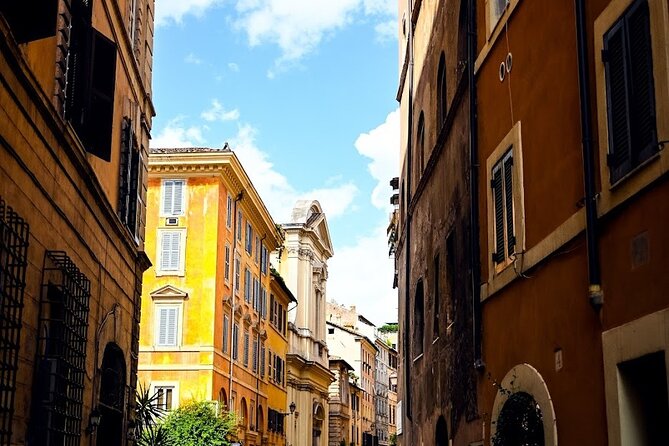
You begin at Sant’Agnese in Agone on Piazza Navona. From there, the route moves south toward Campo de’ Fiori, the French embassy area, the Jewish Ghetto, and Largo di Torre Argentina. That is a useful slice of central Rome because the sights change quickly. You get grand Baroque architecture, market streets, Jewish Roman food traditions, fountains, and ancient ruins without needing a taxi.
The private setup changes the pace. You can ask why a dish is prepared a certain way, which area is best for dinner, or where to return for gelato. Guides named in past tours include Rocio, Ludovica, Massi, Robbie, and Edoardo. Rocio received especially warm attention for her humor, English, food knowledge, and explanations of local geography. Still, your assigned guide may be different, so treat those names as examples rather than a promise.
More Food and History Tours in Italy
- Rome Food Tour in the Historic Centre with 8+ Food Tastings
★ 5.0 · 1,000 reviews - Rome: Ultimate Street Food Tour in the Old Town by Do Eat Better
★ 5.0 · 73 reviews - Rome: Trastevere street food and history tour – small group
★ 5.0 · 58 reviews
Piazza Navona gives the tour a grand opening
The meeting point is Sant’Agnese in Agone, Piazza Navona 14. This puts you beside one of Rome’s most famous squares before the food begins. The square follows the shape of an ancient stadium, and its long open form makes it easy to find the church and meeting point.
The central fountain is the Fountain of the Four Rivers, a 17th-century work with a Roman obelisk and a dove on top. Its four river figures represent major rivers of the world known in the period. Your guide uses this stop to set the tone: Rome is a city where food, power, art, and older layers of history sit almost on top of each other.
Starting here is practical. You are already in the historic center, close to public transportation, and the route ends a manageable walk away at Largo di Torre Argentina. You should still plan for uneven paving and a little more than three hours on foot. Comfortable shoes are not optional advice in Rome.
Campo de’ Fiori brings food into the street
The first major area is Campo de’ Fiori, a rectangular square south of Piazza Navona. Its name means field of flowers, a reminder that the square did not always function as a busy urban meeting place.
Today, it is closely tied to food and market life. The tour uses the area as a bridge between sightseeing and tasting. You may find yourself paying more attention to how ordinary Roman streets work once your guide points out the link between market produce, bakery food, and the dishes arriving on your plate.
The menu begins with homemade pizza, including two different types. This is a good comparison point. You can notice how toppings, texture, and preparation change from one slice to the next without needing to order a full pie. Pizza is familiar to most people, but a guide can help you understand why a simple Roman slice is worth treating as its own local food.
This is also where the tour’s ordering system helps. You do not need to work out ingredients in Italian or guess which portion is intended for sharing. The guide selects the tastings, explains them, and keeps the group moving.
Supplì gives you a true Roman snack
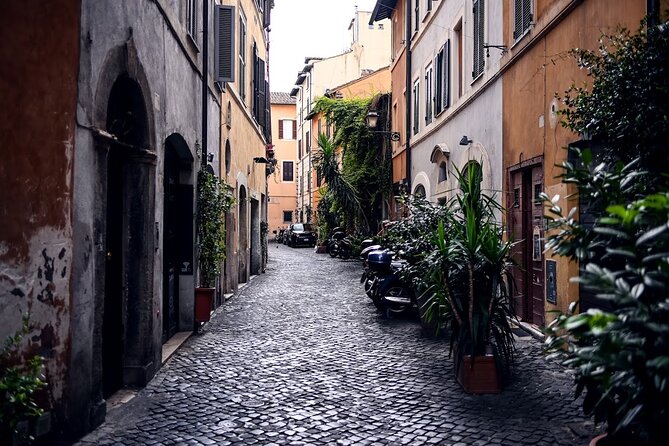
Supplì is a fried risotto ball, usually eaten as a handheld snack. It is often associated with Rome’s casual food culture, and its appeal is easy to understand: crisp outside, soft rice inside, and a hearty flavor that works well between sightseeing stops.
The tour includes supplì along with the pizza, so the early section has a nice contrast between baked and fried foods. You should not expect delicate portions. With pasta, cheese, cold cuts, pastry, gelato, and a secret dish still ahead, it is wise to arrive without a heavy meal behind you.
This is one reason the tour works best earlier in a trip. You can ask your guide what to order again later, then use the advice during the rest of your time in Rome. Several past tour experiences led people back to markets and shops recommended by their guide, which is one of the more useful benefits of a food walk.
More Food and History Tours in Rome
- Rome: Food Tour of the Historic Center with Rooftop Spritz
★ 4.7 · 43 reviews
Palazzo Farnese adds Renaissance Rome
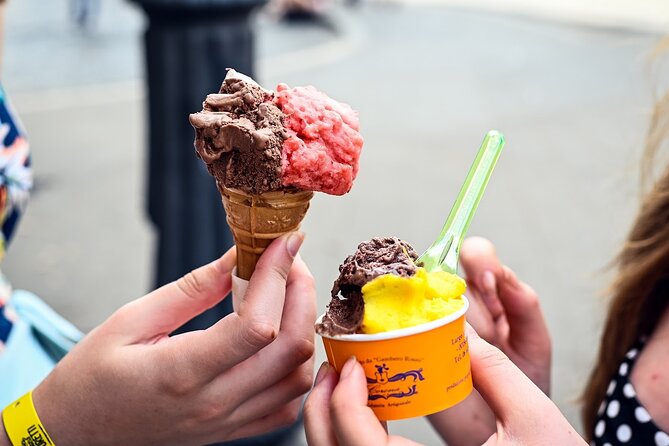
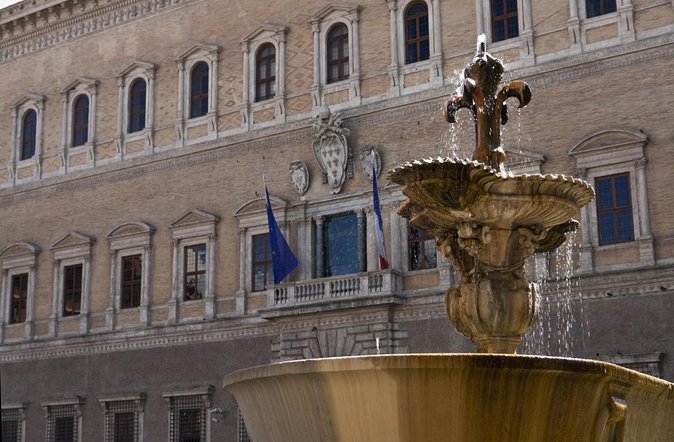
The route includes one of Rome’s most important High Renaissance palaces, now home to the French embassy in Italy. This is Palazzo Farnese, a powerful building with a setting that helps explain how Rome’s leading families shaped the city.
You may not enter the embassy, but the exterior gives the walk a needed pause from eating. The tour is not simply a string of counters and tables. The guide connects the food stops to buildings that reflect Rome’s political and artistic past.
That balance is valuable, especially if you are traveling with someone who wants sightseeing as much as lunch. Food-focused tours can feel repetitive when every stop is another bite. Here, the architecture and street history break up the menu and give your feet a chance to keep pace.
The Jewish Ghetto brings a distinct food tradition
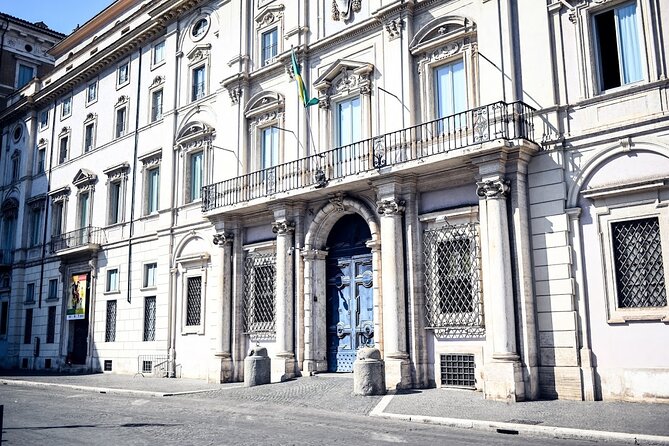
The route then reaches Rome’s Jewish Ghetto, established in 1555 in the Rione Sant’Angelo. It is one of the city’s most distinctive neighborhoods, with a long and difficult past as well as an important food culture.
This section adds depth to the menu. Roman cooking is not one single style, and the Jewish Ghetto shows how communities, restrictions, local ingredients, and tradition shape what people eat. Your guide can also help you read the area beyond its restaurants, pointing out the connection between the neighborhood’s streets, history, and present-day character.
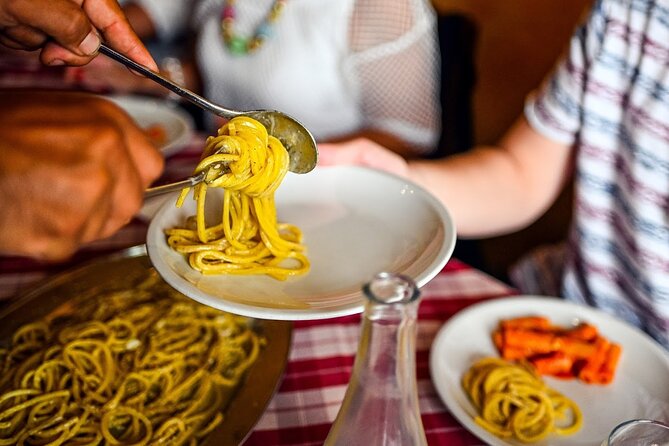
The listed tastings include Italian cold cuts and cheeses, followed by two Roman pastas. Those courses give you a chance to compare preservation, dairy, seasoning, and handmade preparation. The two pasta dishes are especially useful because Roman pasta is often defined by a few strong ingredients rather than long lists of additions.
Expect the food to be selected for the group rather than chosen individually from a menu. That keeps the tour moving and avoids language problems, but it also means you have less control over each dish. If you have allergies or dietary needs, contact the provider before booking. Some restrictions may not be possible to handle in a carefully planned tasting route.
Ancient ruins keep the walk from feeling like lunch alone
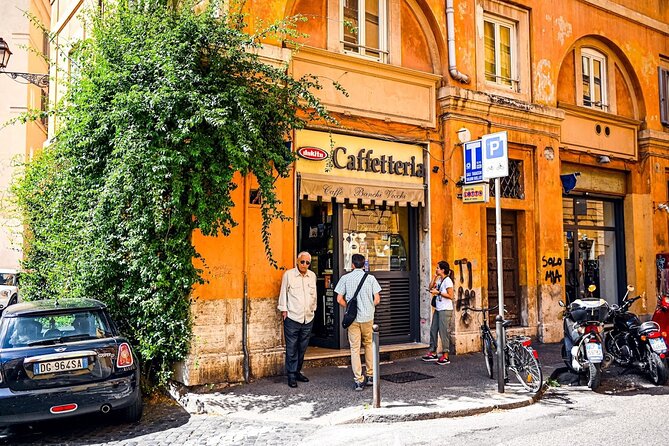
Near the end, the route includes remains of an ancient walkway originally built in the second century B.C. to connect two Roman temples. This is a small but telling piece of Rome. You are not just seeing the city’s most famous monuments. You are also noticing fragments built into the streets and paths people still use.
The final area is Largo di Torre Argentina, a square in the ancient Campus Martius. It contains four Roman Republican temples and the remains of Pompey’s Theatre. This is where the tour ends, and it is a fitting finish because the ruins show how many periods of Rome share the same ground.
The end point is also useful for your next move. You are still in central Rome, with access to nearby streets and public transportation. The tour does not include hotel pickup or drop-off, so you need to make your own way to Piazza Navona and arrange your return afterward.
What you will eat during the three and a half hours
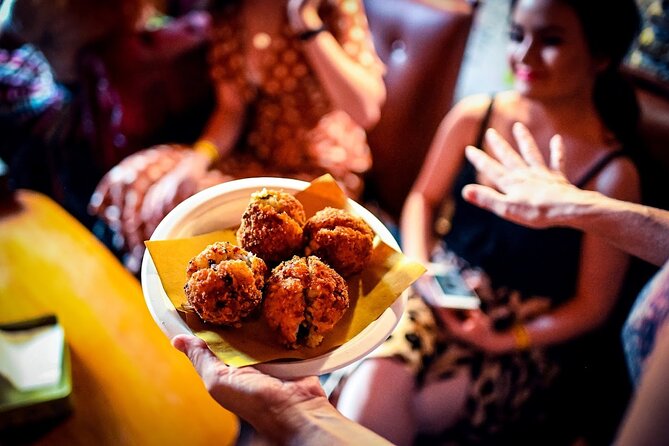
The menu is designed to move from casual savory bites to sweets:
- Two different types of homemade pizza
- Supplì, or fried risotto balls
- Italian cold cuts and cheeses
- Two Roman pastas
- Cannoli
- Artisanal gelato
- One secret dish
That is a generous list for a three-hour-thirty-minute walk. I would think of it as a late lunch or early dinner, not an appetizer before another full meal. The exact order and dishes can change because of weather, availability, and the location of the food stops.
The dessert finish is sensible. Cannoli offers a crisp pastry and creamy filling, while gelato gives you a colder, softer ending. The secret dish adds a little surprise, although the lack of detail means you cannot judge it in advance or plan around it.
Wine and drinks appear in descriptions of some past tours, but the formal inclusions listed here do not promise a specific drink package. Do not book this expecting unlimited wine. Ask the provider if beverages matter to your decision.
Guides make the private format worthwhile
The biggest reason to choose this tour is the guide. Food alone cannot justify a high private-tour price for everyone, especially in a city where you can buy pizza, pasta, and gelato on your own.
A good guide changes the experience by handling ordering, explaining the food, pointing out details in the neighborhoods, and offering practical recommendations for later meals. Rocio has been praised for her humor, excellent English, local geography, food knowledge, and ability to keep the walk lively. Ludovica has also been associated with useful recommendations that helped people return to markets and shops. Massi, Robbie, and Edoardo have led tours that combined food, drinks, history, and friendly conversation.
Those details suggest a tour with a personal, conversational feel. The private format gives you a better chance to ask questions than a large group tour. It also means the quality depends heavily on the guide assigned to your booking, something no food itinerary can fully guarantee.
Is $405.14 per person a fair price?
At $405.14 per person, this is expensive compared with buying the same categories of food independently. You could eat pizza, pasta, gelato, and pastries around Rome for much less if price is your only concern.
The value comes from the package: a private guide, more than three hours of walking and sightseeing, eight or more tastings, help with ordering, and tailored restaurant suggestions. If you are a small group, the cost may feel steep. If you are dividing the experience among several people and group discounts apply, the calculation may improve, though no discount amount is provided.
There is also a notable difference between this current listed price and an older comment describing an almost three-hour experience at €100. Prices and packages can change, so use the current booking price rather than an older figure when deciding. I would book this for a special occasion, a first day in Rome, or a group that places a high value on private attention. I would skip it if you mainly want inexpensive food or already know Rome’s historic center well.
Practical details before you book
The tour is offered in English and uses a mobile ticket. Confirmation is sent within 48 hours, subject to availability. It is near public transportation, and most people can participate, but you should expect a little over three hours of walking on historic streets.
The experience requires good weather. If poor weather cancels it, you can choose another date or receive a full refund. The same applies if the minimum number of participants is not met.
Free cancellation is available up to 24 hours before the start time. Cancellations or changes made less than 24 hours in advance are not refunded or accepted. Gratuity is not included, so plan for that separately if you feel your guide earned it.
Who should book this Rome food walk?
This is a strong match for you if you want history with your food, prefer a private guide, and like having someone else choose a balanced tasting route. It is also useful on your first visit, when you want restaurant advice for the rest of the trip.
Families and couples may appreciate the private setting, especially if everyone wants to ask different questions. People who need strict dietary control should contact the provider before booking and receive a clear answer first. The menu is built around a broad set of Italian foods, and some restrictions may not fit the planned stops.
You should also be comfortable eating several substantial tastings in one afternoon or evening. Wear good walking shoes, bring an appetite, and leave room in your schedule afterward.
Should you book it?
Book this tour if you want a private introduction to Rome through food and place, not just a list of snacks. The route covers a useful section of the historic center, the menu is varied, and a strong guide can give you recommendations that remain useful after the tour ends.
Think twice if $405.14 per person feels too high for a three-and-a-half-hour experience, or if you need full control over every ingredient. For the right group, the cost buys more than food: it buys a guided start to Rome, with local dishes, ancient ruins, neighborhood stories, and someone to make the choices easier.
FAQ
How long does the private Rome food tour last?
The tour lasts approximately three hours and thirty minutes.
Where does the tour begin?
It begins at Sant’Agnese in Agone, Piazza Navona 14, Rome.
Where does the tour end?
The tour ends at Largo di Torre Argentina in Rome.
How many tastings are included?
The experience includes eight or more tastings.
What food is included?
The listed food includes two types of homemade pizza, supplì, Italian cold cuts and cheeses, two Roman pastas, cannoli, artisanal gelato, and a secret dish.
Is the tour private?
Yes. Only your group participates in the activity.
Is the tour offered in English?
Yes. The tour is offered in English.
Is hotel pickup included?
No. Hotel pickup and drop-off are not included.
Can dietary restrictions be accommodated?
You should contact the provider before booking with any dietary requirements. Some dietary restrictions may not be possible to accommodate.
What happens if the tour is canceled because of bad weather?
You will be offered a different date or a full refund if poor weather causes the cancellation.
More Private History Tours in Italy
- Ancient Ostia Antica Semi-Private Day Trip from Rome by Train with Guide
★ 4.5 · 579 reviews - Colosseum & Ancient Rome Semi-Private Tour
★ 5.0 · 208 reviews - Colosseum & Ancient Rome for Kids Private Family Tour
★ 5.0 · 190 reviews - Private Colosseum & Ancient Rome Family Tour for Kids
★ 4.8 · 124 reviews
More Old Town and Historic Centre Walks in Italy
- Rome in a Day Tour with Vatican, Colosseum and Historic Center
★ 4.5 · 1,042 reviews - Rome: Colosseum, Vatican Museums & Historic Center in a Day
★ 4.7 · 228 reviews - Genoa: 2-Hour Guided Walking Tour of the Historical Center
★ 4.2 · 605 reviews - Guided Tour, Historic Center Sassi Rock Churches and Cave House
★ 5.0 · 461 reviews
Just added around Rome
- Rome: Colosseum and Ancient Rome Guided Walking Tour★ 4.5 · 95 reviews
- Secrets of Rome: Historical True Crime Small Group Tour★ 4.9 · 85 reviews
- Rome: Rome at Night Evening Historical Walking Tour★ 4.9 · 24 reviews
- Rome Secrets: Dark History & Tasty Bites Tour★ 5.0 · 37 reviews
- Rome: Introduction to the Colosseum and Ancient City Tour★ 4.8 · 75 reviews
- Rome Pantheon Semi-Private Guided Tour with an Archaeologist★ 5.0 · 60 reviews
- Rome: Ostia Antica Archaeological Park Ticket & Audio App★ 4.6 · 146 reviews
- Rome: Food Tour of the Historic Center with Rooftop Spritz★ 4.7 · 43 reviews
Rome History Tours, compared.
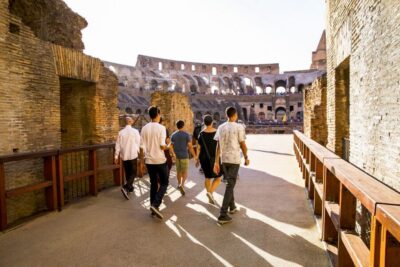
Colosseum: Underground and Ancient Rome Tour
Read our review →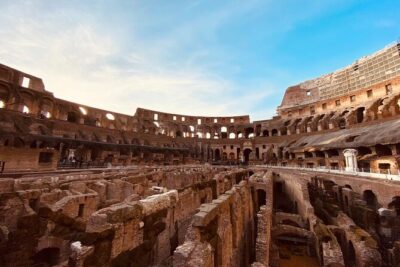
Rome: Colosseum with Arena, Roman Forum and Palatine Guided Tour
Read our review →
Colosseum with Arena, Roman Forum and Palatine Hill Guided Tour
Read our review →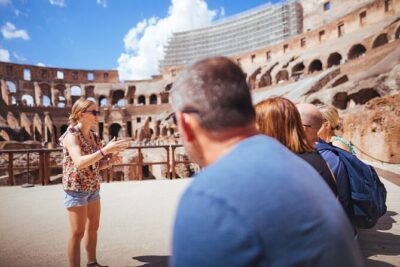
Colosseum & Ancient Rome with Arena Floor Option I Max 6 People
Read our review →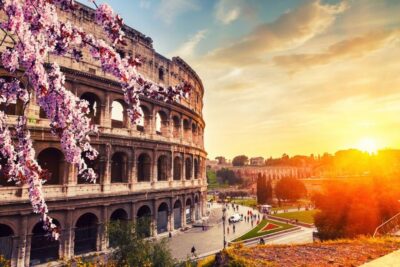
Rome: Colosseum, Ancient Rome Tour or AudioGuided Tour
Read our review →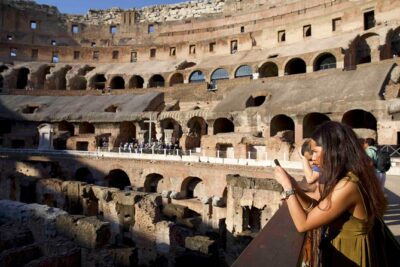
Colosseum Underground & Ancient Rome Guided Tour
Read our review →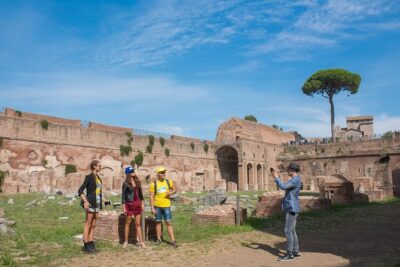
Rome: Colosseum Arena, Roman Forum & Palatine Hill Tour
Read our review →
Colosseum, Roman Forum & Palatine Hill Guided Tour
Read our review →Browse the lists this tour appears in