Review · ROME
Rome Food Tour in the Historic Centre with 8+ Food Tastings
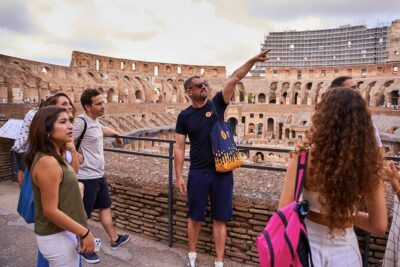
Rome makes you work for its best meals, usually by walking past a fountain, through an ancient quarter, and into a place you might not choose on your own. This three-hour tour links eight or more tastings with the historic center, beginning at Piazza Navona and ending near Largo di Torre Argentina.
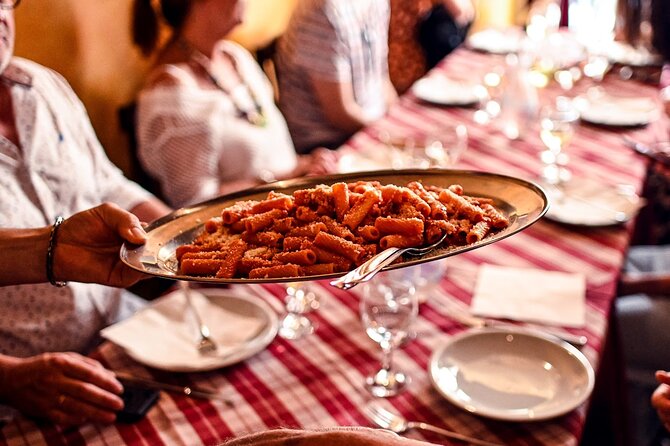
I like the generous menu, especially the two Roman pastas, two kinds of homemade pizza, supplì, cold cuts, cheeses, cannoli, and artisanal gelato. I also like the small group limit of 12 people, which gives guides such as Massimiliano, Rocio, Luda, and Federico room to explain both the food and the city.
The main caution is simple: this is a lot of food and a fair amount of walking in only three hours. Come hungry, wear comfortable shoes, and do not schedule a large meal right afterward.
Key things to know before booking
- Piazza Navona is your starting point: You begin beside Sant’Agnese in Agone and spend about 20 minutes around one of Rome’s grandest squares.
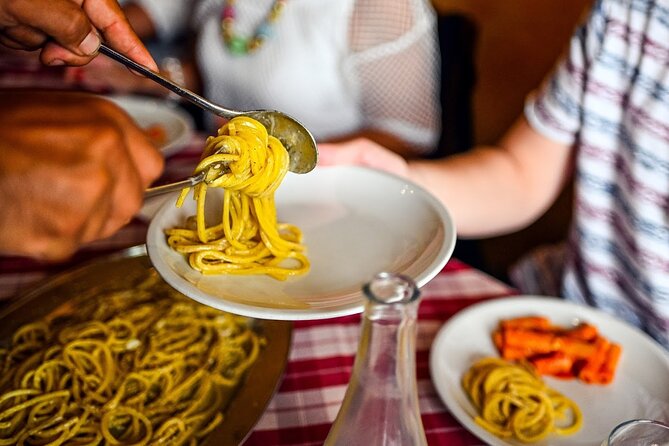
- The menu is substantial: Expect pizza, supplì, Italian cold cuts and cheeses, two Roman pastas, cannoli, gelato, and a secret dish.
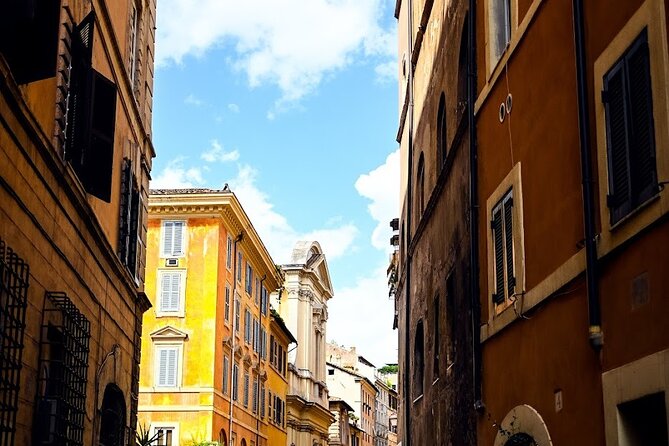
- The route connects food with history: You walk past a High Renaissance palace, through the former Jewish Ghetto, across Campo de’ Fiori, and toward ancient Roman remains.
- Small groups help: The maximum is 12 people, making it easier to hear the guide and ask questions.
- The finish is convenient: The tour ends at Largo di Torre Argentina, near public transportation and central sights.
- Plan around the timing: The tour lasts about three hours, is offered in English, and includes walking between tasting stops.
A food-first introduction to central Rome
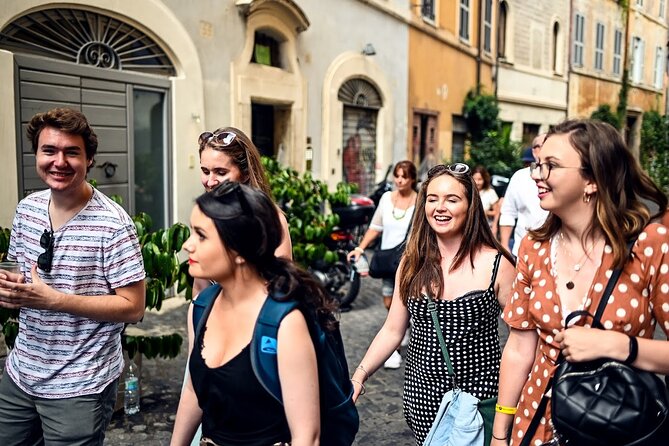
The clever idea here is not simply to eat Roman dishes. It is to use those dishes as a guide to the city. You begin with the grand public face of Rome, Piazza Navona, then move toward quieter corners, old neighborhoods, markets, fountains, and archaeological remains.
That approach works well in Rome because the historic center is compact but layered. A short walk can take you from Baroque architecture to the former Jewish Ghetto, then from a market square to the ruins of Republican temples. With food in hand, those places feel less like isolated monuments and more like parts of daily Roman life.
The tour is priced at $118.51 per person. That is not a cheap lunch, but it includes enough food to function as a full meal, plus a guided walk and cultural background. If you would otherwise pay separately for pizza, pasta, dessert, gelato, drinks, and a history tour, the price becomes easier to justify.
I would book this early in a Rome visit. It gives you a useful introduction to local dishes and helps you understand the layout of the center. The tour is often booked well ahead, with an average booking time of 73 days, so leaving it until the last minute may limit your choices.
More Food and History Tours in Italy
- Private Rome Food Tour in the Historic Centre with 8+Tastings
★ 5.0 · 135 reviews - Rome: Ultimate Street Food Tour in the Old Town by Do Eat Better
★ 5.0 · 73 reviews - Rome: Trastevere street food and history tour – small group
★ 5.0 · 58 reviews
Piazza Navona begins with fountains and food
Meet at Sant’Agnese in Agone, Piazza Navona 14. The tour begins in one of Rome’s most famous squares, built on the site of an ancient stadium. Its long, open shape is still easy to read, and its Baroque buildings and fountains make it a strong first setting for a food walk.
You spend about 20 minutes here. That is enough time for the guide to explain the square and set the tone, but not enough for an extensive sightseeing stop. You will want to admire the architecture, listen closely, and resist the temptation to wander off for a separate coffee.
The square is also a fitting place to discuss Roman snack culture. Pizza bianca, supplì, gelato, and espresso are all part of the city’s everyday food vocabulary. The tour’s formal tastings come later, but Piazza Navona helps you see that Roman food is not limited to sit-down restaurant meals.
One practical point: this is a public square with a steady flow of people. Stay close to the guide at the meeting point, especially if you arrive early and the area is busy.
A High Renaissance palace and the story of Rome’s center
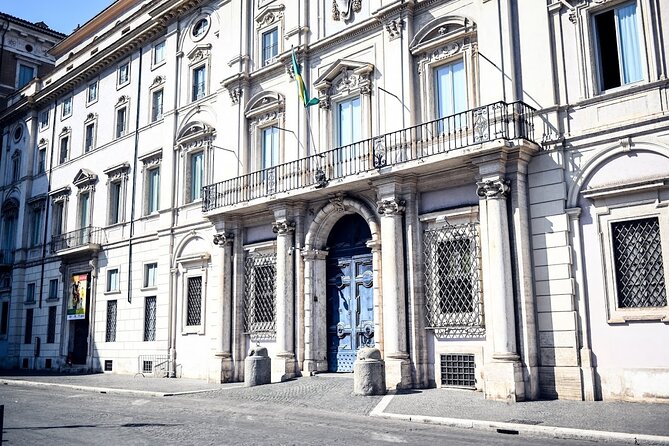
One stop is a major High Renaissance palace that now serves as the French embassy in Italy. The information provided does not name the palace directly, so your guide will supply the exact identification and explain its place in Rome’s political and architectural story.
This kind of stop is useful because it breaks up the eating without taking you away from the central route. You get a look at the grand palaces that shaped Rome while keeping the focus on the relationship between powerful buildings, public squares, and local businesses.
Do not expect a long interior visit here. The palace is currently an embassy, and the tour is designed as a walking and tasting experience rather than a palace tour. The value comes from the exterior setting and the guide’s explanation.
That balance is one of the tour’s strengths. You see important places without spending the whole afternoon waiting in lines or following a strict museum schedule.
The Jewish Ghetto adds depth to the food walk
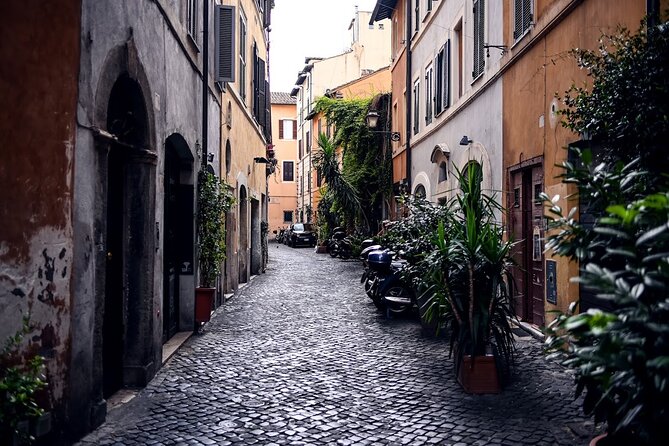
The route continues into the former Jewish Ghetto in the Rione Sant’Angelo. Established in 1555, this is one of Rome’s most distinctive neighborhoods, with a difficult past and a strong food identity.
Here, the tour becomes more than a parade of popular dishes. The neighborhood gives the guide a chance to explain how communities, restrictions, religion, and local cooking shaped one another. You can expect the history to be tied to what you are eating rather than presented as a separate lecture.
The Ghetto is also an excellent place for a food tour because it feels different from the open grandeur of Piazza Navona. The route moves through a neighborhood with its own character, and you get a better sense of Rome as a city of small districts rather than one continuous monument zone.
The walking is not described as strenuous, but you should still wear shoes suited to Rome’s streets. Three hours of standing, eating, and moving between stops can feel longer than a normal restaurant meal, especially in hot weather. One tour participant completed the route on a day above 90 degrees Fahrenheit and still enjoyed it, but heat can make the pace more demanding.
More Food and History Tours in Rome
- Rome: Food Tour of the Historic Center with Rooftop Spritz
★ 4.7 · 43 reviews
Fountains, temples, and the Roman setting
The route includes a classical 17th-century fountain dedicated to four rivers, with a Roman obelisk topped by a dove. This is a visual reminder of how Rome repeatedly built new monuments around older symbols and materials.
Another stop is the remains of an ancient walkway built in the second century B.C. to connect two Roman temples. It is a small detail compared with the Colosseum, but that is exactly why it works well on a walking tour. You are shown how ancient Rome survives in fragments within the modern street plan.
These stops do not appear to be long formal visits. They are part of the route, giving you context between food tastings. I like that format for Rome. You get enough information to notice what you are seeing, then keep moving rather than spending an hour on a single ruin.
The guide makes a real difference here. Massimiliano is repeatedly praised for combining Roman history with explanations of individual dishes. Manuel, Robbie, Eduardo, Federico, and the other named guides are also described as friendly, entertaining, and clear in English. Since guides can change, you should not book on the assumption that one particular person will lead your departure.
The menu: pizza, supplì, pasta, and more
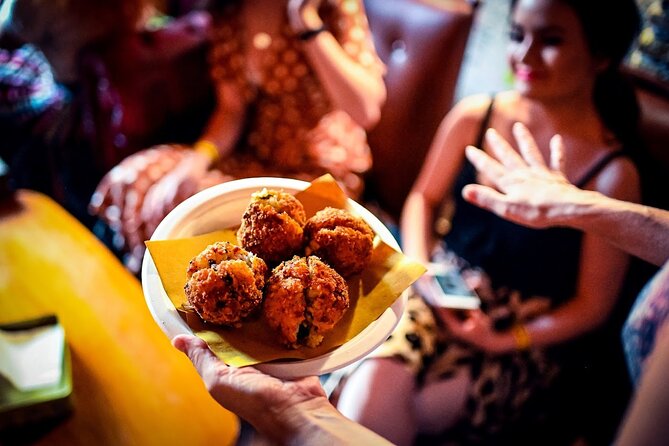
The food is the main reason to choose this experience, and the menu is broad enough to give you a solid sample of Roman eating.
You receive two different kinds of homemade pizza. That matters because pizza in Rome is not just one fixed style. The tour lets you compare textures and toppings rather than treating pizza as a single generic dish.
Supplì brings a classic Roman street-food element. This fried rice snack is a practical introduction to the city’s casual food culture, and it provides a different texture from the bread, pasta, and cheese served elsewhere.
The tasting continues with Italian cold cuts and cheeses. This portion works well for people who enjoy sharing food in a group, though it may be less exciting if you are looking for only hot dishes. The spread adds variety and gives the guide room to talk about ingredients and regional habits.
The two Roman pastas are likely to be the most filling part of the meal. The exact dishes can change because the menu depends on location availability, weather, and other circumstances. A vegetarian participant received vegetarian pasta and alternative dishes at several stops, but you should communicate dietary needs before booking rather than assume every substitution is guaranteed.
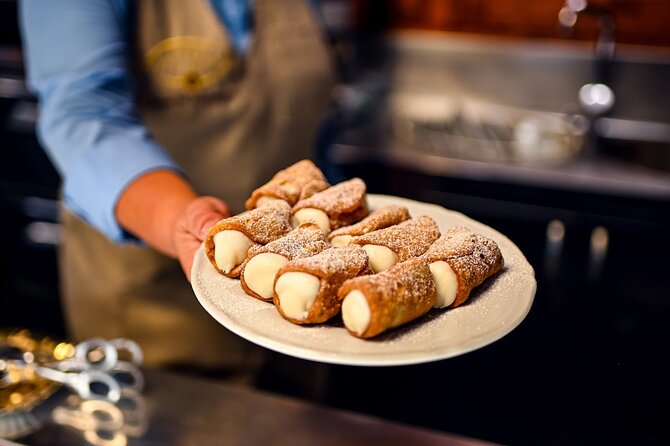
Dessert comes through cannoli and artisanal gelato. Several guides are praised for ending with particularly good gelato, and one participant who had tried plenty of gelato elsewhere still singled out this stop. Cannoli also receives unusual attention, including from someone who normally does not care for it.
There is also a secret dish. Its identity is not provided in advance, which adds a small surprise to the route. Since the menu can change, do not treat the published list as a rigid promise of exact dishes or portions.
Why the quantity changes the value
You will not leave this tour hungry. The menu includes enough separate tastings to replace lunch for most people, and the portions are repeatedly described as generous. That is good value if you want to sample widely without ordering several full dishes at different restaurants.
It also means you need to pace yourself. A common mistake is to eat a large breakfast because the tour begins later in the day, then find the pasta and dessert difficult to finish. I would have a light meal beforehand, drink water, and treat each tasting as part of a long lunch.
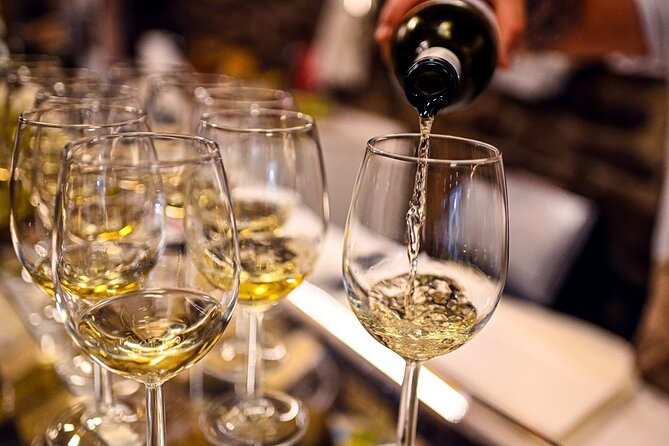
Some experiences include wine or other drinks, based on the food stops and the guide’s arrangements, but the included list specifically guarantees the food items rather than a set drink package. The minimum drinking age is 18. If wine matters to you, confirm the current drink arrangements before booking.
The meal is social. You eat with the rest of the group, which can be a pleasant way to meet people during a solo trip or a couple’s visit. Families have also used the tour successfully, including children ages four and six. A guide made drink adjustments for a nine-year-old while adults had coffee and wine, though you should still check the current arrangements for children.
Campo de’ Fiori and everyday Roman life
The route includes Campo de’ Fiori, a rectangular square south of Piazza Navona. Its name translates as field of flowers, and the square has long been linked with daily commerce and public life.
This is a useful contrast with Piazza Navona. Navona feels grand and monumental, while Campo de’ Fiori gives you a more market-centered view of central Rome. The exact atmosphere can vary by time and day, and the tour does not promise a dedicated market visit, so think of it as a route stop rather than a shopping excursion.
The square also helps explain why food tours work so well in Rome. Food is not kept in one special district. It appears in bakeries, bars, markets, cafés, small shops, and restaurants spread through the city center. The walk gives you a chance to see how those places fit into the urban fabric.
Finishing at Largo di Torre Argentina
The tour ends at Largo di Torre Argentina. This square contains four Roman Republican temples and the remains of Pompey’s Theatre, in the area once known as the Campus Martius.
That ending is especially practical. You finish near central Roman sights and public transportation, rather than being returned to a hotel outside the center. From there, you can continue sightseeing, find another coffee, or make your way back to your accommodation.
The tour does not include hotel pickup or drop-off, so plan your route to and from Piazza Navona yourself. Public transportation is nearby, and the start and finish are both in central Rome, but the experience is not door-to-door.
Group size, pace, and guide quality
The maximum group size is 12. That is small enough for a guide to keep the group together and answer questions without turning every stop into a shouting match. It also makes shared tasting plates more manageable.
Guide quality is one of the strongest parts of the experience. Massimiliano is praised for his history explanations, humor, and help with questions about the rest of a Rome stay. Rocio is described as funny and engaging, while Luda receives credit for being informative and friendly. Federico is noted for handling vegetarian alternatives, and Robbie is praised for useful restaurant suggestions beyond the tour.
Those details matter because a food tour can easily become a list of stops with little context. Here, the guide is expected to explain the origins of dishes, the history of the area, and the customs behind what you are eating. The exact style will vary by person, but the tour depends heavily on having a good storyteller.
English is the offered language. Most people can participate, but the combination of walking and eating may not suit anyone who needs a slower pace or frequent rest breaks. Pets are not permitted.
Who should book this Rome food tour?
I would recommend it to a first-time visitor who wants a quick orientation to central Rome and a substantial introduction to Roman food. It is also a good fit for couples, families with older children, solo visitors who enjoy meeting a small group, and anyone who prefers tasting several dishes instead of committing to one restaurant meal.
It is less suitable if you want a quiet, seated lunch with plenty of time at each course. It may also disappoint you if you expect a fixed menu, a private tour, or hotel transportation.
Cancellation is free up to 24 hours before the start time for a full refund. Changes or cancellations made less than 24 hours before the tour are not accepted for a refund.
Should you book it?
Book this tour if you want to eat a lot, walk through several central neighborhoods, and learn why Roman dishes belong to particular places. The combination of two pizzas, supplì, cold cuts, cheeses, two pastas, cannoli, gelato, and a secret dish makes the $118.51 price reasonable for a filling meal plus a guided city walk.
Skip it if you prefer to choose every restaurant yourself or if three hours of walking and continuous tasting sounds tiring. For most visitors, though, this is a smart early-trip choice: arrive hungry, wear good shoes, and use the guide’s restaurant advice for the rest of your stay.
FAQ
How long does the Rome food tour last?
The tour lasts approximately three hours.
Where does the tour begin?
It begins at Sant’Agnese in Agone, Piazza Navona 14, 00186 Rome.
Where does the tour end?
The tour ends at Largo di Torre Argentina in central Rome.
How much does the tour cost?
The listed price is $118.51 per person.
What food is included?
The included tastings are two types of homemade pizza, supplì, Italian cold cuts and cheeses, two Roman pastas, cannoli, artisanal gelato, and a secret dish.
Is the tour offered in English?
Yes. English is the listed tour language.
How many people can join the tour?
The maximum group size is 12 people.
Is hotel pickup included?
No. Hotel pickup and drop-off are not included.
Can children join the tour?
Most people can participate, and families with young children have joined the experience. The supplied information does not list a minimum age for children.
Can I cancel for a full refund?
Yes. You can cancel at least 24 hours before the start time for a full refund. Cancellations or changes made less than 24 hours before the start time are not accepted for a refund.
More Old Town and Historic Centre Walks in Rome
- Madrid Essential: Historic Center, Plaza Mayor & Royal Palace
★ 5.0 · 6,416 reviews - Lisbon: Live Fado Show with Port Wine in Historic Center
★ 4.7 · 4,166 reviews - Valencia Old Town Tour with Wine & Tapas in 11th Century Historic Monument
★ 5.0 · 3,234 reviews - Prague Old Town, Medieval Underground and Dungeon Historical Tour
★ 4.5 · 3,227 reviews
More Old Town and Historic Centre Walks in Italy
- Rome in a Day Tour with Vatican, Colosseum and Historic Center
★ 4.5 · 1,042 reviews - Rome: Colosseum, Vatican Museums & Historic Center in a Day
★ 4.7 · 228 reviews - Genoa: 2-Hour Guided Walking Tour of the Historical Center
★ 4.2 · 605 reviews - Guided Tour, Historic Center Sassi Rock Churches and Cave House
★ 5.0 · 461 reviews
Just added around Rome
- Rome: Colosseum and Ancient Rome Guided Walking Tour★ 4.5 · 95 reviews
- Secrets of Rome: Historical True Crime Small Group Tour★ 4.9 · 85 reviews
- Rome: Rome at Night Evening Historical Walking Tour★ 4.9 · 24 reviews
- Rome Secrets: Dark History & Tasty Bites Tour★ 5.0 · 37 reviews
- Rome: Introduction to the Colosseum and Ancient City Tour★ 4.8 · 75 reviews
- Rome Pantheon Semi-Private Guided Tour with an Archaeologist★ 5.0 · 60 reviews
- Rome: Ostia Antica Archaeological Park Ticket & Audio App★ 4.6 · 146 reviews
- Rome: Food Tour of the Historic Center with Rooftop Spritz★ 4.7 · 43 reviews
Rome History Tours, compared.
Colosseum: Underground and Ancient Rome Tour
Read our review →
Rome: Colosseum with Arena, Roman Forum and Palatine Guided Tour
Read our review →
Colosseum with Arena, Roman Forum and Palatine Hill Guided Tour
Read our review →
Colosseum & Ancient Rome with Arena Floor Option I Max 6 People
Read our review →
Rome: Colosseum, Ancient Rome Tour or AudioGuided Tour
Read our review →
Colosseum Underground & Ancient Rome Guided Tour
Read our review →
Rome: Colosseum Arena, Roman Forum & Palatine Hill Tour
Read our review →