
Review · AUSTRALIA
Darwin: Small Group 2-Hour Heritage Walk
Darwin’s story is written into its streets: war damage, cyclone destruction, old government buildings, tropical plants, and modern public art all share the same compact city center. This two-hour walk with local guide John gives you the background that can be easy to miss from a tour bus.
I like the leisurely pace and the access to places a bus cannot reach. I also like the small group limit of 10, which leaves room for questions and can feel almost private when numbers are low. The main drawback is the heat: you need a fair level of fitness, since there are few places to sit and rest.
Why this Darwin walk earns your time
- John’s local perspective: Expect clear stories about WWII, Cyclone Tracy, Darwin’s growth, and its multicultural present.
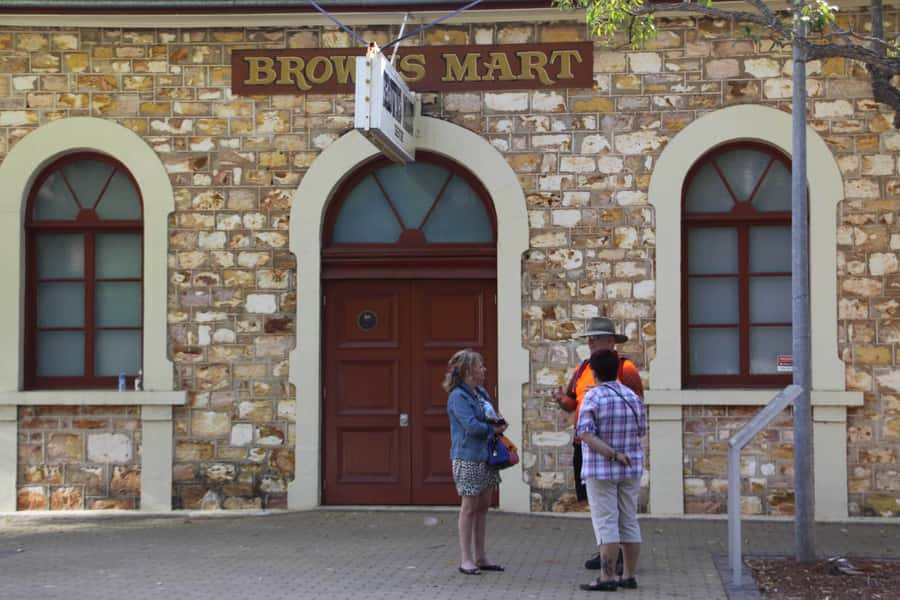
- Historic buildings on foot: See the old courthouse, police station, Brown’s Mart Theatre, and Palmerston Town Hall ruins.
- A compact city route: The walk begins at the John McDouall Stuart statue and finishes near Knuckey Street and the Esplanade.
- Small-group format: No more than 10 people join, with at least two paying guests required for the tour to operate.
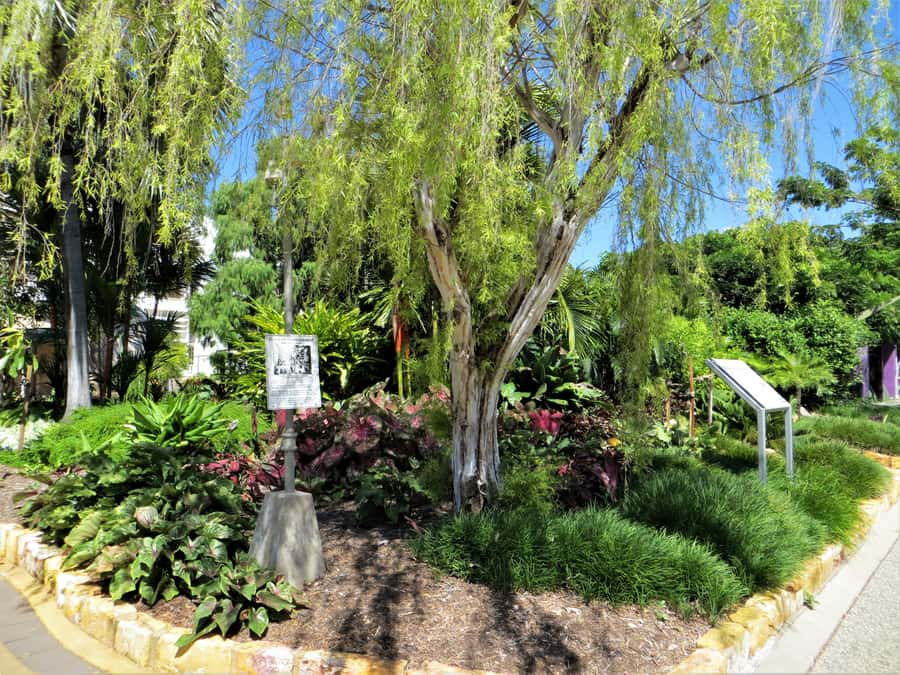
- Good photo opportunities: Look for public art, tropical greenery, old architecture, and occasional wildlife.
- Simple, useful value: At $41 per person, the tour offers two hours of guided history without transport or meal costs added on.
Starting under the John McDouall Stuart statue
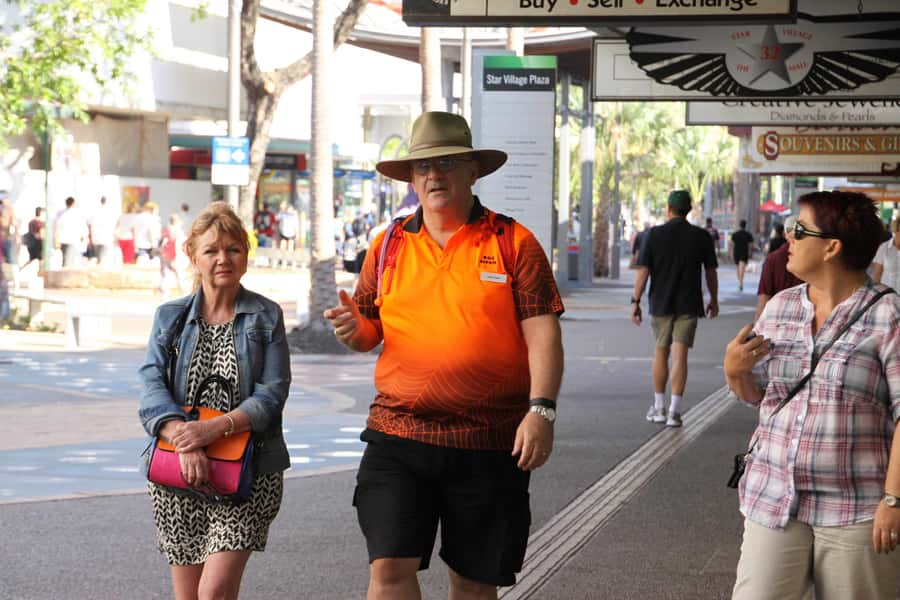
Meet under the John McDouall Stuart statue in Raintree Park. Look for the guide in a bright orange shirt, a useful touch in a city where strong sun and open spaces can make it hard to spot someone at first.
The tour begins in central Darwin and stays on foot. There is no hotel pickup, so you need to make your own way to the meeting point. At the other end, the walk finishes at the corner of Knuckey Street and the Esplanade, giving you a practical location from which to continue exploring the city.
John sets a friendly tone and keeps the walk moving at a sensible pace. The route is not designed as a forced march. It is also not a stop-and-sit sightseeing trip, so wear comfortable shoes and arrive ready to walk for the full two hours.
More History Walking Tours in Australia
- Ultimate Melbourne Walking Tour: History, Laneways & Culture
★ 5.0 · 1,451 reviews - Sydney: The Rocks 90-Minute History Walking Tour
★ 4.7 · 1,092 reviews - Discover Perth Walking Tour: History, Art, Local Insights + More!
★ 5.0 · 458 reviews
Darwin’s past is easier to grasp on foot
A bus can show you a lot of Darwin in a short time, but it rarely gives you a good sense of how close the city’s important buildings and stories are to one another. Walking lets you pause beside a wall, look closely at an old building, or frame a public artwork without viewing everything through a window.
John’s commentary focuses on how Darwin developed. You hear about the early pioneers, the World War II bombings, Cyclone Tracy, and the city’s modern multicultural character. These subjects are not isolated history lessons. Together, they explain why Darwin looks and feels different from many other Australian capitals.
The war and cyclone stories are especially important here. Darwin has faced major disruption, and the city’s surviving and reconstructed buildings help you see how it has been rebuilt over time. The walk gives those events a human scale, connecting broad dates and disasters to specific streets and structures.
The old courthouse and police station
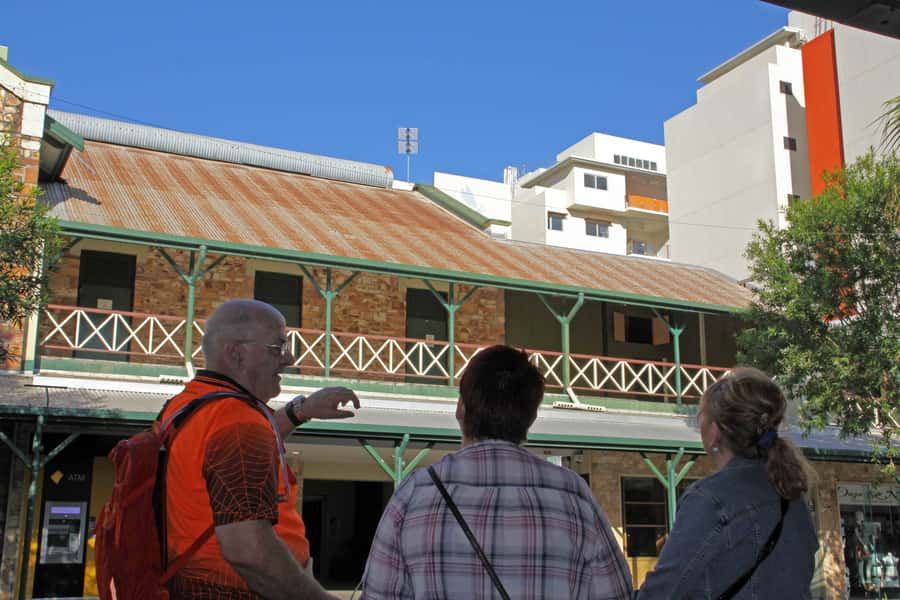
The old courthouse and police station are among the most useful stops for understanding Darwin’s earlier civic life. Their restored appearance can make them look settled and permanent, but the story of reconstruction matters just as much as the architecture.
You can examine details at street level that are easy to miss from a vehicle. John explains what these buildings represented in the developing town and how they fit into the wider story of government, law, and daily life.
This is also a good example of the tour’s basic strength. You are not just collecting exterior photos. You are getting enough explanation to understand why an ordinary-looking building deserves your attention.
Brown’s Mart Theatre and the Palmerston Town Hall ruins
Brown’s Mart Theatre adds a cultural note to the route. It is one of the older buildings associated with Darwin’s public life, and its presence helps show that the town was not only a government outpost or military location. Community life, performance, and local gatherings also shaped the city.
The Palmerston Town Hall ruins offer a different kind of stop. Ruins can be easy to walk past if nobody explains them. Here, they help show the layers of Darwin’s past and the amount of work that has gone into preserving or reconstructing important places.
You will not be touring large interiors for hours. This is an outdoor walking experience, with stops and commentary along the streets. If you enjoy architecture and small historical details, that format works well. If you want long indoor visits or extensive museum time, this is not the right choice.
More Small-Group History Tours in Australia:
- Pompeii: Small Group Tour with an Archaeologist
★ 4.8 · 12,264 reviews - London Small Group Tour of Historical Pubs
★ 5.0 · 10,422 reviews - Pompeii Small Group Tour with an Archaeologist
★ 5.0 · 6,593 reviews - Boston: Freedom Trail History Small Group Walking Tour
★ 5.0 · 6,450 reviews
Government House, Parliament House, and the Supreme Court
The route also takes in Government House, Parliament House, and the Supreme Court of the Northern Territory. These buildings show Darwin as a working capital, not just a tropical holiday base.
Government House connects the city to its colonial and administrative past. Parliament House points to the modern Northern Territory government. The Supreme Court adds another piece to the civic picture. Seen together, these places make the city’s political development easier to follow.
The value here is the contrast between formal public buildings and Darwin’s tropical setting. You get architecture, government, and local history in the same walk, rather than treating them as separate sightseeing subjects.
Do not expect entry into every building. The supplied details describe viewing these places as part of the route, not an interior tour. You should think of this section as an informed street-level look.
Public art, tropical plants, and small details
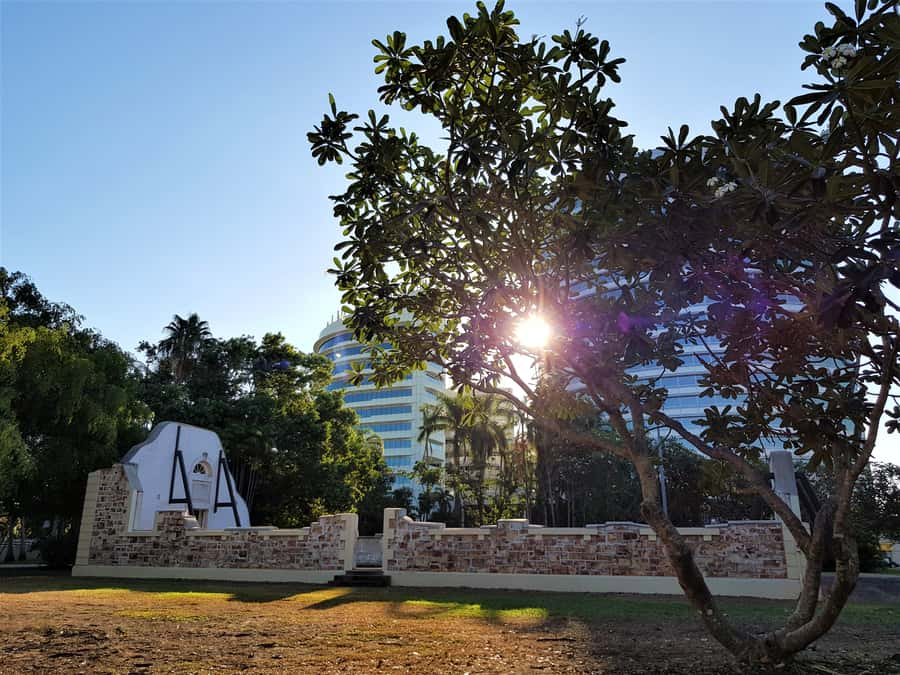
Darwin is not presented only as a collection of old buildings. The walk also leaves room for public art, modern architecture, tropical plants, and wildlife. These details give the route variety and make it more than a formal history lecture.
Bring a camera if you like visual records of a city. The combination of reconstructed structures, civic buildings, outdoor art, and tropical greenery offers plenty to photograph. You might also spot wildlife along the way, although no particular animal sightings are promised.
I like this balance. The tour gives you historical context, but you are still paying attention to the present-day city. Darwin’s multicultural atmosphere is part of the story, and the route helps connect its earlier chapters with the place you see today.
A relaxed pace, with real demands from the heat
The walk is described as leisurely, and that matches the most useful advice from past participants: John keeps the pace sensible and allows time for questions. He has also been praised for helping people stay hydrated and protected from the sun.
Still, leisurely does not mean effortless. There are not many places to stop, sit, and rest. You need a reasonable level of fitness and should be comfortable walking continuously for two hours.
Bring:
- A sun hat
- Sunscreen
- Water
- A camera
- Hand sanitizer or tissues
Wear suitable clothing and shoes. Bare feet are not allowed, smoking is not allowed, and pets cannot join the tour, except for assistance dogs. Children under 10 are not suitable for this experience.
The best time to take the walk depends on the available starting times and the conditions on the day. Check the schedule before booking, then plan around sun protection rather than assuming the short distance will make the heat unimportant.
Why the small group matters
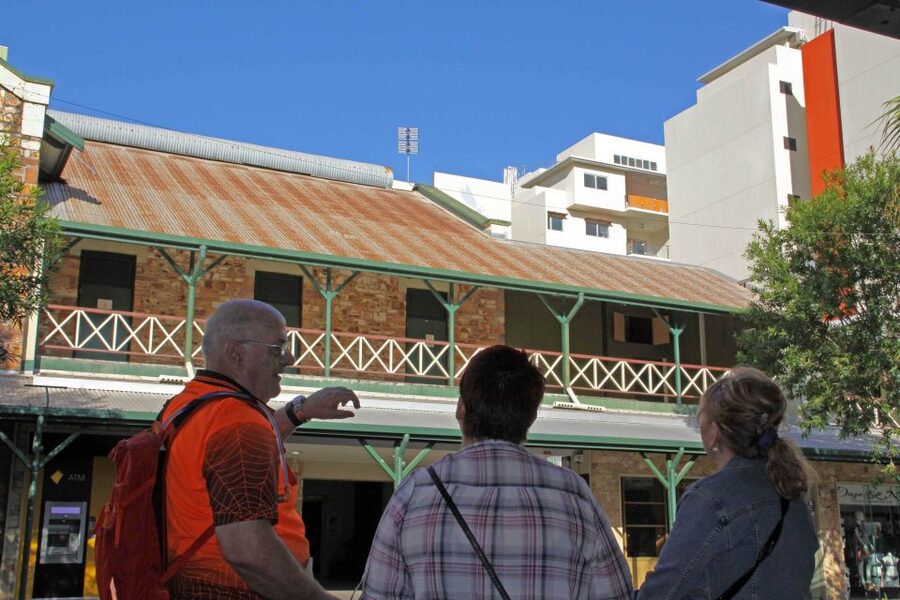
The group is limited to 10 people. That number is large enough to provide company but small enough for the guide to keep the group together on city streets.
A small group also helps with questions. John’s strength is not only delivering prepared facts, but explaining Darwin in a personal and approachable way. Several people have found the tour particularly enjoyable when the group was very small, including one outing with only two participants.
You should not count on having a private tour, since more people may book. But the 10-person limit gives you a better chance of hearing the commentary clearly and asking about details that catch your eye.
The tour requires at least two paying guests to operate. That is worth checking if you are booking alone or on a quiet date.
What $41 gets you
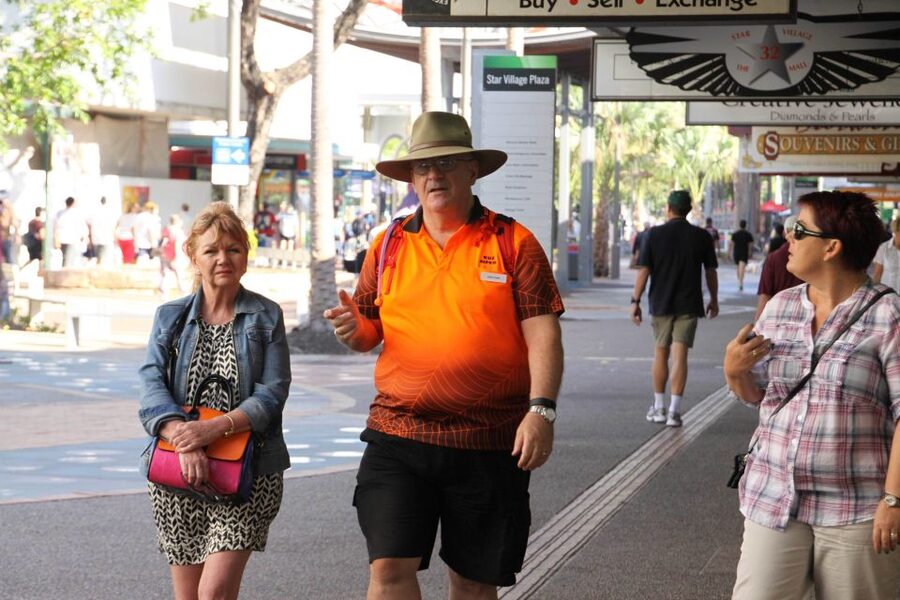
The price is $41 per person. For that amount, you receive two hours of walking, an English-speaking local guide, and live commentary.
There is no food, drink, or hotel transport included. That keeps the cost straightforward, but you need to budget for your own water and arrange your way to the starting point. Since hydration is essential in Darwin, do not treat the absence of included drinks as a minor point.
I see the price as fair if you are new to Darwin and want an informed introduction before exploring alone. The walk covers a useful mix of civic buildings, wartime history, cyclone history, public art, and present-day culture. It can also save you time by showing you which central areas deserve a closer look later.
The value is weaker if you already know central Darwin well or prefer to explore without commentary. It is also less suitable if you want a long museum visit, a seated tour, or transport between scattered sights.
You can cancel up to 24 hours before the start for a full refund, and the reserve-now, pay-later option gives you some flexibility while arranging your plans.
Who should book this experience
I would choose this walk early in a Darwin visit. It gives you a useful orientation and helps you understand why the city has its particular mix of government buildings, reconstructed sites, war memories, tropical surroundings, and multicultural life.
It suits:
- First-time visitors to Darwin
- History fans interested in WWII and Cyclone Tracy
- People who prefer walking to bus sightseeing
- Photographers looking for architecture and public art
- Visitors with only a short time in the city
- Anyone who enjoys asking a local guide practical questions
It is less suitable for young children under 10, anyone with limited walking fitness, or people who need frequent seated breaks. English is the only tour language, so you should be comfortable following spoken commentary in English.
Final verdict: a smart first look at Darwin
Book this tour if you want Darwin explained through its streets rather than reduced to a list of attractions. John’s personal approach, the manageable pace, and the small group make it a strong introduction to the city.
Bring water, sunscreen, a hat, and comfortable shoes. Keep your expectations focused on an outdoor historical walk, not a series of lengthy building entries. If that suits you, $41 is a sensible price for two hours of context and local guidance.
FAQ
Where does the Darwin heritage walk begin?
It begins under the John McDouall Stuart statue in Raintree Park. Your guide wears a bright orange shirt.
Where does the tour finish?
The walk finishes at Knuckey Street and the Esplanade in Darwin City, Northern Territory.
How long does the tour last?
The tour lasts two hours.
What language is the tour conducted in?
The live commentary is provided in English only.
How many people can join the tour?
The group is limited to 10 participants.
How many people are needed for the tour to operate?
At least two paying guests are required for the tour to operate.
What historic places can I see?
The route includes the old courthouse and police station, Brown’s Mart Theatre, the Palmerston Town Hall ruins, Government House, Parliament House, and the Supreme Court of the Northern Territory.
Is the tour suitable for children?
Children under 10 are not suitable for this experience.
What should I bring?
Bring a sun hat, sunscreen, water, a camera, and hand sanitizer or tissues. You should also wear suitable footwear, since this is a two-hour walking tour.
More Two-Hour Tours in Australia
- Berlin’s Best: 2 Hour Walking Tour Third Reich and the Cold War
★ 5.0 · 5,486 reviews - 2-Hour Gettysburg Battlefield Guided History Bus Tour with a National Park Guide
★ 4.5 · 2,201 reviews - Kyoto Gion: 2-Hour Geisha Culture & History Walking Tour
★ 5.0 · 1,186 reviews - 2 Hour LoDo Historic Walking Tour in Denver
★ 5.0 · 1,106 reviews
Just added around Australia
- Authentic Indigenous Cultural Tour Including Scenic River Cruise★ 5.0 · 88 reviews
- Cairns History Walking Tour★ 5.0 · 52 reviews
- Entry Ticket at Historic Village Herberton★ 5.0 · 114 reviews
- Self-Guided Ngilgi Cave Ancient Lands Experience★ 4.5 · 154 reviews
- Hinterland Heritage Wine Tour★ 4.0 · 28 reviews
- Albany’s Historic Whaling Station Admission Ticket★ 4.5 · 86 reviews
- 7 Day Adelaide to Uluru Adventure and Cultural Tour★ 5.0 · 52 reviews
- Sydney Convicts, History & The Rocks 2.5-Hour Walking Tour★ 4.9 · 181 reviews
Australia History Tours, compared.

Ultimate Melbourne Walking Tour: History, Laneways & Culture
Read our review →
Puffing Billy Railway: Heritage Steam Train Journey
Read our review →
Morning World Heritage Cruise on the Gordon River from Strahan
Read our review →
Strahan: World Heritage Cruise on Gordon River with Lunch
Read our review →
Sydney: The Rocks 90-Minute History Walking Tour
Read our review →
Experience History onboard The Mary Valley Rattler
Read our review →
Snorkel & Dive the Reef: Sustainable, Scientific & Cultural Tour
Read our review →
Derwent River Historic Harbour Cruise From Hobart
Read our review →Browse the lists this tour appears in