
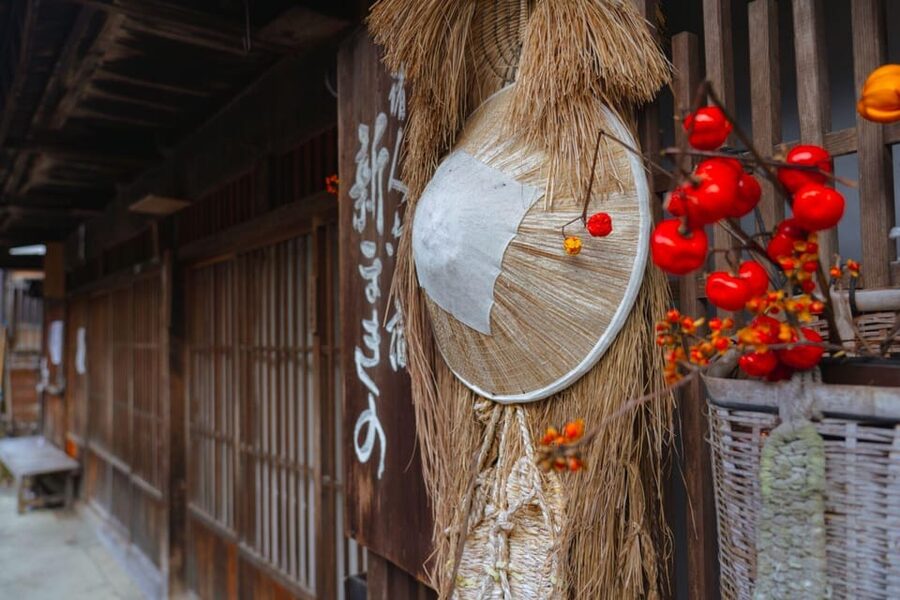
Review · JAPAN
1-Day Tour from Nagoya: Hiking the Historic Nakasendo Trail
The best part of this day is the change of pace. You leave Nagoya’s city streets, ride into the mountains, and walk an old road linking two beautifully preserved post towns. Tsumago feels like an Edo-period village, while the trail itself brings quiet woods, streams, waterfalls, and long mountain views.
I like the small group limit of 14, since it lets guides such as Kim, Mir, Paula, and others adjust the pace and explain the old road without shouting over a crowd. I also like the simple logistics: a comfortable bus, a clear meeting point at Nagoya Station, and a route that combines culture with a proper walk. The main drawback is the long day on your feet, with more than 8 kilometers of walking, hills, mud, and slippery rocks.
Key points at a glance
- Walk between two preserved post towns: Follow the historic route from Tsumago-juku to Magome-juku.
- Expect a real mountain walk: The trail takes about three hours and includes elevation changes, uneven ground, and possible mud.
- Small groups make a difference: The tour is limited to 14 people, with room for questions and a flexible walking pace.
- Pack your own lunch: Food choices are limited during the hike, so buy a bento before meeting the group.
- Enjoy multilingual guiding: English, Spanish, and French options are available.
- Allow for long bus rides: The drive takes about two hours each way, with a bathroom stop on the outward journey.
Why the Nakasendo Trail feels different from a city day trip
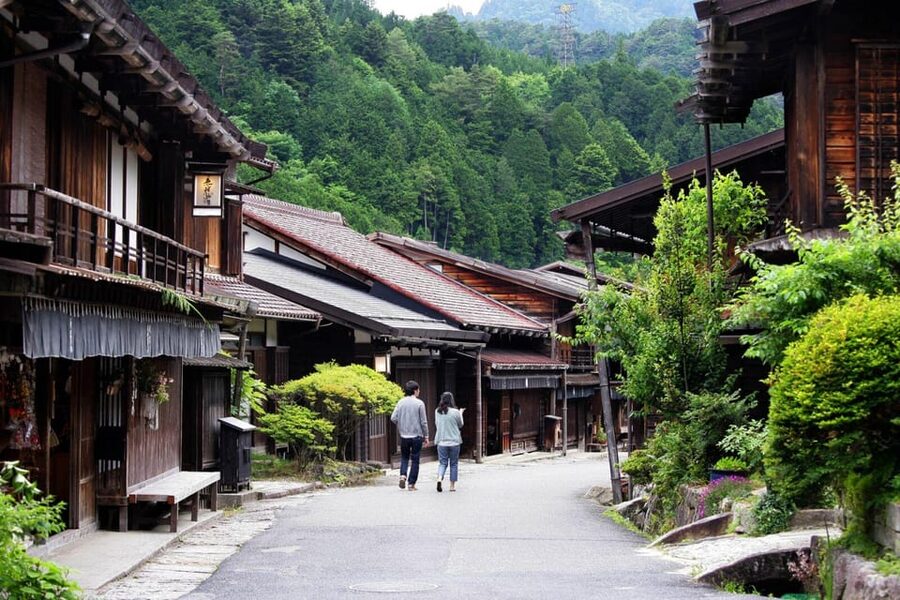
The Nakasendo was one of the historic routes across Japan during the Edo period. The section between Tsumago and Magome is now one of the country’s best-known walking routes, but it does not feel like a standard sightseeing circuit.
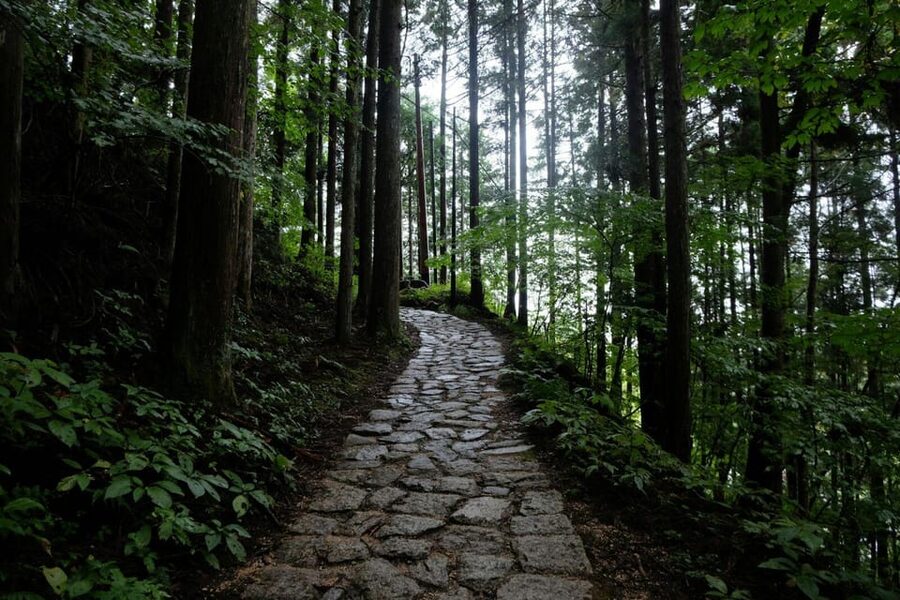
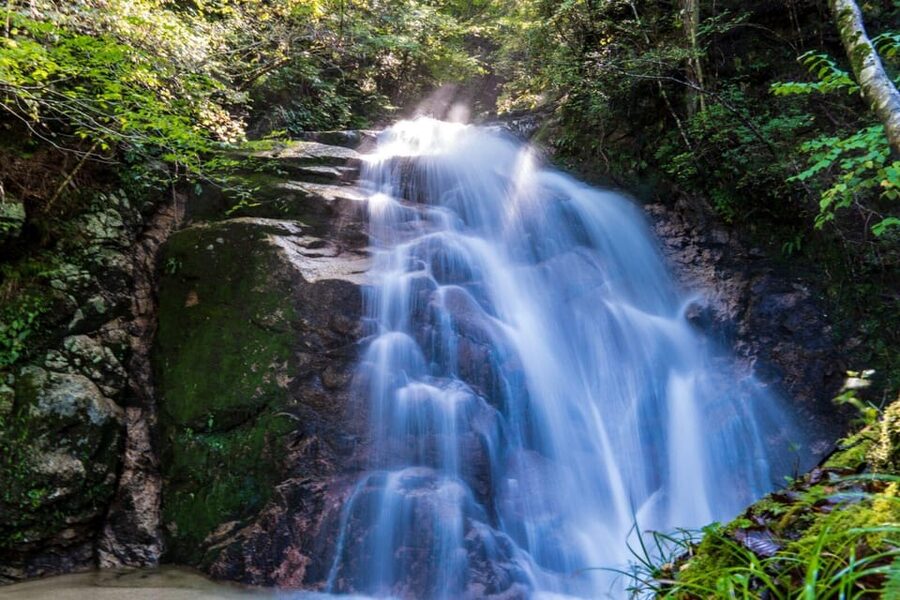
You are not simply driven to a viewpoint, shown a temple, and returned to town. You walk through cedar and broadleaf forest, cross quiet sections of old road, and pass small streams and waterfalls. The appeal is the steady change from built-up streets to rural paths and back again.
That combination makes this a good choice if you want more than a quick visit to Magome or Tsumago. The towns provide the history and architecture. The trail gives you the slower experience of moving through the same mountain corridor on foot.
You should also set your expectations correctly. This is not a gentle stroll. The route covers about 8 kilometers and includes uphill sections, uneven surfaces, mud, and slippery rocks. The trail is described as manageable rather than especially difficult, but your shoes and fitness still matter.
More Walking and Hiking Trips in Japan:
- Rio: Tijuca Forest Small Group Hike to Caves and Waterfalls
★ 4.9 · 536 reviews - Antalya: Hiking in Termessos Ancient City
★ 5.0 · 152 reviews - Nepal Discovery Tour: Heritage Sites & Scenic Hill Easy Hike
★ 5.0 · 121 reviews
Meeting at Nagoya Station at 9:30
The tour begins at the silver clock tower inside Nagoya Station, near the Shinkansen gates. If you arrive by bullet train, the clock should be directly ahead as you leave the gates.
Coming from a regular JR line, follow signs for the Taiko-Dori Gate. The silver clock is inside the station just before that exit. If you enter from outside through the Sakura-Dori side, the side with the gold clock, walk across the station toward Taiko-Dori.
This sounds simple, but Nagoya Station is large and easy to misread when you are carrying luggage or watching the time. I would arrive early and wait near the silver clock for the guide holding a Snow Monkey Resorts tour sign. The meeting point is inside the station, not at a street-level bus stop.
The early start gives you a full day, but the tradeoff is a long ride before the walking begins. The trip to the trail takes about two hours. There is a bathroom stop along the way, though you should be prepared to spend a substantial part of the morning seated on the bus.
Tsumago-juku: a careful step back in time
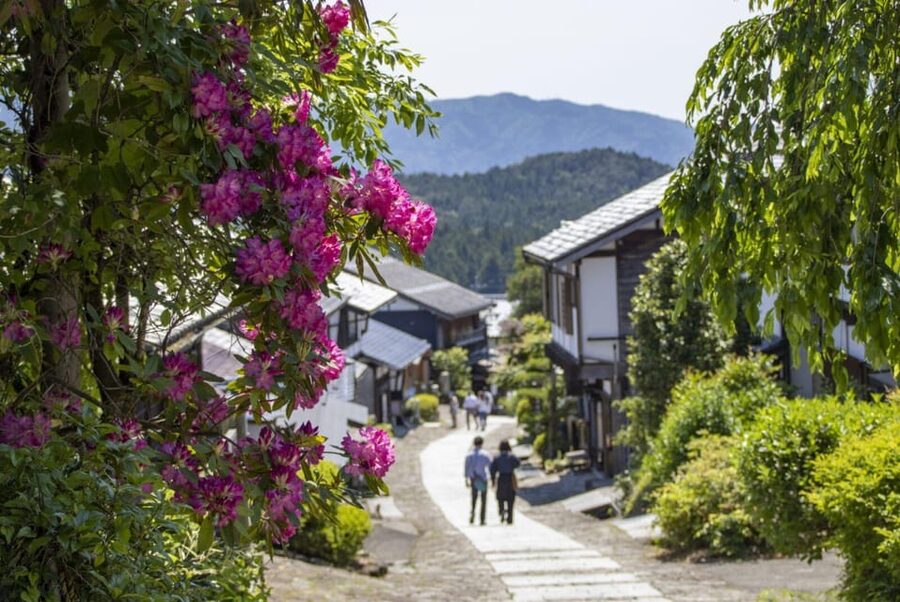
Tsumago is the first major stop, and it sets the tone for the day. This former post town has preserved its old street frontage and traditional buildings with unusual care. Instead of feeling like a modern shopping street dressed up for tourists, it gives you a clearer sense of how a post town once served people moving along the road.
The guided visit lasts about 45 minutes before the hike continues. Your guide can explain what life was like for people traveling or living along the old Samurai Roads during the Edo era. Historical context matters here because the buildings alone cannot tell you who used them or why the towns were built in this pattern.
You may enter historical buildings during the town visit. Take time to notice the wooden facades, narrow street, and quiet scale of the place. Tsumago is a highlight for visitors who prefer old architecture and atmosphere to large attractions.
The stop is not only a photo opportunity. It is your introduction to the road itself. Once you leave the town on foot, the route feels less like a preserved exhibit and more like a real connection between communities.
Three hours through forest, streams, and mountain country
The hike from Tsumago to Magome takes around three hours and covers approximately 8 kilometers. The exact feel of the walk will depend on weather, trail conditions, and the pace of your group.
The route passes through forest, along small streams, and past waterfalls. You might also see signs of wildlife. Bells along the route are part of the trail experience, and one recent spring outing was happily free of black bears, though the bells added a reminder that this is a mountain walk rather than a paved town promenade.
This is where the small group format earns its keep. A guide can set a sensible pace, pause for explanations, and help the group manage the steeper parts. One guide, Kim, has been praised for clear historical explanations and practical help. Mir has brought a strong interest in the trail’s past, while Paula has guided the walk alongside Kim. The individual guide can vary, but the tour offers English, Spanish, and French options.
You should wear proper walking shoes or boots. Trainers may be fine in dry conditions, but the information for this tour specifically warns about mud and slippery rocks. The elevation changes are significant enough that thin city shoes will make the day harder than it needs to be.
A packed lunch is important. There are limited lunch choices along the walking section, and time is set aside to eat on the trail. Buy a bento or other food before the tour begins. This is one of those small preparations that keeps the day comfortable.
Summer deserves extra caution. Temperatures can reach 35 degrees Celsius or higher, with heavy humidity. Choose light clothing, protect yourself from the sun, and carry what you need to manage heat. In cooler months, the forest setting can feel very different, especially when the air is crisp and the trail is damp.
More Day Tours in Japan:
- Kyoto: Fushimi Inari, Kinkakuji, Bamboo Grove 1 Day Bus Tour
★ 4.8 · 4,316 reviews - Miyajima Half-day Trip Historical Walking Tour
★ 5.0 · 284 reviews - From Tokyo: Nikko World Heritage Site Private Full-Day Trip
★ 4.9 · 243 reviews - Tokyo: Nikko World Heritage Private Day Trip Hotel Pick-up
★ 4.8 · 145 reviews
Magome-juku: a lively finish to the old road
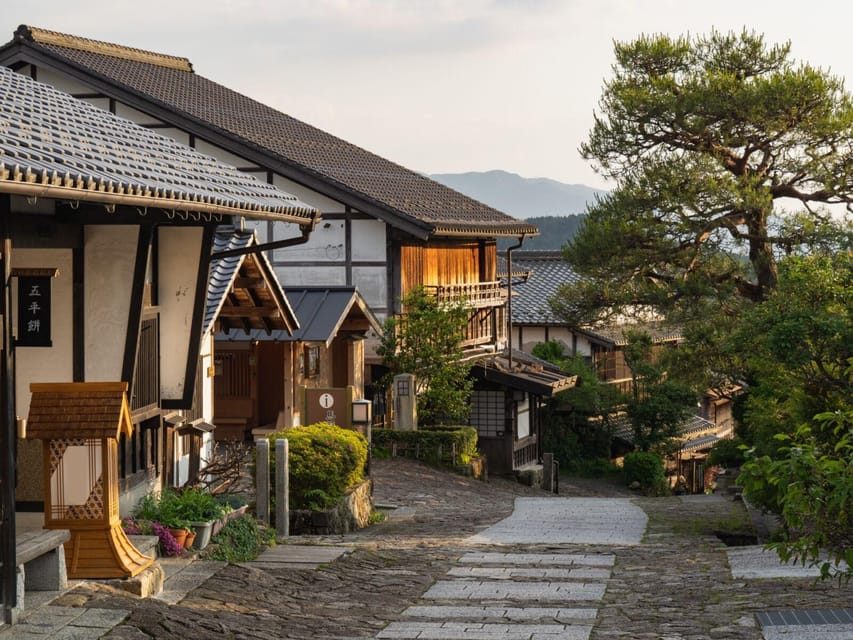
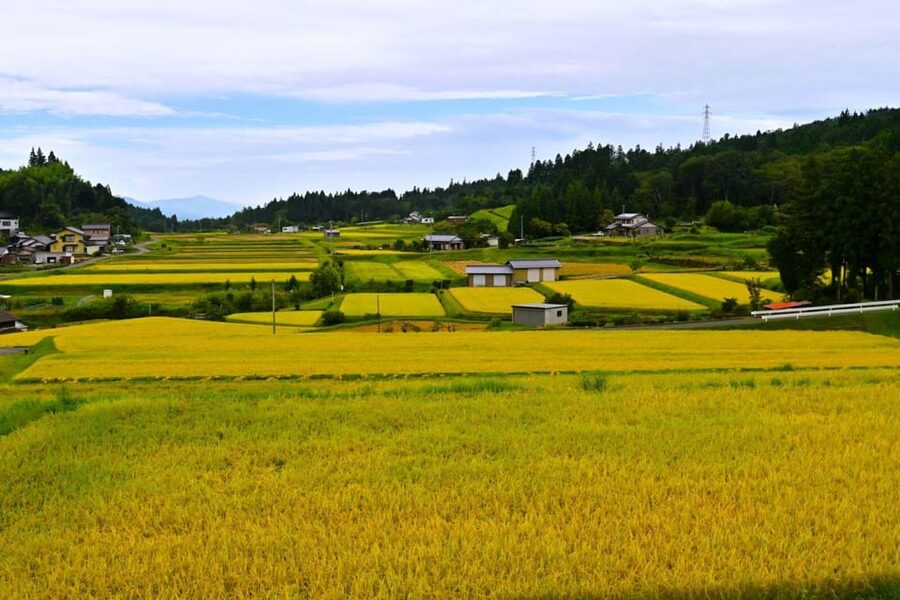
The walk ends at Magome-juku, another historic post town on the Nakasendo. Magome is built along a sloping street, with traditional wooden buildings, small shops, and views toward the valley.
After the quiet forest, Magome feels more active and commercial than Tsumago. That is not necessarily a flaw. It gives you a chance to buy a snack, browse handmade crafts, and look for local specialties after several hours outdoors.
The planned visit includes guided time and free time, with roughly 45 minutes listed for this part of the day. Use it to explore at your own pace, take photographs, or simply sit with a drink and let your legs recover. The limited time means you will not be able to inspect every shop, but it is enough to get a feel for the town.
Magome can be especially satisfying because you arrive on foot. You have not simply been dropped beside the old street. You have approached it through the woods, following the route that connects the two towns. That gives the final stop a stronger sense of place.
What $189 buys you
At $189 per person, this is not the cheapest way to see Tsumago and Magome. The value comes from what the price removes from your planning list.
You receive round-trip transport from central Nagoya, a guide, and the connection between two rural places that are less convenient to visit independently. The bus ride also saves you from working out a complicated combination of trains and local connections. For a one-day outing from the city, that convenience matters.
The small group limit of 14 adds practical value. You are not being moved through the towns as part of a large coach crowd, and the guide can respond to different walking speeds. The company has also kept tours running with very small numbers, including a day with only two participants. That can be reassuring if you are booking outside the busiest periods.
Lunch is not included, and neither is transport from your hotel to Nagoya Station. You also pay for any snacks, shopping, or food in Magome. The price makes the most sense for someone who values a guided walk and reliable transport more than the lowest possible cost.
How hard is the walk?
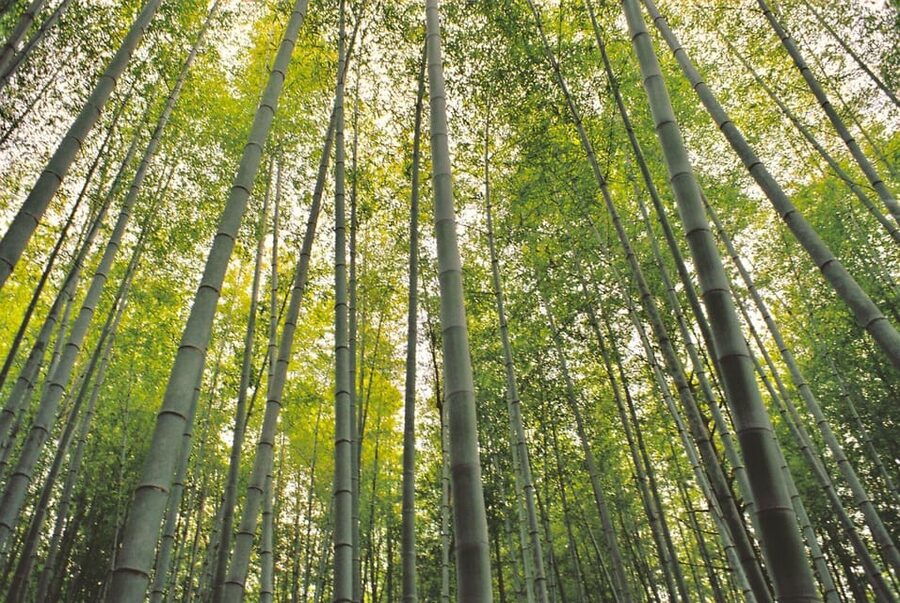
You need a reasonable level of walking fitness. The distance is over 8 kilometers, and the trail includes hills, uneven ground, mud, and slippery stones. It is not presented as a technical hike, but it is more demanding than a flat urban walking tour.
The pace can be adjusted in a small group. A guide slowed the walk for two people in their mid to late 60s, allowing them to complete the route at a comfortable speed. That does not remove the physical effort, but it shows why a small party can be useful.
The standard hiking option is not suitable for small children according to the tour information. One family did complete the route with a two-year-old using a backpack carrier, but that should not be treated as the normal arrangement. If you have young children or mobility concerns, choose the non-hiking option at checkout.
The non-hiking version still includes Tsumago and Magome. Your guide tours Tsumago, then the hikers continue along the trail while you have free time in the town. You later continue by vehicle to Magome, where you can eat, shop, and explore before meeting the hiking group for the return journey.
That option is also worth considering if an injury changes your plans. A group with an ankle problem was accommodated with more time in the towns and a traditional lunch. Availability and arrangements can vary, so you should select the appropriate option from the start or contact the operator if your condition changes.
Weather, clothing, and what to carry
Your most important item is a packed lunch. Buy it before the tour begins, since the trail has limited food options and the schedule allows you to eat outdoors.
Wear shoes with a good grip. The trail may be muddy or slick, and the hills can make a poor pair of shoes a painful mistake. Light, breathable clothing works best in summer, when the combination of heat and humidity can be severe.
Check the forecast before leaving Nagoya. The scenery is a major part of the day, but weather also affects footing and comfort. You should also bring protection from sun and heat in summer, while cooler periods call for layers suitable for several hours outside.
The return bus leaves after time in Magome and brings you back to Nagoya Station. The drive takes about an hour and a half. After the walk, that seated ride is welcome, though the full day will be tiring.
Who should book this Nakasendo day trip?
I would choose this tour if you want a rural side of Japan without giving up the convenience of returning to Nagoya the same day. It suits people who enjoy history, quiet mountain paths, old wooden towns, and a moderate physical challenge.
It is also a strong option for solo visitors or couples who do not want to plan rural transport. The guide adds context that you would miss by simply wandering through Tsumago and Magome, and the small group leaves room for questions.
I would think twice if you dislike long bus rides, hot weather, or walking on uneven trails. This is not a relaxed sightseeing loop. The bus takes about four hours of the day in total, and the hike requires proper shoes, lunch planning, and enough stamina for hills.
The overall rating is 4.9 from 34 ratings, with especially strong praise for the guides, the comfortable transport, the sensible walking pace, and the mix of nature and history. Those are exactly the areas that matter most here.
Should you book it?
Book this tour if you want to walk between Tsumago and Magome rather than simply photograph both towns from a bus. The trail is the heart of the experience, and the guide’s historical explanations make the old road easier to understand.
Choose the non-hiking version if you have mobility limits, young children, or doubts about managing 8 kilometers. For everyone else, bring lunch, wear solid shoes, arrive early at the silver clock, and expect a long but rewarding day beyond Nagoya.
FAQ
Where does the tour meet in Nagoya?
Meet at the base of the silver clock tower inside Nagoya Station, near the Shinkansen gates. The guide will be holding a Snow Monkey Resorts tour sign.
What time does the tour begin?
The guide meets the group at 9:30 A.M. You should arrive early because Nagoya Station can be crowded.
How far is the hike?
The hiking route from Tsumago-juku to Magome-juku is approximately 8 kilometers and takes about three hours.
Is lunch included?
No. Lunch is not included, and food choices are limited along the trail. Buy a bento box or other food before the tour starts.
What languages are available?
The tour is offered with a live guide in English, Spanish, or French.
How large is the group?
The tour is limited to 14 participants.
How long is the bus ride?
The drive from Nagoya to the trail takes about two hours. The return drive from the Magome area to Nagoya takes about one and a half hours.
Is there a non-hiking option?
Yes. The non-hiking option includes a guided visit to Tsumago, free time there, transport to Magome, and free time for lunch, shopping, and sightseeing before returning to Nagoya.
Can I cancel the booking?
You can cancel up to 24 hours in advance for a full refund. The reserve-now, pay-later option is also available.
Just added around Japan
- Private sake pairing@ancient underground★ 5.0 · 27 reviews
- Tokyo: Asakusa & Sensoji ー Oldest Temple Walking Tour (2hrs)★ 5.0 · 213 reviews
- [30 minutes] Rickshaw tour around Asakusa [History, sightseeing, Tokyo Skytree]★ 5.0 · 38 reviews
- Tokyo: Edo Castle & East Garden of the Imperial Palace Tour★ 4.7 · 112 reviews
- Tokyo: Imperial Palace, the history of Japan (ENGLISH GUIDE)★ 5.0 · 77 reviews
- Tokyo: Customized Private Historical Guided Photoshoot Tour★ 5.0 · 25 reviews
- Osaka: Dark Side of Osaka Night Walking Tour★ 4.9 · 89 reviews
- Osaka: Osaka Castle & Historical Museum Guided Tour★ 4.8 · 28 reviews
Japan History Tours, compared.
Kyoto: Fushimi Inari, Kinkakuji, Bamboo Grove 1 Day Bus Tour
Read our review →
World Heritage Shirakawa-go and Experience Tours from Kanazawa
Read our review →
Tokyo: Imperial Palace and Shogun Historical Walking Tour
Read our review →
World Heritage Kyoto & Nara Uji Authentic Matcha Experience
Read our review →
Kyoto Gion: 2-Hour Geisha Culture & History Walking Tour
Read our review →
Tokyo Castle & Imperial PalaceーShogun Walking Tour
Read our review →
Kanazawa: World Heritage Shirakawa-go Morning Guided Tour
Read our review →
Tokyo: Imperial Palace Japanese History Walking Tour
Read our review →Browse the lists this tour appears in