
Review · ITALY
Milan: Fresh Pasta and Tiramisù Class in A Historical Home
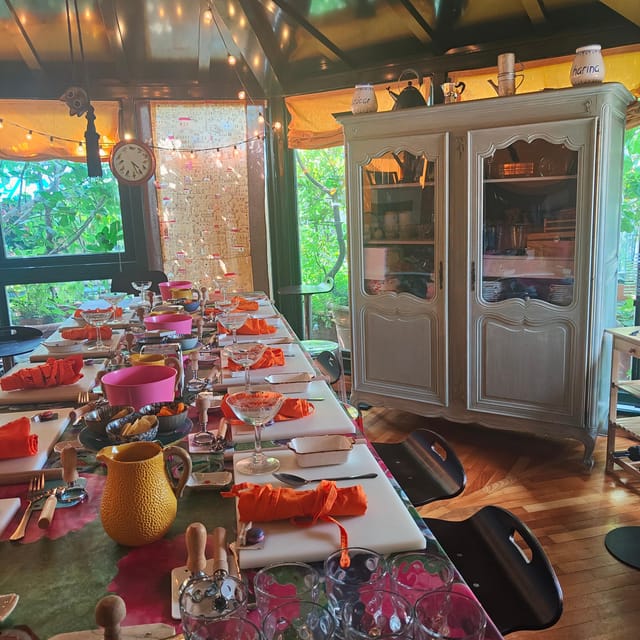
Milan’s best cooking class may begin not in a restaurant kitchen, but in an art-filled family home near the center of town. Over three hours, you make tagliatelle, ravioli, and tiramisu, then sit down to eat what you prepared with wine and homemade limoncello.
I like the family connection behind the class. The recipes come from Grandma Bruna, and her daughter and grandchildren, including Caterina, Federico, and Luca, lead sessions when she is not teaching. I also like the setting: antique furnishings and 16th-century paintings give the meal a sense of place that a standard cooking studio cannot match.
The main consideration is group size. Some sessions have held 17 or 18 people, so you may not receive constant one-on-one help. The class is organized for a crowd, though, and the instructors keep the mood friendly and inclusive.
What makes this Milan pasta class worth your time
- You cook three Italian classics: Make tagliatelle with tomato sauce, ravioli with butter and sage, and traditional tiramisu.
- The class takes place in a private historic home: Antique furniture and 16th-century paintings turn the setting into part of the experience.
- Family recipes shape the lesson: Grandma Bruna’s cooking tradition is carried on by relatives such as Caterina, Federico, and Luca.
- You eat a full meal afterward: Wine, water, limoncello, pasta, ravioli, and dessert are included.
- The class suits mixed language groups: Instruction is available in English, Italian, French, Spanish, Persian, and Hebrew.
- You leave with practical follow-up material: Recipes are sent by email so you can repeat the dishes at home.
Walking into a Milanese family home
The meeting point is at Via Dezza 47, in Milan’s central Designer and Fashion area. The property is near the blue subway line at Coni Zugna, Via Foppa, with an escalator exit close to the building. Sant’Agostino on the green line is about 500 meters away.
Pay close attention to the address. It is in Milan, not another Italian city with a similar activity name. The final meeting instructions are sent the day before, so check those details before setting out. The activity ends at the same place.
The location is useful for a cooking class because you can reach it by public transportation and return to central Milan afterward. The provided information places it roughly 20 minutes on foot from Duomo Square, while another description gives a shorter walking estimate. Allow extra time and use the Via Dezza address rather than relying on a general city-center pin.
The home itself is part of the lesson. You are not simply entering a room with stainless steel counters and commercial equipment. You cook among antique furniture and paintings connected to the family’s Palladian palace. The surroundings give you something to look at while dough rests or pasta cooks, and they help explain why this class feels more personal than a basic kitchen workshop.
Photography is allowed, and bringing a camera makes sense. You are visiting a private home with fine furnishings, so treat the setting with care and ask before photographing people or particularly delicate objects.
A few more history tours around Italy worth a look
- Rome: Five Shapes of Pasta Cooking Class in Ancient Tavern
★ 5.0 · 102 reviews - Homemade Pasta in a Peaceful Medieval Village
★ 5.0 · 44 reviews
Three hours of hands-on cooking
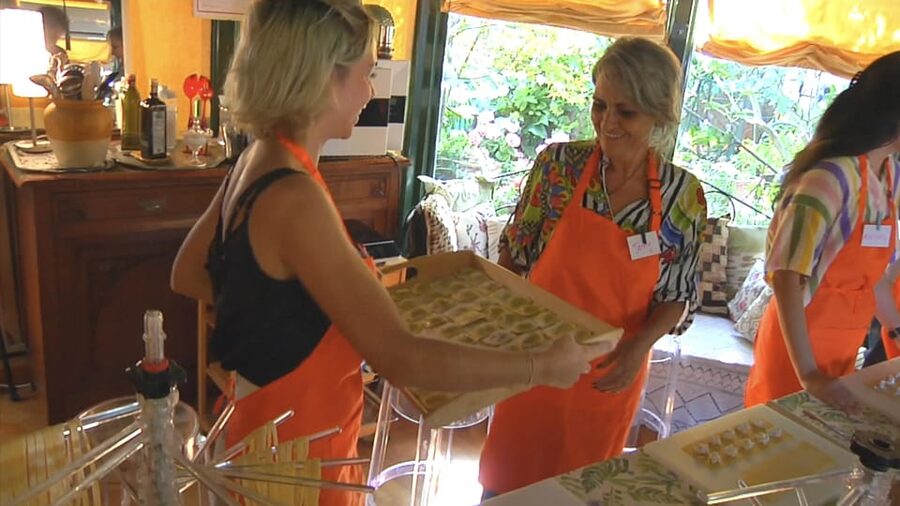
The class is built around participation, not a long demonstration followed by a tasting. You work with the ingredients and tools provided, wear an apron, and follow the instructor through the preparation.
The exact order can vary. In one session, the tiramisu was prepared first and placed in a flash freezer while the pasta was made. That is a sensible plan: the dessert has time to set while you work on the dough, and you get to eat it at the end.
Expect the chef to explain basic techniques as you go. The instructors show how to mix and cut pasta, when to add ingredients, and how to choose suitable toppings and sauces. The lesson also includes some background on pasta and the family’s cooking traditions, so you get more than a list of measurements.
The class has been led by several members of the family and cooking team. Caterina, Bruna’s granddaughter, is described as funny and energetic. Federico is especially good at getting a group talking and helping people relax. Luca has handled larger groups with a calm, organized approach, while Francesca has taught in English and French. Your instructor depends on the date, but the format is designed to work with different teaching personalities.
Several classes have included around 17 or 18 people. That is large for an intimate home lesson, but it also gives the activity a social side. You are likely to share a table with people from different countries and cooking backgrounds. If you prefer a quiet, private lesson with constant individual correction, this may feel busy. If you like meeting people while doing something practical, the group format works in its favor.
Tagliatelle, tomato sauce, and the feel of fresh dough
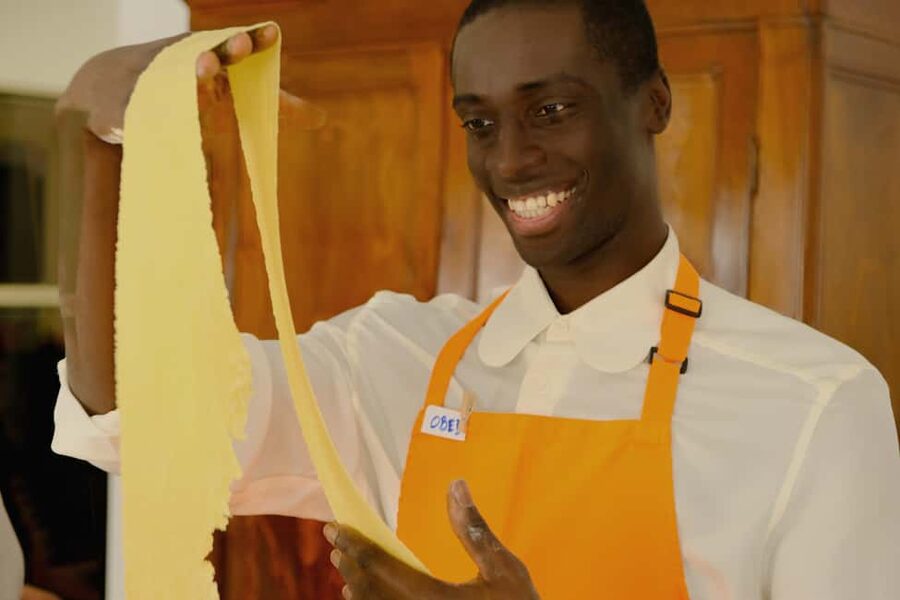
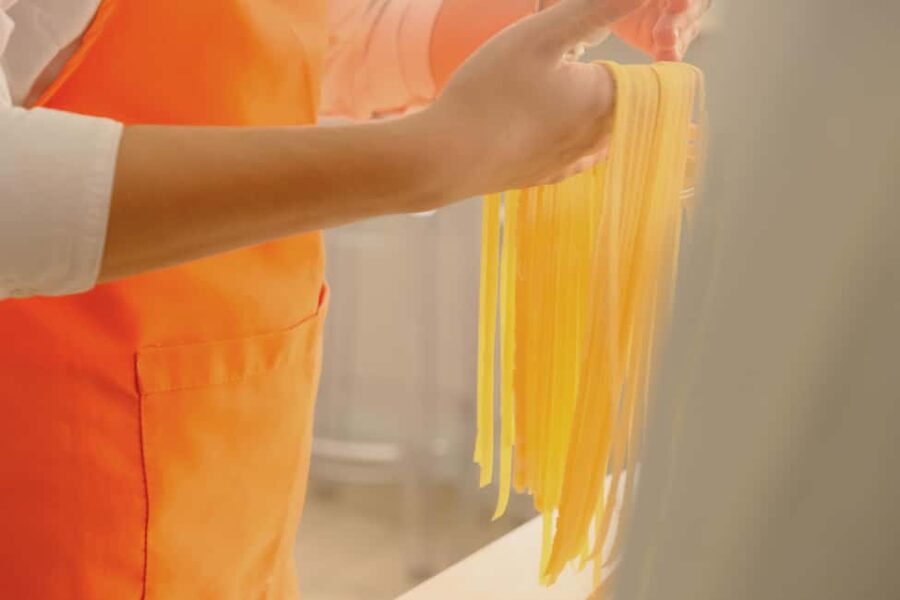
The first pasta is tagliatelle, a broad ribbon pasta that is approachable for beginners. You learn the basic process of turning simple ingredients into dough, then rolling and cutting it into strands.
Fresh pasta rewards patience more than fancy equipment. The useful lesson is learning the texture of the dough and how to handle it without overworking it. These are skills you can repeat at home with modest tools, especially since all equipment is supplied during the class.
Tagliatelle is served with tomato sauce. The dish is familiar, but making the pasta yourself changes the experience. Fresh noodles have a different texture from dried pasta, and the sauce gives you a straightforward first plate before moving on to the more involved ravioli.
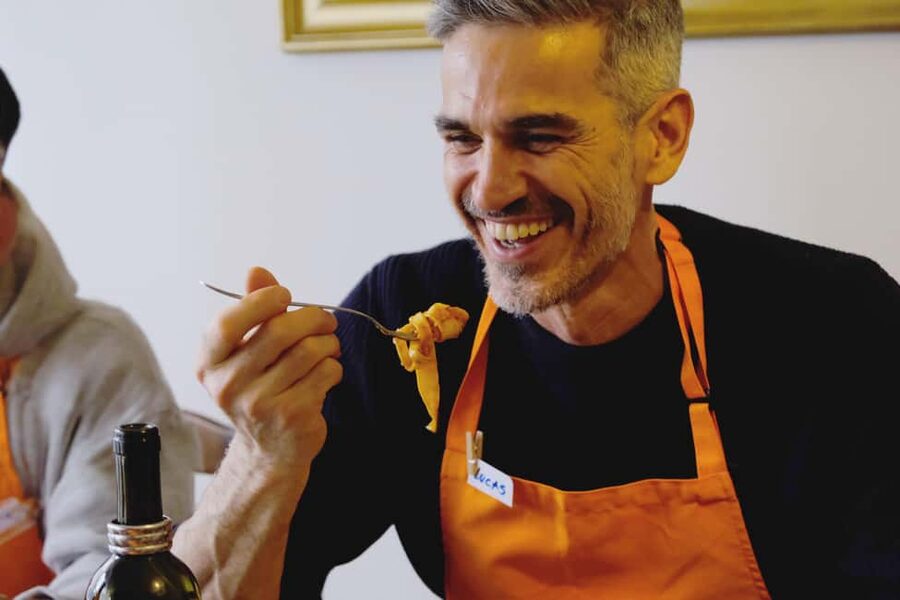
This part of the class is also where a good instructor matters. Federico, Luca, Caterina, and the other chefs are praised for explaining the steps clearly, using humor, and keeping everyone involved. In a group of this size, listen closely during demonstrations, then ask for help when you need it.
Ravioli with butter and sage
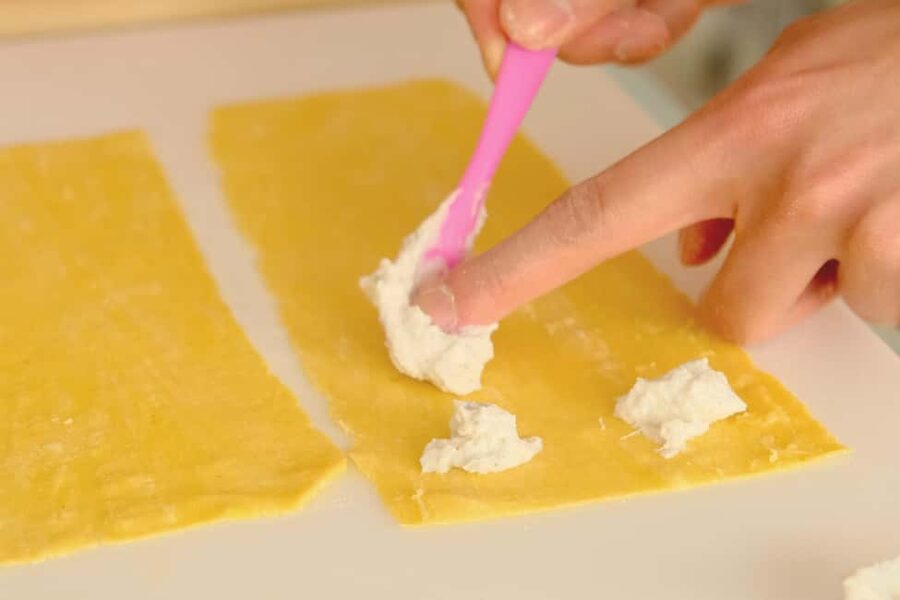
Ravioli brings a little more precision. You fill the pasta, seal it, and shape it so the filling stays inside during cooking. The butter and sage sauce is simple, which is useful because it lets the filled pasta do most of the work.
I like this dish as a take-home skill. You do not need a long ingredient list or a complicated sauce to make a satisfying plate. The important points are sealing the edges well, avoiding too much filling, and handling the dough gently.
The finished ravioli is served as part of the meal. Several classes have specifically praised the ravioli, and some participants have considered it the strongest dish of the session. That makes sense: it is the preparation that feels most different from everyday dried pasta, yet the instructor breaks it into manageable steps.
Do not worry if your first ravioli is not perfectly shaped. The purpose is to learn the method, not to produce a plate for a cooking competition. You will have help, and the shared meal keeps the focus on enjoyment rather than precision.
More Workshops and Classes in Italy:
- Syracuse: Traditional Cooking Class & Ancient Market Visit
★ 4.9 · 72 reviews - Rome: Ancient Mosaic Making Workshop
★ 5.0 · 29 reviews - Cooking Class in a Historic Home in the Heart of Brindisi
★ 4.7 · 28 reviews - Sicilian cooking class in the historic baglio Florio Adamo
★ 5.0 · 27 reviews
Tiramisu first, dessert later
The tiramisu is made during the class and served at the end. Preparing it early gives the dessert time to chill while you work on the pasta.
The lesson focuses on the traditional soft texture and classic Italian method. Tiramisu often looks more complicated than it is, and the class presents it as a dessert you can reasonably repeat at home. You receive the recipes by email after the class, which is more useful than a paper card that can disappear into your luggage.
The dessert is part of a full meal rather than a small sample. After making the pasta, you sit down to eat tagliatelle, ravioli, and tiramisu. That makes the price easier to assess: you are paying for instruction, ingredients, equipment, drinks, and dinner, not just a short demonstration.
Wine, limoncello, and the shared table
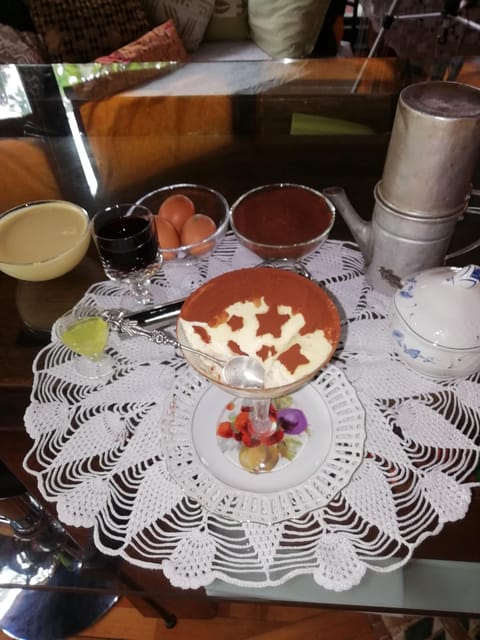
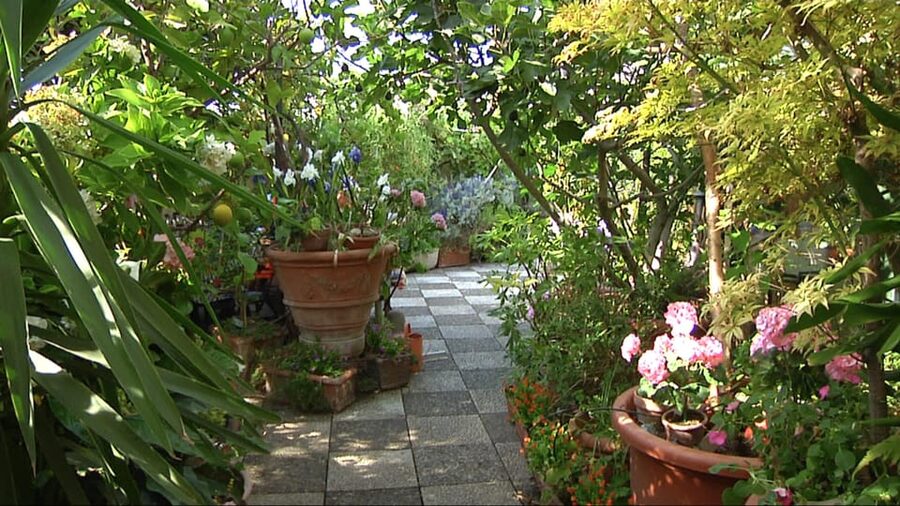
The meal includes water and either white wine, listed as one quarter of a bottle per person, or a soft drink. You also receive limoncello made with lemons from the host’s terrace.
The limoncello is a small but memorable touch. It adds a family detail to the meal and gives the instructor an easy opening to explain the drink and where to buy it. If you do not drink alcohol, the soft drink option is available, but the wine and limoncello are included for those who want them.
Some people would prefer more wine, especially during a three-hour evening class. The listed amount is modest, so do not treat this as a wine tasting. It is a cooking lesson with drinks served alongside dinner.
The meal also gives you time to talk with the other participants. The instructors make a point of breaking the ice, and that matters in a class where everyone is handling the same dough and waiting for the same dishes to cook. The social element is not forced, but you should expect a communal atmosphere rather than a private table.
What the price includes at $84.96
At $84.96 per person, the class sits above a simple pasta demonstration but offers more in return. You receive three hours of instruction, all ingredients and tools, an apron, a full meal, wine or a soft drink, water, limoncello, and recipes afterward.
The value is strongest if you want both a meal and a skill. You are not just eating pasta in an attractive room. You are learning two pasta preparations and a dessert, then getting the chance to taste the results.
The setting also affects the value. A meal in a private Milanese home filled with family art is a different proposition from a standard cooking school. The paintings and antiques do not improve the pasta itself, but they make the time feel tied to Milan and the host family.
There are a few limits. A large group means less personal attention, and the wine portion is not generous. The class is also not suitable for children under eight, so families with younger children need another plan. For adults and older children who enjoy group activities, the balance of food, instruction, and atmosphere is strong.
Practical details before you book
Wear comfortable clothes and shoes. You will be standing and working with food for much of the class, so this is not the time for stiff formal clothing or uncomfortable footwear.
Do not bring a backpack. Smoking indoors is not allowed, and unaccompanied minors cannot attend. Non-folding wheelchairs are not accepted, though the activity is listed as wheelchair accessible, so contact the provider ahead of time if you need to confirm the exact setup for your mobility device.
The lesson is taught in English, with Italian, French, Spanish, Persian, and Hebrew also available. State your language needs when booking rather than assuming every session will use all six languages.
A gluten-free option is available in the form of risotto. If you need gluten-free food or have another dietary restriction, tell the provider in advance. One instructor, Federico, has accommodated dietary needs during class, but advance notice is still the sensible choice.
Free cancellation is available up to 24 hours before the activity for a full refund. You can also reserve and pay later, which helps if your Milan schedule is still shifting.
Who will enjoy this class most?
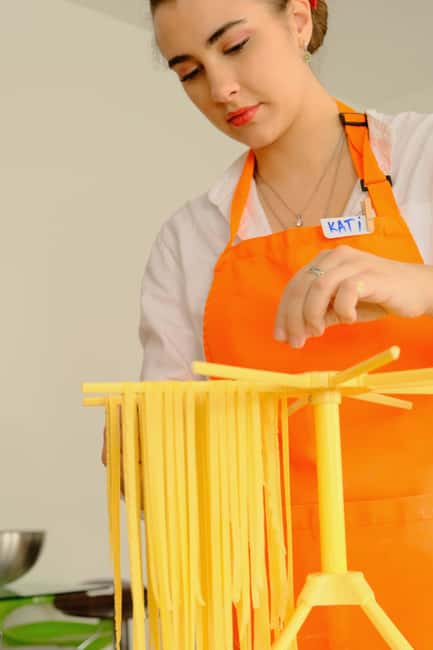
I would choose this experience if you want a hands-on Milan activity that also fills part of an evening meal. It suits couples, friends, solo visitors who enjoy meeting people, and groups looking for something beyond museums and shopping.
It is particularly good for first-time pasta makers. The recipes are approachable, the instructors use humor, and the class does not require previous cooking experience. Experienced home cooks can still enjoy the family techniques, especially the ravioli and tiramisu.
This is less suitable if you want a quiet private lesson, a small tasting menu, or a highly technical cooking course. The group may be large, and the tone is social. You should also skip it if your schedule cannot spare three hours, since the cooking and meal are both central to the experience.
The setting makes it a strong choice for a special occasion, including a birthday or hen weekend. Several instructors are praised for keeping the group laughing and helping strangers work together, which can make the class a good shared memory.
Should you book the Milan pasta and tiramisu class?
Book it if you want to cook, eat, and meet people in a distinctly personal Milan setting. The family connection, art-filled home, homemade limoncello, and recipes sent afterward give it more character than a standard pasta lesson.
Before booking, confirm the meeting instructions, your dietary needs, and the language of your session. If you are comfortable with a larger group and modest wine service, the $84.96 price offers good value for three hours of food, instruction, and a meal you helped create.
FAQ
Where does the cooking class take place?
The class takes place at Via Dezza 47 in Milan, in a historic family home filled with art and antiques.
How far is the meeting point from Milan’s Duomo?
The information provided places the home about 20 minutes walking from Duomo Square. Another description gives a shorter estimate, so allow extra time and follow the exact directions sent the day before.
Which subway stop is closest?
The closest stop is on the blue line at Coni Zugna, Via Foppa, with the escalator exit near the home. Sant’Agostino on the green line is about 500 meters away.
How long does the activity last?
The cooking class lasts three hours.
Which dishes will I prepare?
You will prepare tagliatelle with tomato sauce, ravioli with butter and sage, and traditional tiramisu.
Is a meal included?
Yes. You eat the pasta, ravioli, and tiramisu prepared during the class. Water, wine or a soft drink, and limoncello are also included.
Is wine included?
Yes. The listed amount is one quarter of a bottle of white wine per person, or you can choose a soft drink.
Are the recipes provided afterward?
Yes. The recipes are sent to you by email after the class.
Can I attend if I need gluten-free food?
A gluten-free risotto option is available. Tell the provider about your dietary needs in advance.
Is the class taught in English?
Yes. Instruction is available in English, Italian, French, Spanish, Persian, and Hebrew.
Are children allowed?
Children under eight are not suitable for this activity, and unaccompanied minors cannot attend.
What should I wear?
Wear comfortable clothing and shoes. You may also bring a camera, but backpacks are not allowed.
Can I cancel the booking?
You can cancel up to 24 hours in advance for a full refund. Reserve-now, pay-later booking is also available.
Just added around Italy
- Guided Cultural Tour of the Godfather Film in Messina★ 5.0 · 31 reviews
- Guided tour of the Riace Bronzes and the Archaeological Museum of Reggio Calabria★ 5.0 · 44 reviews
- SU NURAXI BARUMINI Unesco World Heritage Site★ 5.0 · 129 reviews
- Brescia the Unexpected: History, Local Stories & a drink★ 5.0 · 31 reviews
- Bolognese Cooking Class with Margherita in the Historic Center★ 5.0 · 26 reviews
- Tower and Power, Virtual tour in Medieval Bologna★ 4.5 · 54 reviews
- Bologna historical art walking tour with hidden gems and tastings★ 5.0 · 108 reviews
- Best of Bologna in one day : Food, architecture, art and history★ 5.0 · 27 reviews
Italy History Tours, compared.
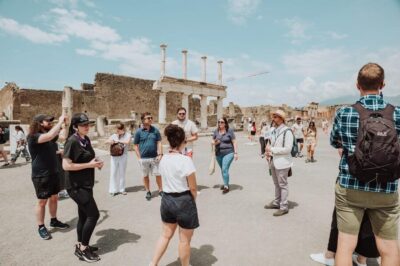
Pompeii: Entry Ticket and Guided Tour with an Archaeologist
Read our review →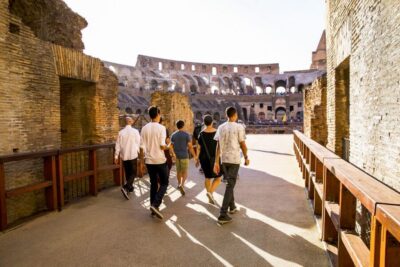
Colosseum: Underground and Ancient Rome Tour
Read our review →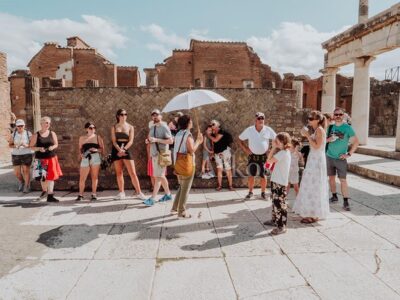
Pompeii: Small Group Tour with an Archaeologist
Read our review →Pompeii Small Group Tour with an Archaeologist
Read our review →
Rome: Colosseum with Arena, Roman Forum and Palatine Guided Tour
Read our review →
Venice: St. Mark’s Basilica Guided Tour & VR History Intro
Read our review →
Colosseum with Arena, Roman Forum and Palatine Hill Guided Tour
Read our review →
Herculaneum: Skip-the-Line Guided Tour with Archaeologist
Read our review →Browse the lists this tour appears in