
Review · JAPAN
Nara: Bike Tour in Ancient Capital UNESCO World Heritage
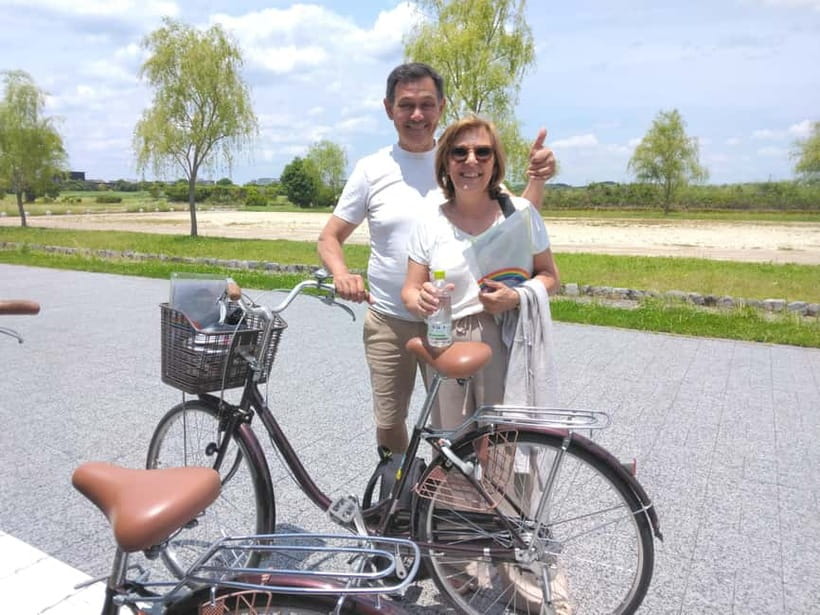
The best thing about this Nara tour is that it takes you far beyond the deer and crowds of Nara Park. You cycle through the broad grounds of the former Heijo Palace, where restored gates, archaeological remains, gardens, and open nature show how Nara once served as Japan’s capital. Kay, one of the guides, is especially warm with families and patient with children.
I like the easy pace and the way a bicycle connects the scattered sites. I also like the mix of grand reconstructions and quiet corners, from the Suzaku Gate to the pond where ducks and turtles appear. The main drawback is that the palace site can feel underwhelming if you expect a fully preserved royal complex. Some buildings are reconstructions, while other remains are only foundations or excavation holes.
Key points to know before you book
- A quiet side of Nara: This tour stays away from the busiest deer areas and explores the spacious Heijo Palace grounds.
- Seven major stops in two hours: You’ll visit gates, gardens, museums, an ancient tomb, and the reconstructed imperial audience hall.
- Kay is a standout guide: She has led many tours in English and is praised for clear explanations, patience, and a friendly manner.
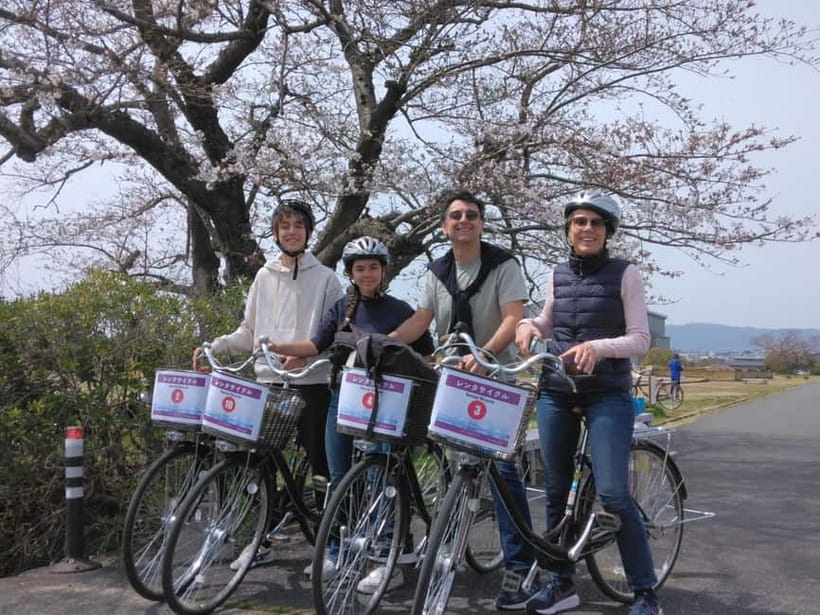
- The bicycle saves time: The palace site is large, and cycling lets you cover much more than you could comfortably see on foot.
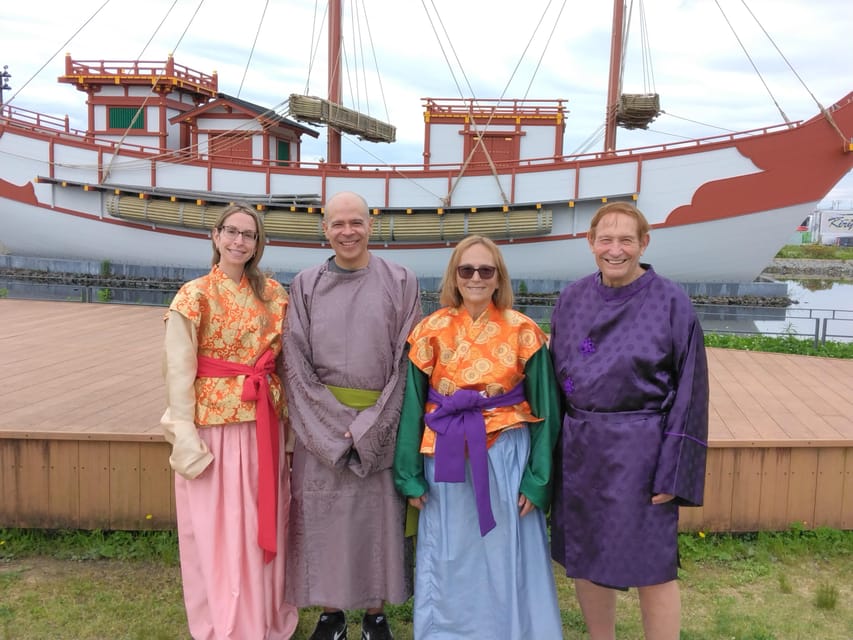
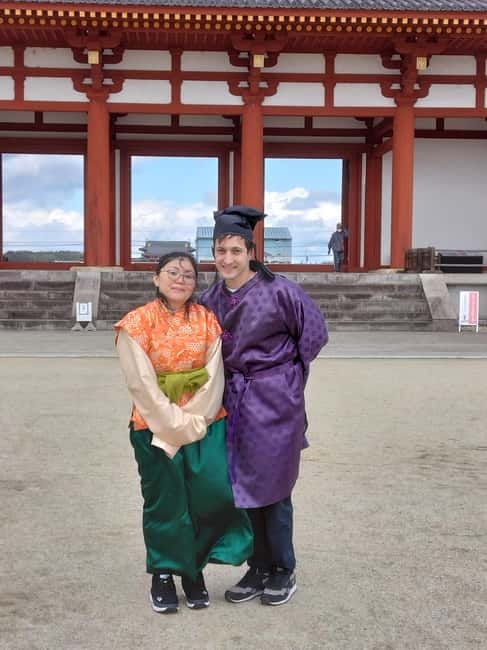
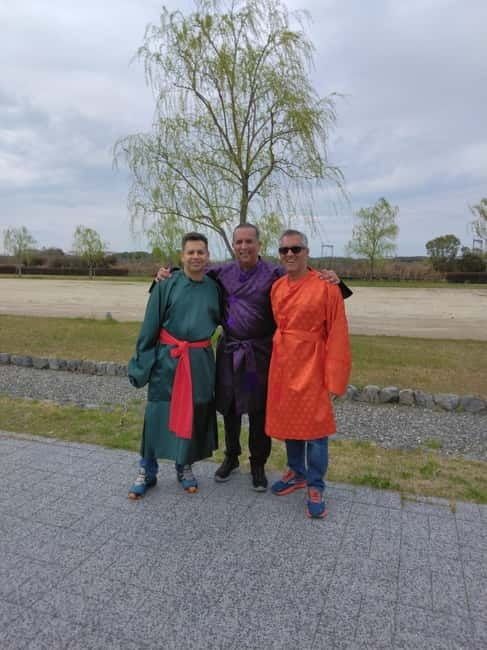
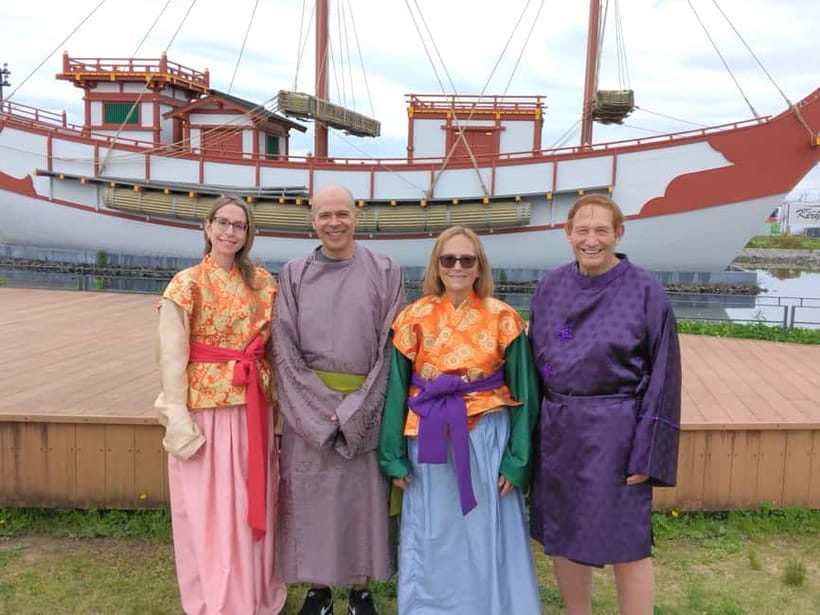
- Traditional clothing is included: You can wear Tenpyo period costume and take memorable photos.
- Best for active history fans: You need to ride a bicycle, and August heat or heavy rain can make the outing less comfortable.
Why Heijo Palace makes a good cycling tour
Nara is best known for Todaiji Temple, Kasuga Taisha, and its tame deer. Those sights deserve their fame, but they can make Nara feel crowded and tightly packed. Heijo Palace offers a different view: wide open grounds, long sightlines, restored ceremonial buildings, and archaeological remains spread across a large former capital.
That size is exactly why a bicycle helps. The palace site is not one compact ruin where you can see everything in a few steps. You move between gates, gardens, museums, a pond, and an ancient tomb. On foot, the distances can eat into a short visit. By bike, you can pause for photos and still reach the main highlights within two hours.
The tour costs $22 per person and includes the bicycle, helmet, guide, admission fees, and traditional costume experience. That is a strong price for an escorted visit with several included attractions. You are paying less for a single grand monument and more for a guided introduction to an entire archaeological area.
The group is limited to eight people. That matters here because the tour involves cycling, stopping at different sites, and listening to explanations outdoors. A small group makes it easier to stay together and ask questions. The guide can also adjust the pace, something that helped families with young children on past tours.
More UNESCO World Heritage Tours in Japan:
- World Heritage Shirakawa-go and Experience Tours from Kanazawa
★ 5.0 · 4,049 reviews - World Heritage Kyoto & Nara Uji Authentic Matcha Experience
★ 5.0 · 1,573 reviews - Kanazawa: World Heritage Shirakawa-go Morning Guided Tour
★ 4.9 · 988 reviews
Meeting at Suzaku Square
You meet at the rental bike reception counter inside Miharashi-Kan in Suzaku-Mon Square. Arrive 10 minutes before the start time. The listed coordinates are 34.68628944048124, 135.7926401146025, which you can enter into a map app before leaving your hotel.
Public buses are the simplest option. From Kintetsu Nara Station, the ride to Suzakumon-hiroba-mae takes about 16 minutes, followed by a five-minute walk north. From Kintetsu Yamato-Saidaiji Station, the bus ride is about 10 minutes from the South Exit, with another five-minute walk.
From JR Nara Station, the bus takes about 10 minutes from the West Exit, then you walk roughly five minutes. You can also walk about 20 minutes from either the South Exit of Kintetsu Yamato-Saidaiji Station or Shin-Omiya Station.
The tour begins and ends at the same rental bike location. That makes it easy to continue sightseeing afterward, though food and drinks are not included. One useful touch from the tour experience is that Kay has helped arrange a taxi for guests heading toward town after the ride, but you should not rely on that as a standard transfer service.
Suzaku Gate, the ceremonial front door
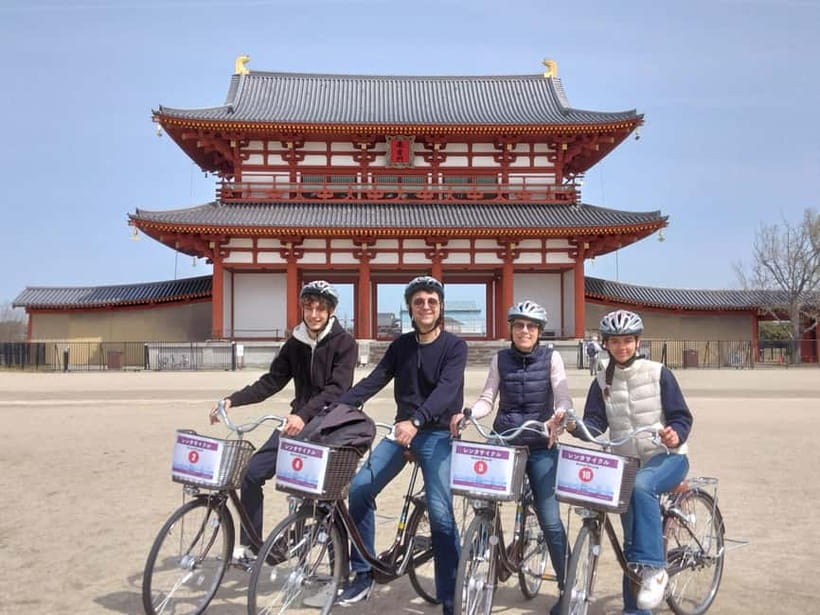
The first major stop is Suzaku Gate, the main entrance to Heijo Palace. It is a large, red-toned reconstruction with a broad approach, and it gives you an immediate sense of the palace’s ceremonial scale.
This is a good place for the guide to explain Nara’s role as Japan’s capital during the Nara period. The gate was not simply an entrance. It formed part of a carefully planned political center, where the approach to the palace communicated order and authority.
You have about 15 minutes here for a guided visit, sightseeing, and photos. The open setting also gives you a clear view of the surrounding grounds. If you want a strong opening picture, this is one of the best stops.
The limitation is that you are looking at a reconstruction, not an original gate preserved from the eighth century. That does not make it worthless, but it changes what you are seeing. The guide’s explanation is important because the building alone cannot tell you how much is original and how much has been recreated.
Toin Garden and the roots of Japanese garden design
Toin Garden, also called East Palace Garden, offers a quieter change of pace. It was the eastern palace garden and includes bridges, buildings, rocks, and water arranged in a formal design.
The garden helps you picture how court life may have included carefully planned outdoor spaces for ceremonies, meetings, and official guests. The guide explains the role of the state guest house and points out how the individual elements work together.
You have about 10 minutes here. That is enough for a quick visit and photos, but not a long, unhurried garden study. If gardens are your main interest, you may wish the schedule allowed more time. Still, the short stop works well in a tour that must cover such a large site.
I like this part because it gives the palace grounds a human scale. The great gates and audience hall speak of government. The garden shows how design, water, rocks, and buildings shaped formal life around that government.
More Ancient History Tours in Japan:
- Private sake pairing@ancient underground
★ 5.0 · 27 reviews - Pompeii: Entry Ticket and Guided Tour with an Archaeologist
★ 4.8 · 19,459 reviews - Athens: Acropolis & up to 5 Archaeological Sites Combo Pass
★ 4.2 · 13,904 reviews - Colosseum: Underground and Ancient Rome Tour
★ 4.7 · 12,691 reviews
Excavation remains in their original setting
The Nara Palace Site Museum and Excavation Site Exhibition Hall bring you closer to the work of archaeology. The excavation hall is particularly unusual because remains are preserved and displayed in the same general state in which they were found.
That can be more revealing than a polished reconstruction. You see the evidence that researchers use to understand the ancient capital, rather than only the finished version presented to the public. The guide can connect what you see in the ground with the layout of the palace and the objects displayed in the museums.
The stop lasts about 10 minutes. That is a brisk introduction, not a full museum visit. If you want to read every display or inspect each object slowly, you may need to return independently. The guided format is better for getting the main idea and understanding why an apparently simple patch of earth matters.
The nearby palace site museum is described as the oldest museum at Heijo Palace. Inside, you can see ancient tiles, wooden tablets, and models. These smaller objects help fill in the picture left by the large buildings. Tiles suggest construction methods, wooden tablets offer clues about administration, and models make the original palace plan easier to understand.
A peaceful ride beside Mizukami Pond
The ride around Mizukami Pond, also called Minakami Pond, is one of the most relaxing parts of the outing. You hear birds, feel the breeze, and may see ducks and turtles. It is a welcome pause after the formal gates and museum displays.
The pond also shows why a bicycle tour is more than a faster way to move from one attraction to another. You get time outdoors, with the palace site’s open setting around you. Several people have especially enjoyed this peaceful section, and it is easy to see why.
The route is presented as gentle, with regular stops. Still, conditions matter. Summer can be very hot, and one guest found an August ride uncomfortable because of the heat. You should bring water, dress for the weather, and think carefully about the season. The operator may cancel for heavy rain, storms, or other bad weather, with a full refund in those cases.
Hishiage Kofun and the clues in a burial mound
Hishiage Kofun is the tour’s ancient tomb stop. You spend about 10 minutes viewing the mound and learning about the grave goods associated with it.
This stop broadens the story beyond the palace itself. The imperial complex explains government and ceremony, while the tomb points to burial practices, social rank, and the material objects placed with the dead. It also reminds you that Nara’s significance did not begin with the capital period alone.
As with the excavation areas, the tomb may not deliver the immediate drama of a complete temple or castle. Its value grows when the guide explains what the mound represents and how the grave goods help researchers interpret the past. If archaeology is not your interest, this may be a short, quiet stop rather than a major highlight.
The reconstructed audience hall
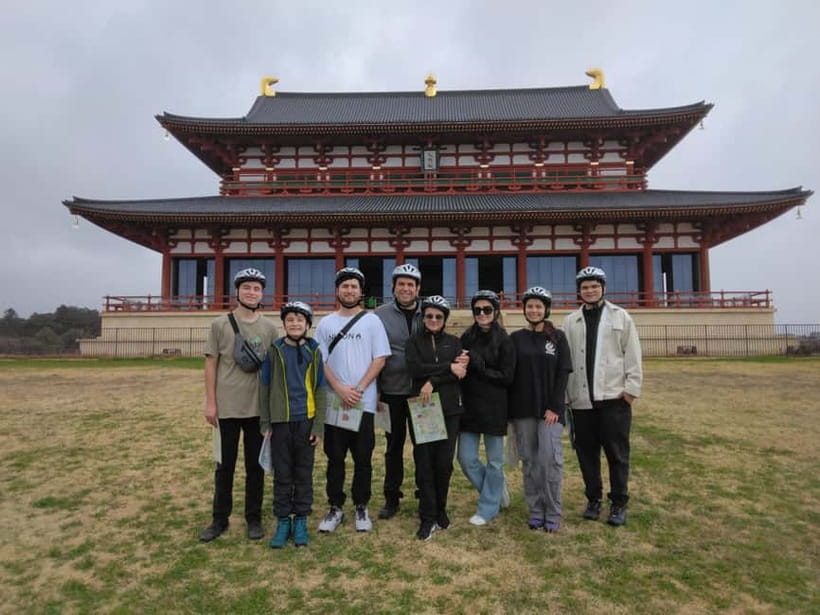
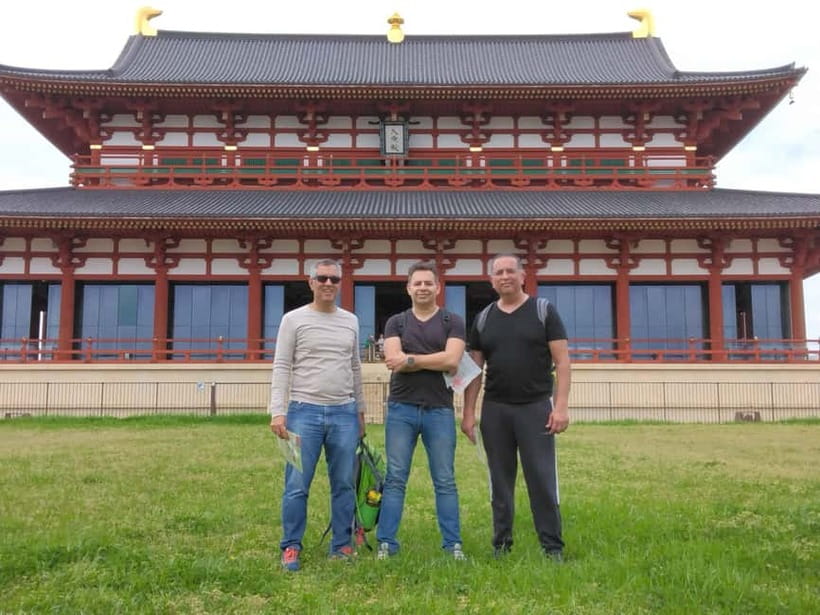
The First Imperial Audience Hall, called Daiichiji Daigokuden, is likely to be the visual centerpiece. This was a major Nara Palace building used for special ceremonies, and the reconstruction gives you a sense of the scale and decoration that once shaped imperial events.
Inside, you can see paintings, ornaments, and other displays. The building also offers a broad view across the palace site. That view helps connect the separate stops: the gates, garden, museums, roads, and open grounds become parts of one planned capital rather than isolated attractions.
You spend about 15 minutes here, making it one of the longer stops. Ask questions if you are interested in the reconstruction process or ceremonial use. The guide’s interpretation is particularly useful because the building can otherwise feel like an attractive modern recreation without enough context.
Next comes the Daigokumon, the great south gate, where the group pauses for about five minutes. It is a shorter photo and explanation stop, but it reinforces the scale of the approach to the audience hall.
Traditional Tenpyo clothing for a final photo
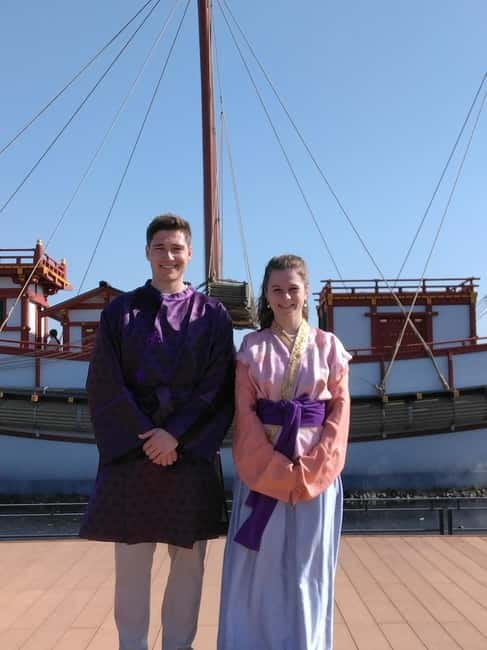
The costume experience lets you try traditional Tenpyo period clothing and take photos. This is a light, hands-on ending to a tour that otherwise focuses heavily on buildings, archaeology, and historical explanation.
The clothing connects the visit to the visual world of the Nara period. It also gives families and first-time visitors something memorable to do, rather than ending with one more museum display. If you enjoy taking photos, allow yourself a little patience while getting arranged.
The supplied information does not specify how many costume options are available or how long the costume portion lasts. Treat it as an included experience rather than a separate full costume session. The tour covers many sites in two hours, so the photo opportunity is likely brief.
How the guide shapes the experience
Kay is the guide most often associated with this tour. Her English explanations cover Nara’s political role, culture, traditions, buildings, and archaeological remains. She has also been described as patient with a six-year-old and willing to answer questions without rushing.
That matters because Heijo Palace can be hard to read on your own. A reconstructed gate is easy to admire, but its purpose and place in the old capital are less obvious. An excavation site may look like a hole in the ground until someone explains what was found and why it matters.
The route seems to suit people who want an overview rather than a specialist seminar. You receive enough detail to understand the main story, but the pace keeps moving. The guide has sometimes allowed extra time so the group could proceed comfortably, though you should still plan for the advertised two-hour duration.
English and Japanese tours are available. Since the group is capped at eight, you can expect a more personal setting than on a large bus tour. The guide’s ability to answer questions is one of the experience’s strongest features.
Who should book this ride?
I would choose this tour if you have already seen, or plan to see, Nara Park and want a quieter historical experience. It is also a smart first activity in Nara because it gives you context for the city’s role in Japanese history before you visit other major sites.
Families can benefit from the bicycles, short stops, stamps and photo opportunities. The six-year-old mentioned in the tour feedback managed the outing well with patient guidance, but every child is different. You should be comfortable with your child riding for two hours and stopping repeatedly at historical sites.
History, archaeology, Japanese garden design, and photography fans will find plenty to enjoy. The tour also works for visitors who like gentle outdoor activities but do not want a strenuous cycling excursion.
It is less suitable if you cannot ride a bicycle, are pregnant, use a wheelchair, or have a visual impairment. Bike insurance is not included, so check your own coverage and ride carefully. The tour is also less appealing if you want original buildings only. Heijo Palace includes reconstructions, models, excavation displays, and open spaces, not a complete surviving palace.
Practical value, timing, and weather
At $22, the tour offers good value if you would otherwise need to rent a bike, pay separate admissions, and work out the palace site on your own. The included helmet and costume experience add to that value, while the licensed guide provides the context that signs alone may not offer.
Two hours is a useful length for most visitors. Several people found it ideal, including families who wanted a clear introduction without committing to a half-day outing. A history specialist could easily want longer at the museums, but the compact schedule keeps the experience manageable.
Try to avoid the hottest part of the day if you have a choice. Spring can bring pleasant garden views and local hanami activity, while cooler mornings may make cycling more comfortable. The activity provider can cancel for severe weather and issue a full refund, but missing the tour yourself is nonrefundable, so arrive early at Miharashi-Kan.
Free cancellation is available up to 24 hours in advance, and you can reserve now and pay later. Those terms are useful when your Nara schedule depends on train connections or changing weather.
Should you book the Heijo-Kyo Bike Tour?
Book it if you want to understand Nara beyond its deer, temples, and busiest streets. The bicycle covers a large UNESCO World Heritage site efficiently, while the small group and guide make the archaeological details easier to grasp.
Skip it if reconstructed buildings disappoint you, if you cannot cycle, or if your idea of Nara is limited to famous temples and animal encounters. For everyone else, this is an inexpensive, calm way to see the former capital from several angles: ceremonial, archaeological, natural, and human.
FAQ
How much does the Nara bike tour cost?
The tour costs $22 per person. The price includes the bike, helmet, guide, admission fees, and traditional costume experience.
How long does the bike tour last?
The scheduled duration is two hours. The route begins and ends at the rental bike reception counter at Miharashi-Kan in Suzaku-Mon Square.
Where does the tour meet?
Meet at the rental bike reception counter at Miharashi-Kan in Suzaku-Mon Square. The coordinates are 34.68628944048124, 135.7926401146025.
Which languages are available?
The tour is available in English and Japanese. Kay is an English-speaking guide associated with many of the tours.
What places are included?
The route includes Suzaku Gate, Toin Garden, the Nara Palace Site Museum, the Excavation Site Exhibition Hall, Hishiage Kofun, the First Imperial Audience Hall, the great south gate, and the Heijo Palace Site Museum.
Is bicycle rental included?
Yes. The rental bike and helmet are included in the tour price. Bike insurance is not included.
Can I wear traditional clothing?
Yes. The experience includes wearing traditional Tenpyo period clothing and taking photos.
Is the tour suitable for children?
Children who can ride a bike may enjoy the tour, and the guide has been patient with a six-year-old. The tour is not suitable for people who cannot ride a bicycle.
What happens if the weather is bad?
The supplier may cancel the tour because of heavy rain, storms, or other bad weather. If the supplier cancels, you receive a full refund. You should arrive on time, since no-shows and missed tours are nonrefundable.
More Cycling Trips in Japan
- Asheville Historic Downtown Guided Electric Bike Tour with Scenic Views
★ 5.0 · 1,234 reviews - Historic Athens: Small Group Electric Bike Tour
★ 4.9 · 966 reviews - Bordeaux: Historic Center & Chartrons District Bike Tour
★ 4.8 · 709 reviews - Intramuros, Manila: Historical Bamboo Bike Tour
★ 4.8 · 583 reviews
More History Tours by Bike, Segway and Tuk-Tuk in Japan
- [30 minutes] Rickshaw tour around Asakusa [History, sightseeing, Tokyo Skytree]
★ 5.0 · 38 reviews - Historical Singapore Bike Tour on Full-Sized Bicycles
★ 5.0 · 1,421 reviews - Charlotte’s Ultimate Southern Charm Historical City Cart Tour
★ 5.0 · 1,347 reviews - Barcelona: 2.5-Hour Bike or E-Bike Historical Tour
★ 4.5 · 1,262 reviews
Just added around Japan
- Private sake pairing@ancient underground★ 5.0 · 27 reviews
- Tokyo: Asakusa & Sensoji ー Oldest Temple Walking Tour (2hrs)★ 5.0 · 213 reviews
- [30 minutes] Rickshaw tour around Asakusa [History, sightseeing, Tokyo Skytree]★ 5.0 · 38 reviews
- Tokyo: Edo Castle & East Garden of the Imperial Palace Tour★ 4.7 · 112 reviews
- Tokyo: Imperial Palace, the history of Japan (ENGLISH GUIDE)★ 5.0 · 77 reviews
- Tokyo: Customized Private Historical Guided Photoshoot Tour★ 5.0 · 25 reviews
- Osaka: Dark Side of Osaka Night Walking Tour★ 4.9 · 89 reviews
- Osaka: Castle History Walking Tour / Castle Tower Admission★ 4.9 · 230 reviews
Japan History Tours, compared.
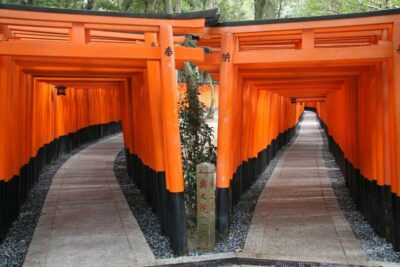
Kyoto: Fushimi Inari, Kinkakuji, Bamboo Grove 1 Day Bus Tour
Read our review →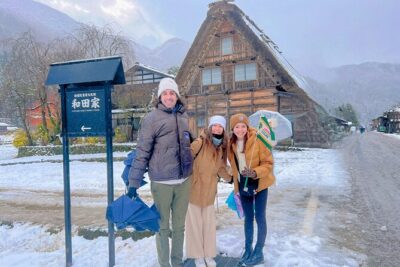
World Heritage Shirakawa-go and Experience Tours from Kanazawa
Read our review →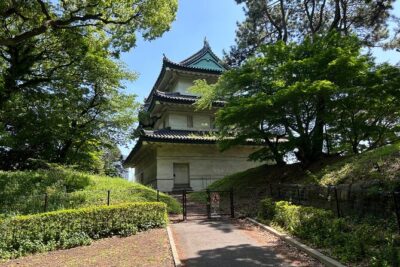
Tokyo: Imperial Palace and Shogun Historical Walking Tour
Read our review →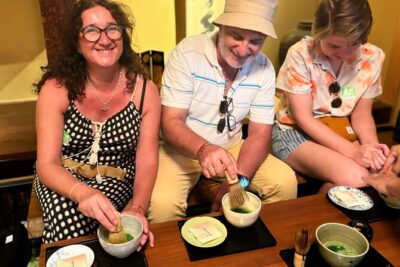
World Heritage Kyoto & Nara Uji Authentic Matcha Experience
Read our review →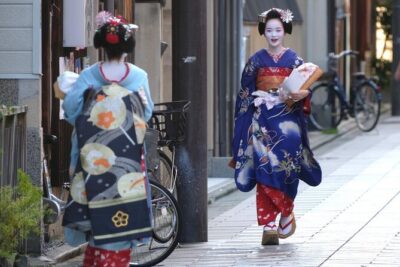
Kyoto Gion: 2-Hour Geisha Culture & History Walking Tour
Read our review →
Tokyo Castle & Imperial PalaceーShogun Walking Tour
Read our review →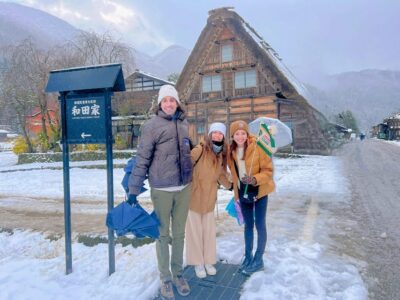
Kanazawa: World Heritage Shirakawa-go Morning Guided Tour
Read our review →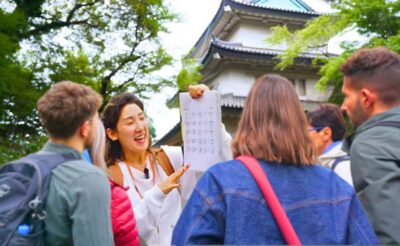
Tokyo: Imperial Palace Japanese History Walking Tour
Read our review →Browse the lists this tour appears in