Review · ITALY
Positano: Old Town Walking Tour with Archaeologist Guide
Positano saves its best surprise for underground. Beneath the Church of Santa Maria Assunta, a Roman villa preserves striking frescoes, giving you a close look at the town’s ancient past after a walk through its steep lanes and sea-facing stairways. The tour also reaches Fornillo Beach, a quieter stretch where locals go to sunbathe.
I like the small groups, limited to 10 people, and the mix of everyday Positano with major sights. You get shops, restaurants, ceramics, sandals, local art, beach views, and a proper archaeological visit in one two-hour outing. The main caution is simple: Positano is built on a hill, and this tour includes a serious amount of walking and stairs.
Key points to know before booking
- The Roman Villa is the star attraction: Enter an underground site beneath Santa Maria Assunta and see its preserved fresco paintings with an archaeological guide.
- You walk through real Positano: The route uses narrow lanes, panoramic staircases, shops, beaches, and old town streets rather than keeping you on the main tourist path.
- Fornillo Beach adds a local pause: This is where residents go to sunbathe, offering a calmer contrast to the main beach.
- The group stays small: With no more than 10 participants, it is easier to hear the guide and ask questions.
- The route is downhill before it turns uphill: You walk down toward the beaches, then climb back toward shops and the church.
- The tour works best for active visitors: It is not suitable for wheelchair users, strollers, or anyone who needs to avoid stairs.
Why the underground Roman Villa changes the Positano story
Many people come to Positano for the views, the beach, and the cliffside streets. Those are good reasons to come. But the Roman Villa gives the town another layer, one that is easy to miss when you are focused on the sea.
The villa lies beneath the Church of Santa Maria Assunta. Its frescoes connect modern Positano with the Roman period and show that the area was more than a picturesque fishing village long before today’s hotels, boutiques, and beach clubs appeared.
You visit the villa near the end of the walk, with an archaeologist guide included. That matters. A general walking guide can point out where the site is, but an archaeological guide can help explain what you are seeing and why the frescoes matter. The visit is not just a quick look at an old room added to a sightseeing route. It is the most specialized part of the experience.
The church itself also carries an important story. It began as the abbey of Positano’s 10th-century Benedictine monastery. That gives the final part of the tour a useful sense of place: you move from ancient Roman life to medieval religious history, then back into the modern town.
More History Walking Tours in Italy
- Venice: City Center Historical Guided Walking Tour
★ 4.2 · 1,873 reviews - Palermo: Street Food and History Walking Tour
★ 4.9 · 1,486 reviews - Verona: History and Hidden Gems Guided Walking Tour
★ 5.0 · 1,379 reviews
Starting above the town at Hotel Pasitea
The meeting point is in front of the main entrance of Art Hotel or Hotel Pasitea. From there, you begin on the upper side of the village rather than immediately gathering at the beach.
That starting point helps you get away from the busiest part of Positano at the beginning. The guide leads you along smaller paths and stairways, where the town feels more like a lived-in hillside community than a postcard backdrop.
You will want comfortable shoes. Positano’s stairs are not a minor detail added to the fine print. They shape the whole walk. The route first moves down through narrow passages and panoramic staircases, so you should be ready for uneven footing, changes in pace, and plenty of steps.
The tour runs for two hours, which is enough time to see several parts of town without turning the day into an exhausting full-day hike. Still, the short duration does not make it effortless. You cover ground on foot, and some of that ground is steep.
Old town lanes and the 13th-century fort
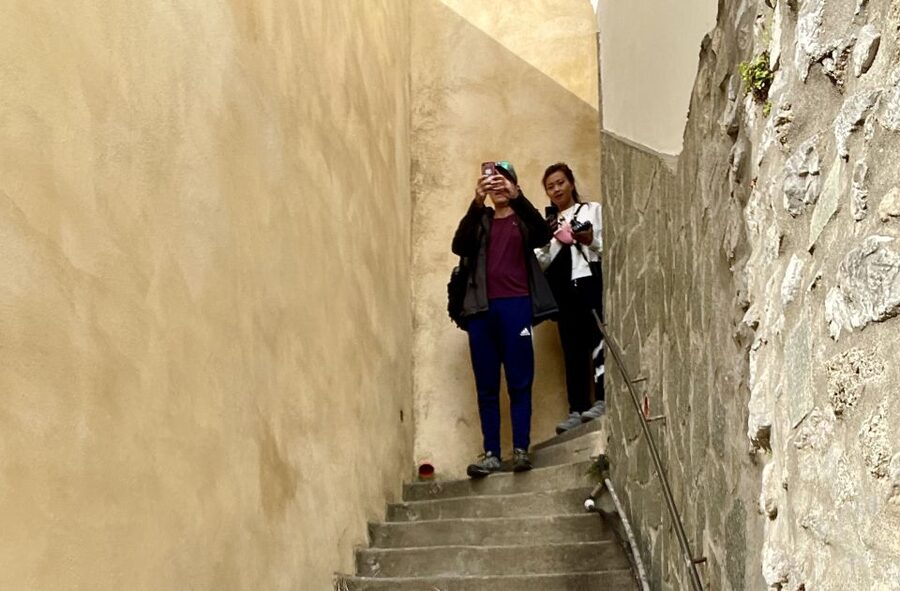
The old town section is where the tour feels most useful for first-time visitors. Positano can be confusing at street level, with lanes that twist, stairways that double back, and paths that lead suddenly to a view.
Your guide takes you along lesser-known routes and points out the historical features that can be easy to miss when you are walking alone. One stop includes a 13th-century fort from the medieval period. It adds a defensive side to Positano’s story, far removed from the town’s current reputation for shopping and sunbathing.
I like this part because it puts the views into context. You are not simply stopping at a lookout for a photograph. You are moving through the routes that shaped the old settlement, passing buildings and remains tied to the town’s earlier life.
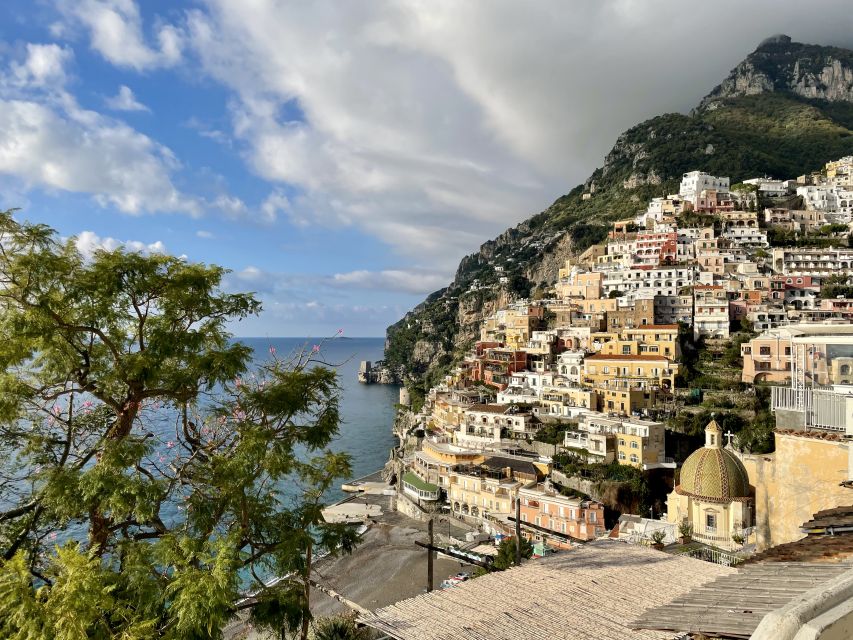
The narrow lanes also give you a better sense of scale. Positano is often photographed from across the water, where the houses appear to climb the cliffs in a single dramatic sweep. Inside the town, you discover how that vertical layout affects daily movement. A short distance on a map can mean a long climb or a staircase.
Fornillo Beach, Positano’s quieter shore
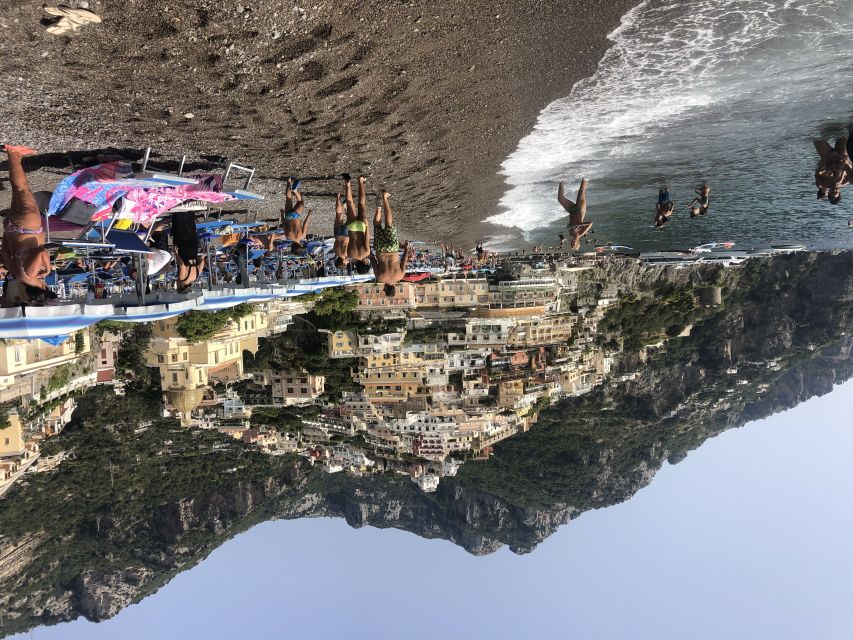
The route continues toward Fornillo Beach, described as the place where locals go to sunbathe. It is a useful contrast with Spiaggia Maggiore, the main beach in central Positano.
You get a more rounded view of the town by seeing both beaches. The main beach gives you the classic Positano setting, while Fornillo shows a less central side of the resort. The walk down also gives you more chances to look back across the hillside and the sea.
The practical point is that the route reaches the beach by stairs. You should not book this tour expecting a flat stroll along the waterfront. The way down is part of the experience, but it may be hard going for anyone with limited mobility or a strong dislike of steps.
There is no separate transport between these stops. You walk the route with the guide, so the beach section feels like part of the town visit rather than a detached photo stop.
More Old Town and Historic Centre Walks in Italy
- Rome in a Day Tour with Vatican, Colosseum and Historic Center
★ 4.5 · 1,042 reviews - Rome Food Tour in the Historic Centre with 8+ Food Tastings
★ 5.0 · 1,000 reviews - Genoa: 2-Hour Guided Walking Tour of the Historical Center
★ 4.2 · 605 reviews - Guided Tour, Historic Center Sassi Rock Churches and Cave House
★ 5.0 · 461 reviews
Shops, ceramics, sandals, and local art
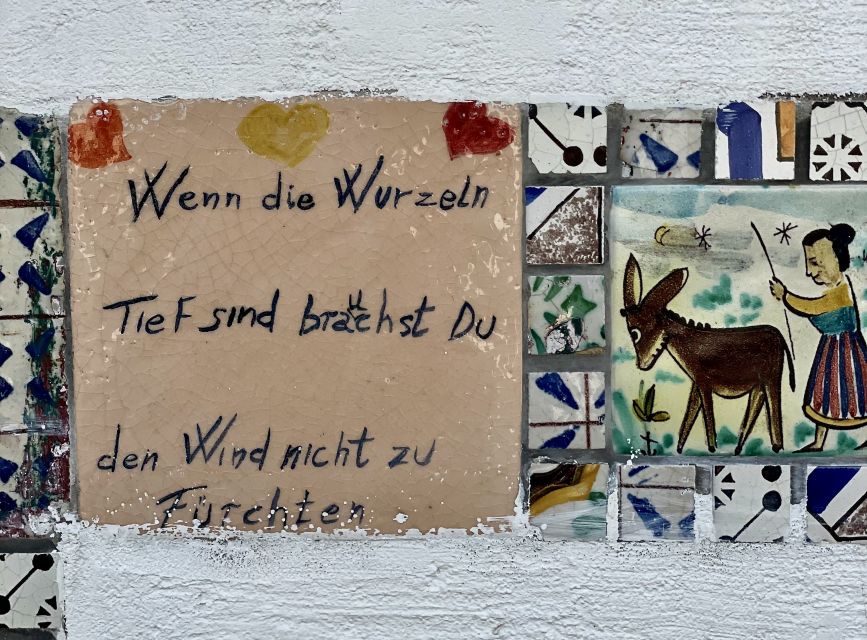
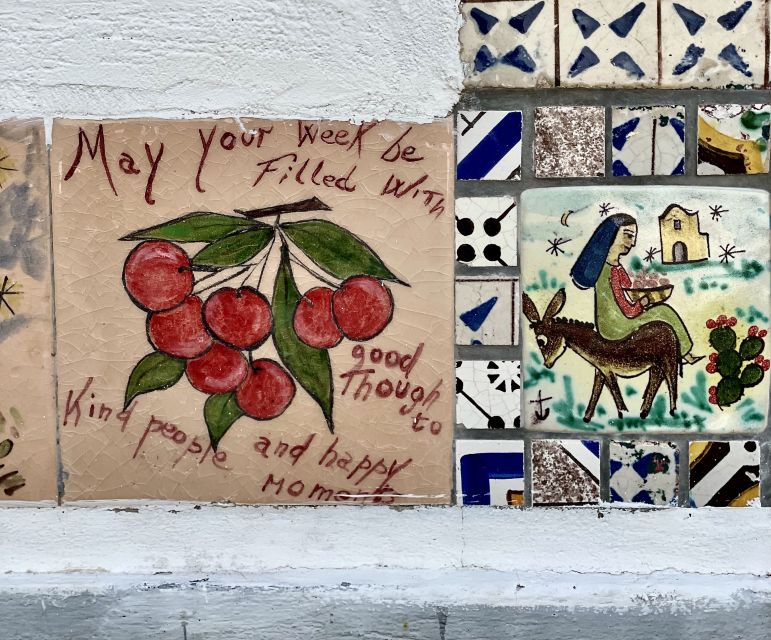
After the beach sections, the route takes you through Downtown Positano. Here you find fine shops and restaurants, followed by a street lined with ceramic shops, sandal makers, and shoemakers.
This is one reason the tour works well early in a Positano visit. You can use the walk to learn where different parts of town are before returning on your own. The guide can also help you understand the difference between the beach area, the old town, and the shopping streets.
The local crafts give the walk some character. Ceramics are closely tied to the wider Campania region, and handmade sandals and shoes are a familiar part of Positano’s shopping scene. The route also passes galleries showing work by local artists, adding a creative side to the town beyond its views and restaurants.
You should keep your expectations realistic. The tour does not include shopping purchases, tastings, or a dedicated workshop. You see the shops and makers as part of the walking route. If you want to buy something, you may need to return later with more time.
The sequence is sensible. First you learn the town’s shape, then you see its main public spaces, and only afterward do you reach the church and archaeological site. The commercial streets become part of the town’s present-day story rather than the whole point of the visit.
Spiaggia Maggiore and the main Positano view
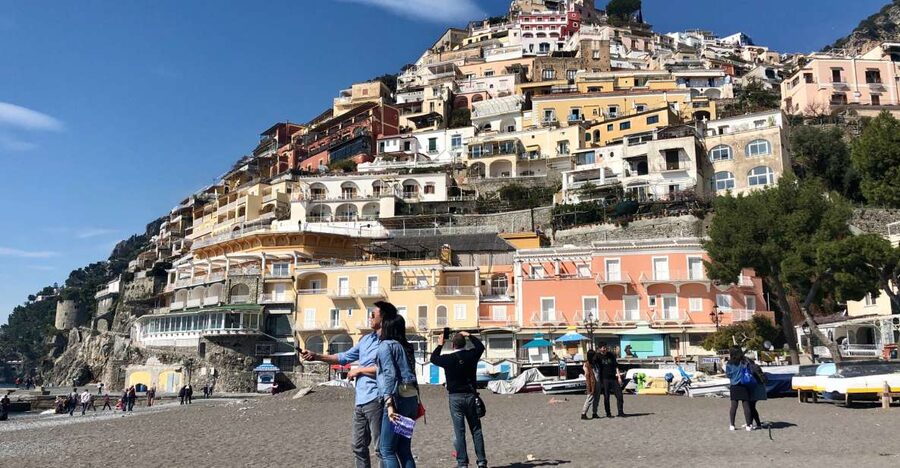
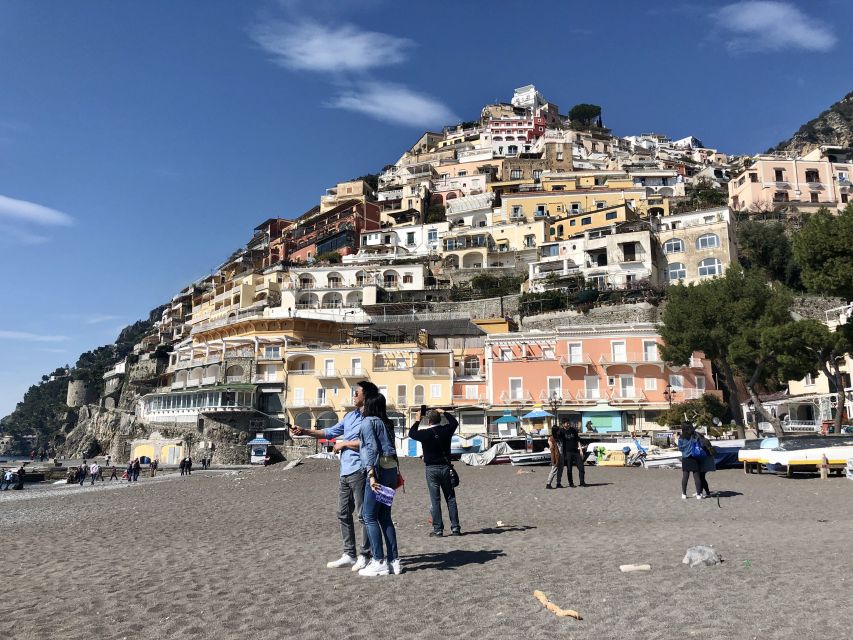
The walk eventually reaches Spiaggia Maggiore, Positano’s central beach. This is the place for the familiar view of the town rising behind the waterfront, with sunlight, sea, and tightly packed buildings filling the scene.
The beach stop is valuable even if you are not planning to swim. You have time to take in the view and understand why Positano became such a famous destination. The guide can also connect the beach to the streets and neighborhoods you have already passed through.
This is a good spot for photographs, but the tour is not built around endless photo breaks. The group continues on a set route, and the total time is only two hours. If you want a long stay at the water, a separate beach visit will suit you better.
From the beach, the route turns uphill. This is the part to take seriously. You have already walked down through the town, and now you climb toward the church and the upper shopping streets. The views may improve as you rise, but your legs may have a different opinion.
Santa Maria Assunta and the final archaeological visit
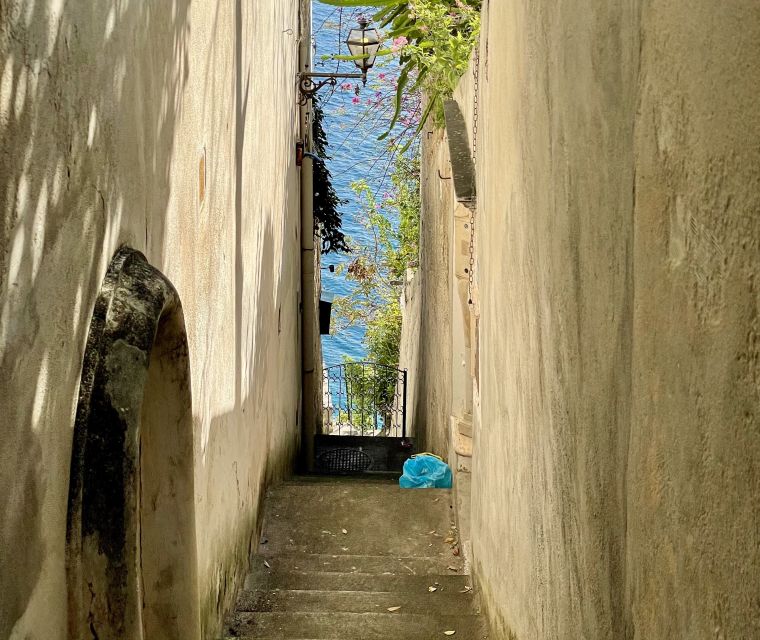
The last major section brings you to the Church of Santa Maria Assunta. Its most important connection for this tour is its place on top of the Roman Villa and its origin as the abbey of a Benedictine monastery founded in the 10th century.
You enter the Roman Villa with an archaeological guide. The frescoes are the payoff for the walking route, and the underground setting gives the visit a very different mood from the bright streets above.
This pairing is particularly strong. Positano’s modern image is all sunshine, ceramics, beaches, and cliff views. The villa reminds you that the town has a much older foundation. You do not need to be an ancient-history specialist to appreciate it, but the archaeological explanation adds real value.
The included entrance ticket means you do not have to arrange the site separately. At a price of $112.15 per person, the cost is not low for a two-hour walk. Still, you are paying for a licensed local guide, a small group, entry to the Roman Villa, and specialist archaeological guidance. For someone who would otherwise book separate sightseeing and archaeological visits, that combination can be fair value.
The exact quality of the visit will depend partly on the guide assigned to your departure. Guides named Lucianna and Emilia have been singled out for their enthusiasm, clear explanations, and pleasant manner. One small private group also had a male guide who spoke loudly and clearly enough for a participant with hearing aids to follow the whole tour. That is useful information if hearing the commentary matters to you: mention it when booking or at the meeting point.
Group size and guide languages
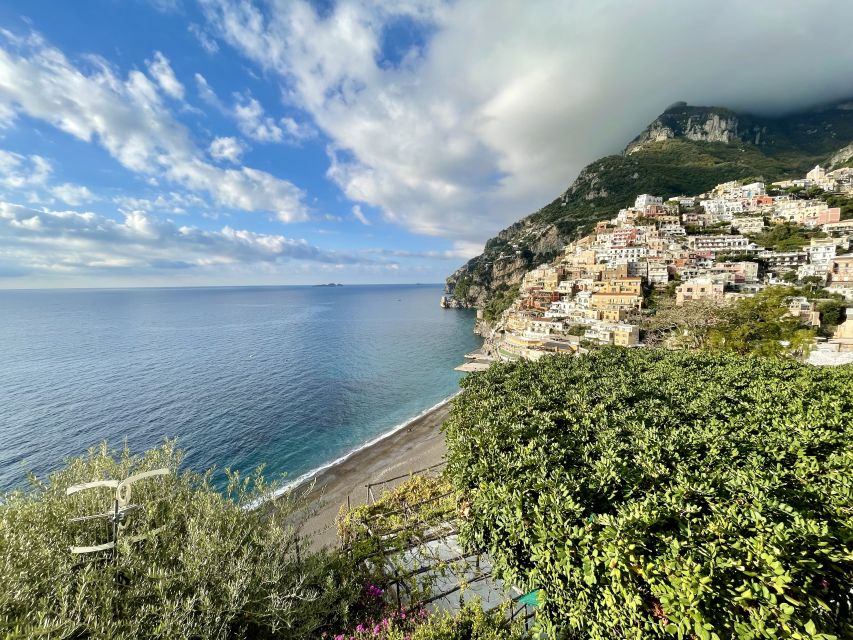
The group is limited to 10 people. That is a meaningful advantage in Positano, where narrow lanes and staircases can make a large tour awkward. A small group also gives you a better chance to hear the guide and ask about the places you pass.
Live guiding is available in English, Italian, German, and Spanish. You should confirm your preferred language when checking available departures, since the available guide may vary by time.
The guide is a licensed local guide, and an archaeological guide is included for the villa. This two-guide structure gives the experience two strengths: local knowledge for the streets and specialist knowledge for the Roman remains.
Past guide feedback has been especially strong for enthusiasm, clarity, and subject knowledge. Emilia and Lucianna are names worth noting, but you should not assume a particular guide will lead every departure.
Is $112.15 a fair price?
At $112.15 per person, this is more expensive than simply walking Positano on your own. Positano’s lanes, beaches, and shops are free to explore, and independent visitors can reach the church without booking a tour.
The value comes from what is harder to organize alone. You get a planned route through several parts of town, a local licensed guide, entry to the Roman Villa, and an archaeological guide for the frescoes. The small group also gives the walk a more personal feel than a large coach-style excursion.
I would consider the price fair if the villa is a priority and you want someone to make sense of the old town. I would be less likely to book it if your main goal is a long beach day, unhurried shopping, or a relaxed meal. Those activities need more time than this two-hour route allows.
Free cancellation up to 24 hours before the activity and the option to reserve now and pay later make the booking less rigid. The tour operates rain or shine, so check the forecast and wear suitable shoes and clothing.
Who should book this Positano walk?
This tour suits first-time visitors who want an organized introduction to Positano. It also works well for anyone who likes combining scenery with history instead of spending the whole day at the beach.
It is a good choice for:
- Active adults comfortable with steep streets and stairs
- Visitors interested in Roman archaeology and medieval Positano
- People who prefer small groups
- Shoppers who want to locate ceramics, sandals, shoes, and galleries
- Anyone who wants both Fornillo Beach and the main beach in one route
- Visitors who value a guide speaking a selected European language
It is a poor match for wheelchair users, people bringing a baby stroller, or anyone unable to manage a substantial amount of walking. The activity is also listed as unsuitable for people over 331 pounds, or 150 kilograms, and people over 95 years old.
Should you book it?
Book this tour if you want Positano explained, not just photographed. The strongest reason to go is the combination of a local walking route and the underground Roman Villa beneath Santa Maria Assunta. The small group and archaeological guide make the price easier to justify.
Skip it if you need a flat route, lots of free time, or a simple beach outing. Positano has a lot of stairs, and this tour uses them in both directions. For active visitors with two hours to spare, it offers a useful first look at the town’s old lanes, beaches, crafts, and ancient remains.
FAQ
How long does the Positano walking tour last?
The tour lasts two hours.
Where does the tour begin?
Meet the guide in front of the main entrance of Art Hotel or Hotel Pasitea.
Where does the activity finish?
The listed finish point is Piazza dei Mulini.
Is the Roman Villa entrance included?
Yes. The Roman Villa entrance ticket is included in the activity price.
Is an archaeological guide included?
Yes. An archaeological guide leads the Roman Villa portion of the experience.
Which languages are available?
Live guiding is available in English, Italian, German, and Spanish.
How large is the group?
The group is limited to 10 participants.
Does the tour involve stairs?
Yes. The tour includes significant walking, and the route down to the beach involves stairs. The return route also includes an uphill walk.
Can wheelchair users or people with strollers join?
No. The activity is not suitable for wheelchair users, and baby strollers are not allowed.
More Archaeological Site Tours in Italy
- Pompeii: Entry Ticket and Guided Tour with an Archaeologist
★ 4.8 · 19,459 reviews - Pompeii: Small Group Tour with an Archaeologist
★ 4.8 · 12,264 reviews - Pompeii Small Group Tour with an Archaeologist
★ 5.0 · 6,593 reviews - Herculaneum: Skip-the-Line Guided Tour with Archaeologist
★ 4.8 · 3,439 reviews
Just added around Italy
- Guided Cultural Tour of the Godfather Film in Messina★ 5.0 · 31 reviews
- Guided tour of the Riace Bronzes and the Archaeological Museum of Reggio Calabria★ 5.0 · 44 reviews
- SU NURAXI BARUMINI Unesco World Heritage Site★ 5.0 · 129 reviews
- Brescia the Unexpected: History, Local Stories & a drink★ 5.0 · 31 reviews
- Bolognese Cooking Class with Margherita in the Historic Center★ 5.0 · 26 reviews
- Tower and Power, Virtual tour in Medieval Bologna★ 4.5 · 54 reviews
- Bologna historical art walking tour with hidden gems and tastings★ 5.0 · 108 reviews
- Best of Bologna in one day : Food, architecture, art and history★ 5.0 · 27 reviews
Italy History Tours, compared.
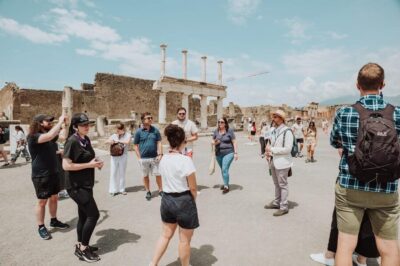
Pompeii: Entry Ticket and Guided Tour with an Archaeologist
Read our review →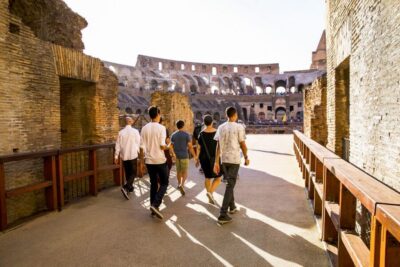
Colosseum: Underground and Ancient Rome Tour
Read our review →
Pompeii: Small Group Tour with an Archaeologist
Read our review →Pompeii Small Group Tour with an Archaeologist
Read our review →
Rome: Colosseum with Arena, Roman Forum and Palatine Guided Tour
Read our review →
Venice: St. Mark’s Basilica Guided Tour & VR History Intro
Read our review →
Colosseum with Arena, Roman Forum and Palatine Hill Guided Tour
Read our review →