
Review · BERLIN
Small-Group Historical Bike Tour in Berlin
Berlin’s past is spread across a wide city, and this 3 to 4 hour bike tour lets you connect the major pieces without spending the day underground or on a bus. You’ll ride from Alexanderplatz through medieval Berlin, Jewish Berlin, Nazi Berlin, and Cold War Berlin, with frequent stops for stories and photos.
I like the way the route combines famous sights with less obvious places such as St. Nicholas Church, Bebelplatz, and the old Jewish quarter. I also like the personal touch: guides including Jerry, Pablo, and Demetrios use stories, old photographs, and time for questions rather than simply pointing out buildings.
The main caution is the equipment and meeting point. Bikes have received mixed comments, and some use back-pedal brakes, which can take getting used to. Also, the TV Tower has more than one side, so read the meeting instructions carefully before arriving.
Key points to know before you book
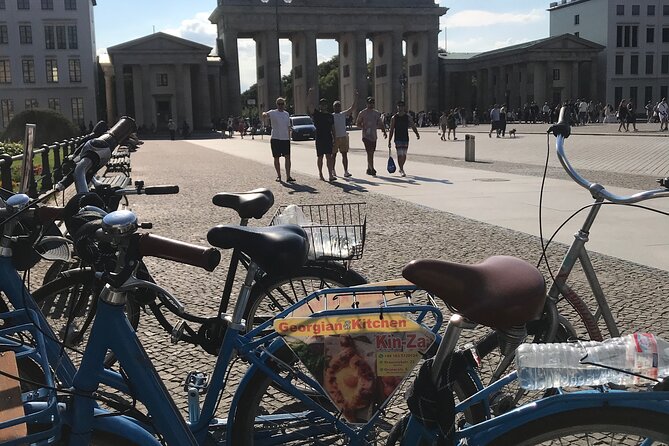
- Berlin’s biggest chapters fit into one ride: The route covers medieval origins, Jewish history, Nazi rule, the Berlin Wall, reunification, and modern government.
- The city is easy to cycle: Berlin is flat, and the pace is generally relaxed, with regular stops rather than a nonstop workout.
- Guides shape the experience: Jerry, Pablo, and Demetrios have led tours, and the guide may tailor the discussion to your questions and interests.
- You see major sights from the outside: The tour includes the Reichstag, Brandenburg Gate, Holocaust Memorial, and museums, but admission tickets are not part of the experience.
- Bike quality deserves attention: Some riders found the bikes fine, while one reported older equipment and unfamiliar back-pedal braking.
- The tour is private for your group: It is described as a private activity, although the product is also presented as a small-group tour.
Why a bike is a smart way to see central Berlin
Berlin is not a compact old town where every famous sight sits around one square. The city’s important places are spread across several neighborhoods, and the events that shaped it happened in different corners.
That makes a bicycle useful. You can cover the distance between Alexanderplatz, Museum Island, the Brandenburg Gate, the former Wall, and Checkpoint Charlie while still seeing the streets in between. A bus gives you a seat, but a bike gives you a better sense of how the city fits together.
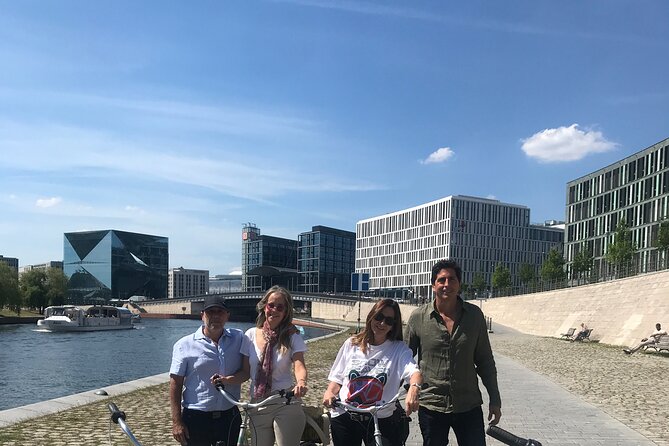
The route is described as easy and leisurely. Berlin is flat, and several riders found the cycling comfortable and safe. You should still be at ease on a bicycle before booking, since the tour lasts several hours and includes city riding.
The pace is not built around speed. You stop often for explanations, photos, and questions. That rhythm works well for a first visit, especially if you want a useful orientation before exploring individual sights on foot.
More History Tours by Bike, Segway and Tuk-Tuk in Berlin:
- Berlin: Cold War & Berlin Wall History Guided Bike Tour
★ 4.8 · 422 reviews - Berlin: Guided Bike tour of the Berlin Wall and Third Reich
★ 5.0 · 160 reviews - Berlin Wall History Small Group Cycling Tour
★ 4.9 · 152 reviews
Starting at Alexanderplatz and the birthplace of Berlin
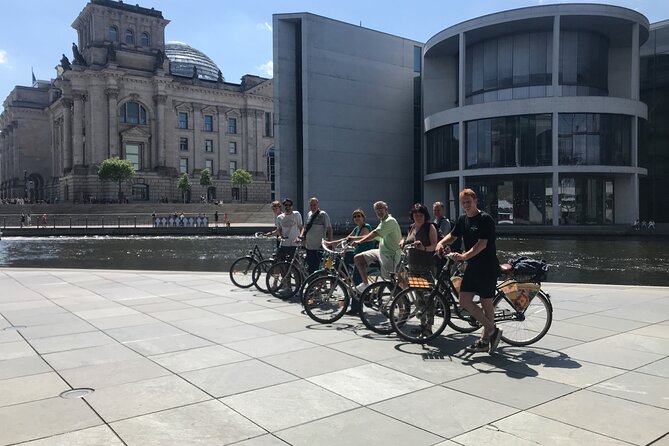
The meeting point is at Panoramastraße 1, near the Berlin TV Tower, with an 11 a.m. start. Take care here: the tower area has two sides, and arriving at the wrong entrance can cause confusion. Allow extra time to find the exact meeting spot.
The tour begins around the Berliner Fernsehturm and Alexanderplatz. Today, the TV Tower is one of Berlin’s best-known symbols, but Alexanderplatz also carries layers of political and social history. Your guide uses the square to set the scene before the ride moves toward the older center.
From here, you reach St. Nicholas Church, one of the key places for understanding Berlin’s early beginnings. The church has been a city landmark for more than 800 years, and this stop shifts the focus away from the familiar 20th-century story.
I appreciate that the route does not begin and end with Hitler and the Wall. Berlin existed long before those events, and seeing the medieval center gives you a fuller timeline. The stop is brief, so expect an introduction rather than a full church visit.
Oranienburgerstrasse and Berlin’s Jewish past
Oranienburgerstrasse brings the tour into one of central Berlin’s most important Jewish areas. The New Synagogue is the visual anchor, and your guide discusses Jewish life and history in Berlin.
This part of the tour matters because Berlin’s Jewish story is not limited to memorials. The city had a long Jewish presence before the Nazi period, followed by persecution, destruction, and the difficult work of remembrance after 1945.
The stop lasts about 15 minutes. You will have time to look and take photographs, but the main value comes from the guide’s explanation. This is a place where context makes a large difference. Without it, the synagogue is simply an impressive building on a busy street.
The Berlin Wall Memorial on Bernauer Strasse
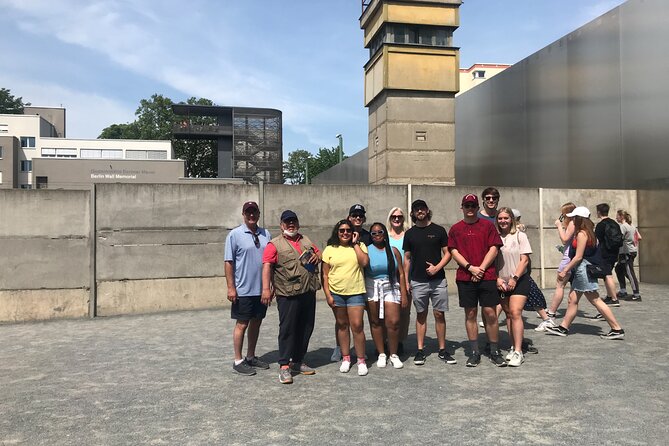
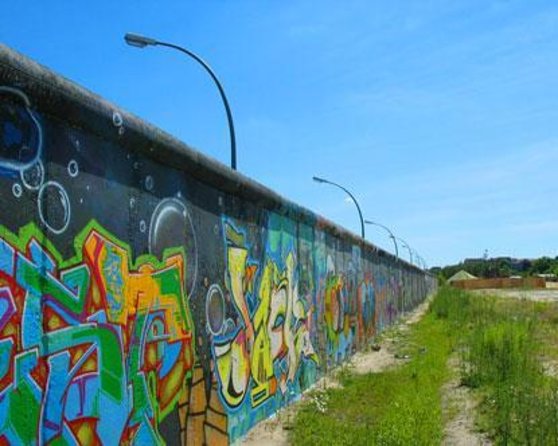
The Berlin Wall Memorial is one of the most serious stops on the route. Located on Bernauer Strasse, it follows about 1.4 kilometers of the former border strip and preserves a section of the Wall, historic ground, and traces of the border system.
The tour allows around 25 minutes here, longer than at many other stops. That is sensible. The memorial helps you understand that the Wall was not just a concrete barrier. It involved fences, watch areas, restricted zones, and a system designed to prevent people from leaving East Berlin.
Your guide explains how the border developed and discusses the human events connected with Bernauer Strasse. You may walk around the memorial and take in the remaining structures, though the tour does not provide time for every part of the site.
This is one of the strongest reasons to choose the bicycle route. The ride connects the Wall Memorial with other Cold War locations, so you begin to understand Berlin as a divided city rather than seeing one isolated fragment of concrete.
More Small-Group History Tours in Berlin:
- Small group Potsdam: A Journey Through History and Palaces
★ 4.7 · 317 reviews - Small group Potsdam: A Journey Through History and Palaces
★ 4.5 · 151 reviews - Berlin Battlefield Tour – Operation Berlin 1945 (Small Group)
★ 5.0 · 23 reviews - Pompeii: Small Group Tour with an Archaeologist
★ 4.8 · 12,264 reviews
Reichstag and the Brandenburg Gate
The route continues to the Reichstag Building, home of the German Parliament. The building also played a role in the Weimar Republic and became linked to the Nazi seizure of power after the Reichstag fire in 1933.
The scheduled stop is short, about 10 minutes. You should expect an outdoor explanation and photographs, not a tour inside the parliament. No entrance tickets are included, and the tour does not list interior access.
Nearby, the Brandenburg Gate provides one of Berlin’s clearest symbols of division and reunification. Built in the 18th century under Friedrich Wilhelm II, it later sat in the restricted zone between East and West Berlin. After reunification, it became a public emblem of a city no longer cut in two.
The guide’s job here is to connect the architecture with the political story. You’ll hear how one monument could represent Prussian power, Cold War separation, and national unity at different points in time.
The Holocaust Memorial and Topography of Terror
The Memorial to the Murdered Jews of Europe is next. Its field of concrete blocks invites you to walk through the site and form your own impression. The tour includes about 15 minutes for viewing, discussion, and photographs.
The guide can explain the memorial’s purpose and help place it within Berlin’s broader effort to confront the Holocaust. You should plan to treat this stop with care. It is not simply a photo background, even though photography is allowed.
At Topography of Terror, the tour makes a shorter stop near the former Gestapo headquarters. The site focuses attention on the machinery of Nazi persecution and the institutions that operated from this area.
You’ll have about 10 minutes here, so consider it a brief introduction. If Nazi history is your main interest, you may want to return later with more time. The bicycle tour gives you the map and the basic connections, but it cannot replace a longer museum visit.
Checkpoint Charlie and the Cold War city
Checkpoint Charlie receives only about five minutes, making it one of the quickest stops. You’ll hear the basic story and have time for a short look and perhaps a photograph.
The location is important, but the present-day setting can feel more theatrical and commercial than the surrounding memorial sites. That is exactly why a guide helps. You can separate the famous name from the larger story of escape attempts, military tension, and the divided city.
Do not expect a long visit here. The value is in placing Checkpoint Charlie into the sequence: the Wall Memorial shows the border system, Brandenburg Gate shows division and unity, and Checkpoint Charlie represents one of the best-known crossing points.
Gendarmenmarkt and the book-burning memorial
At Gendarmenmarkt, the group rides through one of central Berlin’s grand squares. You’ll stop for photographs and a short explanation, with around 10 minutes scheduled.
The square offers a change of mood after the heavier memorials. It also shows how Berlin’s architectural history extends beyond war and division. You can look at the surrounding buildings while the guide explains the square’s place in the city.
The next stop is the Book Burning Memorial at Bebelplatz. The memorial marks the Nazi book burning of 1933 and is easy to miss if you are simply walking through the city. The tour gives you around 15 minutes for the site and its explanation.
This is a good example of the route’s strength. You are not only visiting headline sights. You are also stopping at smaller reminders of how political repression entered public life.
Museum Island on the ride back
The return route passes through Museum Island, where the guide points out the museums and explains their place in Berlin’s cultural story. The stop lasts around 15 minutes.
You will not be touring the museum interiors, and admission is not included. Still, seeing the island as part of the city plan helps you decide which museum to visit later. The stop also adds variety after several sites tied to war and politics.
The ride returns to the Alexanderplatz meeting point. The listed schedule includes another TV Tower stop on the way back, with about 10 minutes allocated. Total timing is approximate, so allow room for the ride, questions, group pace, and any small delays.
The guides and the tone of the tour
The guide can make or break a history tour, and this experience depends heavily on who leads your group. Jerry is associated with the tour and is described as warm, patient, humorous, and eager to answer questions. Pablo has used old photographs and visual material while guiding, and Demetrios has also led the route.
The strongest pattern is personal storytelling. You may get more than dates and names, especially if you ask questions. One particularly thoughtful example involved a guide helping a rider look for a memorial plaque connected to the rider’s grandfather. That suggests the tour can respond to personal interests when time and route allow.
The feedback is not uniformly glowing. One rider felt the historical explanation could have gone further, while another found a Spanish-speaking guide less prepared than expected. That is useful to keep in mind. The tour seems best for people who want a lively overview and conversation, not a formal academic lecture.
English is the offered language. The guide’s individual style and command of the material may vary, so you should arrive ready to ask for clarification if you want more detail on a particular period.
Bikes, brakes, and practical comfort
A bicycle is included, along with a local guide. Food, drinks, and hotel pickup are not included, so arrange your own snacks and transportation to Alexanderplatz.
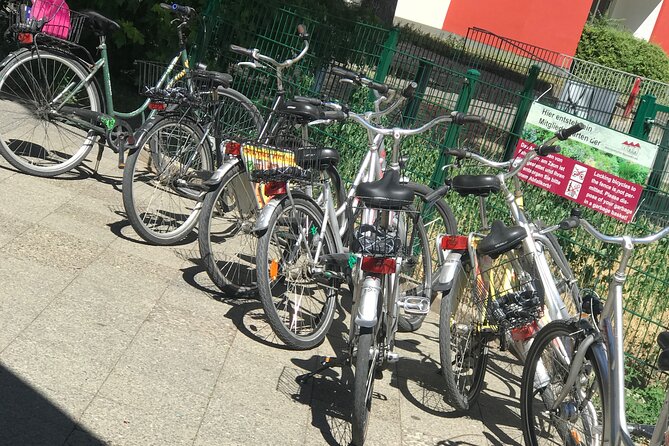
Bike quality has drawn mixed reactions. Several riders found the bikes perfectly usable, while one specifically reported that the bicycles were not in great condition. Another issue is the braking system: some bikes use back-pedal brakes, meaning you brake by pushing the pedals backward.
That system is common on some city bikes, but it can surprise riders used to hand brakes. Ask for a quick demonstration before setting off, and test the brakes in a safe area. This is especially important for children or anyone who has not used back-pedal brakes before.
Casual clothing is suitable. The tour operates in changing weather, and one rider found the guide helpful during a cold December ride. You should dress for several hours outdoors and be prepared for rain or cold, since the tour is not an indoor experience.
Children must be accompanied by an adult, and the minimum age is listed as two. Service animals are allowed, and most people can participate. The information does not specify child seats, trailers, or small bicycles, so ask before booking if your child needs special equipment.
What the $54.42 price gets you
At $54.42 per person, the value depends on how you use the tour. You are paying for a guide, bicycle use, several hours of route planning, and a practical introduction to many central sights.
That is a fair deal if you are visiting Berlin for the first time and want to cover a lot of ground quickly. A private or small-group setting can also make it easier to ask questions than on a large coach tour.
The price does not include food, drinks, entry tickets, or hotel transfers. Most stops are outdoor visits, so you are not paying for museum admission. Think of it as a guided city orientation with wheels, not a series of paid attractions.
The tour is often booked well in advance, with an average booking point of 37 days ahead. That suggests you should reserve early if your dates are fixed, particularly since the activity requires a minimum number of participants and may be canceled if that minimum is not met.
Free cancellation is available up to 24 hours before the start time. Changes or cancellations inside that window are not accepted for a refund.
Who should book this Berlin bike tour
I would choose this tour if you want a broad first look at Berlin, enjoy learning through stories, and are comfortable cycling in a city. It is especially useful near the beginning of your stay, since the route can show you places to revisit on foot.
It also suits people who want a guide with personality. Jerry, Pablo, and Demetrios have different styles, but the format allows questions and conversation rather than a recorded script.
I would hesitate if you want long, detailed visits inside museums, polished new bicycles, or a strict specialist lecture on one subject. The route covers a great deal in a few hours, so each stop is an introduction.
Book it if your priority is seeing how Berlin’s major historical sites connect. Skip it if you are uncomfortable with the braking system, need guaranteed specialized cycling equipment, or want to spend most of your time indoors. For an active and practical first orientation, the route offers a lot for the price, with the equipment and meeting point worth checking carefully before you go.
FAQ
How long does the Berlin bike tour last?
The tour lasts approximately 3 to 4 hours, depending on the pace, stops, questions, and other timing factors.
Where does the tour begin and end?
It begins at Panoramastraße 1, 10178 Berlin, near the TV Tower at Alexanderplatz, and returns to the same meeting point.
What time does the tour start?
The listed start time is 11:00 a.m.
Is bicycle use included?
Yes. Use of a bicycle and a local professional guide are included in the price.
Are entrance tickets included?
No. The stops are generally outdoor visits, and admission tickets are not included.
What language is offered?
The experience is offered in English.
Can children join the tour?
Children can participate from age two, but they must be accompanied by an adult. The available information does not specify child seats, trailers, or special bicycle equipment.
More Cycling Trips in Berlin
- Berlin Wall and Cold War Bike Tour in Small Groups
★ 5.0 · 114 reviews - Berlin (E)Bike Tour Historical Highlights in Small groups
★ 4.5 · 24 reviews - Historical Singapore Bike Tour on Full-Sized Bicycles
★ 5.0 · 1,421 reviews - Barcelona: 2.5-Hour Bike or E-Bike Historical Tour
★ 4.5 · 1,262 reviews
Just added around Berlin
- Berlin Food & Cultural Tour: Must-Try German & Berliner Classics★ 5.0 · 51 reviews
- Berlin Half-Day World War II Walking Tour★ 4.5 · 48 reviews
- Historic center of Berlin – Tour in Italian★ 5.0 · 143 reviews
- Berlin Cold War & World War II Third Reich Walking Tour★ 4.5 · 30 reviews
- Private Taxi Tour City East & West History and Architecture 3-4h★ 5.0 · 42 reviews
- Berlin Wall and Cold War Bike Tour in Small Groups★ 5.0 · 114 reviews
- Private Tour: Jewish Heritage Walking Tour of Berlin★ 5.0 · 29 reviews
- Private Walking Tour: Berlin Wall, Cold War and Checkpoint Charlie★ 5.0 · 37 reviews
Berlin History Tours, compared.
Berlin: Third Reich & Cold War Guided Walking Tour
Read our review →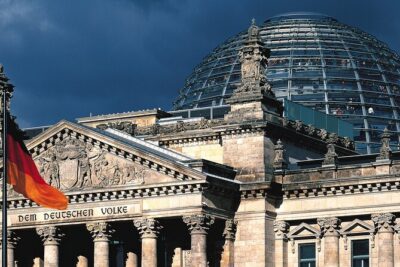
Berlin’s Best: 2 Hour Walking Tour Third Reich and the Cold War
Read our review →
Third Reich Berlin: Hitler and WWII Walking Tour
Read our review →
Berlin: Third Reich, Hitler, and WWII Walking Tour
Read our review →
Berlin: 3-Hour World Heritage Cruise to Potsdam
Read our review →
Cold War, Berlin Wall, Spies and the East Side Gallery
Read our review →
Berlin: History of the Third Reich Guided Walking Tour
Read our review →
Browse the lists this tour appears in