
Review · SPLIT
Private History Split Walking Tour in English
Diocletian’s Palace is not a fenced-off ruin. It is the beating heart of Split, with homes, shops, cafés, lanes, and ancient stone all packed into one living center. This private walk gives you a quick, well-organized way to understand how a Roman emperor’s retirement palace became the city you see today.
I like the private format, since your guide can adjust the pace and answer your questions without a large group slowing things down. I also like the route’s mix of major sights and smaller stories, from the statue of Gregory of Nin to the city’s Jewish past and the old Venetian fort.
The main drawback is the short 90-minute schedule. You will see a lot, but you will not have time to linger at every stop or visit the museum section of the palace substructures. High steps are another concern if you have mobility problems.
Key points to know before booking
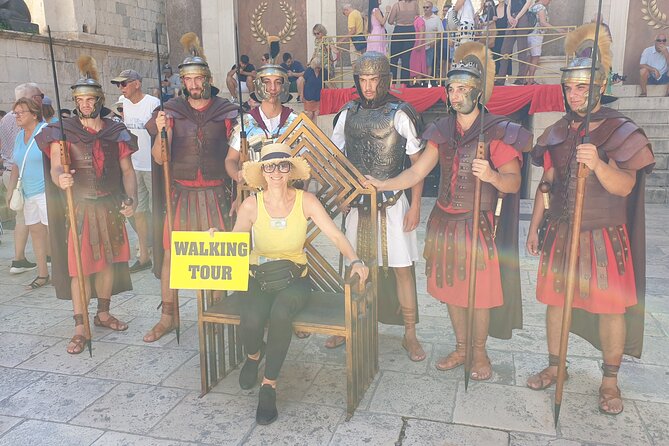
- A private route through a living Roman palace: You walk through Split’s active Old Town rather than around an isolated archaeological site.
- Seven stops in about 90 minutes: The route covers the Peristyle, Vestibule, substructures, Golden Gate, Riva Harbor, Fruit’s Square, and Split Synagogue.
- Strong focus on Diocletian: You learn why the palace was built and how its underground rooms and upper structures worked.
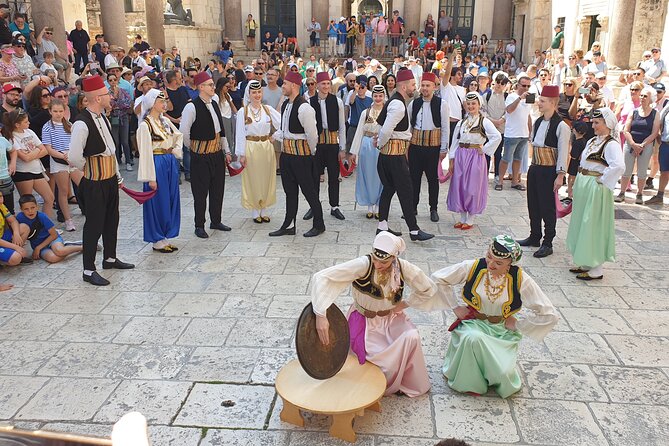
- Local culture enters the tour: At the Vestibule, you might hear traditional Dalmatian singing.
- No large-group shuffle: Only your party takes part, and an English-speaking guide leads the walk.
- Good value for an introduction: At $66.54 per person, the price makes the most sense if you want context, questions answered, and a clear first look at Split.
Starting at the Peristyle, Split’s great stone stage
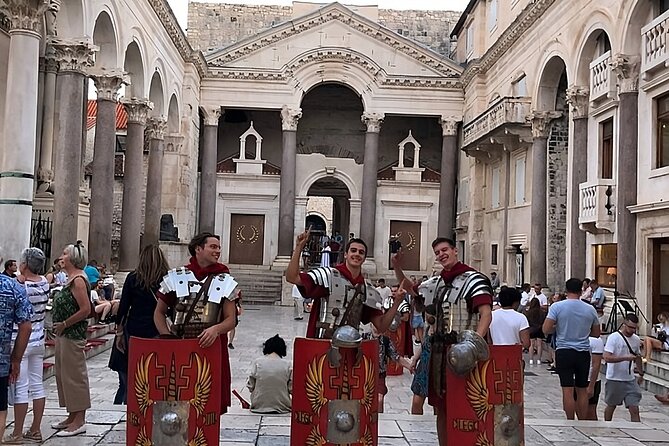
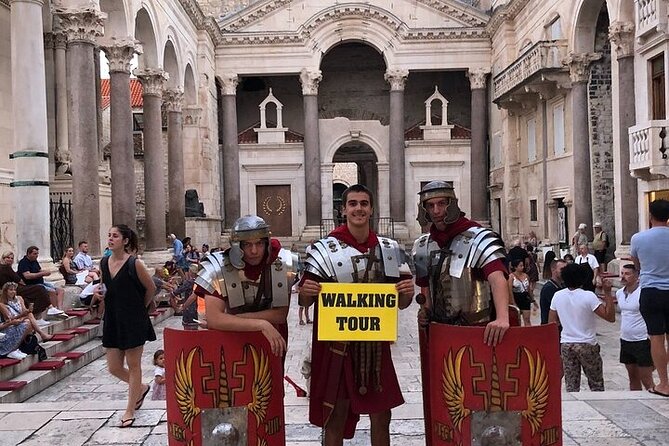
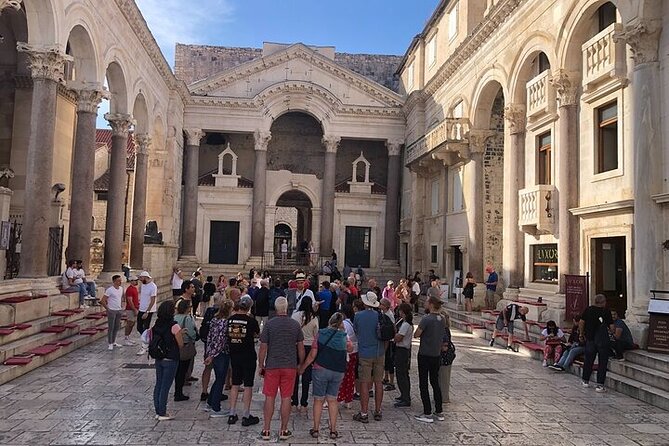
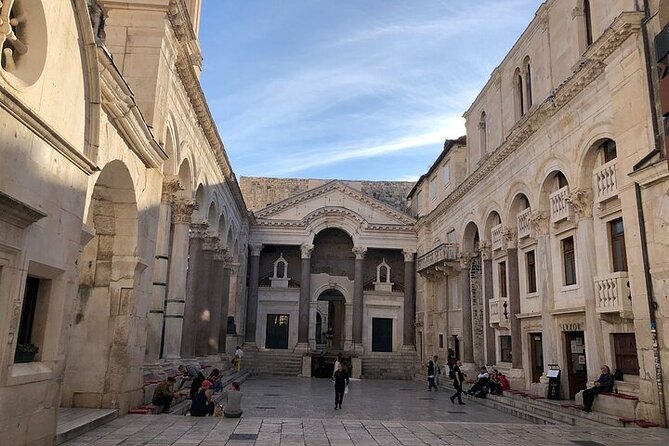
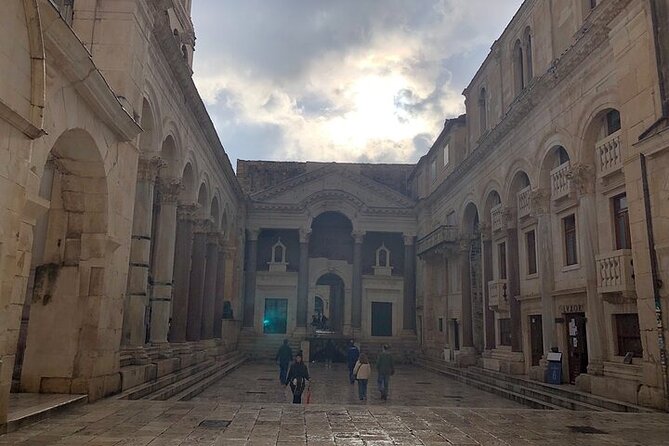
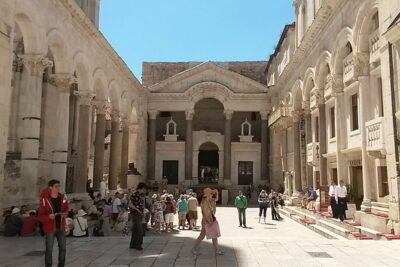
Meet at Peristil ulica, beside the Peristyle of Diocletian’s Palace. This is the natural starting point because the square connects to nearly every major section of the palace, and it gives you an immediate sense of the site’s scale.
The Peristyle was the palace’s central ceremonial space. Here, your guide can explain how Diocletian used architecture to project imperial power and how the square functioned as part of the palace plan. You are not simply looking at old columns. You are standing in a place that still works as a crossroads for modern Split.
The stop lasts about 15 minutes, making it one of the longer pauses on the route. That is useful at the beginning, since the palace can feel confusing when you first arrive. The guide helps you build a mental map before leading you into the narrower lanes.
I would book this tour early in your stay, especially if you are new to Split. The walk gives you a framework for later exploring, so you can return to the Peristyle, nearby lanes, and palace gates with a better sense of how they fit together.
More History Walking Tours in Croatia
- Dubrovnik Old Town History Walking Tour
★ 5.0 · 1,684 reviews - Dubrovnik: Ancient City Walls & Wars Walking Tour
★ 5.0 · 1,270 reviews - Zagreb: City and WWII Tunnels Walking Tour
★ 4.9 · 1,230 reviews
The Vestibule and the sound of Dalmatia
From the Peristyle, the tour moves to the Vestibule, a round entrance space associated with Emperor Diocletian. The visit is brief, about five minutes, but the room makes a strong impression because of its shape and acoustics.
You will learn about the Vestibule’s original purpose and its place within the palace. You might also hear traditional Dalmatian singing here. The possibility is worth noting, but it is not presented as a guaranteed performance, so treat it as a welcome extra rather than the reason to book.
This is one of the tour’s more atmospheric moments. The palace is often described through dates, emperors, and building plans, but the Vestibule helps connect the stonework to local culture. If your guide pauses for singing, listen for how the sound fills the rounded space.
Because the stop is short, you will not get an extended music presentation. Still, it adds a human touch to a tour that could otherwise lean heavily toward Roman architecture.
Below the palace in the substructures
The palace substructures are among the most useful stops for understanding Diocletian’s design. You will walk through the lower rooms and hear how they were built and how their purpose changed over time.
These underground spaces once helped support the palace above. Today, they also help preserve the shape of the original plan. In practical terms, the substructures let you see how the rooms and corridors below relate to the palace streets and ceremonial spaces overhead.
The tour spends about 10 minutes here. The general walk through the substructures is included in the route, but admission to the museum section is not included, and the museum itself is not visited during this experience. You can visit that museum after the tour if you want a longer look at the archaeological material.
That limitation is important. If underground archaeology is your main reason for visiting Split, you will need extra time and a separate ticket. If you mainly want an explanation of how the palace was constructed, this stop gives you a useful introduction without turning the entire walk into a museum visit.
Watch your footing and follow the guide’s pace. The tour information specifically warns that high steps may be difficult for some participants. Most people can take part, but this is not the best choice if stairs and uneven historic interiors cause problems.
The Golden Gate and Gregory of Nin
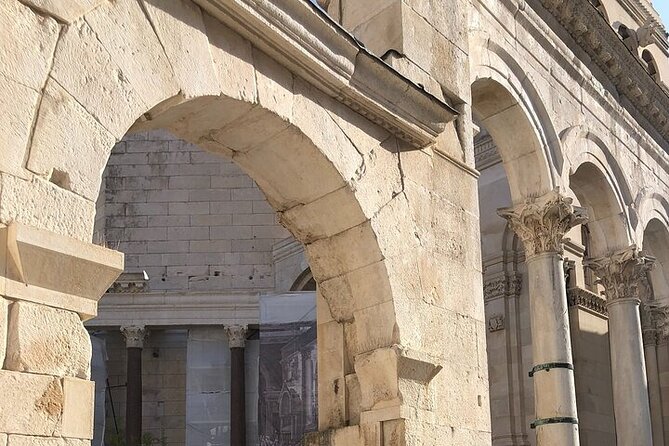
The Golden Gate was the palace’s main entrance, and it is one of the clearest places to see how Diocletian’s compound connected with the wider city. Your guide explains the gate and points out the statue of Gregory of Nin nearby.
Gregory of Nin was a medieval bishop linked to the development of the Croatian language and religious life. His statue also has a famous local custom: visitors often rub the toe for luck. The tour focuses on his importance to Croatian history and language, giving you more than a quick photo stop.
This part of the route helps you move beyond the Roman period. Split’s story did not end when Diocletian left the palace. The Golden Gate and Gregory of Nin bring later Croatian history into the same walk, showing how different eras overlap in the Old Town.
The stop lasts roughly 10 minutes. That is enough for an explanation and photographs, though not a long visit. If you want your own time with the statue or gate, return after the tour when you are not trying to keep up with the schedule.
More Private History Tours in Croatia
- SPLIT-PRIVATE Walking Tour of Diocletian’s Palace & Old Town
★ 5.0 · 467 reviews - Dubrovnik Jewish Heritage Private Walking Tour
★ 5.0 · 121 reviews - Private Sibenik Walking Historical Morning or Evening Tour
★ 5.0 · 93 reviews - Split: Private Walking Tour in the Historical Town Center
★ 5.0 · 25 reviews
Riva Harbor and Split’s waterfront life
The walk then reaches Riva Harbor, where you can see a bronze model of Diocletian’s Palace and learn about the history of the Riva promenade. This change of setting matters. After the tight lanes and heavy stone of the palace, the waterfront opens the view and helps you understand Split as a port city.
The bronze model is especially useful if you still find the palace layout hard to picture. You can compare the model with the real buildings around you and see how the palace sits within the modern city.
The Riva stop lasts about 15 minutes, tied with the Peristyle as one of the route’s longest pauses. I would use this time to ask practical questions about Split. The guides are expected to know the area well, and past comments specifically praise clear explanations, useful suggestions, and the ability to make the history easy to follow.
Keep in mind that this is an explanation stop, not a separate harbor cruise. You walk to the waterfront and learn about the promenade, but no boat ride is included.
Fruit’s Square, Venetian power, and Croatian literature
Fruit’s Square, also called Trg Brace Radic, adds another layer to the walk. Here you learn about a 15th-century Venetian citadel and Marko Marulic, often called the father of Croatian literature.
The square is a good reminder that Split’s story is not only Roman. Venetian influence shaped parts of the city, while Croatian writers and thinkers helped shape its cultural identity. In a short visit, the guide connects military history, urban design, and literature in one place.
This stop lasts around 10 minutes. It is a useful choice for anyone who wants more than a palace tour. You get a broader picture of Split’s past, including the forces that shaped the city long after Diocletian’s era.
The information may move quickly because the tour covers so much ground. If Marko Marulic or the Venetian period catches your interest, ask for suggestions on what to see or read next. The tour’s private setup makes that sort of question easier than it would be in a large group.
Passing Split Synagogue and the city’s Jewish past
The final listed stop is Split Synagogue, where you pass by the 16th-century synagogue and learn about the history of the Jewish community in the city. This is a short 10-minute stop, and the route does not promise a full interior visit.
That distinction matters. You are learning about the synagogue and Jewish life in Split, not taking part in a dedicated religious heritage tour. The stop still adds needed depth, since city tours can easily focus only on emperors, walls, and grand squares.
Admission is not included here. Since the itinerary describes passing by the synagogue, you should not book this experience expecting a long interior examination. Think of it as a concise introduction to one part of Split’s social history.
Afterward, the activity ends back at the meeting point. That makes the route easy to fit into a day of sightseeing. You can continue exploring the palace, return to the substructures museum, or use the guide’s suggestions to choose your next stop.
What the private format changes
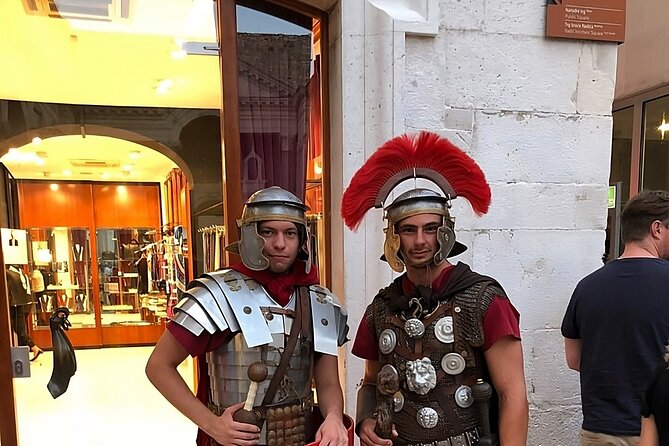
A private tour is not automatically better than a group tour, but it can be a smart choice in Split. The Old Town has narrow passages, irregular streets, and many layers of history packed into a small area. With only your party taking part, you can stop for questions without holding up strangers.
The private format also gives the guide room to respond to your interests. You might want more Roman architecture, more Croatian history, or more practical advice about places to visit afterward. The experience is still only about 90 minutes, but the conversation can feel more personal.
The guide is described as educated and well informed about the palace and surrounding sights. Specific comments praise the historical detail, clear speech, pleasant manner, and ability to make the past easy to follow. One guide named Antonella is singled out for bringing the palace to life in an easy, engaging way, though guide assignments can vary.
This is not a formal lecture with a fixed script that you simply watch from the side. It is a walking conversation, so ask questions when something catches your attention.
Is $66.54 per person fair?
At $66.54 per person, this tour costs more than joining a large shared walk. The price is easier to justify if you value privacy, personal questions, and a focused introduction to Split rather than the lowest possible price.
You are paying for about 90 minutes with an English-speaking guide and a route that covers the palace, its substructures, the Golden Gate, Riva, Fruit’s Square, and the synagogue. All listed stops are included in the walk, but the museum section of the substructures and synagogue admission are not included.
For a couple or family that wants a private orientation soon after arrival, the cost can be reasonable. Group discounts are available, which may improve the value for larger parties. If you are happy to read signs, explore independently, and spend several hours at your own pace, you may prefer to save the money and visit the same area without a guide.
The strongest value comes from the connections between places. A guide can explain why the Peristyle, Vestibule, underground rooms, Golden Gate, and modern streets belong to one larger story. That context is hard to gain from a quick walk alone.
Timing, pace, and practical limits
The advertised duration is approximately one hour and 30 minutes. Since the route includes seven stops, the pace is steady. You will have time to listen and look around, but this is not a slow photography walk.
Wear comfortable shoes and be ready for historic surfaces and high steps. The experience is near public transportation, and service animals are allowed. Most people can participate, but anyone with trouble handling high steps should choose carefully.
Confirmation arrives at booking, and free cancellation is available up to 24 hours before the start time for a full refund. Changes or cancellations inside that 24-hour window are not accepted for a refund. The activity also requires a minimum number of participants, so an operator cancellation could lead to another date or a full refund.
The tour is typically booked about nine days ahead. That suggests planning is sensible, especially if you want a particular day during a busy visit, though no guide or time preference is guaranteed by the information provided.
Who should book this Split walking tour?
I would recommend it to first-time visitors who want a clear introduction to Diocletian’s Palace without joining a large group. It also suits families, couples, and small parties that prefer to ask questions and set the tone of the walk themselves.
History fans will appreciate the range. The route moves from Roman imperial planning to medieval Croatian identity, Venetian military influence, literature, local music, the waterfront, and Jewish heritage. That is a lot for 90 minutes, but it gives you useful leads for the rest of your stay.
I would be more cautious if you want long visits inside every site, a dedicated archaeology tour, or an unhurried photo walk. The schedule is tight, museum admission is separate, and the high steps may be uncomfortable for some people.
Should you book it?
Book this private Split walking tour if you want the palace explained by an English-speaking guide and prefer a personal pace over a cheaper large-group walk. The strongest parts are the clear route, the mix of Roman and later Croatian history, and the chance to ask questions as you go.
Skip it if you already know Diocletian’s Palace well or plan to spend several hours exploring independently. For most first visits, though, the tour gives you a useful map of Split’s Old Town, enough context to make the stonework meaningful, and a solid list of places to revisit at your own speed.
FAQ
How long is the private Split walking tour?
The tour lasts approximately 1 hour and 30 minutes.
What language is the tour offered in?
The tour is offered in English.
Where does the tour start and finish?
It starts at Peristil ulica, near the Peristyle of Diocletian’s Palace, and ends back at the meeting point.
Is admission to the palace substructures included?
The walking tour includes a visit through the substructures, but admission to the museum section is not included. The museum section is not part of the guided visit.
Is this a private tour?
Yes. Only your group participates in the activity.
Can I cancel for a full refund?
Yes, if you cancel at least 24 hours before the experience starts. Cancellations or changes made less than 24 hours in advance are not accepted for a refund.
Just added around Croatia
- Split: Local History and Culture 90-Minute Walking Tour★ 5.0 · 194 reviews
- Split: Walking tour of Split with a ‘Magister’ of History★ 5.0 · 110 reviews
- Split: Historical & Gastro Treasures Tour with Green Market★ 4.9 · 144 reviews
- Split: Historical Tour of Salona, Klis Fortress and Trogir★ 4.1 · 108 reviews
- Split: Private Walking Tour in the Historical Town Center★ 5.0 · 25 reviews
- Šibenik: Croatia in a Day, Vistas, History, Olive Oil, Wine★ 5.0 · 30 reviews
- Šibenik: Medieval Night Walking Tour★ 5.0 · 27 reviews
- Dubrovnik: Red History Museum Regular Ticket★ 4.6 · 134 reviews
Split History Tours, compared.
Walking Tour of Split with a ‘Magister’ of History
Read our review →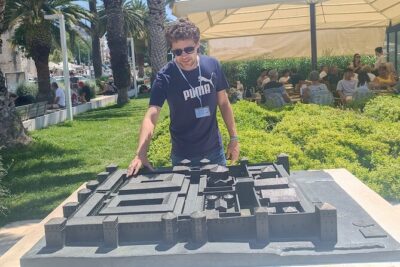
SPLIT-PRIVATE Walking Tour of Diocletian’s Palace & Old Town
Read our review →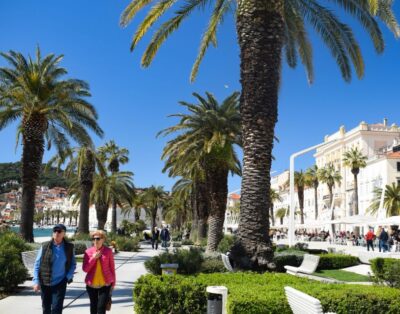
Split: Local History and Culture 90-Minute Walking Tour
Read our review →
Split: Historical & Gastro Treasures Tour with Green Market
Read our review →
Split: Walking tour of Split with a ‘Magister’ of History
Read our review →
Split: Historical Tour of Salona, Klis Fortress and Trogir
Read our review →Browse the lists this tour appears in