
Review · JAPAN
Fukuoka Essentials: History, Culture, & Charms
Fukuoka’s appeal comes into focus on foot, where an old Zen temple, a working shopping arcade, and busy city streets sit close together. This private walk gives you that useful first look, with guides such as Radim and Louise adjusting the pace and conversation to your interests.
I like the mix of quiet temple grounds and everyday Hakata life, especially the contrast between Shofukuji and Kawabata Arcade. I also like the rooftop finish at Hakata Station, which gives you a clear sense of how the city fits together. The main consideration is walking: the route includes several transfers on foot, and food, drinks, transport, and attraction tickets cost extra.
Key points to know before booking
- Kyushu’s oldest Zen temple: Shofukuji gives the tour a strong historical opening and a calm break from the city.
- Four major cultural stops: You visit Shofukuji, Tochoji, Kushida Shrine, and Sumiyoshi Shrine, each with a different feel.
- A taste of daily Fukuoka: Kawabata Shopping Arcade offers 15 minutes of free time for browsing, snacks, or souvenirs.
- Private and adjustable: Your guide can adapt the pace and focus, a useful feature for families or visitors with limited mobility.
- Easy city orientation: The route begins and ends near Hakata Station, with a rooftop view at the finish.
- Good value at $58: For a private three-hour introduction, the price is fair, though extras are not included.
Why this walk is a smart first look at Fukuoka
Many city tours rush from one photo stop to the next. This one works better as an introduction because it links several parts of Fukuoka’s identity: Zen Buddhism, Shinto worship, local commerce, and the modern railway district.
You start at the CASETiFY studio in Amu Plaza Hakata, right beside the main entrance under the large clock. That is a practical meeting spot if you are arriving by train or staying near Hakata Station. A central hotel meeting may also be arranged on request, but only for suitable central locations.
The route is private, so you are not tied to the pace of a large group. That matters in Fukuoka, where the best parts of a temple visit are often the small details: a roofline, a gate, a courtyard, or a local custom that needs a few extra minutes of explanation.
The standard experience lasts about three hours. The activity information also gives a three-to-eight-hour range, so check the available start time and length when booking. The supplied route is a walking tour, though other transport can be arranged for an additional cost.
More Local Culture and Traditions Tours in Japan
- Kyoto Gion: 2-Hour Geisha Culture & History Walking Tour
★ 5.0 · 1,186 reviews - Nara: Half-Day UNESCO Heritage & Local Culture Walking Tour
★ 4.8 · 250 reviews - Tokyo: The Best of Izakaya in Shinjuku Food & Cultural Tour
★ 4.9 · 221 reviews
Shofukuji: a quiet opening in central Fukuoka
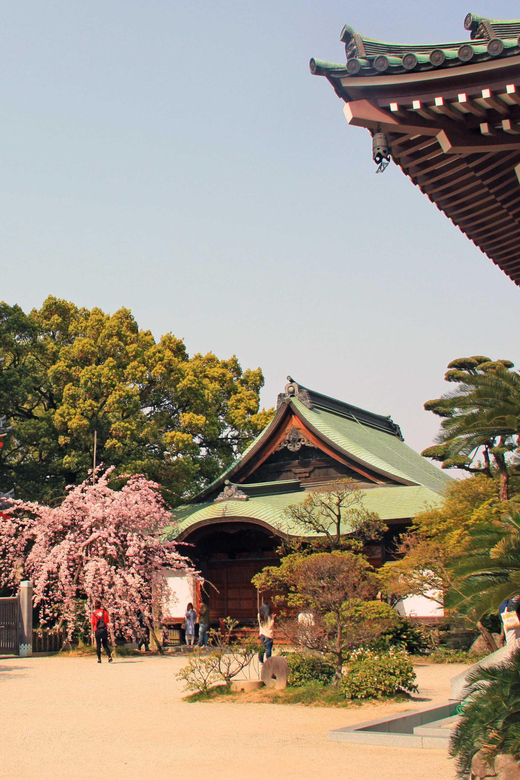
After roughly ten minutes on foot, you reach Shofukuji, the oldest Zen Buddhist temple in Kyushu. This is the strongest historical stop on the route, and it sets a calm tone before the more active streets later in the day.
You can expect a guided look at the temple grounds and architecture. The value here is not a grand spectacle. It is the chance to pause and understand the role Zen Buddhism played in the development of Fukuoka and Hakata.
Shofukuji is also a good reason to take this tour with a guide rather than simply passing by alone. Radim has been praised for explaining the sights without overloading visitors with facts, and that style suits a place where atmosphere matters as much as information.
The temple grounds give you a break from traffic and city noise. Bring comfortable shoes and keep your camera ready, but leave room to simply look around. The visit is more about character and context than checking off a dramatic monument.
Tochoji Temple: a second Buddhist viewpoint
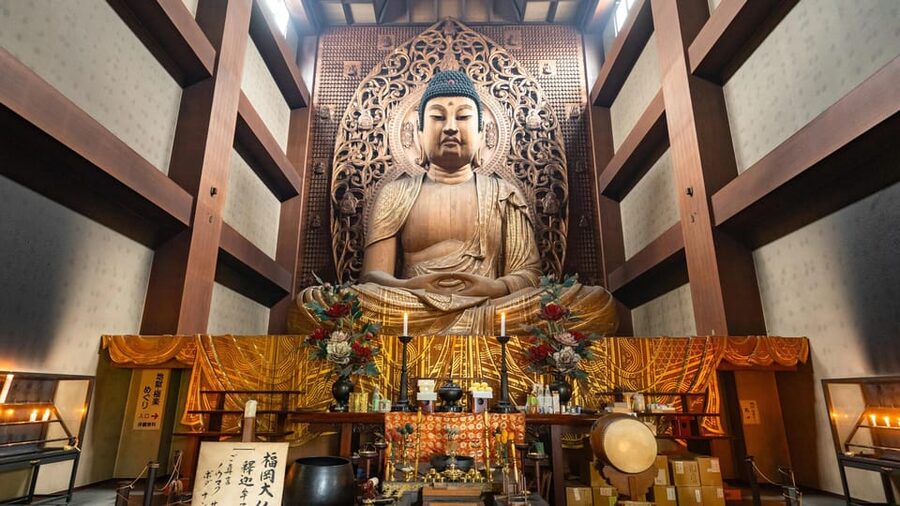
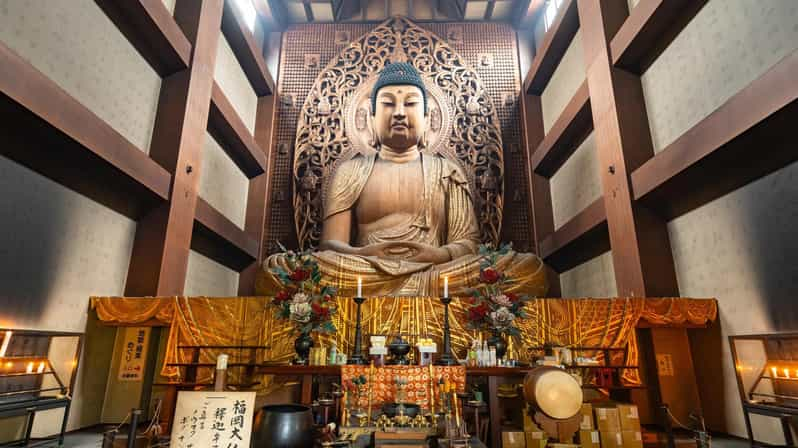
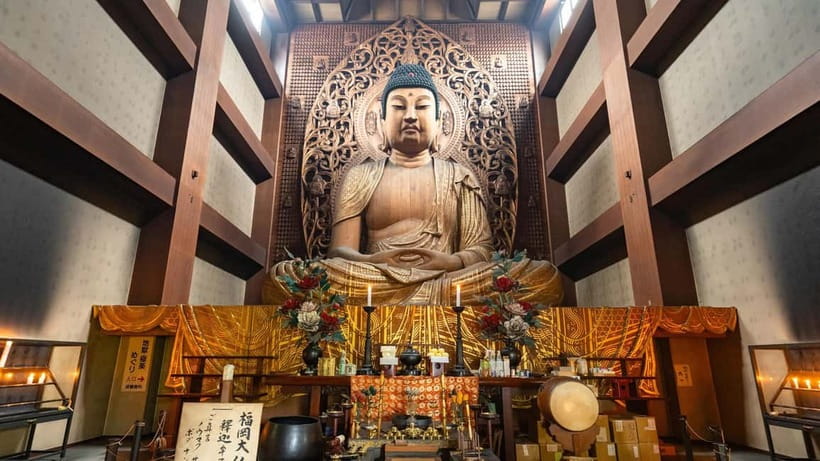
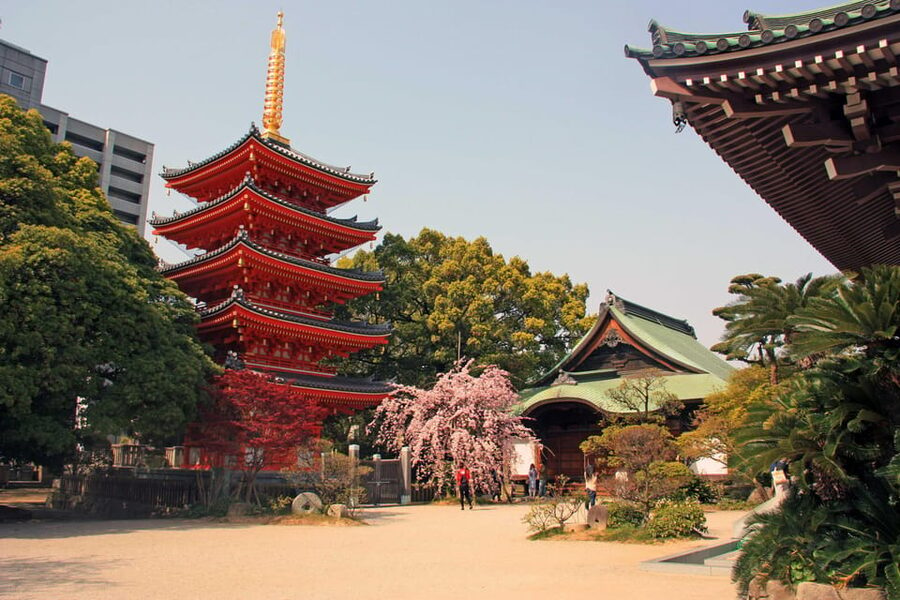
Tochoji follows Shofukuji and adds a different angle to Fukuoka’s Buddhist heritage. The key draw is its large Buddha statue, which gives the stop more visual impact than the quieter first temple.
The guide helps place Tochoji beside Shofukuji rather than treating both as interchangeable. Shofukuji offers the older Zen setting, while Tochoji gives you a major religious site with a striking interior feature. That comparison makes the two stops more useful together.
The itinerary lists both temples as guided visits. Expect time for explanation and questions, not just a quick outside view. If you are interested in Japanese religion, architecture, or the way historic sites sit within a modern city, this part of the walk will likely be the most rewarding.
One practical note: the temples are not the only focus of the experience. If your main goal is a long, slow visit inside every building, confirm the available timing before you book. The tour also needs to reach the shrines and arcade later in the route.
Kushida Shrine and Hakata festival culture
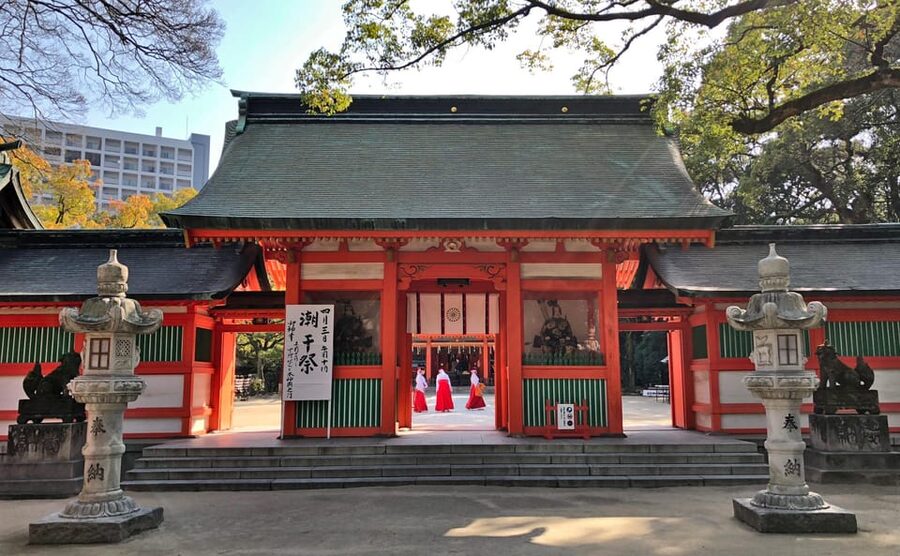
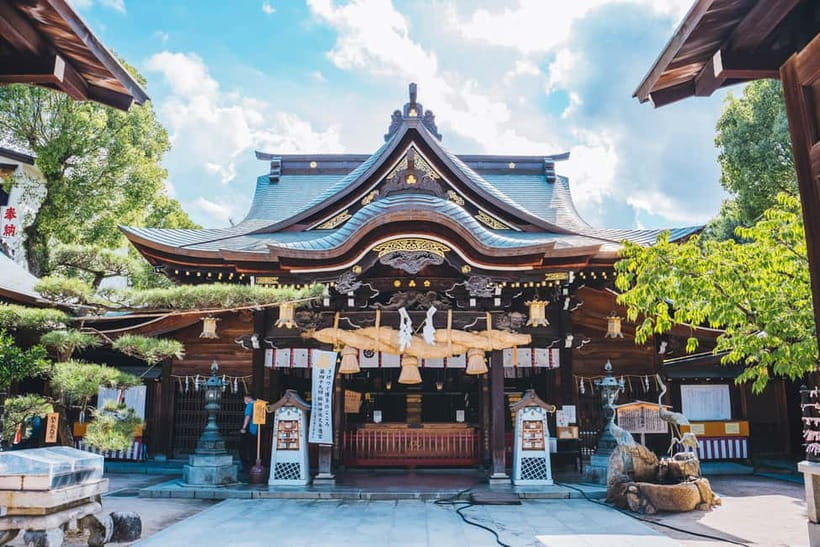
The walk continues for about ten minutes before reaching Kushida Shrine, Fukuoka’s main shrine. This is where the city’s festival identity comes into sharper focus.
Kushida Shrine is closely tied to Hakata Gion Yamakasa, one of Fukuoka’s best-known annual festivals. Your guide can explain why the shrine remains central to local celebrations and point out details in the buildings that are easy to miss when you visit alone.
I like this stop because it shows how a religious site can still be part of ordinary city life. You are not visiting a distant monument isolated from the people around it. The shrine sits within the Hakata area, close to shops, streets, and daily routines.
The visit also provides a useful contrast with the Buddhist temples. Japanese religious sites can look similar at first glance to a newcomer, but the guide’s explanations help you notice the differences in setting, design, and use.
Same city, a different century:
- Kyoto: Fushimi Inari, Kinkakuji, Bamboo Grove 1 Day Bus Tour
★ 4.8 · 4,316 reviews - World Heritage Shirakawa-go and Experience Tours from Kanazawa
★ 5.0 · 4,049 reviews - Tokyo: Imperial Palace and Shogun Historical Walking Tour
★ 5.0 · 2,251 reviews - World Heritage Kyoto & Nara Uji Authentic Matcha Experience
★ 5.0 · 1,573 reviews
Kawabata Arcade: your short taste of local Hakata
From Kushida Shrine, the route moves into Kawabata Shopping Street. This traditional covered arcade is one of the most enjoyable parts of the experience for anyone who wants more than temples.
You get about 15 minutes of free time here. That is enough for a quick snack, a look at local shops, or a small souvenir, but it is not a full shopping session. If you want to stop at several stores or eat a proper meal, you will need to plan extra time outside the standard tour.
The arcade brings sound, smells, and movement into the day. Shops sell a range of everyday goods, and food stalls or small eateries may tempt you as you walk. I would keep some yen available, even though the tour price does not include food or drinks.
This is also a useful place to ask your guide for suggestions. The guides have offered restaurant, shopping, and activity advice beyond the route, which can help you make better use of the rest of your stay.
Sumiyoshi Shrine: a calmer final cultural stop
After about 14 minutes on foot, you reach Sumiyoshi Shrine. Its design differs from many other shrines, and the setting has a clear connection with the sea.
That connection gives the stop a quieter mood after the arcade. You can walk through the grounds, look at the distinctive architecture, and hear how the shrine fits into Fukuoka’s relationship with maritime travel and protection.
The tour does not present every shrine as the same. Kushida is tied strongly to the city’s major festival life, while Sumiyoshi offers a more peaceful setting and a different architectural character. That variety is one of the route’s best features.
There is another 13-minute walk toward Hakata Station afterward. The distances are not extreme, but the full route can feel tiring in hot, wet, or cold weather. If you have a temporary physical limitation, tell the guide before starting. Sally’s experience shows that the pace and plan can be adjusted when needed, though you should still discuss your needs in advance.
Hakata Station rooftop: a useful finish
The tour finishes back at Hakata Station, where you can head to the rooftop for a broad city view. This is not just a pleasant ending. It helps you understand the geography of the places you have just visited.
From above, you can see Fukuoka spread out from the station area. If your timing reaches sunset, the city changes as lights appear across the urban view. The rooftop also gives you a final chance to take photographs without adding another long transfer.
I like ending here because the tour begins and ends in a practical part of the city. You do not have to find your way back from a distant suburb, and you are well placed for trains, shopping, or dinner afterward.
The view is weather dependent, of course. On a cloudy day, it may be less dramatic, but the station still makes a convenient finish and the scenic walk back provides another chance to ask your guide for local suggestions.
The guides and the private-tour advantage
The strongest pattern in the available feedback is the quality of the guiding. Radim is repeatedly described as easy to talk with, clear in English, and willing to adjust the pace. Louise is also described as attentive and ready to answer questions. Other names appear as Radim or Vadim, so confirm your assigned guide when you book.
The practical benefit is more important than the name. You can ask about food, shopping, nearby sights, or the rest of your Kyushu trip as you go. The route can also be shaped around your interests, within the time available.
Families may appreciate the flexible approach. One experience included a teenager who stayed engaged, and another family had the walk adjusted to suit its speed. If you prefer a brisk sightseeing pace, say so. If you need more time at the temples or shorter walking stretches, say that too.
The tour is offered in English and Czech. A private group is available, which gives you more control over the pace and conversation than a large scheduled group.
Is $58 a fair price?
At $58 per person, this is a reasonable price for a private, locally guided introduction lasting about three hours. You are paying for planning, route knowledge, explanations, and the ability to adapt the walk to your interests.
The price is less attractive if you only want transport between sights or prefer to explore silently with a guidebook. It also does not cover transport, food, drinks, or attraction tickets. Since the route is primarily on foot and the listed stops are generally visited as cultural sites, the main value comes from the guide rather than from included admissions.
For a solo visitor, the cost may feel higher than joining a group tour. For a couple, family, or small private party, it becomes easier to justify because the guide can focus on your questions and walking speed.
You can cancel up to 24 hours ahead for a full refund, and the reserve-now, pay-later option keeps your plans flexible. Those terms are useful if your Fukuoka schedule is still changing.
Who will get the most from this Fukuoka walk?
I would choose this tour if you have one to two days in Fukuoka and want a clear introduction before exploring on your own. It is especially useful on a first visit, when deciding which districts and cultural sites deserve more time.
It suits you if you enjoy:
- Japanese temples and shrines, but want explanations in plain English
- Short walks between several central sights
- Local shopping streets more than staged attractions
- A private pace and the chance to ask many questions
- Practical help with restaurants, shopping, and later plans
- A mix of history, daily life, and city views
It may not suit you if you want a full-day food tour, extensive shopping time, or a remote Kyushu excursion. The route is centered on Fukuoka and Hakata, and its purpose is orientation rather than a deep visit to every site.
The three-hour format is a strength for many people. You get a useful introduction without giving up a whole day. If you want more time, the activity can run longer depending on availability, but confirm the duration before booking.
What to know before you go
Wear shoes you can walk in comfortably. The route includes walks of about 10, 14, and 13 minutes between key stops, plus the movement within temple and shrine grounds.
Start with a little flexibility. The guide may spend more time on Buddhism, festivals, architecture, or modern Fukuoka depending on your interests. That personal touch is one of the main reasons to choose a private walk.
Bring money for snacks or purchases at Kawabata Arcade. Food and drinks are not included, and the 15-minute free period is short, so decide in advance whether you want to browse or eat.
Meet at the CASETiFY studio in Amu Plaza Hakata, beside the main entrance under the large clock. Hotel pickup can be arranged for central locations on request, but the standard meeting point is easy to find near Hakata Station.
Should you book it?
Book this tour if you want a friendly, flexible first look at Fukuoka, with real local streets between the headline sights. The combination of Shofukuji, Tochoji, Kushida Shrine, Kawabata Arcade, Sumiyoshi Shrine, and the Hakata Station rooftop gives you a good spread of the city in a short time.
The best reason to book is the guide’s personal approach. Radim has been particularly noted for adjusting pace, answering questions, and offering useful ideas for the rest of a trip. Just remember that the route is a walking introduction, not a food tour or an all-day excursion, and budget separately for anything you eat, buy, or reach by transport.
FAQ
How long does the tour last?
The core walking experience lasts about three hours. Availability is listed from three to eight hours, so check the selected time and duration when booking.
Where does the tour begin?
The standard meeting point is the CASETiFY studio store in Amu Plaza Hakata, beside the main entrance under the large clock.
Can I meet the guide at my hotel?
Hotel pickup is available on request for central locations. Otherwise, you meet at the Hakata Station area meeting point.
Which places are included?
The route includes Shofukuji, Tochoji Temple, Kushida Shrine, Kawabata Shopping Arcade, Sumiyoshi Shrine, and Hakata Station’s rooftop view.
Is transportation included?
No. The experience is primarily on foot. Other transport can be arranged at an additional cost, and transportation costs are not included in the price.
Are food and drinks included?
No. You have free time at Kawabata Shopping Arcade, but you pay separately for any food, drinks, or purchases.
What languages are available?
The tour is offered in English and Czech.
Can I cancel for a refund?
Yes. You can cancel up to 24 hours in advance for a full refund. You can also reserve now and pay later.
Just added around Japan
- Private sake pairing@ancient underground★ 5.0 · 27 reviews
- Tokyo: Asakusa & Sensoji ー Oldest Temple Walking Tour (2hrs)★ 5.0 · 213 reviews
- [30 minutes] Rickshaw tour around Asakusa [History, sightseeing, Tokyo Skytree]★ 5.0 · 38 reviews
- Tokyo: Edo Castle & East Garden of the Imperial Palace Tour★ 4.7 · 112 reviews
- Tokyo: Imperial Palace, the history of Japan (ENGLISH GUIDE)★ 5.0 · 77 reviews
- Tokyo: Customized Private Historical Guided Photoshoot Tour★ 5.0 · 25 reviews
- Osaka: Dark Side of Osaka Night Walking Tour★ 4.9 · 89 reviews
- Osaka: Osaka Castle & Historical Museum Guided Tour★ 4.8 · 28 reviews
Japan History Tours, compared.
Kyoto: Fushimi Inari, Kinkakuji, Bamboo Grove 1 Day Bus Tour
Read our review →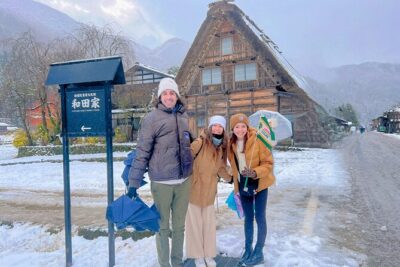
World Heritage Shirakawa-go and Experience Tours from Kanazawa
Read our review →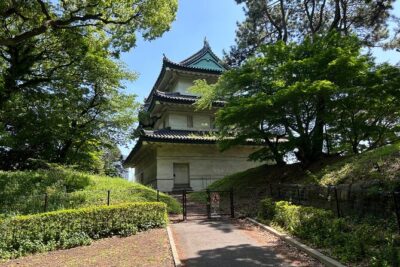
Tokyo: Imperial Palace and Shogun Historical Walking Tour
Read our review →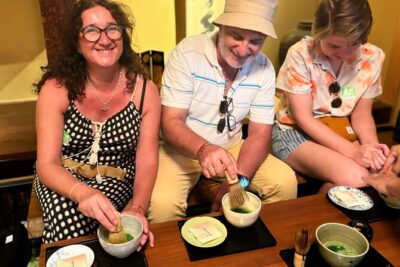
World Heritage Kyoto & Nara Uji Authentic Matcha Experience
Read our review →
Kyoto Gion: 2-Hour Geisha Culture & History Walking Tour
Read our review →
Tokyo Castle & Imperial PalaceーShogun Walking Tour
Read our review →
Kanazawa: World Heritage Shirakawa-go Morning Guided Tour
Read our review →
Tokyo: Imperial Palace Japanese History Walking Tour
Read our review →Browse the lists this tour appears in