
Review · NUREMBERG
Nürnberg: Mörder, Fälscher, Messerstecher
Nuremberg’s prettiest streets conceal some grim stories. This two-hour walk follows the city’s old crime trail, from the Hangman’s House and the career of Franz Schmidt to witch trials, prison cells, public punishment, and the death penalty. It turns familiar sights into places with sharp edges.
I like the way the route links major landmarks with lesser-known history, especially the medieval Lochgefängnisse and the final stop at the Schuldturm. I also like the price: at $15 per person, you get a qualified guide and a focused look at Nuremberg’s past without paying admission to several museums. The main drawback is that the tour is in German, and entry to the Hangman’s House, town hall, and dungeons is not included.
Key points to know before booking
- Franz Schmidt’s career takes center stage: Learn about Nuremberg’s most famous hangman and the work behind the title.
- The route covers major Old Town sights: Walk from the Hangman’s House to the wine market, town hall, Hauptmarkt, Fleischbrücke, and Schuldturm.
- Witch hunts are part of the story: The historic Weinmarkt provides the setting for a look at persecution and justice in Nuremberg.
- The medieval dungeons are explained from outside: The tour discusses the Lochgefängnisse, but admission is not included.
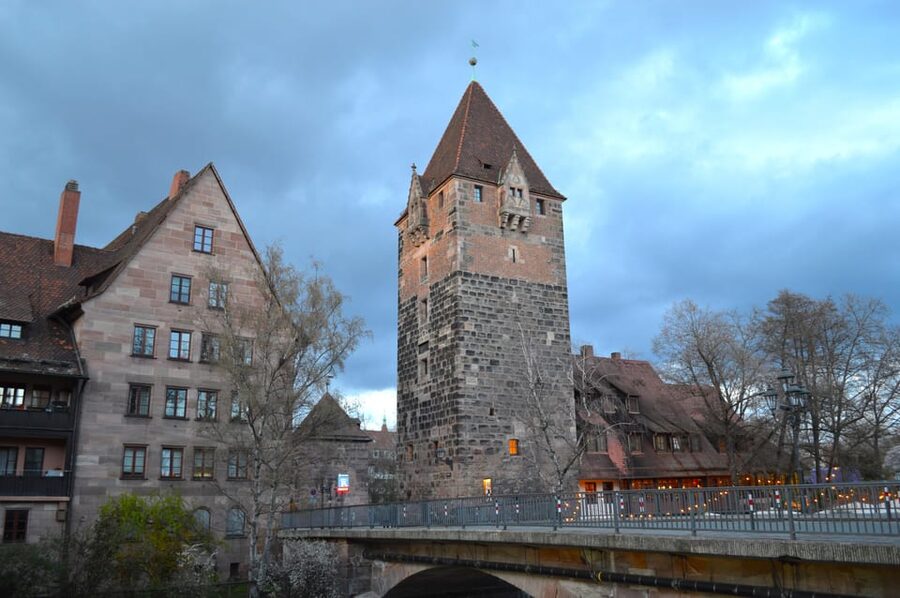
- The tour ends at the Schuldturm: You finish by the old debtors’ tower on Vordere Insel Schütt, not where you began.
- German is the only stated language: You need comfortable German listening skills to follow the guide’s explanations and questions.
Why Nuremberg’s crime history works so well on foot
A crime tour can easily become a parade of gruesome tales. This one has a more useful shape. It uses the Old Town itself as the classroom, showing how justice affected public squares, bridges, towers, markets, and ordinary streets.
I like that the route does not stay in one museum. You move through the city and see how punishment was woven into daily life. The Hauptmarkt was a place for commerce and seasonal celebrations, but it also had a connection to crime and execution. The Fleischbrücke carried shoppers and workers, while the tour uses it to explain corporal punishment in the Middle Ages.
The walk also gives you a better sense of how power worked. The town hall, prisons, and towers were not just handsome old buildings. They were part of a system that judged, confined, punished, and sometimes killed people.
At two hours, the experience is long enough to build a clear story but short enough to fit beside other Nuremberg sightseeing. You should expect steady walking through the Old Town, with several brief walks between stops. Comfortable shoes are important, and weather-appropriate clothing matters because this is an outdoor tour in all but name.
Other history tours people book around Germany:
- Berlin: Third Reich & Cold War Guided Walking Tour
★ 4.9 · 8,378 reviews - Leipzig: City History Canal Sightseeing Tour on a Motorboat
★ 4.7 · 7,671 reviews - Munich: Third Reich & WWII Walking Tour
★ 4.6 · 6,181 reviews
Starting at the Hangman’s House
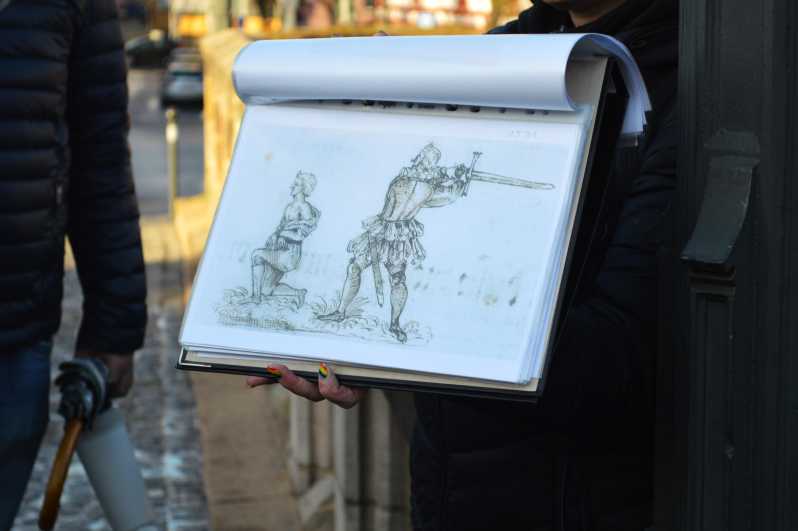
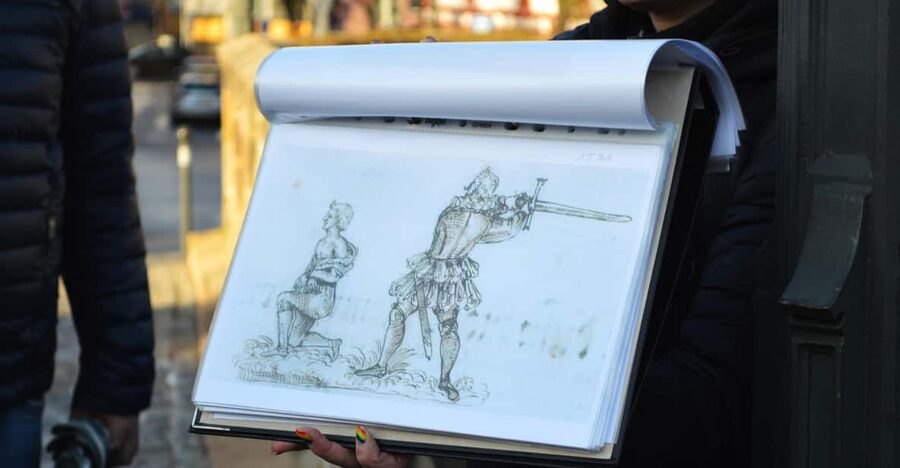
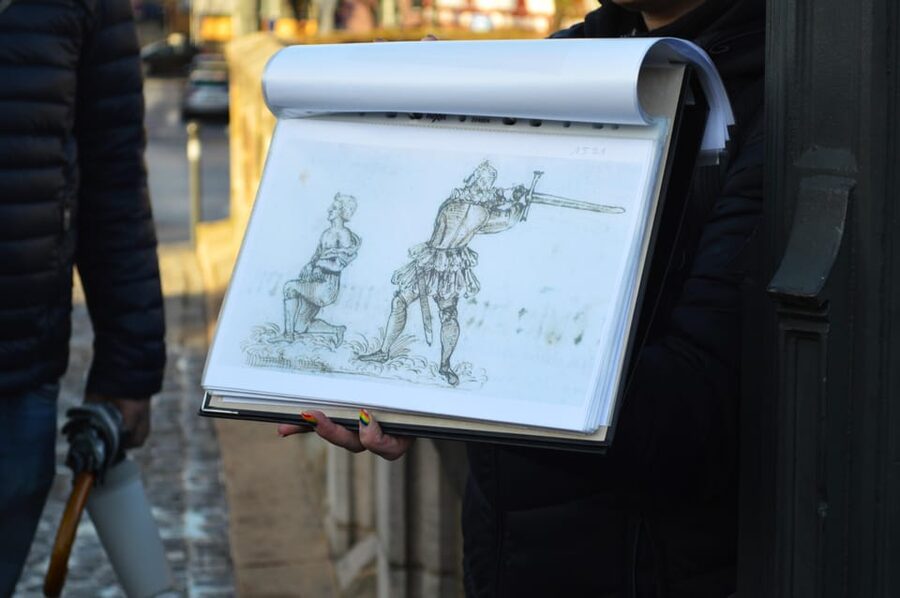
Meet your guide in front of the entrance to the Henkerhaus Museum, also called the Hangman’s House. Look for a guide carrying a picture folder and wearing a green name tag marked Geschichte Für Alle.
The starting point is a smart choice. The building gives the tour an immediate focus, and the opening story introduces Franz Schmidt, Nuremberg’s best-known hangman. His work offers a way to examine medieval and early modern punishment without treating it as simple entertainment.
You will learn about the history of the house and the role of the hangman. That role was complicated. A hangman carried out official sentences, but the job could also place him at the edge of society. The tour uses Schmidt’s story to show how a city handled crime, punishment, and the people assigned to enforce the law.
The tour does not include admission to the Hangman’s House. That keeps the booking price low, but you should know that the guided discussion and the museum visit are separate experiences. If you want to see the interior, budget extra time and money outside the walking tour.
Weinmarkt and the story of witch hunts
After leaving the Hangman’s House, you walk about four minutes to the Weinmarkt. The distance is short, but the subject changes from one official executioner to a wider look at persecution and fear.
Here the guide discusses witch hunts in Nuremberg. This stop matters because it broadens the tour beyond physical punishment. Witch trials raise questions about accusation, evidence, social pressure, and the way authorities responded when fear took hold.
You can expect the guide to explain the topic in the setting where the history unfolded, rather than presenting it as an isolated chapter in a book. That approach helps you connect the subject to the streets around you. It also gives the tour a more serious tone than a simple list of criminal cases.
The quality of the explanation matters a great deal here. The strongest feedback about this experience points to guides who explain a lot without making the walk feel heavy, and who handle questions with care. That is especially useful at a stop such as the Weinmarkt, where context matters more than shock value.
Town hall and Nuremberg’s justice system
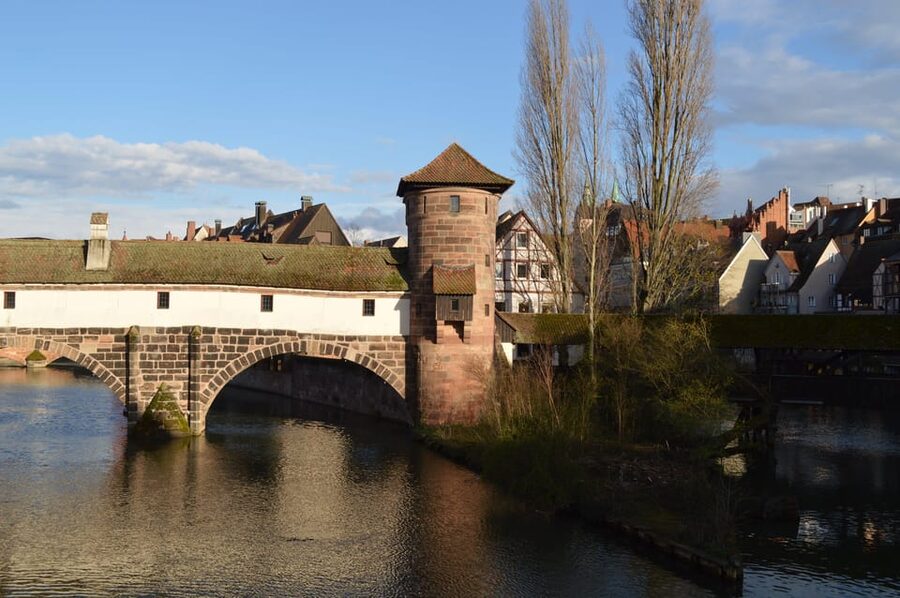
A three-minute walk takes you to Nuremberg’s Old City Hall. This is one of the route’s major landmarks, and the tour uses it to explain the city’s medieval justice system.
I like this stop because it connects political authority with the darker places visited later. The town hall represents the people and officials who made decisions, while the prisons and towers show what happened after those decisions were made.
The tour’s purpose is not simply to admire the building. You will hear about how justice operated in medieval Nuremberg and how the city dealt with accused and convicted people. That makes the stop useful even if you have already seen the town hall on a standard Old Town walk.
Admission to the town hall is not included. The guide provides an exterior explanation as part of the walking tour, so you can decide later if an interior visit fits your plans. If your main interest is architecture, this stop may feel brief. If you want civic history and law, it adds a good layer to the route.
Same city, a different century:
- Berlin’s Best: 2 Hour Walking Tour Third Reich and the Cold War
★ 5.0 · 5,486 reviews - Third Reich Berlin: Hitler and WWII Walking Tour
★ 5.0 · 3,301 reviews - Leipzig: 1.5-Hour Historical Walking Tour in German
★ 4.7 · 2,217 reviews - Nuremberg: Medieval Dungeons Guided Tour
★ 4.8 · 2,214 reviews
Inside the story of the Lochgefängnisse
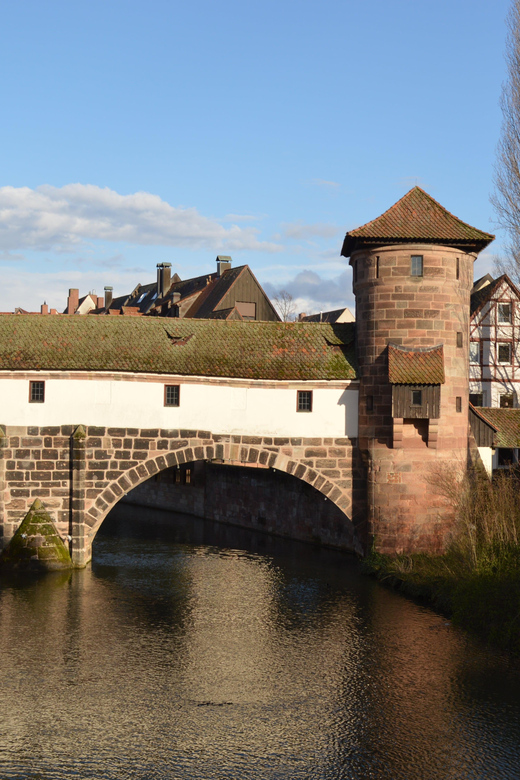
Next comes the medieval prison known as the Lochgefängnisse, or medieval dungeons. The tour explains the prison’s purpose and the conditions faced by inmates.
This is one of the most distinctive parts of the walk. A medieval prison can sound like a standard sightseeing stop, but the focus here is on how the facility functioned and what confinement meant. You will hear about the role of the dungeons within Nuremberg’s justice system, not just a collection of frightening details.
Admission to the dungeons is not included. That distinction is important. You receive a guided account of the place, but you should not book this walk expecting a dungeon interior visit as part of the $15 price.
For many people, this will be the point where the tour’s themes come together. The hangman carried out sentences, the authorities made legal decisions, and the prison held people within that system. The dungeons make the machinery of punishment easier to understand.
Hauptmarkt, Christkindlesmarkt, and public punishment
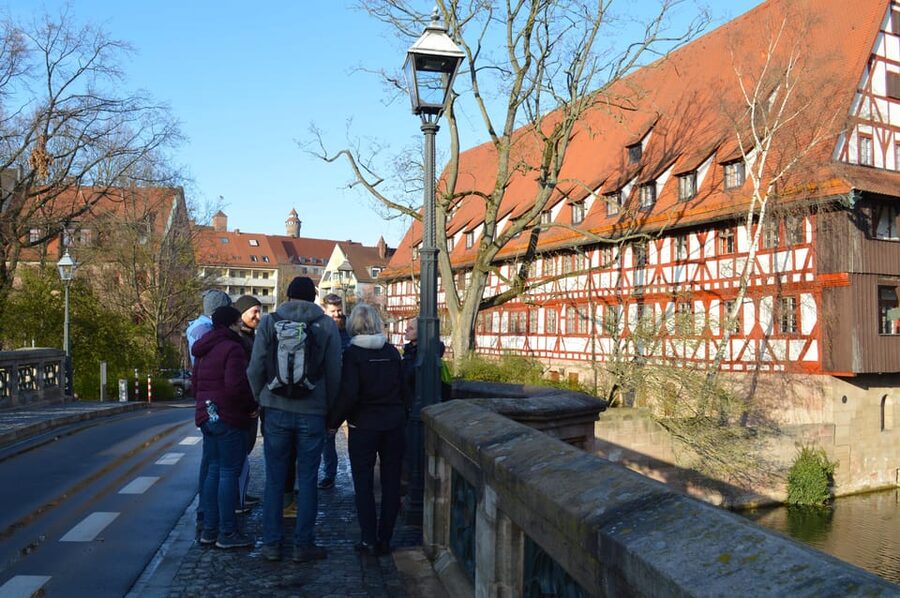
A short walk of about one minute brings you to the Hauptmarkt, Nuremberg’s famous main market. In December, this is where the Christkindlesmarkt takes place, so the square may be familiar from festive photographs or a Christmas visit.
The tour asks you to see the square differently. Along with trade and celebration, the guide explains its connection to everyday crime and the death penalty. The contrast is striking. A place now linked with holiday lights and market stalls also carries memories of public justice and death.
This is one of the tour’s best choices because it changes how you read a famous sight. You do not need to visit an obscure corner to find the city’s darker history. It is right in the middle of the place many people already plan to see.
The Hauptmarkt can be especially busy during the Christkindlesmarkt. Crowds may make it harder to hear, and the square’s festive activity can compete with the guide’s talk. I would choose a time when you can listen comfortably, and I would keep your expectations realistic during the December market period.
Fleischbrücke and medieval corporal punishment
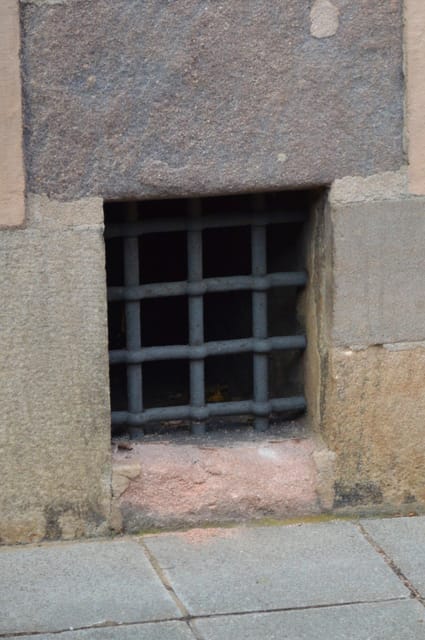
From the Hauptmarkt, the route continues for about two minutes to the Fleischbrücke. Here you learn about corporal punishment in the Middle Ages.
The bridge is a useful setting because it turns an ordinary crossing into part of the story. The stop shows how punishment could be public, physical, and tied to places where people gathered. You get a sense of how justice was meant not only to penalize an individual but also to warn everyone watching.
This section will appeal to you if you want the social meaning behind medieval punishment. It is less about memorizing dates and more about understanding how public spaces were used to enforce authority.
The subject is not light, so this may not be the right choice for young children or anyone looking for a cheerful city walk. The tour deals with crime, death, prisons, and bodily punishment. Its appeal comes from historical context, not a relaxed sightseeing mood.
Findelgasse and the story of Peter Henlein
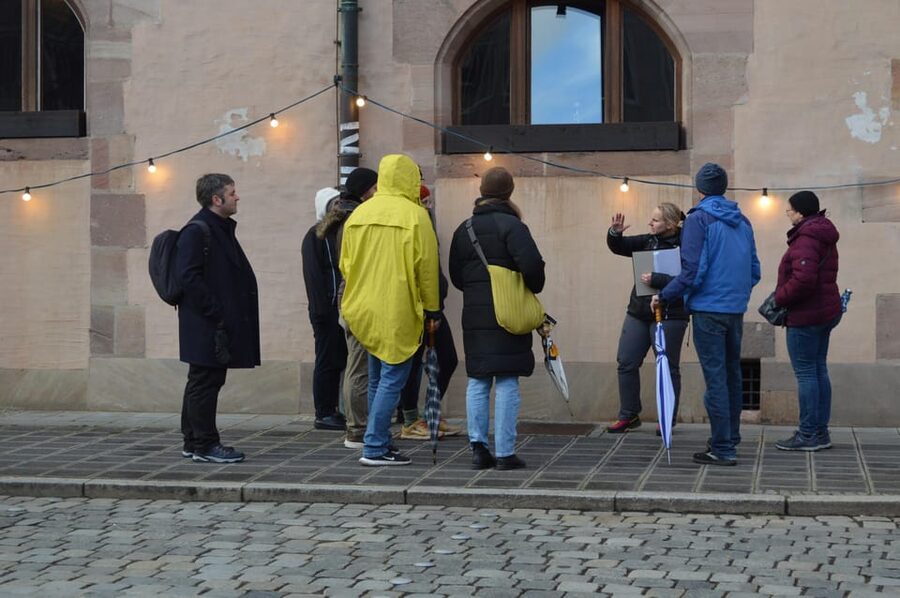
The walk then heads toward Findelgasse, a five-minute stretch that shifts the subject once again. Here the guide tells the story of Peter Henlein, a famous watchmaker.
This stop adds welcome variety. The route is called a crime-history walk, but the story of Henlein shows how the tour also uses individual lives and occupations to build a picture of old Nuremberg. The city’s past was not made only by judges, prisoners, and executioners.
The information supplied for the tour does not give more detail about Henlein’s connection to the crime theme, so you should see this as a short historical stop rather than a full watchmaking visit. It may be especially interesting if you like the way local figures fit into a city’s wider story.
Ending at the Schuldturm
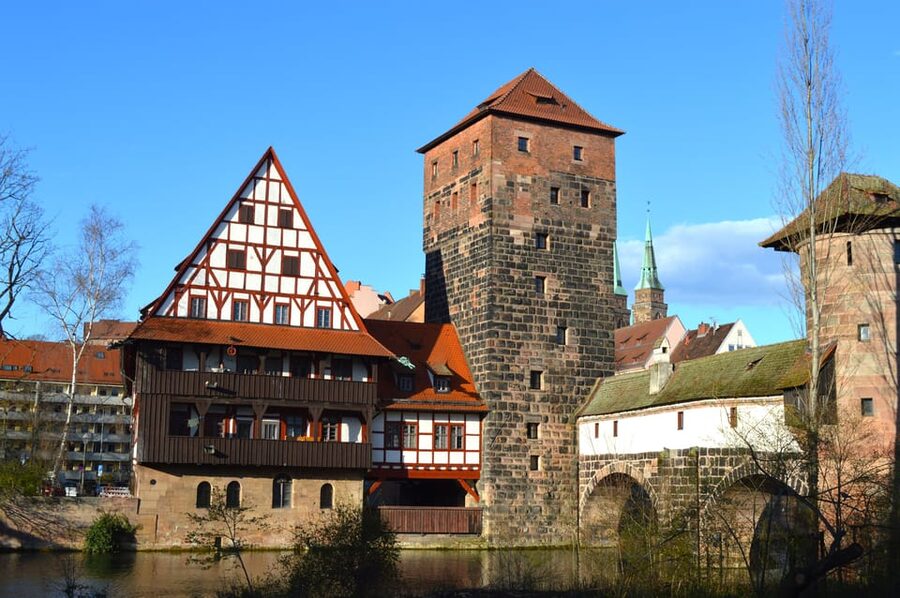
The final stop is the Schuldturm, or debtors’ tower, on Vordere Insel Schütt. This is where the tour ends, so you will need to make your own way back to the Old Town or onward to your next stop.
The guide explains the tower’s purpose and the inmates held there. That gives the tour a fitting final chapter. Earlier stops have covered punishment, imprisonment, and authority. The Schuldturm adds the specific problem of debt and shows that incarceration was not limited to violent crime.
Ending here also gives the walk a clear geographic direction. You begin near the Hangman’s House and finish at the river island area, rather than returning to the starting point. I would avoid scheduling a tight appointment at the Hangman’s House immediately afterward.
What $15 includes, and what it does not
At $15 per person, this is good value if you want a guided explanation of Nuremberg’s darker past. The fee covers a two-hour walking tour with a qualified guide. You are paying for the route, the storytelling, and the historical links between sites.
The price does not include entry to the Hangman’s House, the town hall, or the medieval dungeons. That is not a serious flaw for a walking tour, but it affects your planning. You can treat the walk as an outdoor introduction, then decide which interiors deserve separate visits.
The tour is offered by Geschichte Für Alle e.V., a local organization focused on historical walks and public education. The clearest strength in the feedback is the guiding: visitors praise professional presentation, answers to questions, and explanations that remain interesting and well supported. One account even found the tour worthwhile in rain and darkness, which is a useful reminder that the subject does not depend on sunny views.
The guide speaks German. Since the tour covers legal and historical ideas, not just place names, you should have enough German to follow a sustained explanation. No English option is given.
Free cancellation is available up to 24 hours before the start, and you can reserve while paying later. For groups of 10 or more, contact [email protected]. No invoice can be issued for bookings made through GetYourGuide, with the booking confirmation serving as proof of payment.
Who should book this Nuremberg walk?
I would recommend it to you if you have already seen Nuremberg’s main sights and want to understand what happened behind their attractive facades. It suits history fans, adult travelers, local residents, and anyone who prefers a guided walk with a strong theme.
It is also a good choice if you want a compact experience. Two hours gives you plenty of context without taking over your day. The route moves through the Old Town at a manageable pace, with short walks between most stops.
You should think twice if you want an English-language tour, a museum-entry package, or a gentle walk focused on art and architecture. It is also not suitable for people with mobility impairments, and the subject matter includes executions, prisons, witch hunts, and corporal punishment.
The guide’s manner will shape the experience. The best accounts describe open, careful explanations and guides who handle questions well. That matters more here than flashy presentation. A good guide can make difficult history clear without turning suffering into spectacle.
Should you book it?
Book this tour if you want Nuremberg’s Old Town to make more sense as a place of law, punishment, fear, and public authority. The route has a strong sequence, the price is modest, and the stops include major sights that you might otherwise see only from the outside.
Skip it if your German is limited, you dislike grim historical subjects, or you need interior access included in the price. For everyone else, this is a focused way to see familiar Nuremberg landmarks with a sharper and more human story attached to them.
FAQ
How long does the Nürnberg: Mörder, Fälscher, Messerstecher tour last?
The walking tour lasts two hours.
How much does the tour cost?
The stated price is $15 per person.
What language is the tour offered in?
The live guided tour is offered in German.
Where does the tour begin?
Meet the guide in front of the entrance to the Henkerhaus Museum, also known as the Hangman’s House.
How can I identify the guide?
The guide carries a picture folder and wears a green name tag marked Geschichte Für Alle.
Where does the tour finish?
The tour ends at the Schuldturm area on Vordere Insel Schütt, 90403 Nürnberg-Mitte, Germany.
Are museum and dungeon admissions included?
No. Entry to the Hangman’s House, the town hall, and the medieval dungeons is not included.
Is the tour suitable for people with mobility impairments?
No. The activity is listed as unsuitable for people with mobility impairments.
What should I bring?
Bring comfortable shoes and clothing suitable for the weather.
Just added around Germany
- Berlin Food & Cultural Tour: Must-Try German & Berliner Classics★ 5.0 · 51 reviews
- Berlin Half-Day World War II Walking Tour★ 4.5 · 48 reviews
- Small-Group Historical Bike Tour in Berlin★ 4.5 · 103 reviews
- Historic center of Berlin – Tour in Italian★ 5.0 · 143 reviews
- Berlin Cold War & World War II Third Reich Walking Tour★ 4.5 · 30 reviews
- Private Taxi Tour City East & West History and Architecture 3-4h★ 5.0 · 42 reviews
- Berlin Wall and Cold War Bike Tour in Small Groups★ 5.0 · 114 reviews
- Private Tour: Jewish Heritage Walking Tour of Berlin★ 5.0 · 29 reviews
Nuremberg History Tours, compared.
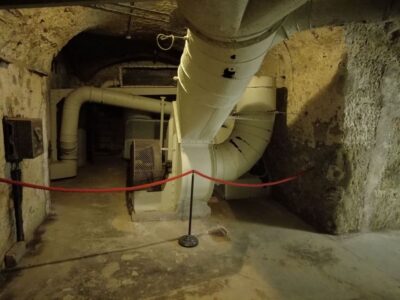
Nuremberg: Historischer Kunstbunker WWII Art Bunker Tour
Read our review →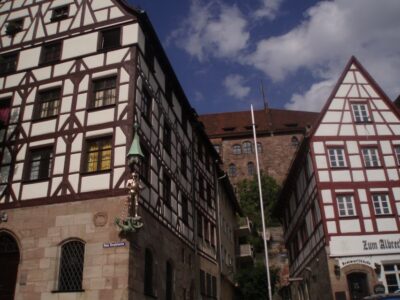
Nuremberg: 1.5-Hour Private Tour through Historical Old Town
Read our review →
“Rotes Bier” and “Blaue Zipfel”. A historical-culinary walk
Read our review →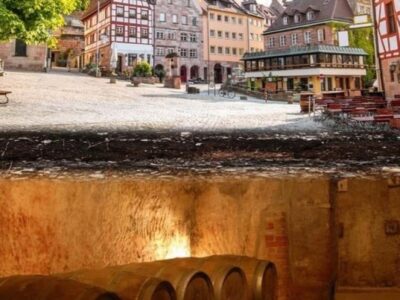
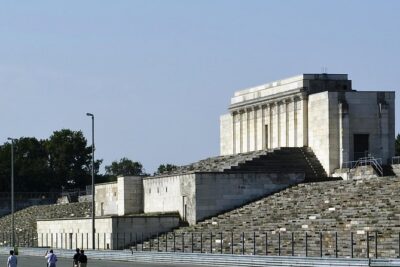
Nuremberg: WWII Tour, Courtroom 600 and 3rd Reich Sites
Read our review →
Browse the lists this tour appears in