
Review · NUREMBERG
Nuremberg: World War II Tour with Hotel Pickup
Nuremberg’s Nazi Party Rally Grounds are so large that seeing them on foot alone can feel confusing. This three-hour tour gives the sprawling site a clear shape, from the unfinished Congress Hall to the parade route and Zeppelinfeld, then links it to the courtroom where the Nuremberg trials took place.
I like the hotel pickup and the small group limit of eight, which make a difficult subject easier to follow and less tiring. I also like the range of stops: you see both the huge propaganda grounds and the Palace of Justice. The main caution is timing. Thirty minutes at the court can feel short, and the Palace of Justice is closed on Tuesdays.
Key points to know before booking
- The Rally Grounds are the main event: See Luitpoldhain, the Great Road, Congress Hall, and Zeppelinfeld with a guide who explains how the site was used.
- The tour connects place with consequence: The final stop is the Palace of Justice, where the Nuremberg trials were held.
- Hotel pickup saves time: Pickup and return are included for accommodations in Nuremberg’s Old Town.
- The group is genuinely small: The tour is limited to eight participants, allowing a more personal pace than a large coach excursion.
- The court visit is brief and partly self-guided: Entry is not included, and you have about 30 minutes there.
- Check the day carefully: The Palace of Justice is closed on Tuesdays, and one booking reported a pickup failure, so confirm the meeting details before departure.
Why Nuremberg’s Rally Grounds matter
Nuremberg is often introduced through its medieval center, but its 20th-century past is impossible to understand without visiting the southeast side of the city. From 1933 to 1938, the Nazi Party used this area for enormous party rallies designed to display order, power, and mass loyalty.
The scale was part of the message. These were not ordinary public squares. They were carefully planned spaces for speeches, parades, military displays, and staged images of unity. Your guide helps you read the layout instead of simply pointing at old buildings.
That guidance matters here. Much of the site is open and spread out, so the significance is not always obvious from the stones and broad roads alone. You need the political context to understand why the spaces were built and how propaganda shaped the experience of those who attended.
The tour does not treat the subject as spectacle. Its value is in showing how architecture and public ceremony were used by the National Socialist regime, then placing that story beside the legal reckoning that followed after the war.
More WWII and D-Day Tours in Germany
- Berlin: Third Reich & Cold War Guided Walking Tour
★ 4.9 · 8,378 reviews - Munich: Third Reich & WWII Walking Tour
★ 4.6 · 6,181 reviews - Berlin’s Best: 2 Hour Walking Tour Third Reich and the Cold War
★ 5.0 · 5,486 reviews
Getting picked up and crossing Nuremberg
The experience begins with pickup at your accommodation in the Old Town. You are asked to wait in the hotel lobby 10 minutes before the scheduled time, a small but useful detail in a city where finding a vehicle on a busy street can take longer than expected.
The drive toward the Rally Grounds takes about 30 minutes. Transportation is included, so you do not need to work out the connection to the southeast of Nuremberg or navigate between the separate sites yourself.
This is one reason the $94 price can make sense. You are paying not only for a guide but also for door-to-door transportation, a compact group, and a route that would take more planning by public transport. If you are already comfortable finding your own way around Nuremberg, you may find the price less compelling. The convenience is the main saving.
The vehicle also gives you a short rest before walking around the grounds. Bring comfortable shoes. The route includes several outdoor stops, and the site is much larger than a typical city monument.
Luitpoldhain and the ceremonial setting
The first major stop is Luitpoldhain, an area used for the party rallies. You spend about 30 minutes here with the guide.
This stop helps explain the planned nature of the grounds. The rallies were designed to make individuals feel part of something vast and disciplined. The open setting, formal arrangement, and huge gatherings all served that purpose.
I find this kind of explanation more useful than a simple list of dates. The physical setting lets you see how political power was presented through space. Your guide can point out what was built for public ceremonies and how the area fit into the larger rally plan.
Because this is an outdoor stop, conditions can affect your comfort. The tour continues at a steady pace, so comfortable footwear and weather-appropriate clothing are sensible. The grounds are not a compact cluster of monuments where you can spend the whole visit standing in one place.
Walking the nearly two-kilometer Great Road
The Great Road, or Große Straße, receives about 20 minutes of guided sightseeing. It is nearly two kilometers long and was built for parades, though it was never used for its intended purpose.
That unfinished story gives the road a special weight. It was planned as a stage for mass movement and military display, yet the grand event it was meant to host never took place. Looking down its length, you can sense the ambition behind the project and the gap between political fantasy and reality.
The stop is relatively short, so you should not expect a long walk along the entire road. Instead, the guide uses the section you see to explain its intended role and relationship to the rest of the grounds.
This is a good example of why a guide helps. On your own, you might see a broad, formal road and move on. With context, the road becomes evidence of how the regime imagined itself and how much effort went into building a stage for propaganda.
Same city, a different century:
- Leipzig: City History Canal Sightseeing Tour on a Motorboat
★ 4.7 · 7,671 reviews - Third Reich Berlin: Hitler and WWII Walking Tour
★ 5.0 · 3,301 reviews - Leipzig: 1.5-Hour Historical Walking Tour in German
★ 4.7 · 2,217 reviews - Nuremberg: Medieval Dungeons Guided Tour
★ 4.8 · 2,214 reviews
Congress Hall and an unfinished monument
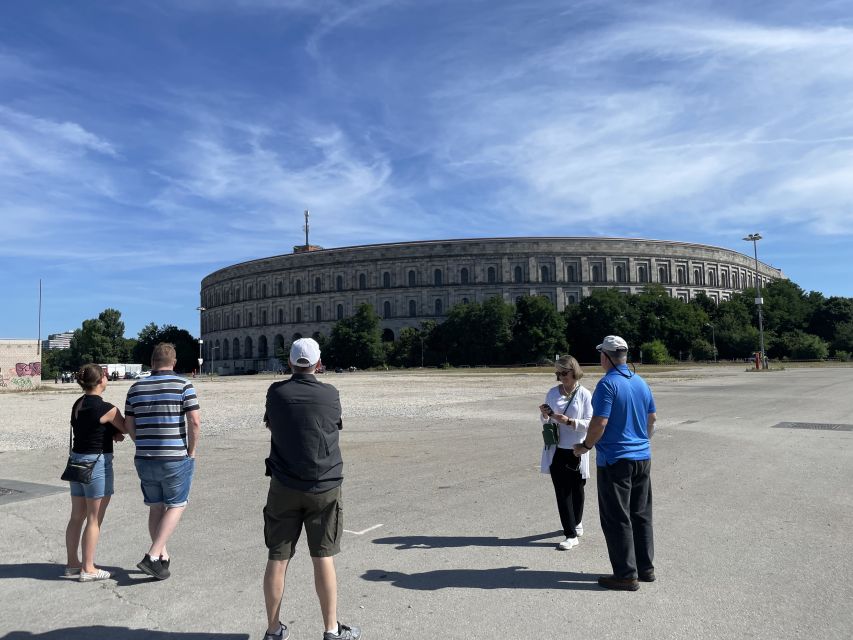
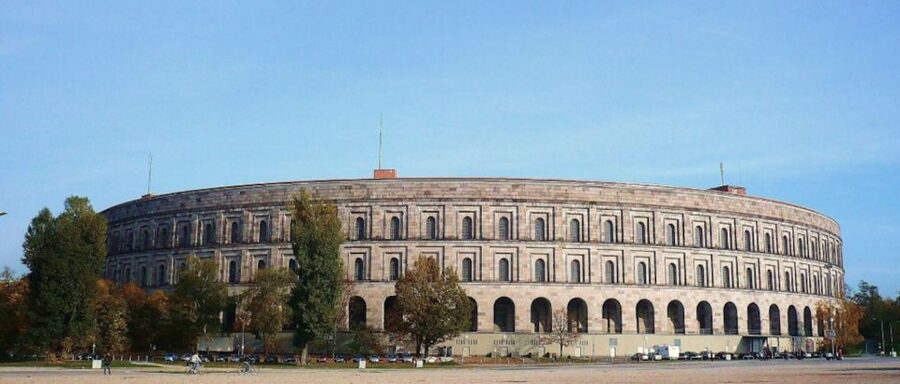
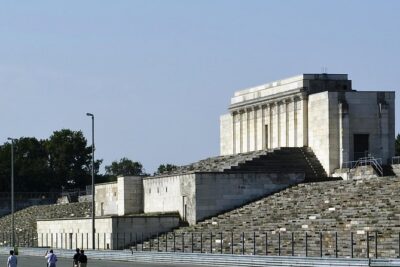
The Congress Hall is one of the tour’s most striking stops. You have about 30 minutes for guided sightseeing around this massive, unfinished structure.
The building was intended to serve the Nazi Party’s purposes, but it was never completed. Its incomplete condition is important. Instead of a finished monument delivering the message its designers wanted, you see a huge project that reveals the scale of the regime’s plans without fully achieving them.
The size can be difficult to grasp from a photograph. Being beside it makes the planned audience and political ambition more apparent. Your guide provides the background needed to understand why the building was designed this way and how it fit into the Rally Grounds.
This is not an entertainment stop. The subject is serious, and the architecture can feel imposing. The tour’s best guides keep the focus on what the place was meant to do, not just how large it is. Saba received especially strong praise for making the heavy subject accessible and insightful, while Rob was described as both informed and fun. Guide quality matters on a tour like this because the facts need clear explanation without turning the visit into a performance.
Zeppelinfeld and the power of spectacle
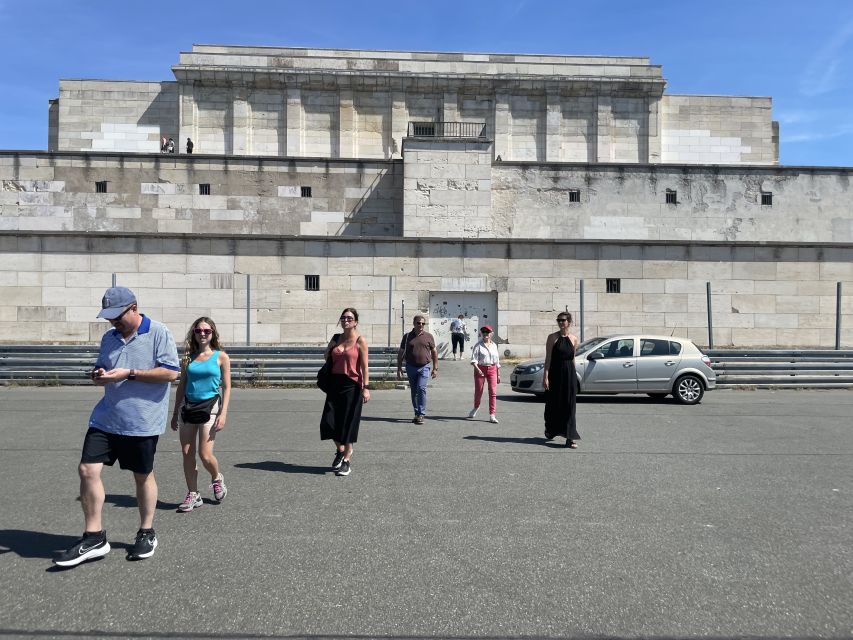
You spend another 30 minutes at Zeppelinfeld. This was one of the main rally areas and is closely linked with the regime’s use of mass gatherings, symbols, and carefully controlled views.
The important point is not only what happened here, but why the space was arranged as it was. Large crowds, formal lines, monumental architecture, and public speeches were all part of a system meant to create obedience and emotional impact.
At Zeppelinfeld, you can better understand the difference between a historic site and a normal public monument. The place was designed to influence people. Its meaning comes from the way architecture, crowd size, ceremony, and political messaging worked together.
The 30-minute stop gives you time to listen and look, though not necessarily to examine every corner. If you want detailed architectural study or extended photography, you may find the schedule brisk. The benefit is that the tour covers several important locations in one morning or afternoon instead of using all three hours at a single building.
The Palace of Justice and Courtroom 600
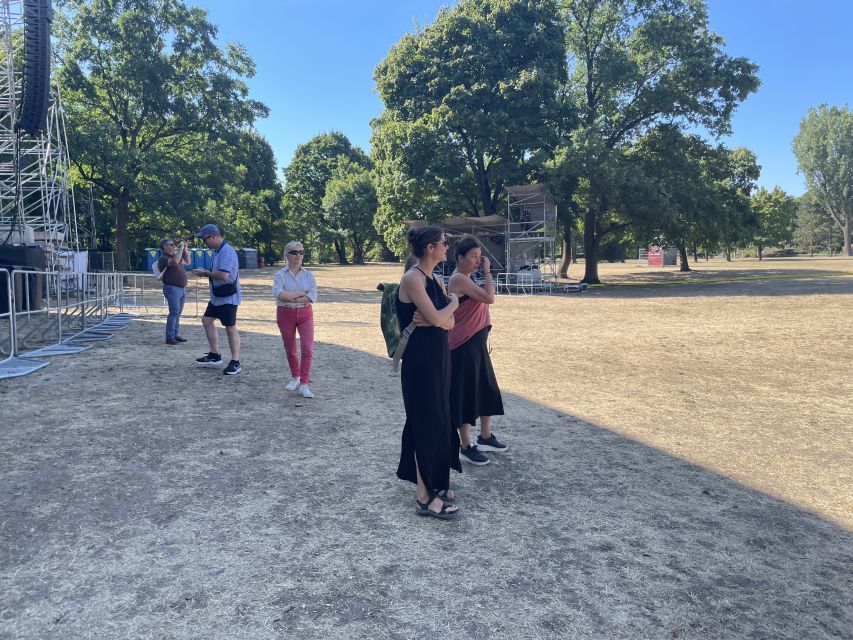
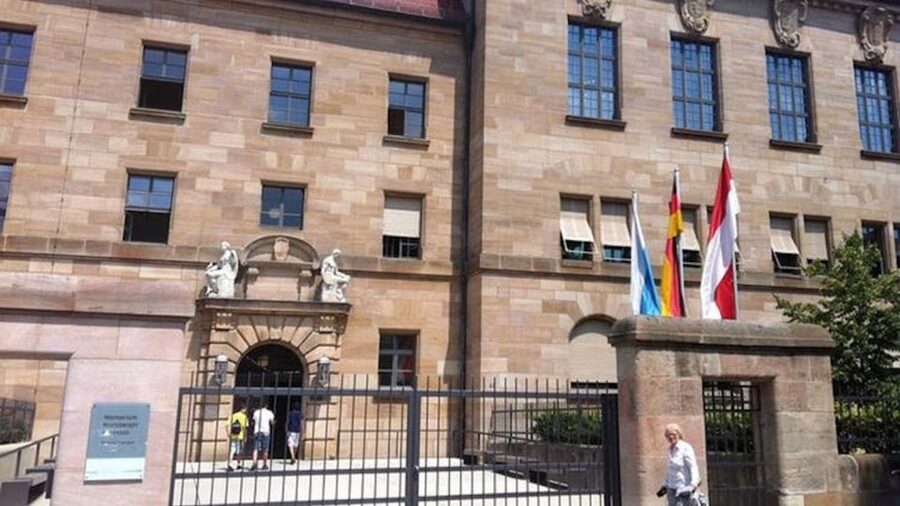
The final major stop is the Nuremberg Palace of Justice, the site of the Nuremberg trials. The building was selected after the war because it was largely undamaged and had enough room for the courtroom proceedings and a large prison complex.
This stop changes the focus of the tour. The Rally Grounds show how the Nazi regime presented power. The Palace of Justice shows the later attempt to establish responsibility through law.
You have about 30 minutes here for sightseeing and a self-guided visit. The entry ticket is not included, so budget for that separately. The short visit is enough to add the courtroom to the story, but it may not satisfy anyone who wants a full museum experience.
Courtroom 600 is the detail to check before booking. The Palace of Justice is closed on Tuesdays, and a Tuesday visit may leave out the tour’s final link to the trials. One booking specifically objected that the closure should have been made clearer in advance. I would confirm the operating day before paying, especially if the court is your main reason for choosing this tour.
Another practical point is time. One participant felt that more time was needed at the court. That is a fair concern. Thirty minutes is useful for orientation, but you will need to keep moving and may not have time to read everything at length.
How the small group changes the experience
The maximum group size is eight. That is a meaningful advantage at the Rally Grounds, where a large group can easily become scattered or hard to hear.
A small group also gives you a better chance to ask questions about the buildings, the rally program, or the trials. It does not guarantee a particular guide or style, but the format is more personal than a large coach tour.
The guide is the heart of this experience. Saba was singled out for being on time, engaging, and able to make a heavy subject accessible. Rob was praised for being informative and enjoyable. Those comments point to the qualities you want here: clear facts, good pacing, and a serious tone that does not become dry.
Still, you should allow for variation. One booking reported that the guide never arrived after a 20-minute wait, with a later response claiming the guide was present. That is a serious service problem, even though it appears to be an isolated complaint within an overall rating of 4.4 from 51 bookings. Wait in the lobby as instructed and keep the provider’s contact details available on the day.
Languages, access, and the $94 price
Tours are offered in English, Italian, Portuguese, and Spanish. Make sure you select the language you want when booking, since the guide’s explanations are the main value of the experience.
The tour is listed as wheelchair accessible, though the site includes broad outdoor areas and several stops. If you use a wheelchair, it is sensible to confirm the exact vehicle and route details before departure, particularly because the grounds are extensive.
At $94 per person, this is not the cheapest way to see Nuremberg’s Nazi-era sites. The price becomes easier to justify if you value hotel pickup, return transport, a small group, and a guide who can connect several locations in three hours.
You may prefer independent sightseeing if you want to spend more time inside the Palace of Justice, move at your own pace, or visit the Rally Grounds in greater detail. The guided tour is better suited to a first visit when you want the main sites explained and arranged into one efficient route.
Free cancellation up to 24 hours in advance and the option to reserve now and pay later reduce some of the planning risk. Those policies are useful if your Nuremberg schedule is not fixed, but they do not replace checking the Tuesday closure and pickup arrangements.
Who should book this Nuremberg tour?
I would choose this tour if you have three hours, want the major Third Reich sites explained in plain language, and prefer not to organize transportation yourself. It suits history-minded visitors who want both the Rally Grounds and the Palace of Justice rather than only a city-center walking tour.
It is also a good fit if you are staying in the Old Town and want pickup at your accommodation. The small group limit makes the price more reasonable than it would be for a crowded coach excursion.
I would hesitate if you want long, quiet visits at each stop. The schedule gives roughly 20 to 30 minutes at the individual locations, and the court visit is self-guided and brief. I would also avoid booking without checking the day if the Palace of Justice is essential to your plans.
Final verdict: a strong overview with one important time limit
This is a useful, serious introduction to Nuremberg’s Nazi-era sites. Its strongest feature is the combination of the enormous Rally Grounds with the Palace of Justice, allowing you to see both propaganda and postwar justice in one route.
The guide can make or break the experience, and the best reports point to guides such as Saba and Rob who explain difficult material with clarity and energy. The main weaknesses are the short court visit, the separate entry fee, the Tuesday closure, and the small but important report of a missed pickup.
Book it if you want efficient transport, a small group, and a guided framework for understanding places that are easy to misread on your own. Skip it if you want to study the court or Rally Grounds at length. For most first-time visitors with limited time, the three-hour route offers a solid way to face this part of Nuremberg’s past without treating it as just another sightseeing stop.
FAQ
How long does the Nuremberg World War II tour last?
The tour lasts three hours, including transportation between Nuremberg and the sites.
Is hotel pickup included?
Yes. Pickup and drop-off are included for hotels and accommodations in Nuremberg’s Old Town. You should wait in the hotel lobby 10 minutes before the scheduled pickup time.
What places are included on the tour?
The route includes Luitpoldhain, the Great Road, the unfinished Congress Hall, Zeppelinfeld, and the Nuremberg Palace of Justice.
Is the Palace of Justice admission ticket included?
No. The Palace of Justice entry ticket is not included in the tour price.
Is the Palace of Justice open every day?
No. The Palace of Justice is closed on Tuesdays.
How many people are in the group?
The tour is limited to eight participants.
Which languages are available?
The live guide is available in English, Italian, Portuguese, and Spanish.
Is the tour wheelchair accessible?
Yes. The activity is listed as wheelchair accessible.
Just added around Germany
- Berlin Food & Cultural Tour: Must-Try German & Berliner Classics★ 5.0 · 51 reviews
- Berlin Half-Day World War II Walking Tour★ 4.5 · 48 reviews
- Small-Group Historical Bike Tour in Berlin★ 4.5 · 103 reviews
- Historic center of Berlin – Tour in Italian★ 5.0 · 143 reviews
- Berlin Cold War & World War II Third Reich Walking Tour★ 4.5 · 30 reviews
- Private Taxi Tour City East & West History and Architecture 3-4h★ 5.0 · 42 reviews
- Berlin Wall and Cold War Bike Tour in Small Groups★ 5.0 · 114 reviews
- Private Tour: Jewish Heritage Walking Tour of Berlin★ 5.0 · 29 reviews
Nuremberg History Tours, compared.
Nuremberg: Historischer Kunstbunker WWII Art Bunker Tour
Read our review →
Nuremberg: 1.5-Hour Private Tour through Historical Old Town
Read our review →
“Rotes Bier” and “Blaue Zipfel”. A historical-culinary walk
Read our review →
Nuremberg: WWII Tour, Courtroom 600 and 3rd Reich Sites
Read our review →
Browse the lists this tour appears in