

Review · POMPEII
Pompeii 3hours Villa of Mysteries tour with an Archaeologist
The Villa of the Mysteries is the reason to choose this Pompeii tour over a basic walk through the ruins. Its famous frescoes are puzzling, dramatic, and easy to misunderstand without someone who can explain the possible meanings. I like that you reach it with an archaeologist rather than simply viewing it on your own, and I like the small-group format, which makes questions practical.
I also like the route through major homes, public buildings, and theaters, giving you a useful picture of both private and civic Roman life. The main drawback is simple: three hours is not enough for all of Pompeii, so you will need extra time afterward if you want to explore beyond the main sights.
Key points to know before booking
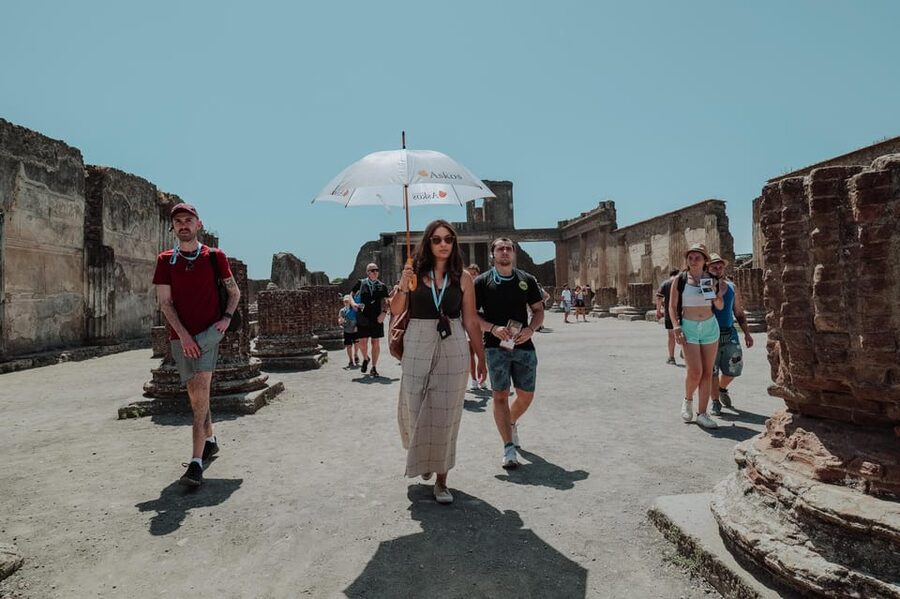
- The Villa of the Mysteries is included, along with the Pompeii Archaeological Park entrance ticket.
- The guide is an archaeologist, with tours offered in English, German, Italian, French, Spanish, and Portuguese.
- The route covers major highlights, including the House of the Vettii, House of the Faun, Lupanare, theaters, Forum, basilica, and Temple of Apollo.
- Crowd timing is part of the value, since guides such as Teresa, Julia, Antonella, and Anna Sorrento have been praised for finding quieter moments at popular buildings.
- Bring water, sun protection, and good shoes. Pompeii is exposed, uneven, and tiring, especially in warm weather.
- Plan to stay longer if possible. The guided portion gives you the essential framework, but Pompeii is far too large for a complete visit in three hours.
Why an archaeologist changes your Pompeii visit

Pompeii can look like a field of broken walls if you arrive without a plan. The site is enormous, the streets are uneven, and many buildings are closed or open at changing times. A guide helps you understand what you are seeing before the details blur together.
An archaeologist can point out how a Roman house worked, why a building was placed where it was, and what a wall painting may have meant to the people who lived there. That turns a doorway into part of a home, a stone counter into a shop, and a public square into a place where people argued, traded, worshipped, and conducted business.
The strongest part of this tour is the focus on ordinary life. You are not only shown grand buildings. You move through homes such as the House of Menander and House of the Vettii, where frescoes, courtyards, rooms, and household design help explain how Roman families lived.
Guides named in the booking feedback include Teresa, Julia, Anna Sorrento, Antonella, Yolanda, Rafaella, Alexandra, and Michele. The specific guide depends on the departure, but the pattern is clear: the best guides use stories, humor, questions, and details from archaeological work to keep the three hours moving.
Some guides have worked on excavation or conservation projects at Pompeii. That can add a useful layer, since you may hear not only what the city looked like in AD 79, but also how archaeologists continue to uncover and protect it.
More Ancient History Tours in Italy
- Pompeii: Entry Ticket and Guided Tour with an Archaeologist
★ 4.8 · 19,459 reviews - Pompeii: Small Group Tour with an Archaeologist
★ 4.8 · 12,264 reviews - Pompeii Small Group Tour with an Archaeologist
★ 5.0 · 6,593 reviews
Meeting at Porta Marina Superiore
The meeting point is at Via Villa dei Misteri, 2, by the entrance gate called Porta Marina Superiore. Look for the guide holding a sign marked ASKOS TOURS.
This detail matters because Pompeii has more than one entrance, and the archaeological area is too large for a casual last-minute walk from one gate to another. Give yourself enough time to find Porta Marina Superiore, especially if you are arriving by train, taxi, or another local connection.
The tour includes the Pompeii Plus entrance ticket, covering the Archaeological Park and the Villa of the Mysteries. You also get skip-the-ticket-line access, which is useful at busy times. Transportation, food, and drinks are not included, so you arrange your own way to the meeting point and carry what you need inside.
Bring a passport or ID card. Wear closed-toe walking shoes, not flip-flops. Pompeii’s paving stones can be rough and uneven, and you will be outside for three hours. In summer, a hat is a sensible addition. Water is especially important because some visitors find the first refill station comes later than expected.
Through Pompeii’s houses and public life

The tour begins with the wider archaeological site, then moves between private homes and public buildings. That mix is useful. If you only see villas, you miss how the city worked. If you only see the Forum, you miss how people lived behind the public face of Pompeii.
House of the Vettii
The House of the Vettii is one of the most interesting private homes on the route. Its rooms and wall paintings give you a feel for Roman domestic decoration, social status, and the way a wealthy house was organized.
This is also where the pace can feel tight. A three-hour route has many stops, and one person specifically wanted more time inside the houses. If you enjoy frescoes and domestic architecture, use the guide’s explanation carefully and make a note of buildings you may want to revisit after the tour.
More Ancient History Tours in Pompeii
- Discover the Ancient Ruins of Pompeii: Day Trip from Rome
★ 3.5 · 2,247 reviews - Pompeii and Herculaneum Small Group Tour with an Archaeologist
★ 5.0 · 1,350 reviews - Skip the Line Guided Tour of Pompeii led by an Archaeologist
★ 5.0 · 703 reviews - Pompeii: Tour with Archaeologist Guide & Skip-the-Line Entry
★ 4.5 · 623 reviews
House of the Faun
The House of the Faun is one of Pompeii’s largest and most famous residences. It helps show the scale that private wealth could reach in the ancient city, with broad spaces and a layout far removed from the small modern rooms many of us know.
Your guide can help you read the house as more than a collection of walls. Look for the relationship between open courtyards, decorated rooms, and movement through the home. The stop is especially useful if you want to understand how architecture expressed wealth and social position.
House of Menander
The House of Menander adds another view of Roman household life. Its name comes from the decoration associated with the playwright Menander, and the building gives the guide a chance to talk about taste, education, and the cultural world behind the city’s everyday routines.
You may find that some homes are more memorable for a single fresco or room than for their full layout. This is one reason a guide helps. You get the detail worth noticing, rather than trying to absorb every wall at once.
House of the Tragic Poet
The House of the Tragic Poet is another chance to connect art with daily life. Its name points to the dramatic and literary images found within, giving you a glimpse of the stories and symbols Roman homeowners chose to place around them.
At Pompeii, the paintings are not isolated museum pieces. They were part of the home. They shaped the mood of rooms and told visitors something about the owner’s taste, education, or ambitions.
The theaters, Lupanare, and Forum
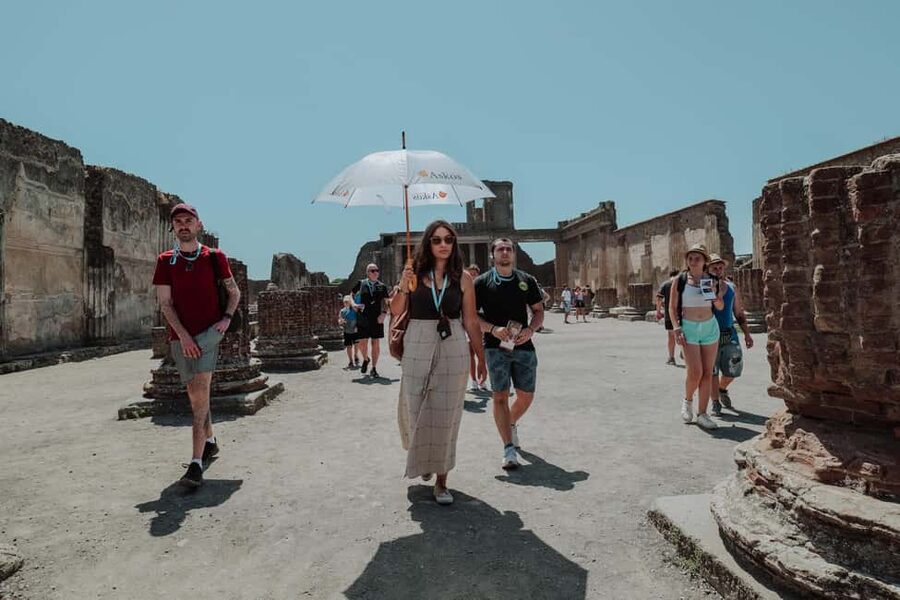
Pompeii’s public spaces give the tour a change of rhythm. You leave the courtyards and bedrooms and move into places built for entertainment, commerce, politics, worship, and public bathing.
Large Theatre
The Large Theatre shows how Roman entertainment fit into city life. Your guide can explain how the space worked and what its scale says about Pompeii’s population and public culture.
This stop also gives your legs a short mental break from the close detail of houses. You can take in the shape of the seating and imagine the crowds that once gathered there, while still keeping the focus on what the structure tells us rather than on a vague fantasy of the ancient world.
Lupanare
The Lupanare is one of Pompeii’s most talked-about buildings. Its small rooms and surviving imagery offer an unusually direct look at an aspect of Roman commercial life that is often softened or skipped in general tours.
Expect this stop to draw attention from the group. A good guide keeps the explanation factual and places the building within the wider social and economic life of Pompeii. If you are visiting with children or teenagers, the guide can help you understand what is being shown without turning it into a cheap joke.
Forum Baths
The Forum Baths show how bathing was part of Roman city life, not simply a private luxury. The rooms reveal planning, heating, and the social role of public facilities.
This is the kind of stop that benefits from explanation. Without a guide, it can be hard to tell what each chamber did or why the engineering mattered. Look for the practical side of Roman life here: water, heat, changing, washing, and social contact.
Basilica and Civil Forum
The Basilica and Civil Forum form the civic center of Pompeii. This is where the city’s public identity comes into focus. The basilica was tied to legal and business activity, while the Forum served as a major gathering place for civic, religious, and commercial life.
The open space can be hard to grasp at first because much of the original activity is gone. A guide gives you the missing structure: where people gathered, which buildings mattered, and how public life was arranged around the square.
The Forum is also one of the places where crowd control matters most. Guides such as Antonella, Julia, and Anna Sorrento have been praised for shifting the order of stops to avoid the largest groups. That does not guarantee an empty site, but smart timing can make a major difference.
Temple of Apollo
The Temple of Apollo adds a religious layer to the city center. It sits near the Forum and helps show how worship was woven into the public design of Pompeii.
Your guide may connect the temple to the broader Roman habit of placing religious buildings beside civic and commercial spaces. That relationship is one of the useful themes of the tour: Pompeii was not divided into neat modern categories. Religion, politics, business, and social life overlapped.
The Villa of the Mysteries
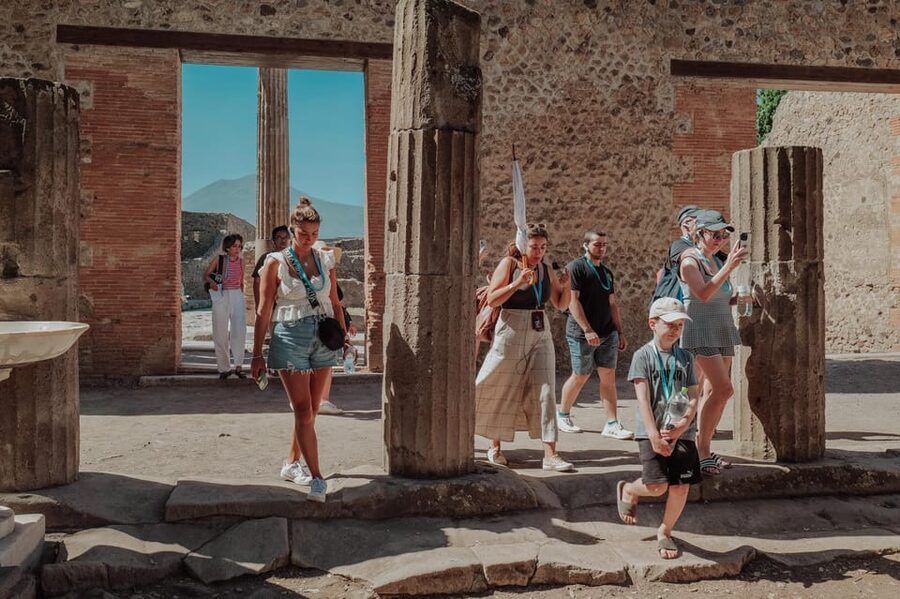
The Villa of the Mysteries is the tour’s main prize. It lies beyond the busiest central cluster, and the walk there helps explain why many independent visitors miss it or leave it for another day.
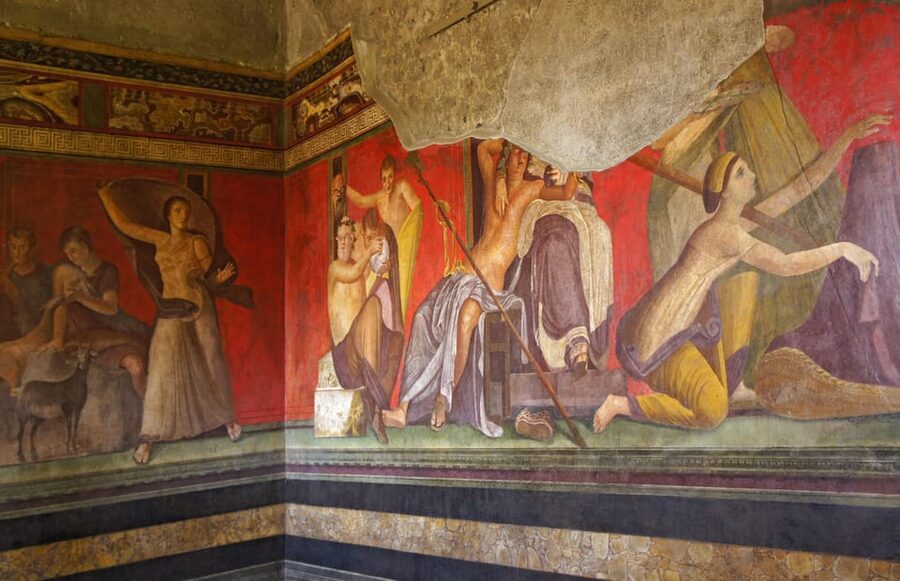
The villa is known for its large painted cycle, often called the Dionysiac frieze. The scenes have led to several interpretations, and the mystery is part of the appeal. Your guide can explain what scholars think the images may show without pretending that every question has one certain answer.
That balance matters. The villa is more interesting when you understand the debate. You are not handed a tidy story and told to accept it. Instead, you see how archaeologists use the paintings, layout, and historical context to build possible readings.
The setting also feels different from the central streets. One useful benefit of adding the villa is that you reach a quieter section with another villa and a cemetery area nearby. You may have a chance to pause there after the main guided portion, although you should bring your own snack if you expect to rest and eat.
The Villa of the Mysteries is not a quick extra room tagged onto the end. It changes the shape of the visit. You get a major artistic site, a less crowded part of Pompeii, and a stronger sense that the city extended well beyond the Forum.
Is three hours enough?

Three hours is enough for a strong introduction, not a complete exploration. You will cover a substantial group of major sites, but Pompeii is too large to see in full during one guided circuit.
The best plan is to treat the tour as your organized first pass. Let the guide show you the main buildings, explain the city’s structure, and point out places worth returning to. Then stay inside the archaeological park afterward to wander at your own pace if your schedule allows.
Several people have found that the tour ran close to, or a little beyond, the stated end time. That is usually helpful if you want the full explanation, but it can matter if you have a train, lunch reservation, or another booked activity immediately afterward. Leave some breathing room.
If you want only a quick look at Pompeii, three hours may be plenty. If you are serious about the site, plan on several more hours overall. The guided portion gives you orientation and context, while your extra time lets you linger in houses, revisit the Forum, or explore areas not covered by the group.
Price, group size, and overall value
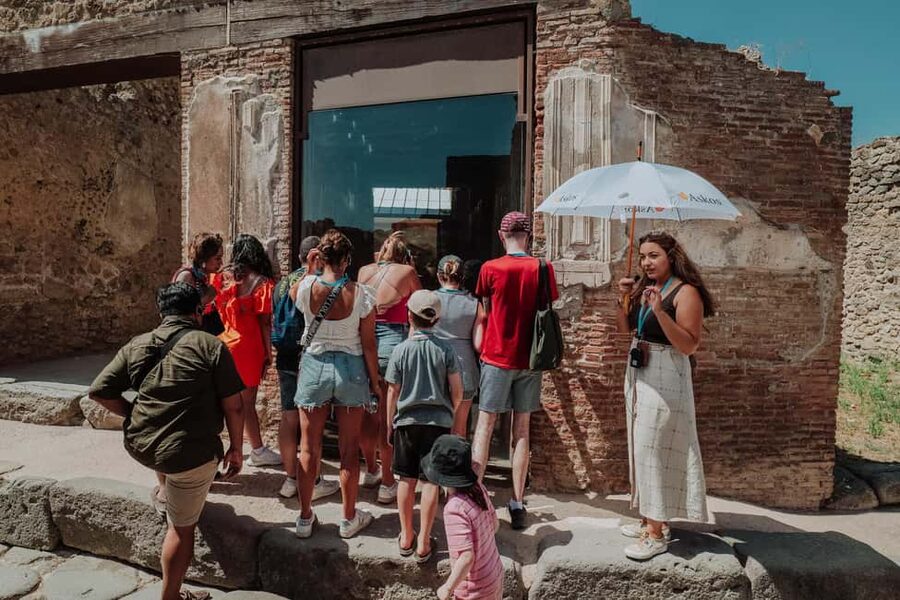
At $88 per person, this is not the cheapest way to enter Pompeii. The price includes the archaeological admission, the Villa of the Mysteries, skip-the-line access, and a three-hour archaeologist-led tour in a small group.
I think the price makes sense if you value interpretation. Pompeii is a place where a guide can change what you notice. Without one, you may see impressive ruins. With one, you are more likely to understand the difference between a home, shop, bath, temple, basilica, and entertainment venue.
The small group is another part of the value. A group of around ten has been reported on one departure, though the exact size can vary. That is small enough for questions and easier movement through narrow spaces, but it is still a group tour, not a private visit.
The main limitation is that the price is the same basic tour cost even when younger visitors may qualify for free archaeological admission under site rules. If you are booking for a teenager, check how the provider handles age-based entry before paying, since the tour price may not change in the same way as the park admission.
Who should book this Pompeii tour?
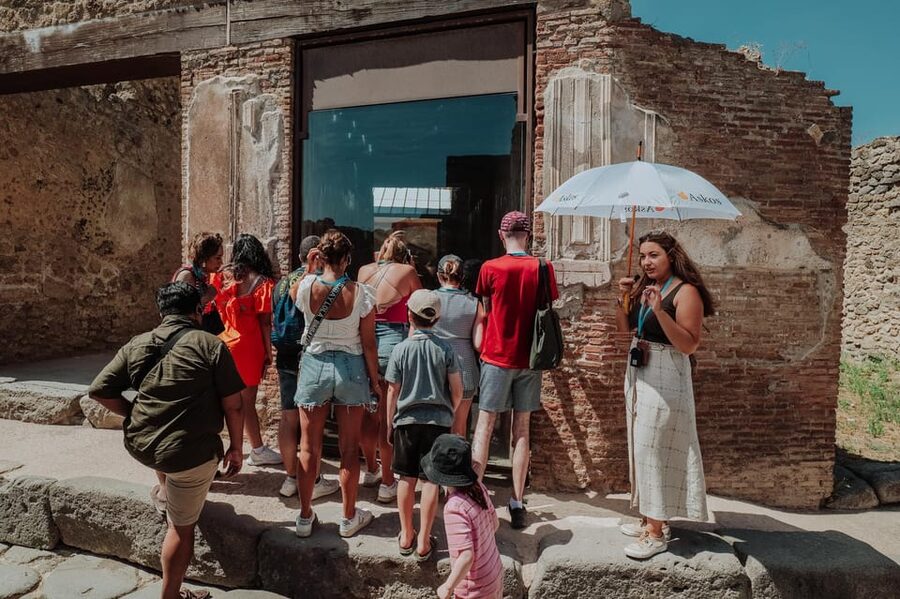
I would choose this tour if you are visiting Pompeii for the first time, want the Villa of the Mysteries, or feel unsure how to make sense of a very large archaeological site. It is also a strong choice for families with older children and teenagers, since a lively guide can keep the ruins from becoming a long march through stones.
It suits people who enjoy history, architecture, art, and Roman daily life. The guides use stories and questions, and several have been praised for humor and energy. That style can make a difference during the middle hour, when heat and walking begin to catch up with you.
I would think twice if you dislike guided pacing or want to study every house at length. You will see many important places, but stops are necessarily selective. Mobility is another serious consideration: the tour is not suitable for wheelchair users or people with mobility impairments.
The tour runs rain or shine. Small pets under 10 kilograms are allowed in the archaeological park if kept on a leash, but everyone should be prepared for exposed conditions and uneven ground.
Should you book it?
Book it if you want a clear introduction to Pompeii, care about the Villa of the Mysteries, and would rather spend three focused hours with an archaeologist than try to decode the site alone. The strongest value comes from the guide’s ability to explain houses, public buildings, frescoes, and changing crowd patterns.
Skip it if you already know Pompeii well, prefer a private pace, or have only a short window before another appointment. Otherwise, this is a sensible way to see the essential Pompeii sights, then stay on for a few extra hours and explore the parts the guided route cannot cover.
FAQ
Where does the Pompeii tour meet?
The guide meets you at Porta Marina Superiore, the entrance gate to the Pompeii ruins, at Via Villa dei Misteri, 2. Look for a sign marked ASKOS TOURS.
What is included in the $88 price?
The price includes a three-hour small-group tour, an archaeologist guide, and the Pompeii Plus entrance ticket covering the Archaeological Park and Villa of the Mysteries.
Is transportation included?
No. Transportation, food, and drinks are not included, so you must make your own way to the meeting point and bring any water or snacks you need.
Which languages are available?
Tours are offered in German, Italian, French, English, Spanish, and Portuguese. Check availability for your preferred language when selecting a departure.
What should I wear and bring?
Wear comfortable closed-toe shoes. In summer, bring a hat and plenty of water. Flip-flops are not suitable, and you should bring a passport or ID card.
Is the tour suitable for wheelchair users?
No. The tour is not suitable for wheelchair users or people with mobility impairments. Small pets under 10 kilograms are allowed in the park if they remain on a leash.
More Archaeological Site Tours in Pompeii
- Pompeii Private Tour with an Archaeologist and Skip The Line – 3 hours
★ 5.0 · 564 reviews - Pompeii Skip-the-line Tour with Archaeologist Guide
★ 5.0 · 559 reviews - Explore Pompeii with an Archaeologist
★ 5.0 · 511 reviews - Pompeii Private Tour with an Archaeologist and Skip The Line
★ 5.0 · 391 reviews
Just added around Pompeii
- Pompeii and Herculaneum: Guided Tour with an Archaeologist★ 5.0 · 164 reviews
- Pompeii Guided Tour with Archaeologist★ 4.6 · 27 reviews
- Pompeii: Guided Tour with Archaeologist with max. 12 People★ 5.0 · 155 reviews
- Pompeii Small Group Tour – Tickets Included★ 4.7 · 72 reviews
- Pompeii: 2-Hour Guided Tour with an Archaeologist★ 4.9 · 151 reviews
- PompeiI Exclusive Tour with your Archaeologist in a Small Group★ 4.5 · 363 reviews
- Pompeii Private Tour with an Archaeologist Guide★ 5.0 · 184 reviews
- Pompeii Private Tour with an Archaeologist and Skip The Line★ 5.0 · 391 reviews
Pompeii History Tours, compared.
Pompeii: Entry Ticket and Guided Tour with an Archaeologist
Read our review →
Pompeii: Small Group Tour with an Archaeologist
Read our review →Pompeii Small Group Tour with an Archaeologist
Read our review →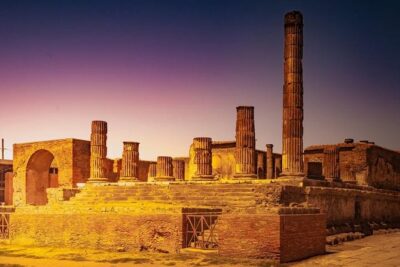
Discover the Ancient Ruins of Pompeii: Day Trip from Rome
Read our review →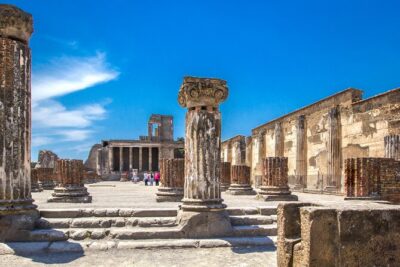
Pompeii and Herculaneum Small Group Tour with an Archaeologist
Read our review →
Skip the Line Guided Tour of Pompeii led by an Archaeologist
Read our review →
Pompeii: Tour with Archaeologist Guide & Skip-the-Line Entry
Read our review →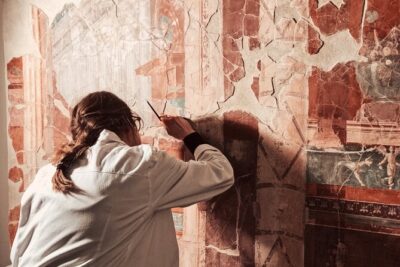
Pompeii Private Tour with an Archaeologist and Skip The Line – 3 hours
Read our review →Browse the lists this tour appears in