
Review · POMPEII
Pompeii: Guided Tour with Archaeologist with max. 12 People
Pompeii makes far more sense when someone can explain the streets, homes, shops, and public buildings as parts of a living Roman city. This small-group tour puts you with archaeologist Benedetto, whose work at the site and university background give the visit a useful layer of detail beyond a quick walk with a map.
I like the maximum group size of 12, which leaves room for questions and makes it easier to stay together on Pompeii’s uneven streets. I also like the practical two-hour format: you see the essential sights, then have free time to keep exploring on your own.
The main drawback is simple: Pompeii is huge, and two hours cannot cover it all. The walk also involves rough ancient paving and long stretches without shade, so this is not a good fit for wheelchair users or people with serious mobility limits.
What makes this Pompeii tour worth your time
- A real archaeologist leads the route, adding context about excavation, restoration, Roman life, and the eruption.
- The group stays small, with up to 12 people and headsets provided for groups larger than eight.
- The route covers major highlights, including the theaters, House of Menander, Stabian Baths, Forum, Temple of Jupiter, Macellum, Basilica, and lupanare.
- You see everyday Pompeii, from bakeries and snack bars to shops, mosaics, frescoes, and public baths.
- You can stay after the guided walk, using the included free time to visit more of the archaeological site.
- The price is $65 per person, a fair rate if you want expert interpretation without paying for a full private tour.
Meeting Benedetto at Porta Marina Inferiore
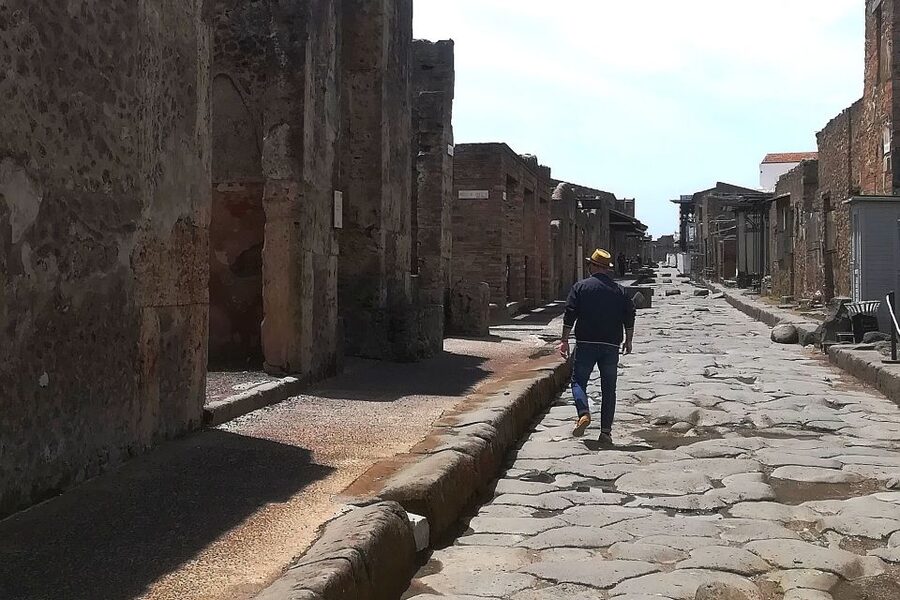
Your meeting point is Ristorante Suisse, where the guide waits with a sign bearing your name. From there, the tour enters Pompeii near Porta Marina Inferiore, one of the practical access points for reaching the ancient city.
That meeting detail matters. Pompeii has several entrances, and arriving at the wrong one can waste precious time. You should bring the original passport or ID card because the admission ticket is named, and the names of all participants must be submitted after booking.
The ticket is included, as is express entry. Transportation, food, and drinks are not included, so you need to arrange your own way to the meeting point and carry water for the walk.
Benedetto is the guide most closely associated with this experience. He has worked on Pompeii’s archaeological excavations for years and is also connected with university archaeology work. That background is especially useful here because Pompeii can look like a collection of empty walls if nobody explains what you are seeing.
More Ancient History Tours in Italy
- Pompeii: Entry Ticket and Guided Tour with an Archaeologist
★ 4.8 · 19,459 reviews - Pompeii: Small Group Tour with an Archaeologist
★ 4.8 · 12,264 reviews - Pompeii Small Group Tour with an Archaeologist
★ 5.0 · 6,593 reviews
The theaters and the first look at Roman public life
The route begins in the theater area, giving you an early look at Pompeii as a functioning city rather than only a disaster site. Public entertainment mattered in Roman life, and these buildings help show how people gathered, watched performances, and spent time outside their homes.
I like starting here because it gives the tour a clear rhythm. You first see public space, then move into houses and commercial streets, gradually building a picture of how the city worked.
Pompeii is not presented as a museum arranged for easy viewing. Streets can be uneven, walls may be partly preserved, and information panels do not explain every building in detail. A guide helps connect the remains to their original purpose, which saves you from simply staring at stones and guessing.
House of Menander and Pompeii’s decorated homes
The House of Menander is one of the tour’s most rewarding residential stops. Here, the focus shifts to private life, with mosaics, frescoes, marble details, and the layout of a Roman home.
The important point is not only the artwork. Benedetto can explain how these spaces were used, how rooms were arranged, and what decoration said about the household. The remains give you clues about status, taste, religion, and daily routines.
For me, this is where an archaeologist guide earns the admission price. You are not just looking at a painted wall. You are learning how to read the surviving fragments and imagine the home before the eruption of Vesuvius in AD 79.
The tour does not promise every famous house in Pompeii, and two hours means some buildings will be passed by. If your main goal is to study domestic architecture in depth, you will want to use the free time afterward for a longer self-guided visit.
Roman streets, shops, bakeries, and snack bars
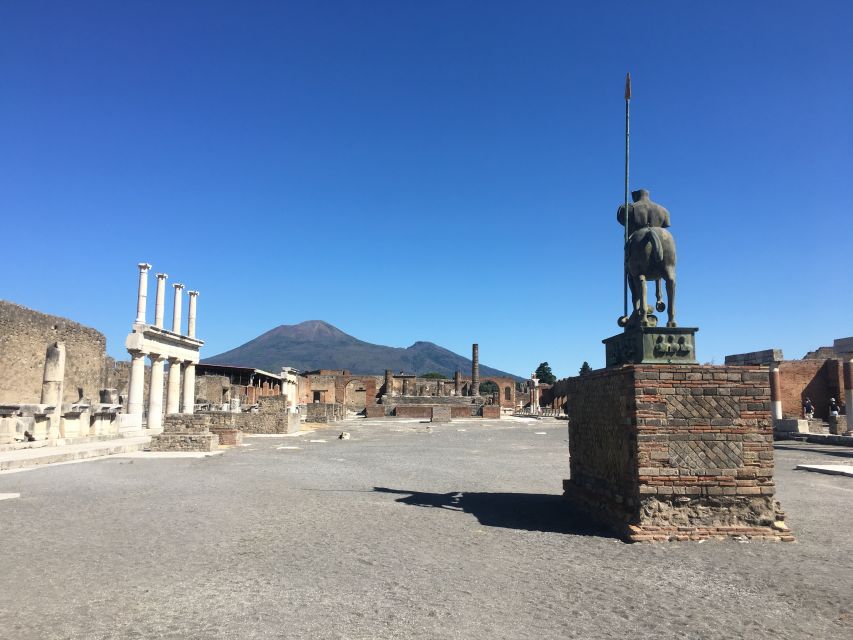
One of the best parts of this route is the walk through the commercial side of Pompeii. You pass ancient shopfronts, bakeries, and old snack bars, places that make the city feel more ordinary and human.
The famous tragedy can dominate any visit, but these businesses remind you that Pompeii was also a place where people bought food, worked, met friends, and went about routine errands. The streets are not just routes between monuments. They were the city’s daily stage.
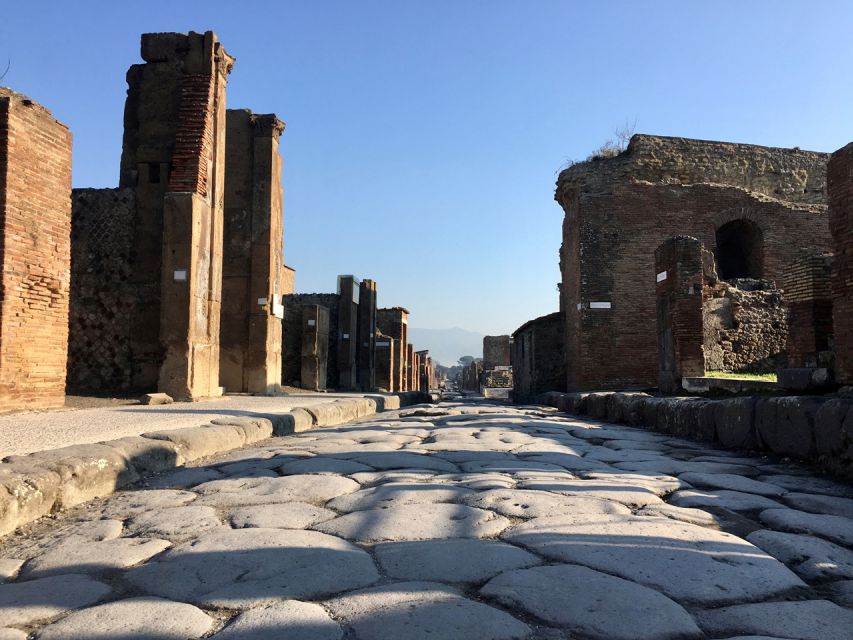
You also walk on an original Roman road. That sounds simple, but it is one of the most direct ways to connect with the site. Look down at the paving and then up at the entrances, counters, doorways, and walls. The combination makes it easier to picture a working neighborhood.
The old paving can be awkward underfoot. Wear comfortable shoes with firm soles, and do not expect a flat, polished museum floor. A hat and water are sensible, particularly in warm weather, when shade can be limited.
More Ancient History Tours in Pompeii
- Discover the Ancient Ruins of Pompeii: Day Trip from Rome
★ 3.5 · 2,247 reviews - Pompeii and Herculaneum Small Group Tour with an Archaeologist
★ 5.0 · 1,350 reviews - Skip the Line Guided Tour of Pompeii led by an Archaeologist
★ 5.0 · 703 reviews - Pompeii: Tour with Archaeologist Guide & Skip-the-Line Entry
★ 4.5 · 623 reviews
The Stabian Baths and Roman public comfort
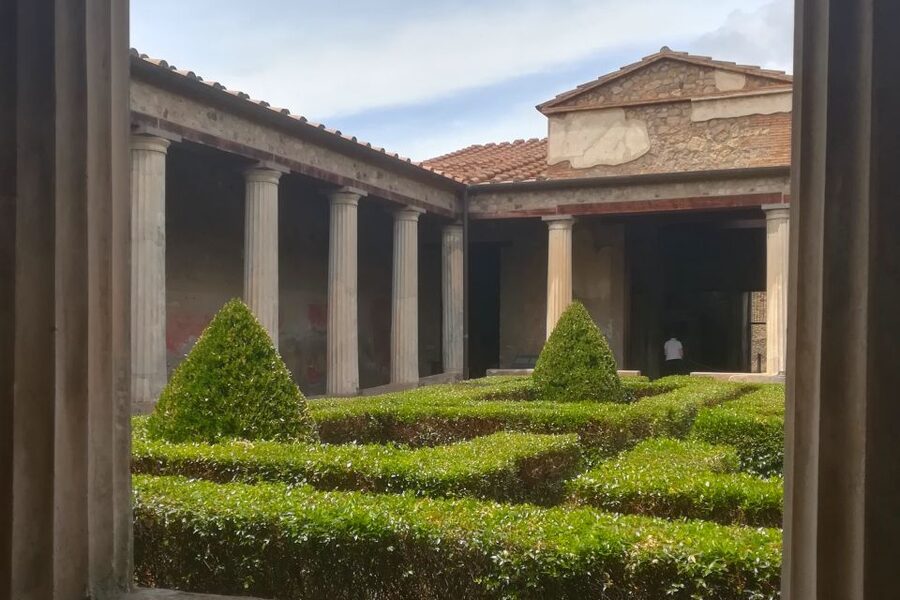
The Terme Stabiane, or Stabian Baths, show another side of city life. Public baths were not only places to wash. They were social spaces, and the surviving rooms give you a glimpse of the systems and routines that supported Roman urban living.
This stop works well after the commercial streets because it broadens the picture. You move from private homes and businesses to a public facility used by a wider part of the population.
A guide can point out the different areas and explain how the baths fit into Roman culture. Without that help, the rooms may look repetitive, especially if you have already seen several houses and courtyards.
The lupanare and Pompeii’s less polished side
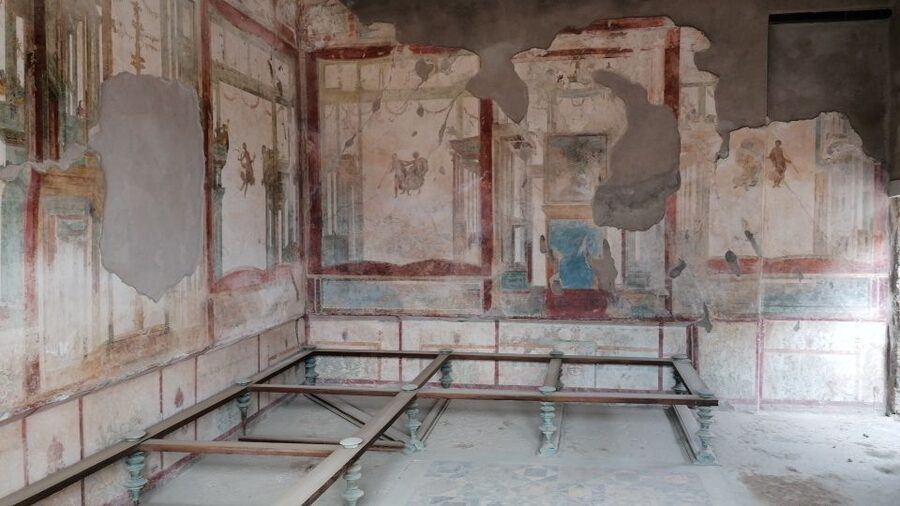
The lupanare, or brothel, is one of Pompeii’s best-known stops. Its small rooms and surviving decorations offer a direct look at a part of Roman society that official monuments usually leave out.
This is not a stop to treat as a joke or a quick photo opportunity. The value is in understanding how commercial sex, household arrangements, and social divisions fit into the wider city.
Families can take the tour, but parents may want to decide how much context is right for younger children. The guide can adjust explanations and answer questions, and past groups have included children as young as seven, as well as teenagers.
Crowds can gather around the lupanare, the Forum, and other famous areas. Benedetto’s familiarity with the site helps him adjust the order or route when needed, reducing unnecessary waits. That flexibility can make a real difference on busy days.
Forum, Temple of Jupiter, Macellum, and Basilica
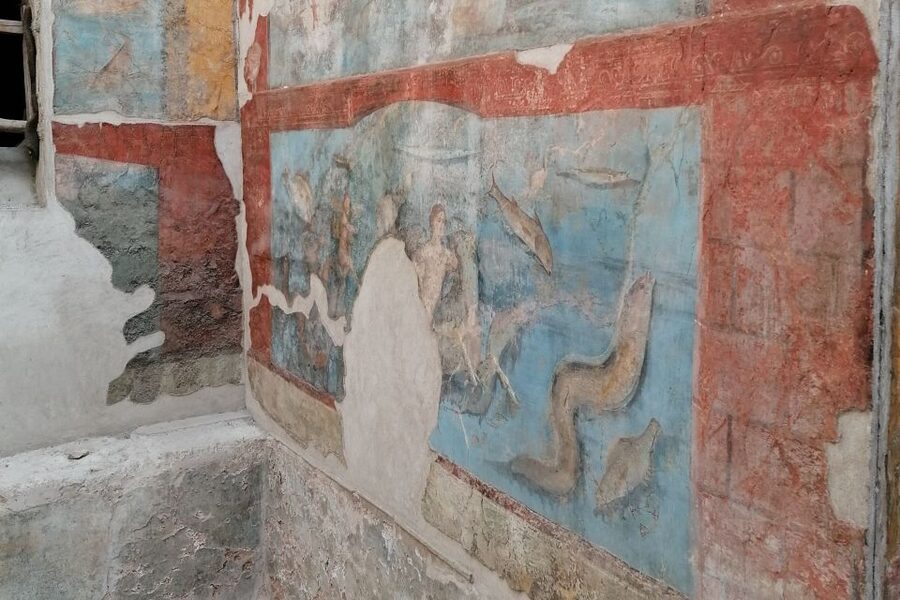
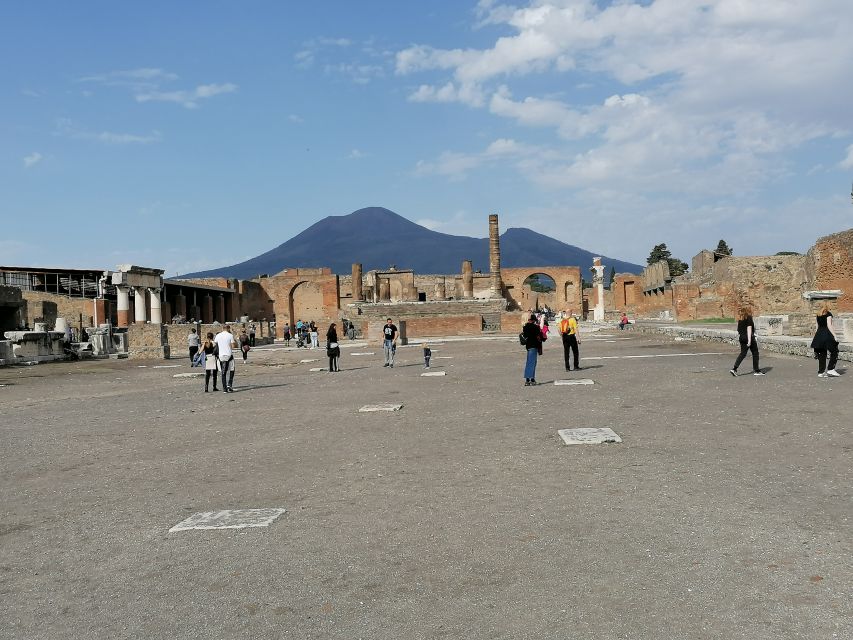
The final portion reaches Pompeii’s political, religious, and commercial heart. The Foro Civile di Pompei is the place to bring together the pieces you have seen earlier: public buildings, temples, markets, and civic life.
The Temple of Jupiter anchors the Forum visually and historically. Nearby, the Macellum shows how food and trade were organized, while the Basilica points to the legal and administrative business of the city.
This group of buildings can feel overwhelming because so much is packed into one area. I appreciate having a guide here because the scale and importance are not always obvious from the ruins alone. You need someone to explain what each building did and how the spaces related to one another.
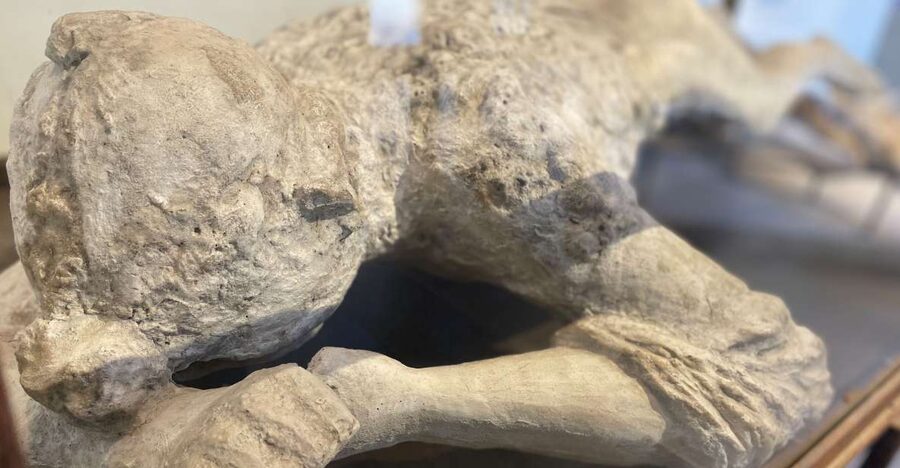
The plaster casts of victims are also included among the final major sights. They are among Pompeii’s most moving remains, but they can be difficult to see. The casts are not simply archaeological objects. They preserve the final positions of people caught by the eruption, giving the disaster a human weight that walls and artifacts cannot provide.
Benedetto’s approach, based on the available information, emphasizes both the eruption and the people who lived there before it. That balance is important. Pompeii is a tragedy, but it was also a real city filled with homes, work, food, art, arguments, and ordinary habits.
Why two hours works, and where it falls short
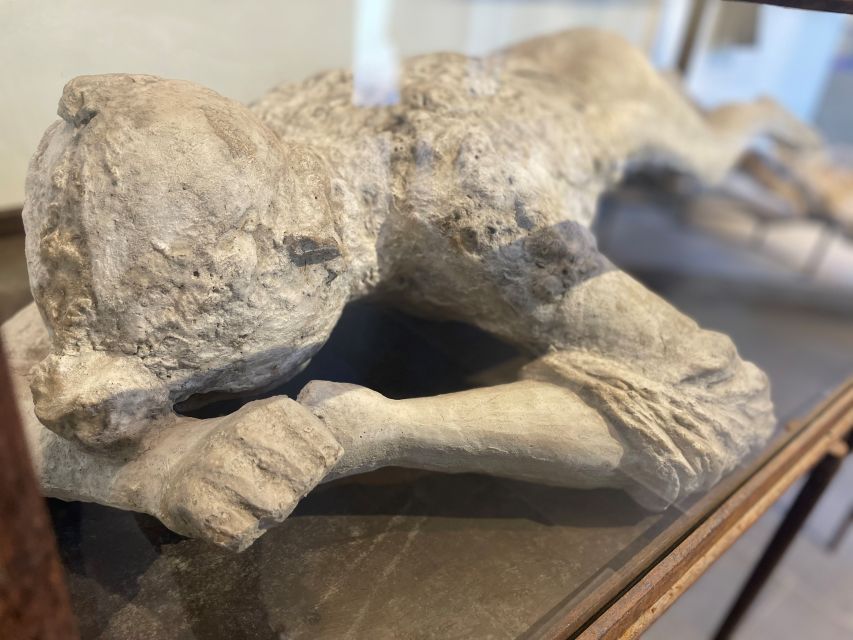
Two hours is enough for a strong first visit. You get a guided framework, see the major landmarks, and leave with a better idea of how to continue through the site.
The small group helps the timing. You can ask questions without interrupting a large crowd, and the guide can keep the pace suited to the people present. Several groups have also extended their time with Benedetto, sometimes adding an hour for an extra fee, but that longer option should be arranged separately.
I would not choose the two-hour tour if Pompeii is your only reason for visiting Campania and you want to cover every major district. The site is too large for that. I would choose it if you want an informed introduction and plan to use the included free time afterward.
The schedule can also be affected by crowds, heat, and access to individual buildings. The guide may change the order to avoid long waits, which is a practical improvement rather than a flaw.
Price, group size, and overall value
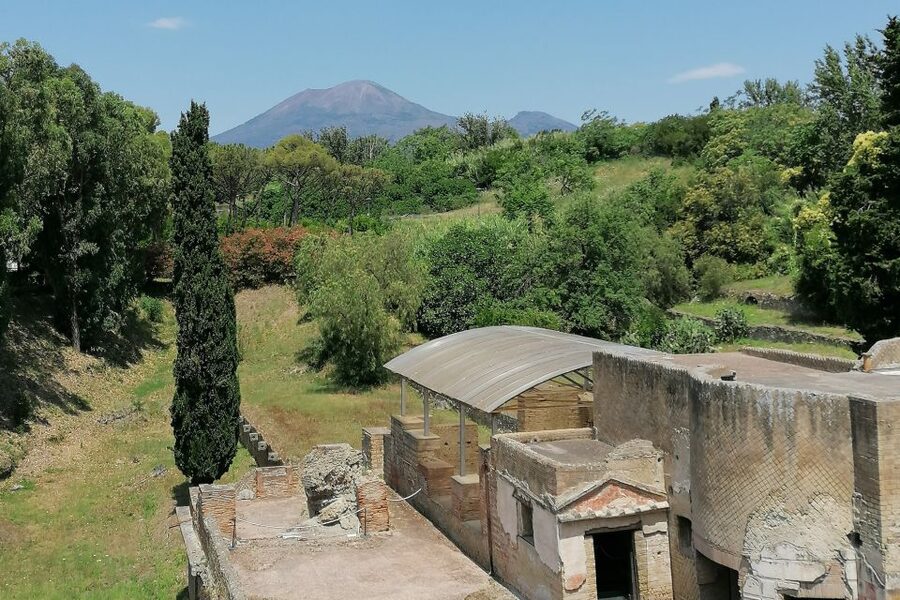
At $65 per person, this tour costs more than entering Pompeii alone, but the comparison is not quite equal. You are paying for the ticket, express entry, a live guide, a small group, and the ability to ask questions while moving through one of Europe’s most complicated archaeological sites.
The strongest value comes from the archaeologist’s training. Many visitors can identify the Forum or a fresco, but fewer can explain how a Roman house functioned, why a building mattered, or how excavation and restoration affect what you see today.
A group of 12 is not private, but it is small enough to feel personal. Groups may be smaller, and in some cases the guide has led only one or two people. For groups larger than eight, headsets are provided, so you should still be able to follow the commentary.
Languages offered are English, Italian, and French. A private group option is also available, which may suit families or friends who want more control over the pace.
Practical advice for a smoother visit
Wear comfortable shoes, not sandals with thin soles. Pompeii’s original roads and uneven surfaces can make a short walk feel longer than expected.
Bring your original passport or ID card, a hat, and water. The guide can find shade when possible, but you should not count on continuous cover from the sun.
Arrive at Ristorante Suisse with enough time to find the meeting point. Your guide will be holding a sign with your name, and clear communication before the visit is part of the practical support offered.
The tour is not suitable for wheelchair users or people with mobility impairments. If you need a highly accessible route, this is not the right experience based on the conditions given.
You can cancel up to 24 hours ahead for a full refund, and the reserve-now, pay-later option keeps the booking flexible. Those terms are useful when your Campania plans depend on trains, weather, or a changing schedule.
Who should book this Pompeii experience?
I would recommend it to first-time visitors who want Pompeii explained rather than simply photographed. It is also a strong choice for families, archaeology fans, and anyone who prefers a small group over a large flag-led tour.
Children can enjoy it when the guide adjusts the pace and explains Roman life in clear terms. Older visitors should consider the uneven streets and heat before booking.
You should also book this if you plan to continue exploring after the tour. The guided route gives you a map in your head, and the free time lets you return to areas that caught your attention.
If you already know Pompeii well, a private or longer tour may offer better value. For most first visits, though, the two-hour route provides a sensible balance of major sights, human stories, and practical orientation.
FAQ
How long does the Pompeii tour last?
The guided visit lasts two hours. You also receive free time to continue exploring the archaeological site afterward.
How many people can join the group?
The group can include up to 12 people. A private group option is available.
Who guides the tour?
The experience is led by a professional archaeologist. Benedetto is the named guide associated with the tour and has archaeological excavation and university experience.
Which languages are available?
The tour is offered in English, Italian, and French.
Are Pompeii tickets included?
Yes. An express entry ticket to Pompeii is included, so you can skip the ticket line.
What should I bring?
Bring your original passport or ID card, comfortable shoes, a hat, and water. The passport or ID is required because Pompeii admission tickets are named.
Is the tour suitable for wheelchair users?
No. The experience is not suitable for wheelchair users or people with mobility impairments because of the archaeological site’s conditions.
Should you book it?
Book this tour if you want Pompeii to feel like a city rather than a pile of ruins. Benedetto’s archaeological background, the small group, and the carefully chosen route give you useful context for homes, shops, baths, public buildings, and the plaster casts.
Skip it if you prefer to wander alone for several hours or need a fully accessible route. For most first-time visitors who value explanation and want free time to continue exploring, $65 is a fair price for a focused, personal introduction to Pompeii.
More Archaeological Site Tours in Pompeii
- Pompeii Private Tour with an Archaeologist and Skip The Line – 3 hours
★ 5.0 · 564 reviews - Pompeii Skip-the-line Tour with Archaeologist Guide
★ 5.0 · 559 reviews - Explore Pompeii with an Archaeologist
★ 5.0 · 511 reviews - Pompeii 3hours Villa of Mysteries tour with an Archaeologist
★ 4.8 · 486 reviews
Just added around Pompeii
- Pompeii and Herculaneum: Guided Tour with an Archaeologist★ 5.0 · 164 reviews
- Pompeii Guided Tour with Archaeologist★ 4.6 · 27 reviews
- Pompeii Small Group Tour – Tickets Included★ 4.7 · 72 reviews
- Pompeii: 2-Hour Guided Tour with an Archaeologist★ 4.9 · 151 reviews
- PompeiI Exclusive Tour with your Archaeologist in a Small Group★ 4.5 · 363 reviews
- Pompeii Private Tour with an Archaeologist Guide★ 5.0 · 184 reviews
- Pompeii Private Tour with an Archaeologist and Skip The Line★ 5.0 · 391 reviews
- Pompeii 3hours Villa of Mysteries tour with an Archaeologist★ 4.8 · 486 reviews
Pompeii History Tours, compared.
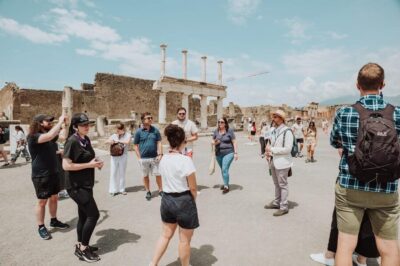
Pompeii: Entry Ticket and Guided Tour with an Archaeologist
Read our review →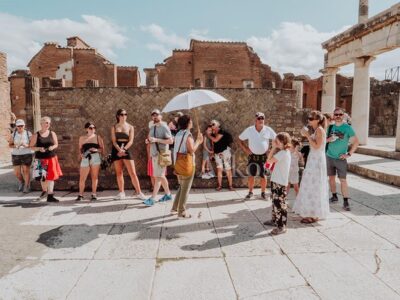
Pompeii: Small Group Tour with an Archaeologist
Read our review →Pompeii Small Group Tour with an Archaeologist
Read our review →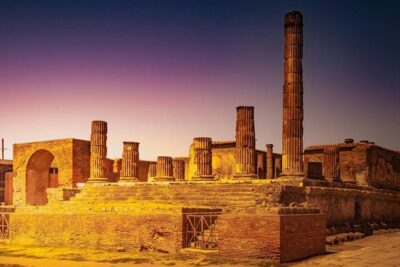
Discover the Ancient Ruins of Pompeii: Day Trip from Rome
Read our review →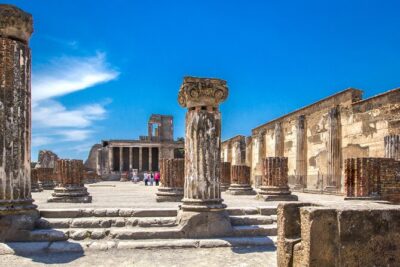
Pompeii and Herculaneum Small Group Tour with an Archaeologist
Read our review →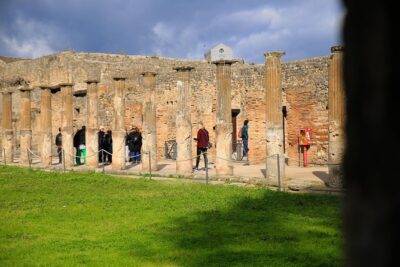
Skip the Line Guided Tour of Pompeii led by an Archaeologist
Read our review →
Pompeii: Tour with Archaeologist Guide & Skip-the-Line Entry
Read our review →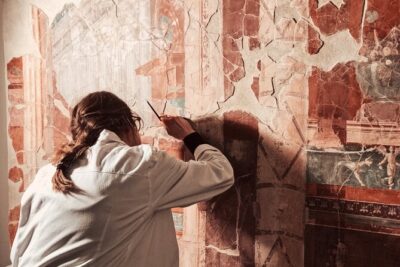
Pompeii Private Tour with an Archaeologist and Skip The Line – 3 hours
Read our review →Browse the lists this tour appears in