
Review · POMPEII
Pompeii and Herculaneum: Guided Tour with an Archaeologist
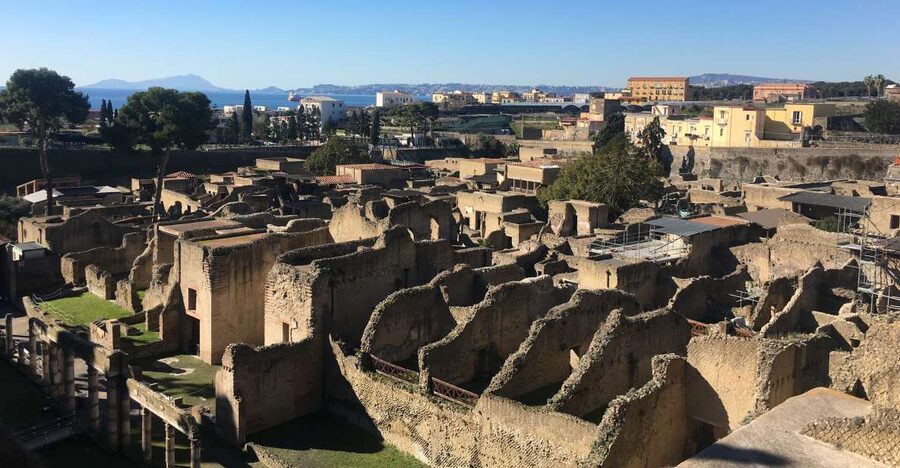
Pompeii and Herculaneum tell two different stories of the same volcanic disaster. This tour makes the contrast clear: Pompeii gives you a broad Roman city to walk through, while Herculaneum feels smaller and better preserved, with wood, marble, jewelry, and household details still visible. I especially like the chance to see both in one day and the small-group limit of 10.
I also like the guide’s archaeological training. Benedetto is repeatedly praised for his humor, clear explanations, crowd-avoiding routes, and practical help with trains, taxis, and lunch. The main drawback is simple: five hours is a brisk schedule, and the tour involves a lot of walking on uneven ancient streets. It is not suitable for wheelchair users or people with mobility impairments.
Key points to know before booking
- Two ancient cities in one tour: Compare Pompeii’s broad streets and public buildings with Herculaneum’s remarkably preserved homes.
- Led by an archaeologist: Benedetto brings archaeological experience, detailed site knowledge, and a lively sense of humor.
- Small groups up to 10 people: This makes it easier to ask questions and move around crowded areas.
- Pompeii’s highlights are well chosen: Expect theatres, decorated houses, shops, bakeries, snack bars, baths, the Lupanare, and the Forum.
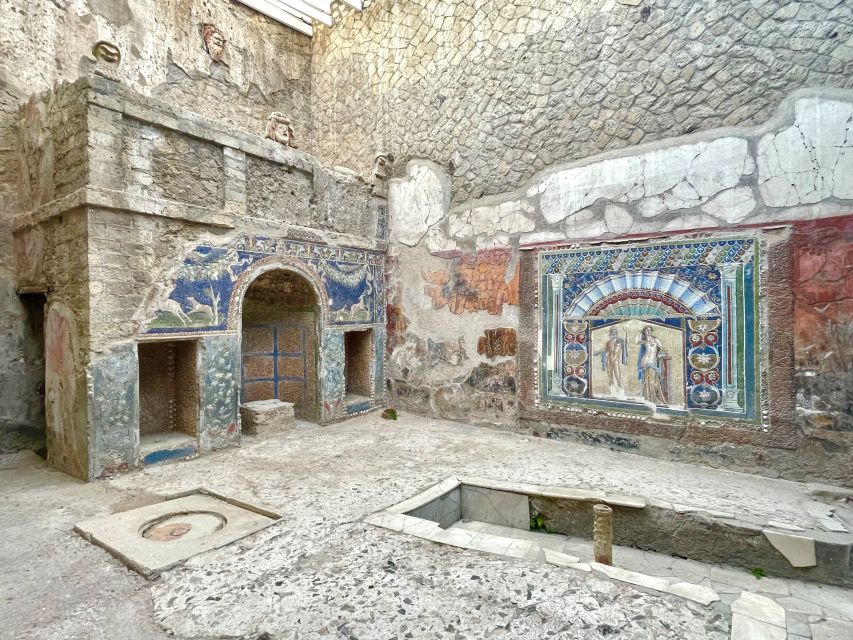
- Herculaneum adds details Pompeii cannot: Look for preserved wood, skeletons, mosaics, marble, frescoes, and jewelry.
- Plan for heat and hard walking: Bring water, a hat, comfortable shoes, and your original passport or ID card.
Why seeing both sites changes the day
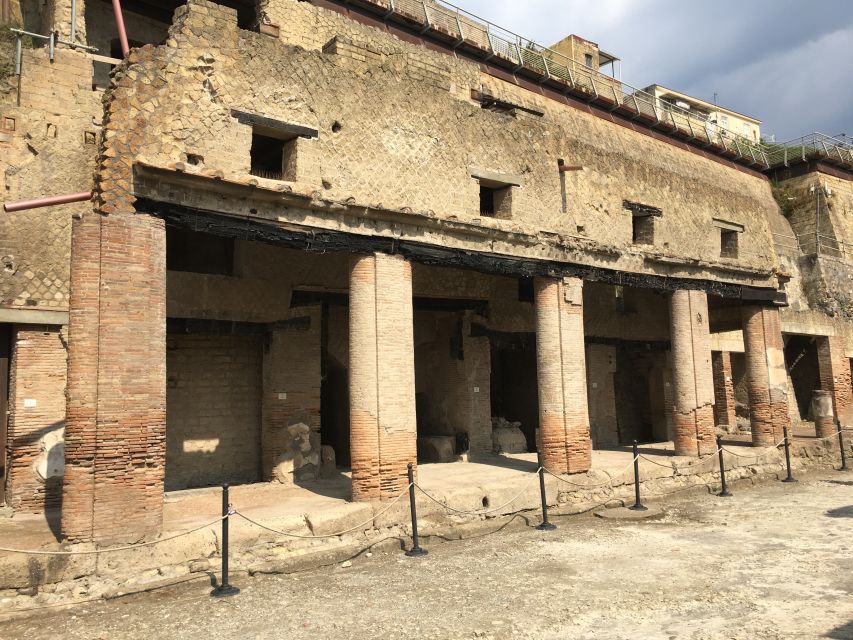
If you have only seen photographs of Pompeii, it is easy to think the site is mainly about the eruption and the famous plaster casts. The real value is broader. Pompeii lets you walk through a complete Roman town, moving from theatres and houses to shops, bakeries, public baths, and the Forum.
Herculaneum supplies the close-up view. The burial conditions were different, and more household material survived. You may see exceptionally preserved wood, polished marble, mosaics, frescoes, jewelry, and skeletons. The two sites are close enough to visit together, but different enough that the second stop does not feel repetitive.
I like this pairing because the first visit gives you the basic vocabulary of Roman urban life. By the time you reach Herculaneum, you have a better sense of what you are looking at and why the details matter.
More Ancient History Tours in Italy
- Pompeii: Entry Ticket and Guided Tour with an Archaeologist
★ 4.8 · 19,459 reviews - Pompeii: Small Group Tour with an Archaeologist
★ 4.8 · 12,264 reviews - Pompeii Small Group Tour with an Archaeologist
★ 5.0 · 6,593 reviews
Meeting at Ristorante Suisse
The tour begins at Ristorante Suisse, near the entrance area for Pompeii. Your guide waits with a sign showing your name, which is useful in a busy arrival area.
The location also makes the restaurant a practical place to get breakfast or lunch. The restaurant is described as being directly outside the entrance, and it can be useful for a quick meal before or after the Pompeii visit. Still, food and drinks are not included, so budget for your own meal.
Your Pompeii ticket is named. After booking, you need to provide the first and last name of each participant, and you must bring the original passport or ID card. A photocopy is not enough according to the tour instructions.
Pompeii begins with theatres and Roman streets
The Pompeii portion lasts about two hours. The route begins at Porta Marina Inferiore and heads through the theatre area before moving into residential and commercial sections of the city.
The theatres help establish the scale of public life in Pompeii. From there, the guide leads you through ancient homes decorated with mosaics, frescoes, and marble. This is where an archaeologist can add real value. Instead of simply pointing at a painted wall, the guide can connect decoration, room design, and daily routines.
You will also pass shops, old bakeries, and ancient snack bars. These commercial spaces make Pompeii feel less like a collection of ruins and more like a functioning town. You can picture residents shopping, eating, meeting friends, and handling ordinary business before the eruption interrupted everything.
The public baths come later, followed by the Lupanare, Pompeii’s famous brothel. The tour then reaches the Forum, the civic center lined with public buildings.
The Forum and the plaster casts
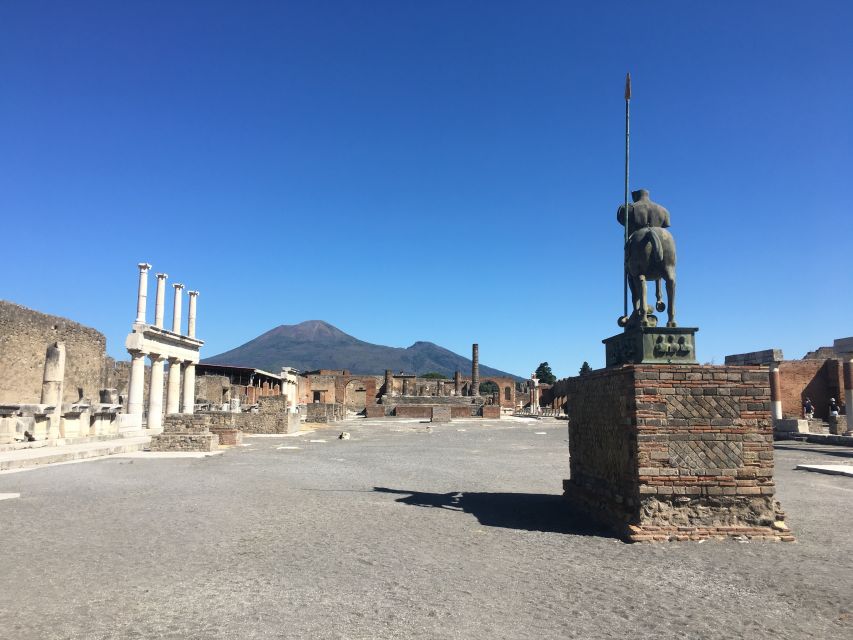
The Forum is one of Pompeii’s essential stops, but it can be difficult to understand without guidance. A good explanation helps you connect the open civic space with the surrounding public buildings and the wider structure of Roman society.
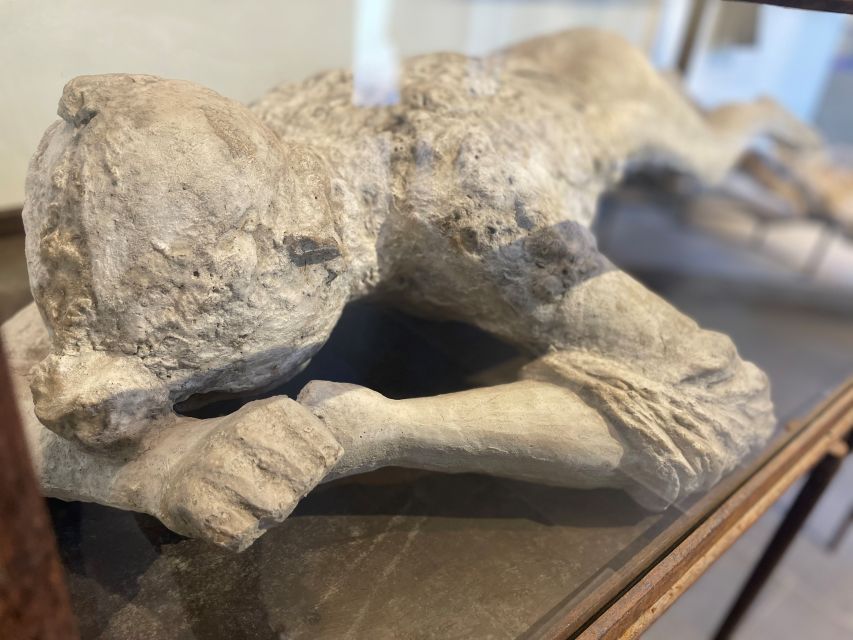
The tour also includes the plaster casts of eruption victims. These can be emotionally difficult. They are not simply archaeological curiosities. They show the human cost of the disaster, and they can change the tone of the visit after the lively streets, houses, and shops.
The description also refers to the bodies of victims. At Herculaneum, you may see skeletons rather than the same type of casts found at Pompeii. The guide’s role is important here, since the remains deserve a serious explanation rather than a sensational one.
More Ancient History Tours in Pompeii
- Discover the Ancient Ruins of Pompeii: Day Trip from Rome
★ 3.5 · 2,247 reviews - Pompeii and Herculaneum Small Group Tour with an Archaeologist
★ 5.0 · 1,350 reviews - Skip the Line Guided Tour of Pompeii led by an Archaeologist
★ 5.0 · 703 reviews - Pompeii: Tour with Archaeologist Guide & Skip-the-Line Entry
★ 4.5 · 623 reviews
A one-hour lunch break between the ruins
After Pompeii, you get about an hour for lunch. Food is not included, and the tour price does not cover drinks or transportation.
The break matters because the archaeological sites are physically demanding. You will have spent roughly two hours walking over ancient surfaces, often in open conditions, before taking the train to Herculaneum. Use this time to eat, refill your water, and sit down.
The restaurant near the Pompeii entrance is one practical option, but you should not assume the exact lunch arrangement is fixed. Guides may suggest places, and Benedetto has helped groups organize lunch and shared taxis, but transportation and meals remain outside the basic package.
Reaching Herculaneum by train or taxi
The planned transfer to Herculaneum takes about 20 minutes by train, while the schedule allows roughly 30 minutes for the train portion. Transportation is not included in the tour price, so you should be ready to pay separately.
The practical details may change on the day. One group was helped with a shared taxi, particularly when rail service was affected, and Benedetto has been praised for helping organize transport. That is useful, but you should treat it as assistance rather than a guaranteed included service.
This is also a point where you should read the meeting and ending instructions carefully. The itinerary lists the Archaeological Park of Herculaneum as the final stop, while the meeting-point information says the activity ends back at the starting meeting point. Confirm the return arrangement before you go, especially if you have a train, hotel transfer, or dinner reservation afterward.
Herculaneum offers a closer look at Roman homes
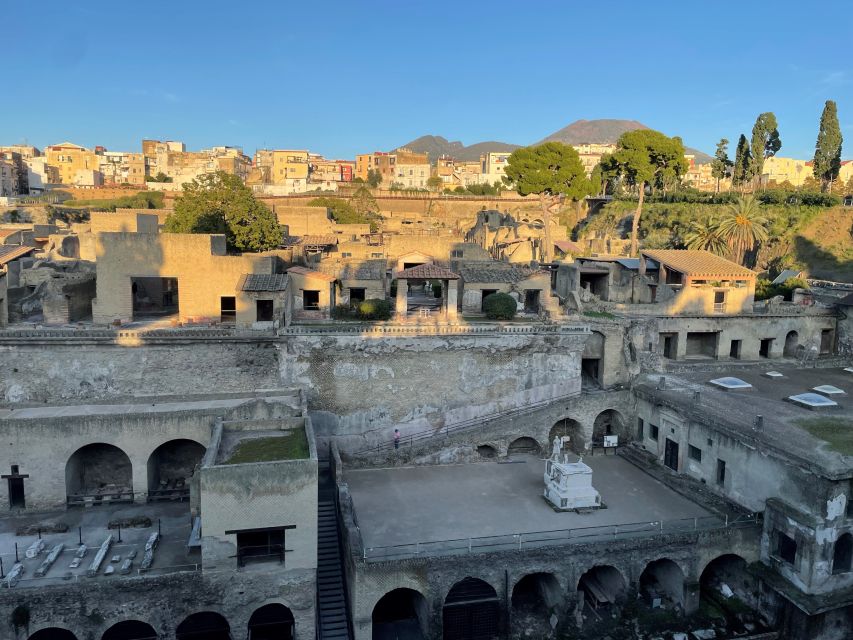
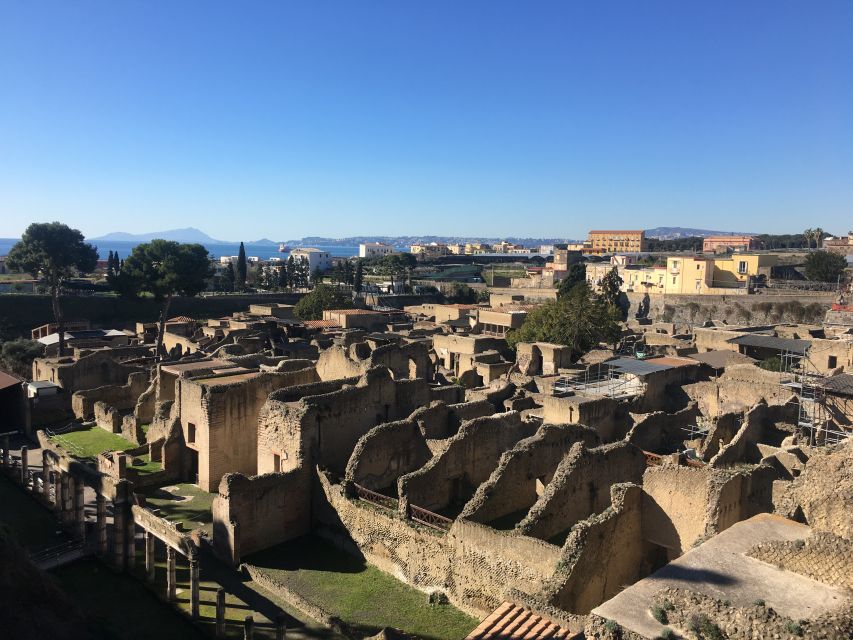
The Herculaneum guided visit lasts about an hour and a half. It is shorter than the Pompeii section, but the site is smaller and the preserved details can be unusually strong.
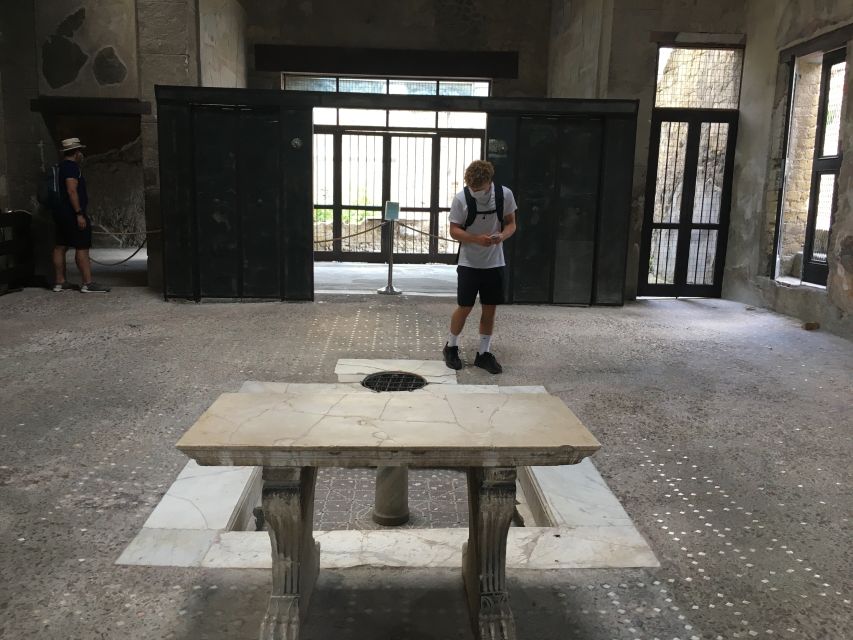
Here, the focus shifts toward residences and domestic decoration. You may see frescoes, marble, mosaics, jewelry, skeletons, and preserved wooden elements. Those surviving materials help you understand how Roman interiors looked and how much has disappeared at other ancient sites.
I find Herculaneum especially useful after Pompeii because you can compare the two cities directly. Pompeii gives you a broad sense of streets, civic buildings, and commercial life. Herculaneum brings you closer to individual homes and their contents.
The site is also generally described as quieter than Pompeii. That does not mean you will have it to yourself, but the smaller scale can make it easier to focus on the guide and the details around you.
What an archaeologist adds
The strongest part of this experience is the guide’s role. Benedetto is identified as an archaeologist and is described as having a doctorate in archaeology. His approach combines site knowledge with stories about Roman life, social customs, architecture, and the eruption.
You should expect an active conversation rather than a one-way speech. The small group makes it easier to ask questions, and the guide can adjust the pace or route based on what interests you. Previous groups have also been guided through less crowded paths and shown details that are easy to miss when walking alone.
That does not mean every moment will be quiet. Pompeii is a major attraction, and crowd levels can affect the route. The advantage of a small group is that your guide can make practical choices, seek shade when possible, and avoid some of the biggest clusters.
The guide is also known for humor. That matters during a long archaeological visit. The subject includes death, disaster, and painful evidence, but a warm and funny guide can keep the day human without making the subject feel trivial.
Group size, headsets, and tour style
You can book a private tour or join a small group of up to 10 people. A private tour gives you the most control, but the small-group option already offers a more personal format than a large coach excursion.
Headsets are provided for groups larger than eight. This is a small but useful detail. Pompeii can be noisy, and a headset helps you hear explanations when other groups are nearby.
The tour is available in English, Italian, or French. The exact guide may vary, but Benedetto is the name most closely associated with the experience and is praised for fluent English, detailed explanations, patience, and a lively presentation.
Families are a good match, particularly if children can manage several hours of walking. The guide has been praised for making the sites accessible to a 10-year-old and for keeping children involved. Photography and archaeology enthusiasts should also find plenty to interest them.
Physical demands and hot-weather planning
This is not an easy stroll. You walk through large archaeological areas, cross uneven ancient surfaces, and spend several hours on your feet. The tour is specifically not suitable for wheelchair users or people with mobility impairments.
Comfortable shoes are essential. Bring water and a hat, particularly in spring and summer when much of the route can feel exposed. One practical tip is to hydrate before you feel thirsty, since the combination of heat, walking, and concentration can wear you down.
Spring may be more comfortable than the hottest summer months. The tour can still be warm, but the guide may look for shade and adjust the route when possible. You should not count on shade everywhere, so dress for sun and bring enough water.
Is the $141.61 price good value?
At $141.61 per person, this is not the cheapest way to enter Pompeii and Herculaneum. You are paying for more than admission, though. The price includes entry tickets and an archaeologist guide, with a private or small-group format available.
The value is strongest if you want context. You can walk through Pompeii and Herculaneum on your own, but it is easy to spend time looking at walls and ruins without understanding how the pieces fit together. A specialist guide can help you notice the difference between a home, shop, bath, civic building, and religious or commercial space.
The price also includes the convenience of seeing both sites in one organized half-day. You still pay for lunch and transportation, so the final cost will be higher. If you already have strong archaeological knowledge or prefer a very slow independent visit, the price may feel less attractive.
For families, first-time visitors, and anyone with limited time in Campania, I think the cost is easier to justify. You get a planned route, entry tickets, a guide who can answer questions, and help with the transition between sites.
Booking details that matter
Free cancellation is available up to 24 hours before the activity for a full refund. You can also reserve now and pay later, which helps if your Campania plans are still changing.
Remember the named-ticket rule for Pompeii. Send the full first and last names of everyone in your party after booking, and bring each person’s original passport or ID card.
Check the starting time when you book. The tour lasts five hours, but the available start times can vary. Also confirm where the day ends, since the itinerary and meeting-point notes describe the finish differently.
Who should choose this tour?
I would choose this experience if you want both major Roman sites explained in one day and prefer a guide who can connect architecture with everyday life. It is especially well suited to families, photographers, people interested in archaeology, and first-time visitors who want help making sense of a large ruin complex.
It is less suitable if you want to move slowly, avoid walking, or spend the entire day at one site. Pompeii alone can fill many hours, and this tour gives you only about two hours there before moving on.
Should you book it?
Book this tour if you want Pompeii and Herculaneum to feel like real Roman towns rather than disconnected ruins. The combination of a small group, included entry tickets, and an archaeologist guide gives you a strong introduction to both places.
I would pay special attention to Benedetto’s role, the crowd management, and the practical help with lunch and local transport. Just plan for heat, uneven ground, extra costs for food and transportation, and a brisk schedule. If those conditions suit you, this is a well-focused way to see the two sites and understand why each one matters.
FAQ
How long does the Pompeii and Herculaneum tour last?
The full activity lasts about five hours. The schedule includes roughly two hours at Pompeii, one hour for lunch, about 20 to 30 minutes for the train transfer, and about an hour and a half at Herculaneum.
Is transportation between Pompeii and Herculaneum included?
No. Transportation is not included in the tour price. The planned transfer is by train, and the journey takes about 20 minutes, with around 30 minutes allowed in the schedule.
What is included in the tour price?
The price includes an archaeologist guide, entry tickets, and headsets for groups larger than eight people. Lunch, drinks, and transportation are not included.
What languages are available?
The tour is available in English, Italian, and French. Private tours and small groups are offered.
What should I bring?
Bring your original passport or ID card, comfortable shoes, a hat, and water. Pompeii tickets are named, so you must provide the first and last names of all participants after booking.
Is the tour suitable for wheelchair users?
No. The activity is not suitable for wheelchair users or people with mobility impairments because the route involves substantial walking across ancient archaeological surfaces.
More Archaeological Site Tours in Pompeii
- Pompeii Private Tour with an Archaeologist and Skip The Line – 3 hours
★ 5.0 · 564 reviews - Pompeii Skip-the-line Tour with Archaeologist Guide
★ 5.0 · 559 reviews - Explore Pompeii with an Archaeologist
★ 5.0 · 511 reviews - Pompeii 3hours Villa of Mysteries tour with an Archaeologist
★ 4.8 · 486 reviews
Just added around Pompeii
- Pompeii Guided Tour with Archaeologist★ 4.6 · 27 reviews
- Pompeii: Guided Tour with Archaeologist with max. 12 People★ 5.0 · 155 reviews
- Pompeii Small Group Tour – Tickets Included★ 4.7 · 72 reviews
- Pompeii: 2-Hour Guided Tour with an Archaeologist★ 4.9 · 151 reviews
- PompeiI Exclusive Tour with your Archaeologist in a Small Group★ 4.5 · 363 reviews
- Pompeii Private Tour with an Archaeologist Guide★ 5.0 · 184 reviews
- Pompeii Private Tour with an Archaeologist and Skip The Line★ 5.0 · 391 reviews
- Pompeii 3hours Villa of Mysteries tour with an Archaeologist★ 4.8 · 486 reviews
Pompeii History Tours, compared.
Pompeii: Entry Ticket and Guided Tour with an Archaeologist
Read our review →
Pompeii: Small Group Tour with an Archaeologist
Read our review →Pompeii Small Group Tour with an Archaeologist
Read our review →
Discover the Ancient Ruins of Pompeii: Day Trip from Rome
Read our review →
Pompeii and Herculaneum Small Group Tour with an Archaeologist
Read our review →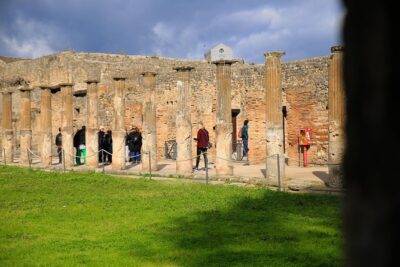
Skip the Line Guided Tour of Pompeii led by an Archaeologist
Read our review →
Pompeii: Tour with Archaeologist Guide & Skip-the-Line Entry
Read our review →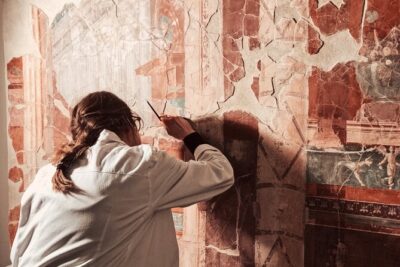
Pompeii Private Tour with an Archaeologist and Skip The Line – 3 hours
Read our review →Browse the lists this tour appears in