
Review · CROATIA
Zagreb: City & History Walking Tour & WW2 Tunnels
The most unusual part of this Zagreb walk is the Grič Tunnel, a WWII-era passage beneath the Upper Town that adds a jolt of recent history to a route filled with churches, markets, towers, and medieval lanes. You get a quick but useful look at how Zagreb grew from two hilltop settlements into Croatia’s capital.
I like the small-group feel, which makes it easier to hear, ask questions, and talk with the guide. I also like the mix of major sights and everyday Zagreb, from the Cathedral and St. Mark’s Church to Dolac Market and café-lined Tkalčićeva Street. The main drawback is the pace: 150 minutes covers a lot, so the tour gives you context and exterior views rather than long visits inside museums or churches.
Key points to know before you book
- The Grič Tunnel adds a rare wartime perspective: You walk through a former shelter beneath the Upper Town, though access can change if an event is taking place.
- The route connects Zagreb’s main districts: Zrinjevac, Ban Jelačić Square, Dolac, Tkalčićeva Street, and Gradec all fit into one outing.
- Guides make the difference: Petra, Tomislav, Tomas, and Maja are praised for clear English, humor, personal stories, and useful restaurant advice.
- The group format favors conversation: Smaller groups make it easier to hear the guide and get answers without being lost in a crowd.
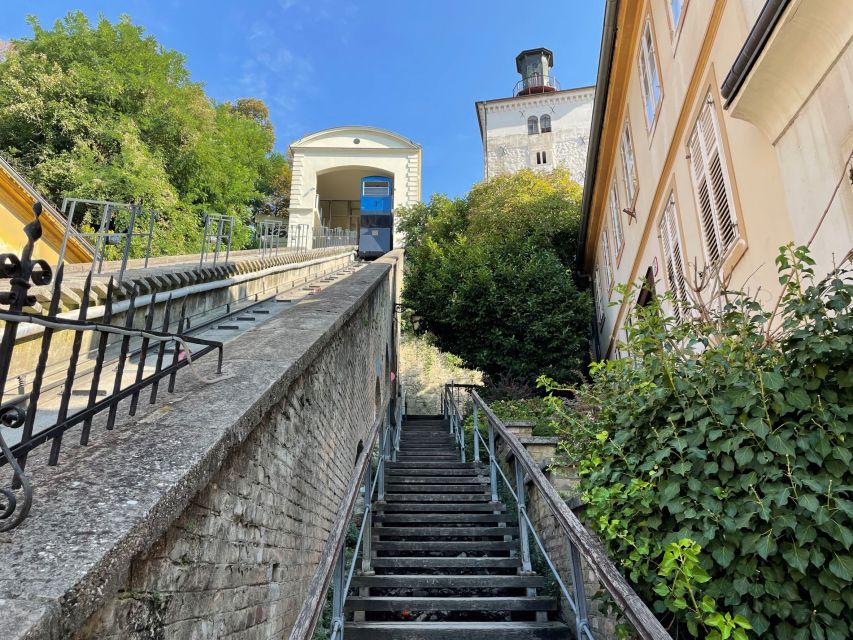
- The funicular is currently closed: Renovation keeps Zagreb’s oldest public transport out of the experience until March 2026.
- Market timing matters: Dolac Market closes in the afternoon and on public holidays, so morning departures offer the fullest look.
Why this $11 walk is a smart first look at Zagreb
At $11 per person, this is an inexpensive way to get your bearings in Zagreb. You are paying for a licensed local guide and 150 minutes on foot, not admission to museums, food, drinks, or a ride on the funicular. That low price makes sense if you want orientation, stories, and a list of places to return to later.
I see the best value in the route’s range. In one morning or afternoon, you move from formal parks and grand architecture to a working market, a café street, a medieval gate, and an underground wartime passage. That variety helps you understand Zagreb as a lived-in city rather than a string of postcard stops.
The tour is especially useful at the start of a stay. You finish at Ban Jelačić Square, the city’s central meeting place, with the old town laid out in your mind and practical suggestions for food, museums, and later exploring. Several guides also use personal stories and local habits to explain the city, which gives the walk more character than a list of dates.
You should keep your expectations in check. At this price and duration, you will not receive a full museum tour, a long interior visit at the Cathedral, or a detailed study of every landmark. Think of it as a lively introduction that points you toward the places worth seeing in greater depth.
More History Walking Tours in Croatia
- Dubrovnik Old Town History Walking Tour
★ 5.0 · 1,684 reviews - Dubrovnik: Ancient City Walls & Wars Walking Tour
★ 5.0 · 1,270 reviews - Zagreb: City and WWII Tunnels Walking Tour
★ 4.9 · 1,230 reviews
Zrinjevac Park begins the story in elegant surroundings
Meet beside the small meteorological station on the north side of Zrinjevac Park, at Trg Nikola Šubića Zrinskog 2. Look for the display showing temperature and barometric pressure. This precise meeting point matters because Zrinjevac is a broad park, and a vague meeting instruction could leave you circling the flower beds.
The park is part of Zagreb’s Lower Town and gives the tour a calm opening. Your guide uses roughly 15 minutes here to introduce the city and explain how its formal public spaces fit into Zagreb’s development. The tree-lined setting also offers a gentler start than being dropped straight into a crowded square.
I like beginning here because it gives you a sense of Zagreb’s layout before the route climbs toward Gradec. If you arrive early, the park is an easy place to wait, but remember that the entire experience is outdoors and on foot. Wear shoes that can handle pavement, slopes, and old stone surfaces.
Ban Jelačić Square and the story behind Zagreb’s name
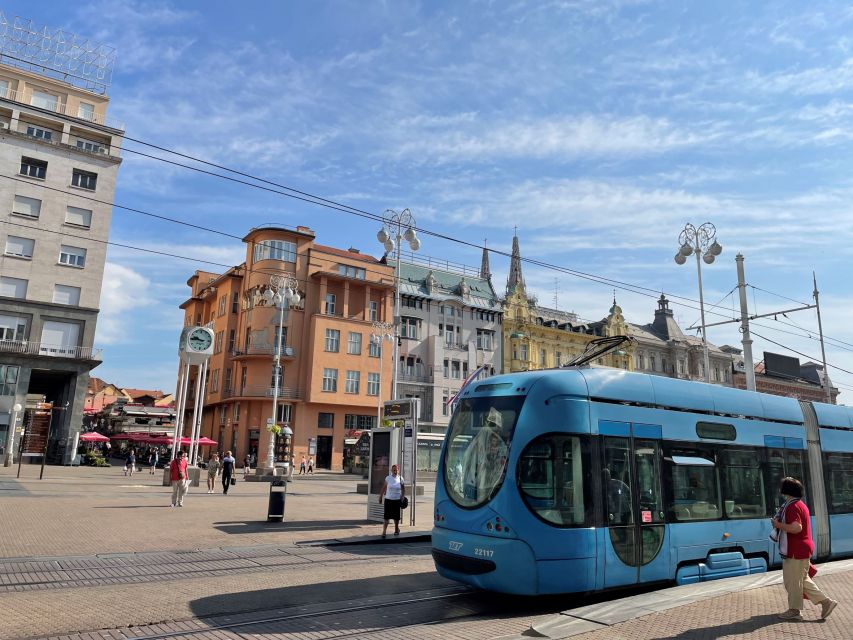
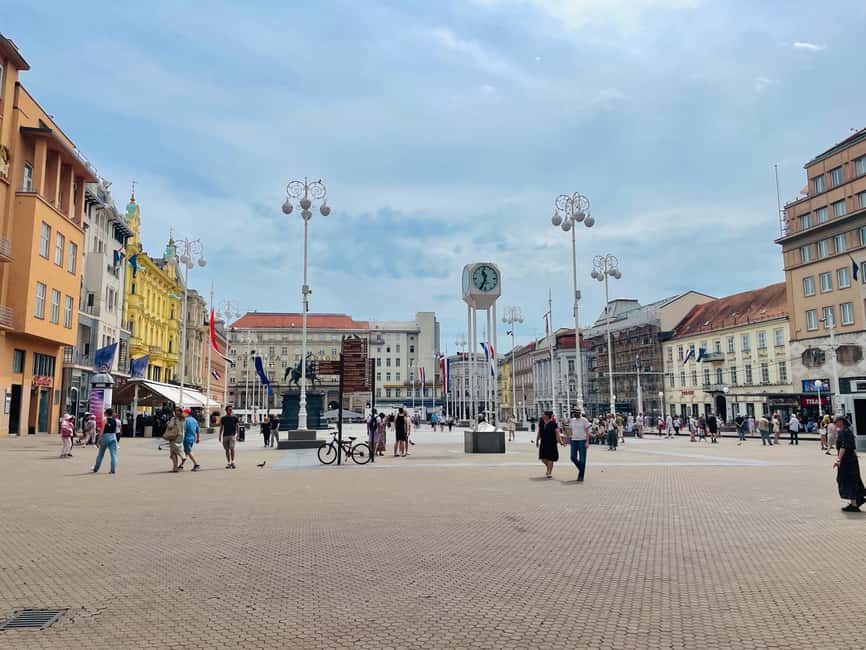
From Zrinjevac, the walk heads to Ban Josip Jelačić Square, the central hub of modern Zagreb. This is the place where tram lines, shoppers, cafés, and pedestrians meet, so it gives you an immediate feel for the city’s daily rhythm.
The guide explains the legends surrounding Zagreb’s founding and the origin of the city’s name. These stories are useful because they turn an ordinary square into a starting point for understanding the city’s identity. You also get time for photographs and questions before moving toward the Cathedral.
The square is a strong orientation point for the rest of your stay. You finish the tour here, and the guide can suggest where to eat or what to see next. If you are changing buses or have only a few hours in Zagreb, the central location makes this route easy to fit into a short visit.
Zagreb Cathedral and centuries of rebuilding
The Cathedral of the Assumption of the Blessed Virgin Mary is one of Zagreb’s defining landmarks. The stop lasts about 15 minutes, with the guide covering its origins, difficult periods, and repeated restoration work.
The useful part here is not simply the photograph. Zagreb’s Cathedral has had to endure the city’s changing fortunes and physical damage, so its appearance reflects more than one period. The guide puts those layers into plain language, giving you a better reason to look closely at the building rather than simply check it off your list.
This is a guided stop and photo opportunity, not a guaranteed extended interior visit. If seeing the inside is important to you, treat the tour as an introduction and plan separate time. The route continues at a steady pace, so keep an eye on the group while taking pictures.
More WWII and D-Day Tours in Croatia:
- Amsterdam: Life of Anne Frank and World War II Walking Tour
★ 4.8 · 10,467 reviews - Berlin: Third Reich & Cold War Guided Walking Tour
★ 4.9 · 8,378 reviews - Normandy D-Day Sites & Cemetery Day Trip from Paris with Lunch
★ 5.0 · 6,877 reviews - Munich: Third Reich & WWII Walking Tour
★ 4.6 · 6,181 reviews
Dolac Market, Zagreb’s everyday center
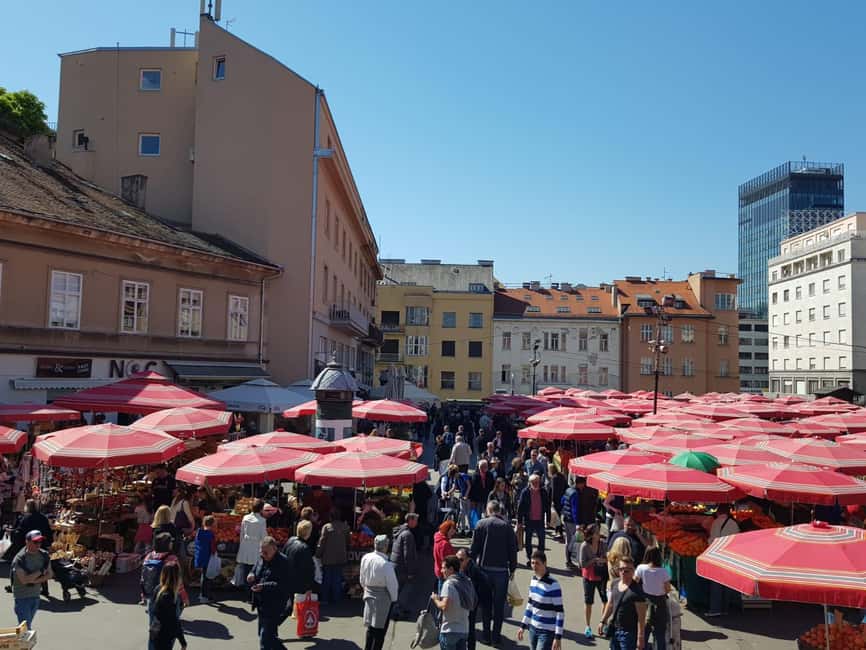
Dolac Market is often called the belly of Zagreb, and the name makes sense once you see the rows of produce and the steady flow of local shoppers. The guide spends about 15 minutes explaining the market’s place in city life.
This is one of the stops I value most because it shows Zagreb as a working town, not just a collection of old buildings. You hear about local food habits and see the public space where people come for fresh produce and everyday errands. The market also helps explain why Zagreb’s center remains social and practical at the same time.
Timing is important. Dolac is closed in the afternoon and on public holidays, so a later tour may pass through a quieter space or offer less to see. You should not count on food being included either. Food and drinks are not part of the tour, so use the market as a place to observe, then return later if you want to shop or eat.
Tkalčićeva Street and Zagreb’s café culture
The route continues toward Tkalčićeva Street, a lively pedestrian area lined with cafés and places to sit. The guide explains how lingering over coffee is part of local life, not just a stop between attractions.
That simple detail gives the walk a welcome change of pace. Zagreb is a city where the pause matters. You learn why sitting, talking, and watching the street are central to the local routine, and you may begin to see café time as part of your sightseeing rather than a delay.
The tour does not include a café stop or refreshments. Still, this is a useful place to return after the walk, especially if you want to try the social side of Zagreb at your own pace.
The Grič Tunnel brings wartime Zagreb underground
The Grič Tunnel is the route’s most distinctive stop. This underground passage dates from the WWII period and once served as a wartime shelter. You spend about 20 minutes here, getting a glimpse of Zagreb’s more recent past in a setting very different from the parks and churches above.
I like this contrast. The tunnel reminds you that Zagreb’s story is not limited to medieval walls, religious buildings, and elegant squares. The city also faced modern conflict and uncertainty, and this passage gives that part of its past a physical presence.
Access is not guaranteed. The tunnel may close if an exhibition, theatre performance, or another event is taking place inside. If that happens, the tunnel visit cannot be substituted with another included attraction, so book this tour for the wider route as well as the tunnel.
Reaching Upper Town without the funicular
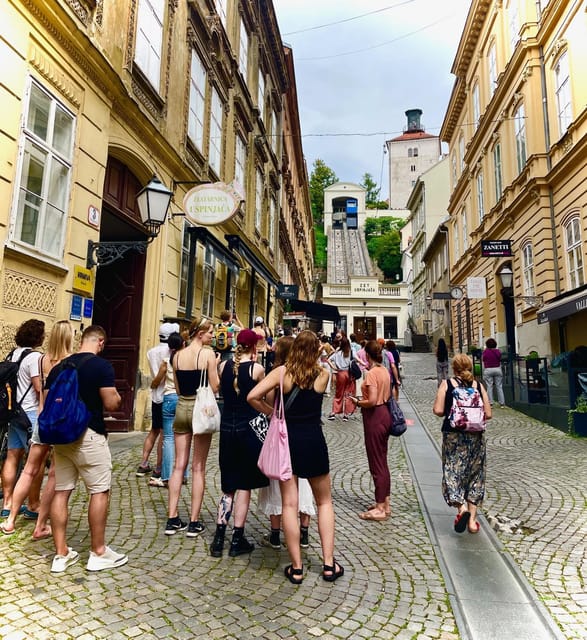
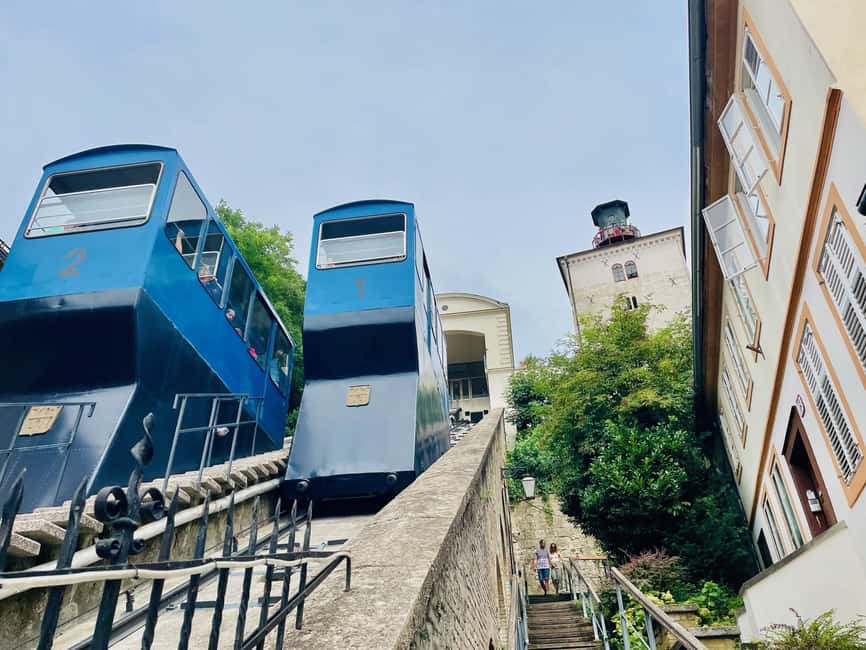
The walk heads toward Zagreb’s Upper Town, known as Gradec, one of the city’s original medieval settlements. Under normal circumstances, Zagreb’s historic funicular would be an appealing part of this climb. It is the city’s oldest public transport, but it is closed for renovation until March 2026.
That means you should expect to walk rather than ride. The Upper Town section is short in the stated schedule, but the route includes uphill movement and old surfaces. The tour is not suitable for wheelchair users, and anyone who finds hills difficult should consider that before booking.
The reward is the change in atmosphere. Gradec feels quieter and more enclosed than the Lower Town, with historic lanes, lookout points, and buildings tied to Zagreb’s earliest urban story.
Strossmayer Promenade and Lotrščak Tower
Strossmayer Promenade offers one of the best views across Zagreb. This leafy terrace gives you a chance to pause above the lower city and understand how the two levels fit together.
The guide then brings you to Lotrščak Tower, one of the Upper Town’s best-known landmarks. The stop lasts about 20 minutes and usually includes stories about the tower, the old city, and the cannon tradition associated with it. If your timing lines up, you may hear the cannon fire at midday. Several guests specifically appreciated guides arranging the route to catch this event.
That timing depends on the tour start and the day, so do not book solely for the cannon. Still, it is a fine example of what a local guide adds: small pieces of city life that are easy to miss when you walk alone.
Passing the Museum of Broken Relationships
The route passes the Museum of Broken Relationships for about 10 minutes. You do not get a full museum visit as part of the tour, but the guide points it out and gives you a useful idea of where it sits in the Upper Town.
This is a good example of the tour’s role. You see a wide range of places, then decide which deserve a return visit. If the museum interests you, note its location and come back after the walking tour with enough time to explore it properly.
St. Mark’s Square and the tiled church roof
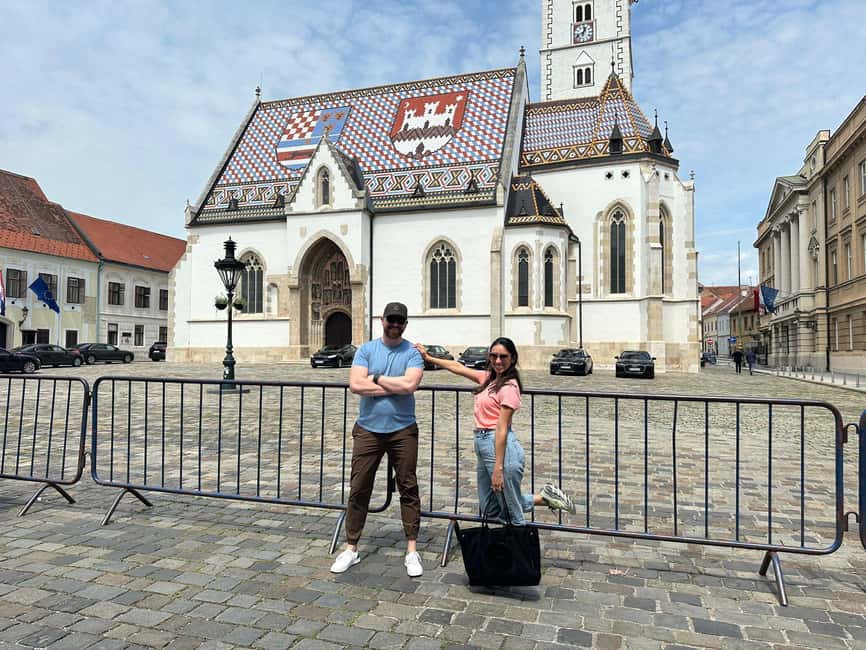
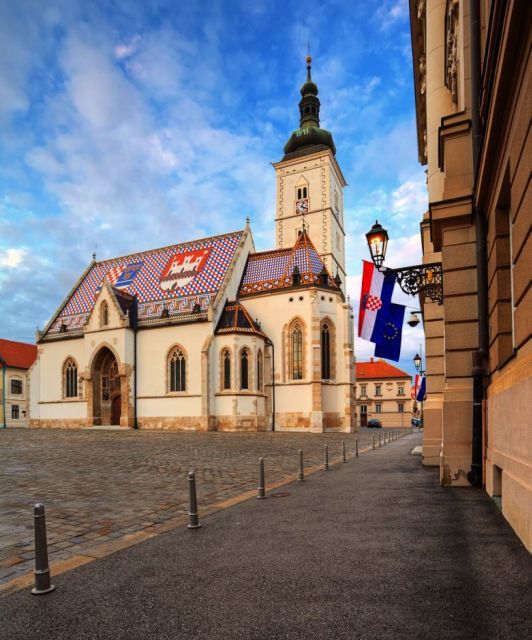
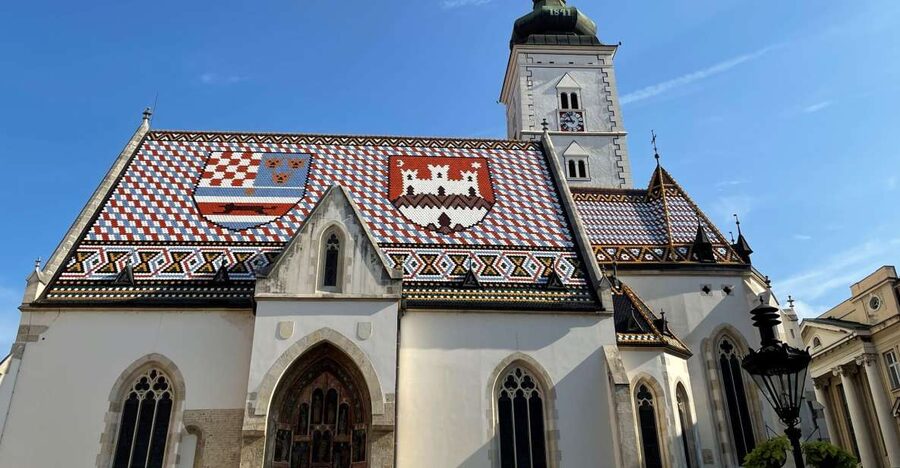
St. Mark’s Square is one of Zagreb’s most recognizable scenes. St. Mark’s Church is famous for its colorful tiled roof, which displays the visual symbols of Zagreb and Croatia.
The guide spends about 15 minutes here, explaining the church and the square’s role in the Upper Town. This is one of the tour’s strongest photo stops, but the guide’s context makes it more useful than a quick picture. You learn to look at the roof as a statement about place and identity, not just as a colorful design.
The square can feel formal and quiet compared with Tkalčićeva Street below. That contrast helps show how compact Zagreb is. In a short walk, the city shifts from café chatter to medieval lanes and government buildings.
Stone Gate and a chapel loved by locals
Stone Gate is the only surviving gate from Zagreb’s old fortifications. Walking through it gives you a direct link to the city’s medieval defenses, but the most memorable detail is inside: a small chapel containing a painting of Our Lady.
The painting is said to be miraculous and is deeply respected by local people. The guide explains the tradition and gives you time to take in the space. Keep your voice low and be considerate here, since this remains a place of devotion rather than simply a sightseeing stop.
This is the kind of detail I would likely miss without a guide. The gate looks modest from the street, but the chapel gives it emotional weight and shows how local belief remains tied to the city’s oldest structures.
A few tucked-away stops before Ban Jelačić Square
Before returning to the central square, the guide includes a few less obvious spots away from the main route. The exact details are not fixed in the description, which is part of the appeal. You get a chance to see small pieces of Zagreb that do not always appear in a standard list of attractions.
The tour then ends at Trg bana Josipa Jelačića. This is a practical finish because you are close to the Cathedral, Dolac Market, Tkalčićeva Street, and the city’s transport connections. Ask your guide for restaurant or museum suggestions while the route is still fresh.
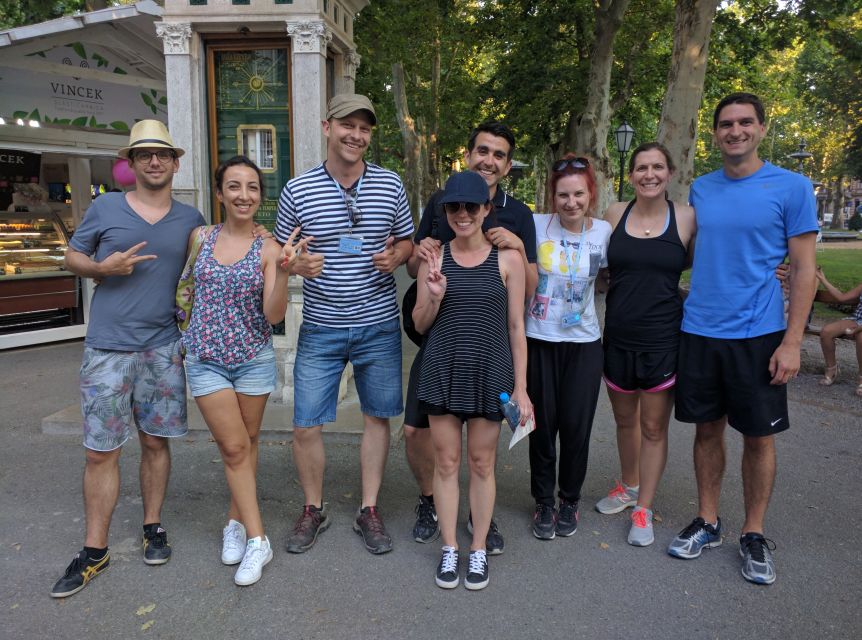
Petra, Tomislav, Tomas, and Maja have all led this experience at different times. The strongest qualities to look for are clear English, patience with questions, humor, and a willingness to share local recommendations. The group size can vary, but the experience is designed around a smaller, more conversational format.
How much walking and planning should you expect?
The tour lasts 150 minutes and covers a full sequence of stops. You should expect continuous walking, photo pauses, short explanations, and some uphill movement toward Gradec.
It is not a hard hike, but it is not a sit-down sightseeing tour. You will be outdoors for most of the time, so bring water and dress for the weather. The route can be enjoyable in light rain, but wet pavement and old stone may make the Upper Town sections less comfortable.
The meeting point is next to the meteorological station in Zrinjevac Park, and the tour ends at Ban Jelačić Square. Food and drinks cost extra. Free cancellation is available up to 24 hours before departure, and you can reserve now and pay later, which helps if your Zagreb schedule is still shifting.
Who should book this Zagreb walking tour?
I would choose this tour if you are visiting Zagreb for the first time, have only a day or two, or want the city’s main sights explained in a friendly setting. It also suits people who prefer stories and local context to a silent checklist of monuments.
It is a good fit for solo visitors and couples who want to ask questions without shouting across a large group. Families with older children may also enjoy the tunnel, tower, market, and unusual stories, though the walking pace and uneven surfaces may not suit everyone.
I would look elsewhere if your main goal is extended interior access, a museum visit, a funicular ride, or a wheelchair-friendly route. You should also choose a morning departure if Dolac Market matters to you, and confirm the tunnel is open if that stop is your top priority.
Should you book it?
For $11, this is a strong-value introduction to Zagreb. You get the city’s main landmarks, a market, Upper Town views, the Grič Tunnel, and a local guide who can turn scattered sights into a connected story.
Book it early in your stay if you want help planning the rest of your time. Choose it with realistic expectations: it is a walking overview, not a series of full admissions. If you can handle the hills and accept that the funicular is closed until March 2026, this is an easy, affordable way to meet Zagreb properly.
FAQ
Where does the tour begin?
It begins at Trg Nikola Šubića Zrinskog 2 in Zrinjevac Park, beside the small meteorological station on the park’s north side.
Where does the tour end?
The tour ends at Ban Josip Jelačić Square in central Zagreb.
How long does the walking tour last?
The experience lasts 150 minutes, or 2.5 hours.
Is the Grič Tunnel visit guaranteed?
No. The tunnel may close if an exhibition, theatre show, or another event is taking place inside. If it is closed, the tunnel cannot be visited during the tour.
Can I ride the Zagreb funicular during this experience?
No. The funicular is closed for renovation until March 2026.
Is the tour suitable for wheelchair users?
No. The activity is not suitable for wheelchair users.
Just added around Croatia
- Split: Local History and Culture 90-Minute Walking Tour★ 5.0 · 194 reviews
- Split: Historical & Gastro Treasures Tour with Green Market★ 4.9 · 144 reviews
- Split: Walking tour of Split with a ‘Magister’ of History★ 5.0 · 110 reviews
- Split: Historical Tour of Salona, Klis Fortress and Trogir★ 4.1 · 108 reviews
- Split: Private Walking Tour in the Historical Town Center★ 5.0 · 25 reviews
- Šibenik: Medieval Night Walking Tour★ 5.0 · 27 reviews
- Šibenik: Croatia in a Day, Vistas, History, Olive Oil, Wine★ 5.0 · 30 reviews
- Dubrovnik: Red History Museum Regular Ticket★ 4.6 · 134 reviews
Croatia History Tours, compared.
Dubrovnik: Ancient City Walls & Wars Walking Tour
Read our review →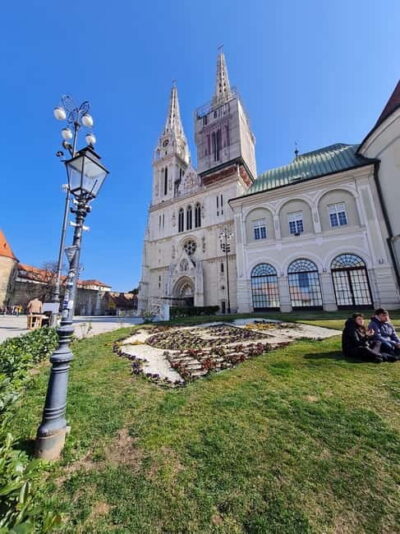
Walking Tour of Split with a ‘Magister’ of History
Read our review →
Dubrovnik Combo: Old Town & Ancient City Walls
Read our review →
Browse the lists this tour appears in