
Review · GERMANY
Quedlinburg UNESCO World Heritage Group Tour (private)
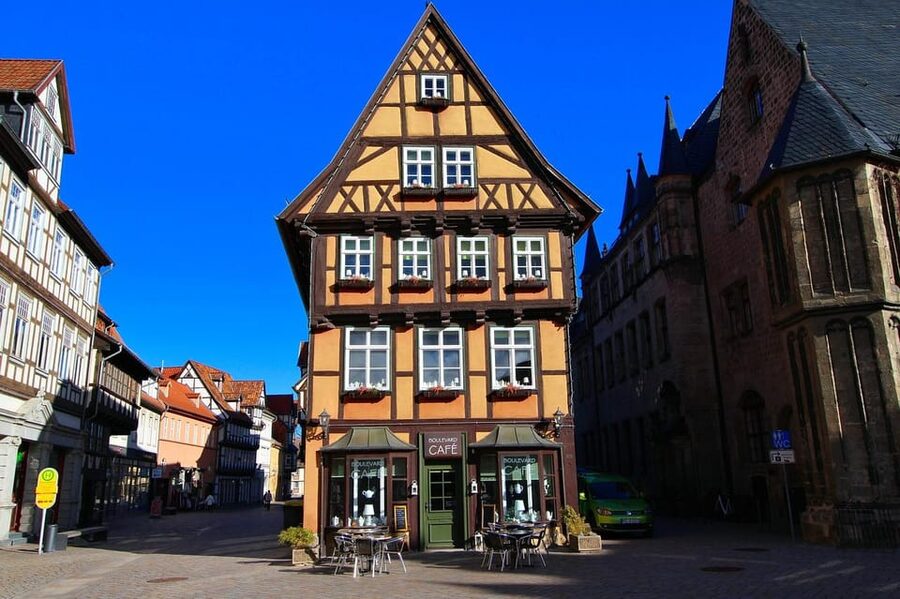
Quedlinburg’s real attraction is not one grand monument. It is the sheer concentration of old streets, crooked half-timbered houses, churches, and small corners that make the town feel like a history book you can walk through. This private tour links those details with more than 1,100 years of local history, from the market square to the Schlossberg.
I like the private format for up to 12 people, since you can ask questions and keep the pace suited to your group. I also like the route’s mix of famous sights and less obvious stops, including the Schuhhof, the area called the Hell, the Blasii church, and the half-cave museum. The main caution is language: the tour is in German, and one review found guide Klaus spoke too quickly at times.
Key points to know before booking
- Two distinct walks in one: Explore the historic old town first, then climb the Schlossberg for the castle district.
- A true private group: One booking covers up to 12 people, making the $117 group price more attractive for families and friends.
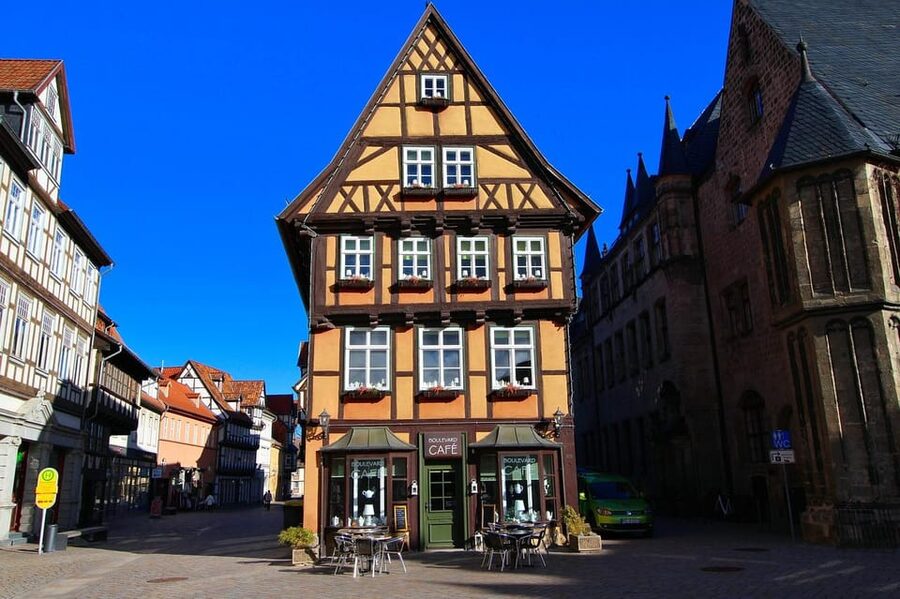
- The half-timbered houses are the star: You will see a wide range of styles rather than just one postcard street.
- Guide Klaus brings local stories: His enthusiasm for Quedlinburg and small personal tales were especially well received.
- The collegiate church is viewed from outside: Entry to St. Servatii is not included, so plan separately if you want to see the interior.
- Prepare for cobbles and a climb: The route runs in all weather and includes a steeper section on the Schlossberg.
Starting at Quedlinburg’s green city information office
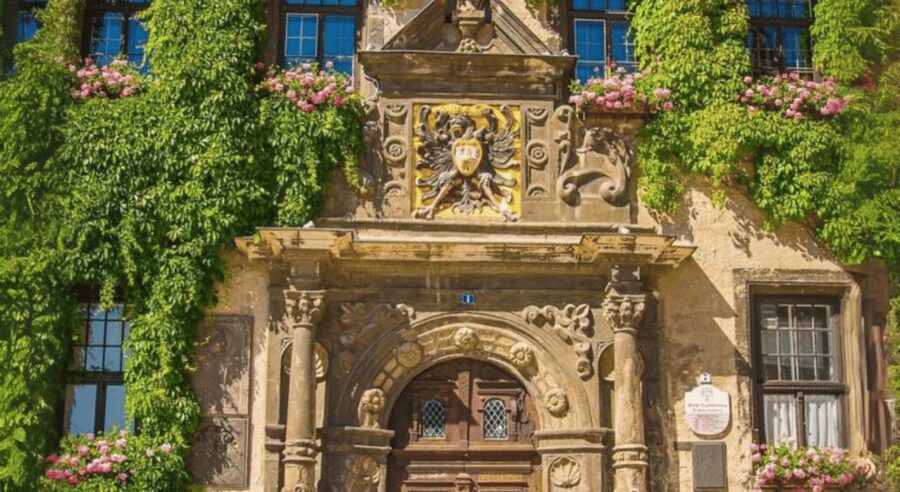
Your group meets just before the tour at the green Quedlinburg city information office on the market square. The guide meets you there, so you do not need to search through side streets or wait at a vague landmark.
That starting point makes sense. The market square gives you an immediate look at Quedlinburg’s civic center, with the town hall and market church nearby. From here, the tour moves on foot through the old town rather than treating the city as a series of isolated photo stops.
The tour is conducted in German. If you understand German well, the format should let you get more from the guide’s stories and explanations. If your German is limited, the sights are still easy to appreciate, but the amount you take away will depend heavily on how comfortably you follow spoken German.
Guide Klaus receives repeated praise for his enthusiasm and local anecdotes. One positive account singled out his feeling for the city and the many small stories he added along the way. Another called the tour interesting and lively, but noted that he sometimes spoke too quickly. That is worth keeping in mind, especially if you are booking for children, older family members, or anyone who needs a slower presentation.
More Private History Tours in Germany
- Berlin Private Complete History All Day Walking Tour
★ 5.0 · 474 reviews - Private Walking Tour Berlin Third Reich Hitler and World War II
★ 5.0 · 360 reviews - Nuremberg: 1.5-Hour Private Tour through Historical Old Town
★ 4.8 · 283 reviews
Reading Quedlinburg through its old town route
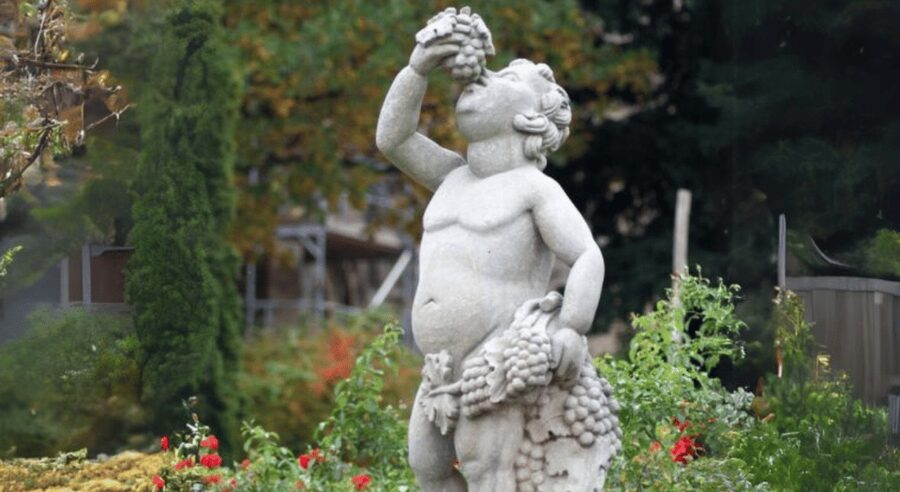
The first part of the walk focuses on the historic center. You will pass the town hall, the market church of St. Benedikti, the Schuhhof, the area known as the Hell, the Blasii church, and the half-cave museum.
The value here is the way the stops build a picture of daily life. The town hall represents civic power, while the churches show how important religion was to the city’s development. The half-timbered houses add another layer: their beams, shapes, and decorative details reveal how much variety can fit within one architectural style.
I like that the route does not limit itself to the most famous square. The Schuhhof and the smaller lanes are exactly the kind of places that are easy to miss if you simply follow a map between major sights. A guide can point out why a particular street or building matters, instead of leaving you to see only a row of attractive façades.
The half-cave museum adds an unusual note to the walk. The supplied details do not specify how much time you spend inside or what exhibits are included, so you should think of it as one stop within the wider old-town route, not as a long museum visit.
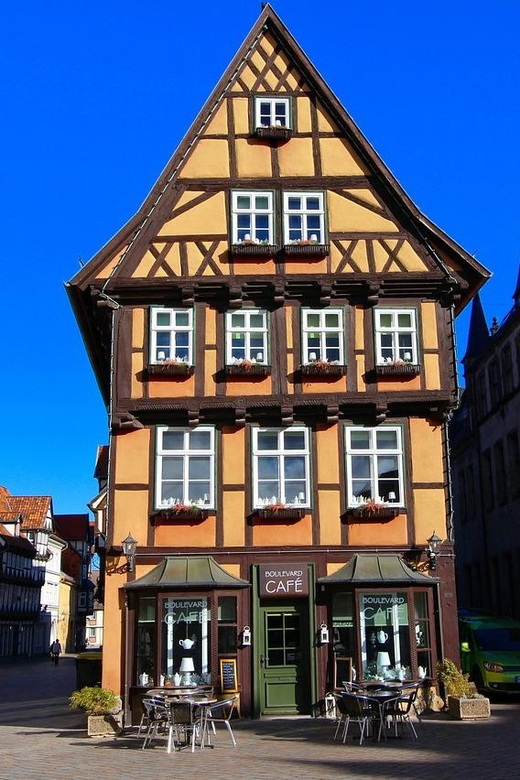
Quedlinburg’s half-timbered buildings are one of the tour’s strongest subjects. You will not see just one repeated design. The route is meant to show the range of half-timbered art across the old town, which gives the architecture more meaning than a quick photo stop can provide.
What the market church and Blasii church add
The market church of St. Benedikti and the Blasii church help anchor the walking route. They are not simply points on a sightseeing checklist. Their presence shows how the old town was organized around religious buildings as well as civic spaces.
The tour information promises historical context at these stops, but it does not provide a detailed breakdown of the interiors or indicate that the churches are entered. You should therefore expect to see and discuss them as part of the outdoor walk, rather than count on an extended indoor visit.
That distinction matters if you are choosing between this tour and a church-focused visit. This experience is built around the entire old town and Schlossberg. It gives you connections between buildings, streets, famous residents, and local food spots, instead of concentrating on one interior.
Climbing the Schlossberg for the city’s grandest chapter
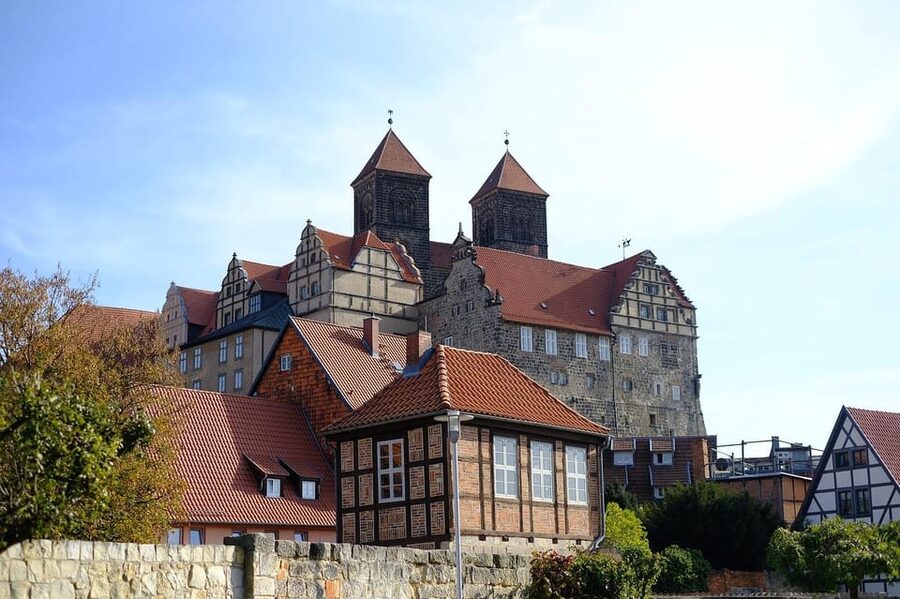
The tour’s high point is the Schlossberg, the hill crowned by St. Servatii Collegiate Church. The route includes Klopstock House, the Lyonel Feininger Museum, the castle gardens, and the collegiate church.
This section changes the feel of the outing. The lower town offers lanes, façades, and market life. The Schlossberg brings together the hilltop institutions and the religious center that gives Quedlinburg much of its historical weight.
You will encounter a steeper section here, along with cobblestone paths. It is not a difficult expedition, but it is not a completely flat stroll either. Wear shoes with a firm sole, and remember that rain can make old paving less comfortable. The tour runs in all weather, so a wet-day plan means waterproof clothing rather than a cancellation by default.
Klopstock House connects the city to one of its famous personalities. The Lyonel Feininger Museum adds a modern art connection to the older buildings around it. Together, these stops broaden the story: Quedlinburg is presented not only as a medieval and early modern town, but also as a place linked with notable cultural figures.
The castle gardens provide a pause from the tighter streets below. The information does not promise a specific garden presentation or a long stop, so do not book this expecting a formal garden tour. Instead, consider it part of the Schlossberg setting and a useful change of pace before the collegiate church.
More UNESCO World Heritage Tours in Germany:
- Berlin: 3-Hour World Heritage Cruise to Potsdam
★ 4.5 · 1,569 reviews - Hamburg: UNESCO-World Heritage Sites Tour
★ 4.7 · 137 reviews - Classic city tour in the World Heritage City of Augsburg
★ 4.0 · 41 reviews - World Heritage Shirakawa-go and Experience Tours from Kanazawa
★ 5.0 · 4,049 reviews
St. Servatii Collegiate Church, with one important limit
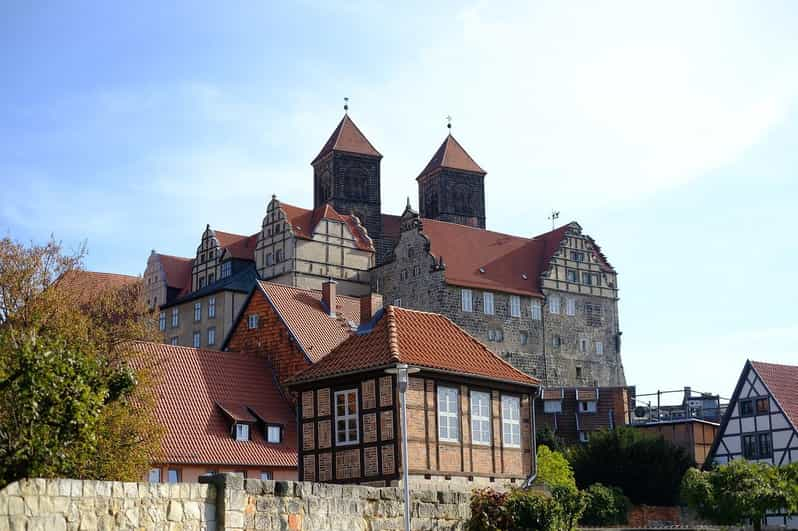
St. Servatii Collegiate Church is the central sight on the Schlossberg, but the inside is not included. The tour takes you along the church as part of the hilltop route, yet admission to the interior is specifically excluded.
That is the clearest limitation in the program. If the church interior is your main reason for visiting Quedlinburg, you will need to arrange that separately and check its opening conditions. If your main goal is to understand the city’s old streets, architecture, and historical setting, seeing the church from the outside still gives the tour a strong finish.
The outside visit also keeps the two-hour schedule realistic. Quedlinburg has enough historic material to fill far more than one afternoon, and an interior visit could easily add time. This walk gives you a broad introduction rather than pretending to cover every room and exhibit.
Local personalities and stories beyond the dates
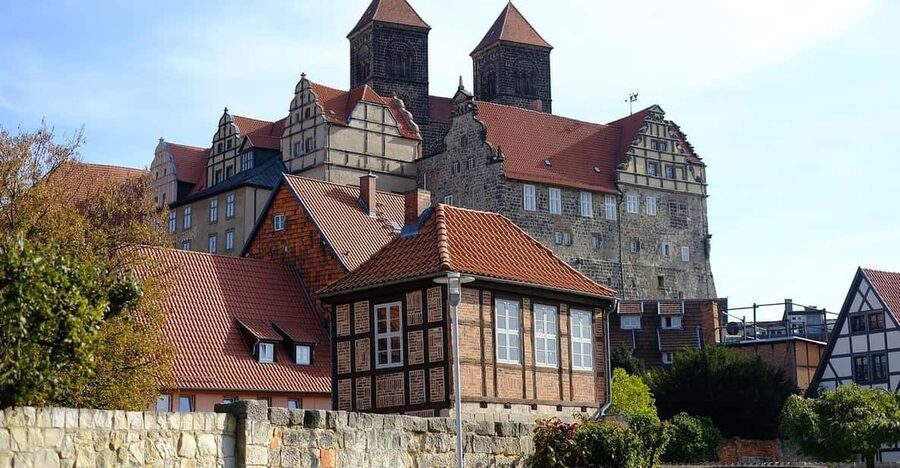
The tour specifically promises stories about famous people from Quedlinburg. Klopstock House and the Lyonel Feininger Museum give that promise a physical place in the route, while the guide’s local anecdotes add the human touch that dates and building names cannot provide.
This is where a private tour can earn its price. You can ask why a person matters locally, how a building connects to the town, or which detail you should notice before moving on. The guide’s enthusiasm for Quedlinburg was one of the most praised parts of the experience, particularly the small stories about the city.
There is also a practical benefit to having a local guide in a town with many narrow lanes and layered names. One booking account noted that without the guide, the group would have missed several places. That is a fair reason to choose a guided walk instead of relying only on a self-guided route.
Still, the quality of the spoken presentation matters. The feedback is not uniformly glowing. One harsh assessment criticized the guide’s pronunciation, general knowledge, and approach with children. That is only one poor rating among a larger set of positive scores, but families should take it seriously and make sure German comprehension and expectations match the format.
Food advice built into a history walk
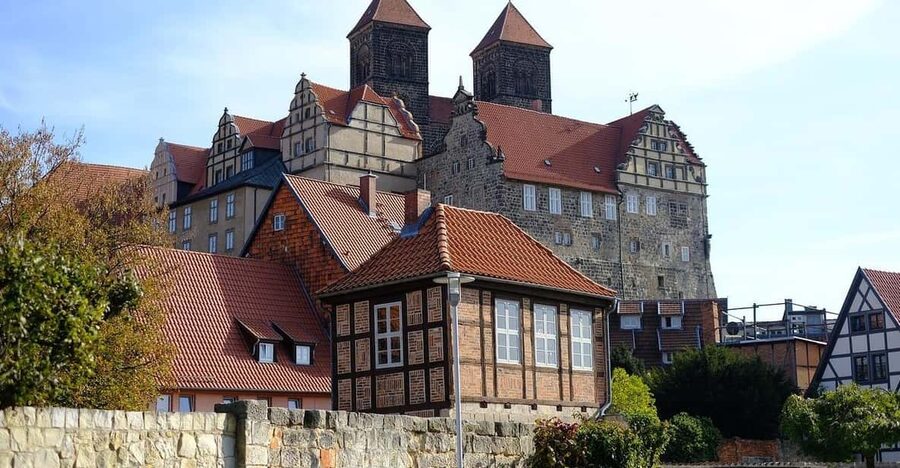
The guide also presents culinary hotspots and offers recommendations. This is not a food tour, and no tastings or meals are included. The value is practical: after two hours of walking, you can ask for ideas about where to eat or what local places deserve your attention.
Because the information does not name specific restaurants, you should not book this expecting a fixed dining itinerary. Treat the food section as a useful orientation for the rest of your time in Quedlinburg.
I like this small addition because it keeps the tour connected to the rest of your visit. A good city walk should help you decide what to do next, not simply end at the last monument.
Is $117 good value for a private group?
The price is $117 for a group of up to 12 people. That means the value depends on how many people are in your party. For one or two people, it is a fairly substantial cost for a two-hour walk. For a larger family or group of friends, the per-person price drops quickly.
The private format is the main reason to consider it. You are not joining an open group with an unknown size or pace. Your party receives a dedicated two-hour route through the old town and Schlossberg, with room for questions and a more personal exchange.
Children and young people up to age 16 are free. That makes the tour more appealing for families, although the German-only format and the guide feedback about speaking speed deserve attention. The cobblestones and hill also matter for younger children and anyone who does not enjoy uneven walking.
The tour includes a skip-the-ticket-line feature, but the collegiate church interior is not included. Since this is primarily an outdoor walking route, the main value comes from the guide, the structure, and the explanations rather than from bundled admission tickets.
Who will get the most from this walk?
I would choose this tour if you want a strong first look at Quedlinburg and prefer a guide to connect the buildings into one story. It suits couples, families, and small groups who want private time rather than a large public walk.
It is especially useful if you are interested in:
- Half-timbered architecture and old-town streets
- Quedlinburg’s civic and religious history
- Local figures linked with Klopstock House and the Feininger Museum
- A guided introduction before exploring alone
- Food recommendations for the rest of your stay
You may want something else if you need an English-language tour, want to spend a long time inside St. Servatii, or have difficulty with cobbles and a steep section. The listed language is German only, and the church interior is not part of the price.
The two-hour length is well judged for a first orientation. It gives you enough time to see the main districts without turning the outing into an all-day march. At the same time, Quedlinburg has more detail than any two-hour route can cover, so plan to return to the streets and buildings that catch your eye.
Practical details that shape the experience
The tour operates in rain or shine. Bring weather-appropriate clothing and shoes suited to cobblestones. The route includes a steeper part of the Schlossberg, so comfort matters more than fashion here.
The meeting point is directly in front of the green Quedlinburg city information office on the market square. Arrive shortly before the start so the guide can find your group without a rushed phone call.
The tour lasts two hours and has starting times based on availability. You can cancel up to 24 hours before the start for a full refund, and a reserve-now, pay-later option is available. These policies make it easier to fit the walk into a changing German itinerary.
The overall score is 4.6 out of 5 from 32 ratings. The strongest pattern is clear: the tour works best when the guide’s local enthusiasm, stories, and knowledge come through. The main concerns are the German-only delivery, occasional fast speech, and one sharply negative report about presentation and child-friendliness.
Should you book the Quedlinburg UNESCO tour?
Book it if you want a private, German-language introduction to Quedlinburg that combines the market square, old-town lanes, half-timbered houses, and Schlossberg in one route. The guide’s local stories and the group price for up to 12 people are the strongest reasons to choose it.
Think twice if you need English, require a flat route, or mainly want to visit the inside of St. Servatii. For everyone else, this is a sensible way to get your bearings, learn why Quedlinburg matters, and leave with a better plan for exploring the city on your own.
FAQ
Where does the tour meet?
The group meets in front of the green Quedlinburg city information office on the market square. The guide receives the group there shortly before the tour begins.
How long does the tour last?
The tour lasts two hours.
How much does the private tour cost?
The price is $117 per group of up to 12 people.
Is the tour private?
Yes. It is offered as a private group tour.
What language is the tour in?
The live tour guide speaks German. German is the only language listed for this activity.
Are children included in the price?
Children and young people up to 16 years old are free.
What sights are included in the old-town portion?
The old-town route includes the town hall, the market church of St. Benedikti, the Schuhhof, the Hell, the Blasii church, and the half-cave museum.
What does the Schlossberg portion include?
The Schlossberg route includes Klopstock House, the Lyonel Feininger Museum, the castle gardens, and St. Servatii Collegiate Church.
Can I enter St. Servatii Collegiate Church during the tour?
The inside of St. Servatii Collegiate Church is not included. The church is part of the Schlossberg route, but interior admission is excluded.
Does the tour operate in bad weather?
Yes. The tour operates in all weather conditions, including rain. The route includes cobblestone paths and a steeper section on the Schlossberg.
Just added around Germany
- Berlin Food & Cultural Tour: Must-Try German & Berliner Classics★ 5.0 · 51 reviews
- Berlin Half-Day World War II Walking Tour★ 4.5 · 48 reviews
- Small-Group Historical Bike Tour in Berlin★ 4.5 · 103 reviews
- Historic center of Berlin – Tour in Italian★ 5.0 · 143 reviews
- Berlin Cold War & World War II Third Reich Walking Tour★ 4.5 · 30 reviews
- Private Taxi Tour City East & West History and Architecture 3-4h★ 5.0 · 42 reviews
- Berlin Wall and Cold War Bike Tour in Small Groups★ 5.0 · 114 reviews
- Private Tour: Jewish Heritage Walking Tour of Berlin★ 5.0 · 29 reviews
Germany History Tours, compared.

Berlin: Third Reich & Cold War Guided Walking Tour
Read our review →
Leipzig: City History Canal Sightseeing Tour on a Motorboat
Read our review →
Berlin’s Best: 2 Hour Walking Tour Third Reich and the Cold War
Read our review →
Third Reich Berlin: Hitler and WWII Walking Tour
Read our review →
Leipzig: 1.5-Hour Historical Walking Tour in German
Read our review →
Berlin: Third Reich, Hitler, and WWII Walking Tour
Read our review →Browse the lists this tour appears in