
Review · 2-HOUR EXPERIENCES
Riga: 2-Hour History of Art Nouveau Walking Tour
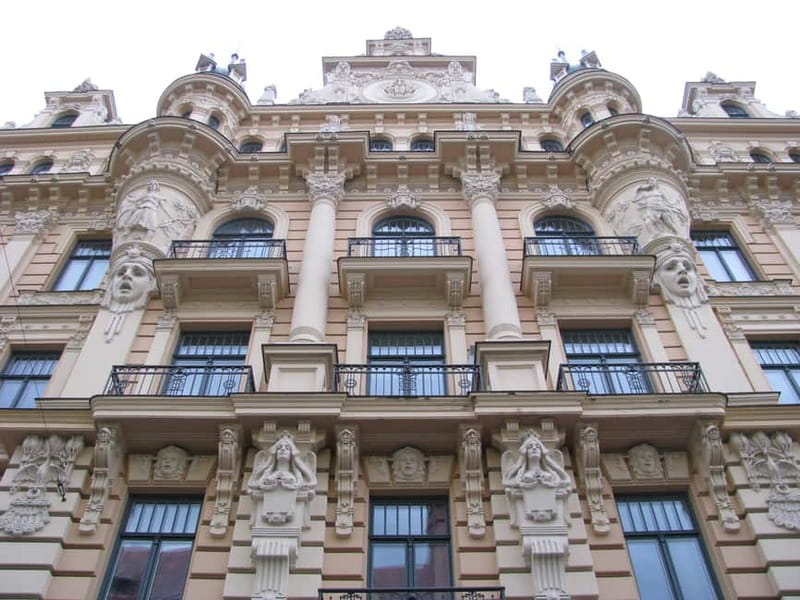
Riga’s Art Nouveau district is the star here, but the real treat is learning how to read its decorated facades. This two-hour walk moves from central Riga to Alberta Street, where Mikhail Eisenstein’s bold work sits beside quieter national romantic designs. I like the clear architectural focus and the chance to see how beauty and function were meant to work together.
I also like the small-group feel when numbers stay low, plus the guides’ strong command of Riga’s history. Tatiana, Gunta, Caspars, Liga, and Nelli have each led highly praised departures, with visitors especially valuing patient explanations and an easy pace. The main drawback is that children over six pay the full price, and younger children may lose interest before the two hours are up.
Key points to know before you book
- The route links two sides of Riga: Begin at the House of the Black Heads in Town Hall Square, then walk through the Old Town toward the Art Nouveau district.
- Alberta Street is the visual high point: Expect elaborate facades, bold ornament, and discussion of the architects behind Riga’s best-known buildings.
- Mikhail Eisenstein gets special attention: You’ll hear about his life and his controversial place in Riga’s architectural story.
- The tour is about ideas as well as decoration: Your guide explains decorative Art Nouveau, more restrained intellectual designs, and national romanticism.
- The group requires at least three people: If too few book, the tour may be cancelled with a full refund, or you can upgrade to a private outing.
- Plan for a walking tour, not indoor sightseeing: Entry tickets are not included, so the value comes from the guide’s explanations and the route itself.
Why Riga is such a good city for Art Nouveau
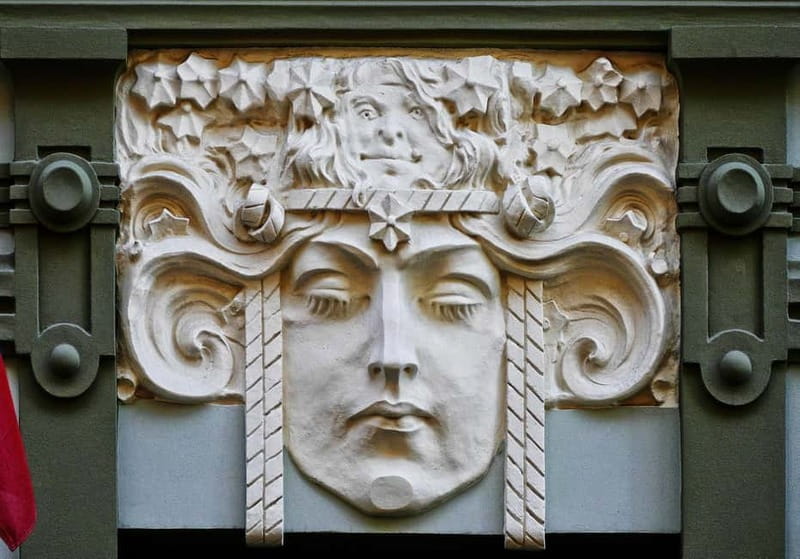
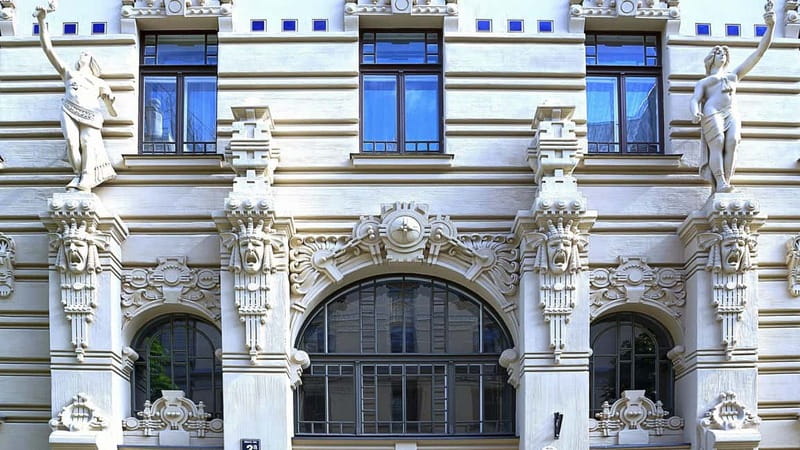
Riga’s Art Nouveau buildings are not scattered curiosities. They form a substantial part of the central city, making it possible to compare different approaches on foot in a short time. That matters because Art Nouveau is not one fixed look. Some buildings use faces, flowers, figures, and heavy ornament. Others take a more restrained approach, with clean lines and an emphasis on structure.
This walk gives you a way to sort out those differences. Instead of seeing a pretty building and moving on, you learn what its decoration is trying to do. Was it meant to signal wealth? National identity? Modern thinking? Or simply the ambition of the owner and architect?
Riga was once the most important port city in the Russian Empire, and the tour places its architecture in that setting. Latvian, German, Russian, and Jewish architects all contributed to the city’s building culture. That mix gives the route more depth than a simple parade of attractive facades.
You should also expect the guide to discuss the tension inside the style. Art Nouveau valued both beauty and function. The tour asks you to consider how well these buildings meet that goal. A facade may be wonderfully theatrical, yet the practical qualities of the building are less obvious from the street.
More History Walking Tours in the world:
- History and Hauntings of Salem Guided Walking Tour
★ 5.0 · 14,564 reviews - Lisbon: History, Stories and Lifestyle Walking Tour
★ 4.8 · 10,902 reviews - Amsterdam: Life of Anne Frank and World War II Walking Tour
★ 4.8 · 10,467 reviews
Starting at the House of the Black Heads
The meeting point is the Smile Line office inside the House of the Black Heads at Town Hall Square, 7. This is a useful central starting point because you begin among Riga’s historic public buildings before heading toward the later Art Nouveau district.
Your guide leads the group through the Old Town first. That opening section helps connect Riga’s older medieval setting with the grander urban expansion that followed. You are not simply dropped into a district of ornate apartment buildings. You get a short sense of how the city developed and why the Art Nouveau period mattered.
The House of the Black Heads is also a practical landmark for meeting up, though you should allow a little time to locate the office inside the building. Wear comfortable shoes. The route is only two hours, but it is still a city walk, and you will spend much of it looking upward and stopping at street corners.
The tour is wheelchair accessible, which makes this a useful option for visitors who want a guided architectural walk without assuming that every city route is difficult. Route changes can occur, so the exact sequence of streets is not guaranteed.
Walking from Old Town to the Art Nouveau district
The shift from Old Town to the Art Nouveau district is one of the tour’s useful features. In a short period, you see two distinct chapters of Riga. The Old Town provides the earlier setting, while the later buildings show a city growing more ambitious and modern.
This transition also keeps the outing from feeling like a single-style lecture. You can compare the scale and mood of the older center with the larger, more decorative buildings farther out. Your guide points out how Riga’s role as a major port helped create the conditions for new construction and new architectural ideas.
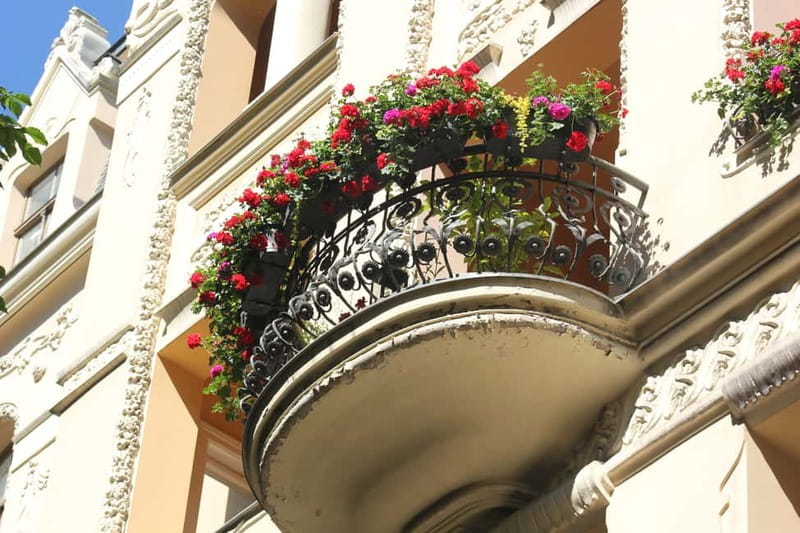
The pace is intended to be easy. That is important because Art Nouveau rewards attention. If you rush, you miss the faces carved into a facade, the geometric detail above a doorway, or the way decoration is arranged around windows and balconies.
Some departures have used an audio system, allowing you to hear the guide while looking at the buildings rather than crowding close. That can be especially helpful on a busy street or for anyone who has trouble hearing in an open urban setting.
Mikhail Eisenstein and Riga’s most theatrical facades
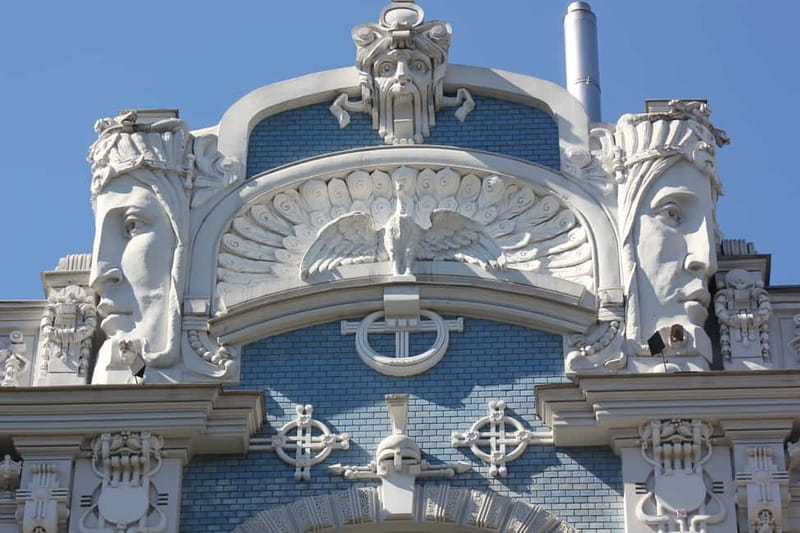
Mikhail Eisenstein is a major part of the tour. He was a talented and controversial architect, and his buildings offer some of the clearest examples of the more dramatic side of Riga’s Art Nouveau. Your guide explains his life in the city and places his work within the wider Russian Empire.
Eisenstein’s facades are the kind that make you stop. Look for heavy ornament, strong vertical lines, expressive details, and a sense of movement even though the building itself is fixed in place. The point is not just to admire the decoration. You learn why the buildings can feel almost theatrical and why that approach was not universally admired.
This is where a strong guide makes a real difference. A casual walk may show you the facade, but it will not necessarily explain the architect’s reputation or how his work fits into Riga’s larger building boom. Tatiana has been praised for making the subject lively and approachable, while Gunta, Caspars, Liga, and Nelli have also led engaging walks with careful explanations.
The guide’s personality matters because architectural history can become dry when it turns into a list of dates and names. The best parts of this experience appear to come from connecting the buildings to people, politics, taste, and the changing identity of Riga.
More Two-Hour Tours in the world:
- Berlin’s Best: 2 Hour Walking Tour Third Reich and the Cold War
★ 5.0 · 5,486 reviews - 2-Hour Gettysburg Battlefield Guided History Bus Tour with a National Park Guide
★ 4.5 · 2,201 reviews - Kyoto Gion: 2-Hour Geisha Culture & History Walking Tour
★ 5.0 · 1,186 reviews - 2 Hour LoDo Historic Walking Tour in Denver
★ 5.0 · 1,106 reviews
Alberta Street and the range of Art Nouveau styles
Alberta Street is the key address on the route. It is the place where the tour’s ideas come together, with several important Art Nouveau buildings close enough to compare without a long transfer between them.
You will see the highly decorative side of the style, but the guide also discusses national romanticism. This approach built local identity into the design rather than relying only on fashionable European decoration. The result can feel more restrained, more tied to place, or more focused on materials and form.
The route also introduces the work of Latvian, German, Russian, and Jewish architects. That detail is important. Riga’s architecture was shaped by a city with many cultural connections, not by a single national school. The buildings show those overlapping influences in different ways.
I would pay close attention to the guide’s comments about windows, entrances, ornament, and the arrangement of the facade. Those details help you understand how architects controlled the viewer’s eye. You may begin by noticing a striking face or flourish, then start seeing the building’s structure underneath.
The tour does not include entry tickets. That is not a major issue for this particular outing because its core purpose is street-level architecture. Still, you should know that the experience focuses on exteriors and interpretation rather than interior visits.
What the guides add to the experience
The strongest feature of this walk is the guide. The available departures are led in English or German, and other languages, including Swedish, Norwegian, Polish, Spanish, Portuguese, French, Italian, and Japanese, can be requested.
Tatiana has received repeated praise for clear English, warmth, and strong command of the subject. One guide, Caspars, was noted for focusing on small details and keeping the walk well organized. Liga was valued for useful context, while Nelli was praised for making the subject fascinating. These details suggest that the agency has several capable guides rather than depending on one personality.
You should still understand that a guided walk can vary slightly by leader. One guide may spend more time on architectural details, while another may focus more on Riga’s social and political background. That is normal for a tour built around interpretation rather than a fixed indoor exhibit.
The guides also appear willing to answer questions. That helps if you want to know more about a particular architect, style, or building. The walk is not designed as a silent photo stop. It works best when you listen, look closely, and ask about the details that catch your eye.
Group size, pace, and family considerations
This is a group tour with a minimum of three participants. The group may remain under ten people, which gives it a more personal feel and makes it easier to hear the guide and ask questions.
If the minimum is not reached, the outing may be cancelled with a full refund, or you can choose to upgrade to a private tour. If your schedule is tight, keep that possibility in mind when planning your Riga days.
The two-hour length is well judged for an introduction. You get enough time to see the main district without committing half a day to architecture. The tradeoff is that the guide cannot cover every Art Nouveau building in Riga or give equal attention to every architect.
Children under six can join free. Older children pay the full price, and the subject may test their patience by the final stretch. Families should decide based on the child’s interest in buildings and stories rather than assuming the tour will function like a general sightseeing walk.
Is $39 a fair price?
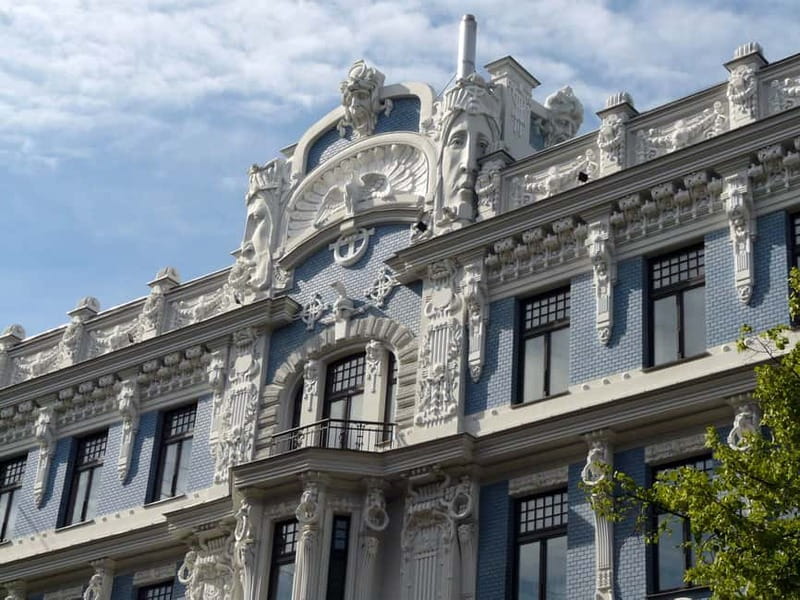
At $39 per person, this is a reasonable purchase if you care about architecture or want more from Riga than a quick look at decorated streets. You are paying for two hours of local interpretation, a planned route, and the ability to understand details you might otherwise pass without noticing.
The value is strongest for first-time visitors. A self-guided walk costs nothing beyond your time, but you would need to research the architects, identify the best streets, and work out how the buildings relate to one another. The tour handles that work for you.
It is less compelling if you only want photographs and do not enjoy commentary. Since entry tickets are not included and the experience takes place outdoors, the price is mainly for the guide’s skill. That is why the quality of the person leading your departure matters so much.
You can cancel up to 24 hours ahead for a full refund, and reserve now while paying later. Those policies make it easier to fit the tour into a changing Riga itinerary.
Who should book this Riga walking tour?
I would choose this tour if you like city history, architecture, or guided walks that explain what you are seeing. It is also a smart early activity because the Old Town starting point and Art Nouveau district help you get oriented.
It suits solo visitors who want company and local context, including anyone who feels uneasy exploring an unfamiliar city alone. It also works for couples and small groups who want a focused two-hour experience rather than a broad city tour.
You may want to skip it if you dislike looking upward, stopping often, or hearing architectural terms. Families with children over six should consider the full price and the possibility of boredom. Visitors who already know Riga’s Art Nouveau district well may prefer a private tour or a more specialized subject.
Should you book the Art Nouveau walking tour?
Book it if you want to understand why Riga is famous for Art Nouveau, not just take pictures of attractive buildings. The combination of Old Town context, Alberta Street, Mikhail Eisenstein, and several architectural traditions gives you a useful introduction in a compact format.
The best reason to go is the guide’s interpretation. Tatiana, Gunta, Caspars, Liga, and Nelli have all been singled out for careful explanations, friendly manner, and attention to detail. At $39, that makes the walk good value for most architecture-minded visitors.
Skip it only if your interest in buildings is limited or if your group includes children who will not enjoy two hours of street-level commentary. For everyone else, this is a practical, focused way to see one of Riga’s defining features with much sharper eyes.
FAQ
Where does the tour start?
Meet the guide at the Smile Line office in the House of the Black Heads, Town Hall Square, 7, in central Riga.
How long does the walking tour last?
The tour lasts two hours.
What languages are available?
The regular tour languages are English and German. Swedish, Norwegian, Polish, Spanish, Portuguese, French, Italian, and Japanese may be available upon request.
Does the tour visit Alberta Street?
Yes. The route includes the famous Alberta Street in Riga’s Art Nouveau district.
Does the tour focus on Mikhail Eisenstein?
Yes. The guide discusses Mikhail Eisenstein, his history in Riga, and his place among the city’s Art Nouveau architects.
Are entry tickets included?
No. Entry tickets are not included. The experience is a guided walking tour focused on the city’s streets and building facades.
Is the tour wheelchair accessible?
Yes, the activity is listed as wheelchair accessible. Some route changes may occur.
How many people are needed for the group tour?
At least three participants are required for the group tour.
Can children join the tour?
Yes. Children under six can join free. Children older than six are charged the regular price.
What should I bring?
Bring comfortable shoes for the two-hour city walk.
Just added around the world
- Scenic Train ride to historical cities of Morretes and Antonina★ 4.0 · 188 reviews
- 6-Day Cultural Tour to Machu Picchu★ 5.0 · 76 reviews
- Jewish Heritage of Curacao★ 4.5 · 68 reviews
- The Curacao’s Colorful History Walking Tour★ 5.0 · 55 reviews
- Discover Scuba Diving Amathounta’s Ancient Port★ 5.0 · 30 reviews
- Olous – Guided Snorkelling Excursion to Discover Olous Sunken Ancient City★ 4.5 · 31 reviews
- Night Walking Tour of Medieval Cuenca★ 5.0 · 64 reviews
- WWII – The Battle of Crete Day Tour★ 5.0 · 103 reviews
2-Hour Experiences, compared.

Berlin’s Best: 2 Hour Walking Tour Third Reich and the Cold War
Read our review →
2-Hour Gettysburg Battlefield Guided History Bus Tour with a National Park Guide
Read our review →
Kyoto Gion: 2-Hour Geisha Culture & History Walking Tour
Read our review →
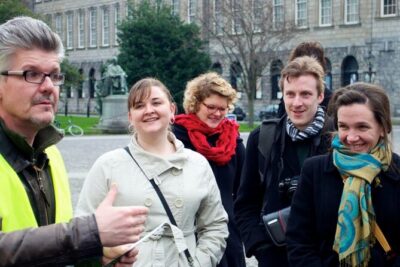

Historical 2-Hour Guided Walking Tour of Dublin
Read our review →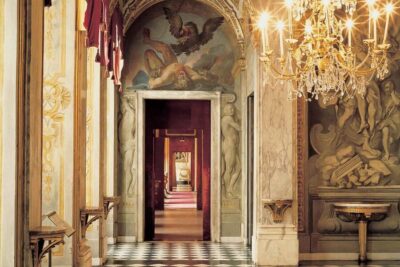
Genoa: 2-Hour Guided Walking Tour of the Historical Center
Read our review →
Málaga: 2h Walking Historical Tour–Art, Culture and Legends
Read our review →Browse the lists this tour appears in