
Review · POMPEII
Pompeii Guided Tour with Archaeologist
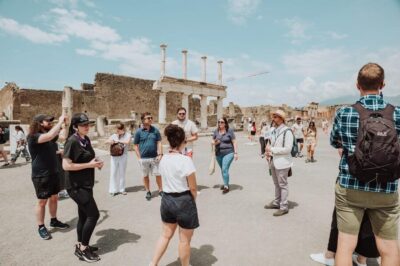
Pompeii is easier to grasp when someone helps you read its streets, houses, shops, and public spaces. I like the small maximum group of 16 and the fact that a regional archaeologist leads the visit, not a guide rushing through a memorized script. I also like the skip-the-line entry, which matters when the gate is crowded.
The two-hour route gives you a useful introduction, especially at the forum, suburban baths, and plaster casts. The catch is that Pompeii is huge, and this tour covers only about a quarter of the archaeological park. You should plan to continue on your own afterward, ideally with a site map.
Key points to know before booking
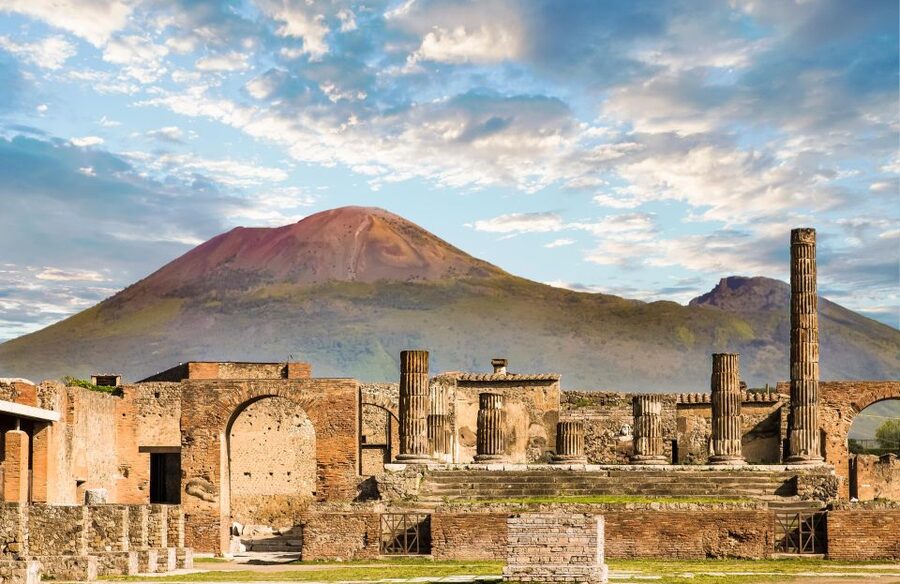
- Meet at Porta Marina Superiore: Find the guide holding the company sign at Pompeii’s main entrance.
- See Pompeii’s essential sights: The route includes the forum, suburban baths, plaster casts, and other key areas.
- Learn from a regional archaeologist: Explanations cover daily life and the eruption of Vesuvius in 79 A.D.
- Keep the group manageable: The shared tour has a maximum of 16 people.
- Stay inside after the tour: Your ticket lets you continue exploring the ruins after the guided portion.
- Budget $64 per person: The price includes admission and the two-hour guided visit, but not the Villa of the Mysteries.
Why a guide helps at Pompeii
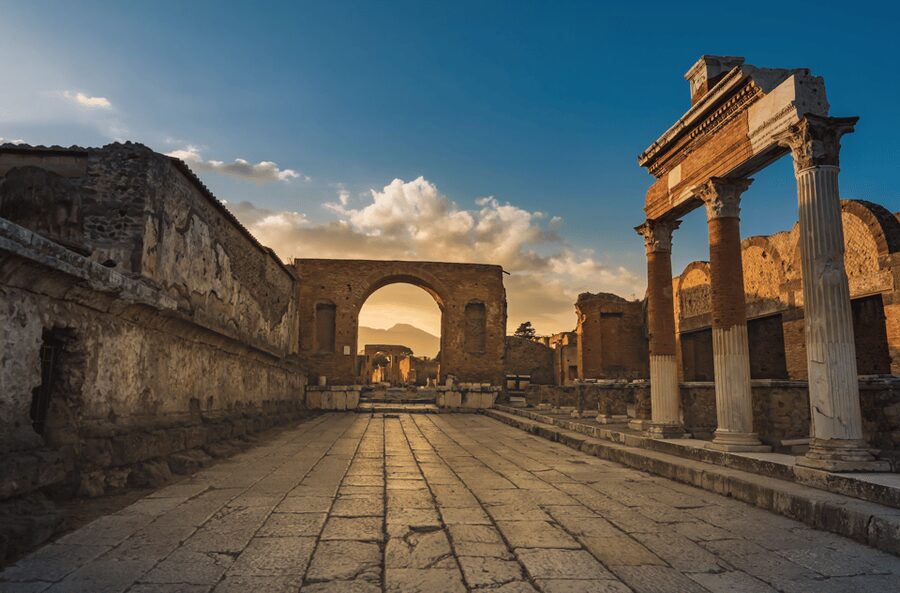
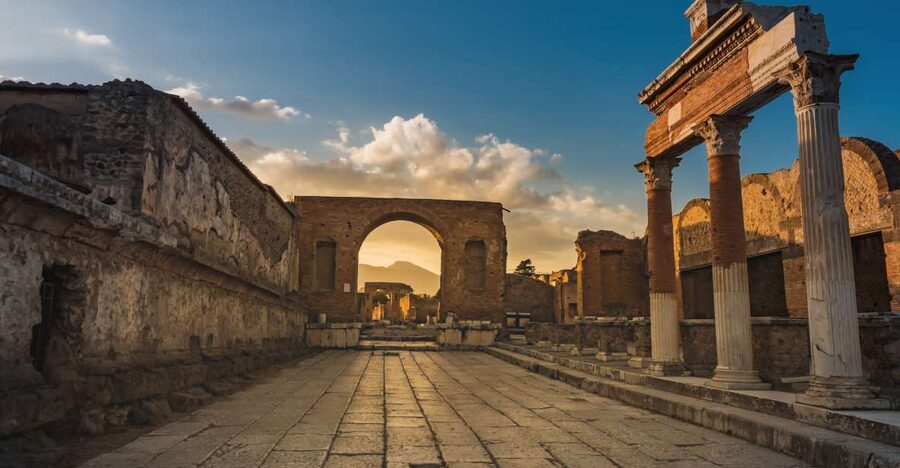
Pompeii can look simple at first: stone streets, broken walls, columns, and scattered fragments. Give it a few minutes, though, and the site becomes a complicated town with homes, shops, baths, religious buildings, public meeting places, and working streets.
That change in perspective is the main reason to book a guided visit. An archaeologist can explain how a building functioned, what its details reveal about daily life, and how the eruption changed the city. You are not just looking at old stones. You are learning how people moved, worked, washed, worshipped, and spent their free time.
The guide also gives the ruins a sensible order. Without help, you can spend much of your first hour simply trying to work out where you are. This tour takes you to important areas in a compact two-hour route, then leaves you inside the site to explore at your own pace.
The strongest guides appear to balance facts with a light touch. Imma has been praised for handling a mixed Italian and American group, switching between languages without making either side feel left out. Roberta, also called Robin during an English-language tour, has been described as professional, friendly, and clear. Another English-speaking guide was appreciated for combining history and humor.
That personal style matters at Pompeii. The subject includes death, destruction, and the sudden end of a city, but the best explanation also brings ordinary life back into view.
More Ancient History Tours in Italy
- Pompeii: Entry Ticket and Guided Tour with an Archaeologist
★ 4.8 · 19,459 reviews - Pompeii: Small Group Tour with an Archaeologist
★ 4.8 · 12,264 reviews - Pompeii Small Group Tour with an Archaeologist
★ 5.0 · 6,593 reviews
Meeting at Porta Marina Superiore
The meeting point is Porta Marina Superiore, the main entrance to Pompeii’s ruins. Look for the guide holding the company sign. This detail sounds minor, but it is worth taking seriously because the archaeological park has more than one entrance and the site is large.
The tour includes the daily admission ticket and an express security check, so you do not need to purchase a separate entry ticket for the guided visit. The skip-the-line benefit is most useful when the entrance queue is long. It does not mean you should arrive at the last second. Give yourself enough time to find Porta Marina Superiore and locate the guide.
One practical wrinkle has appeared at the beginning of the tour: the meeting point and the actual start of the walking route may not seem to match. A group was taken onward without much explanation, which caused some confusion. If the guide moves you after meeting, ask where you are going and how long the transfer will take. A quick question can prevent a shaky start.
The tour is offered in English and Italian. If you book an Italian visit, expect the guide to explain the main sights in Italian. Mixed groups may receive explanations in both languages, as Imma did for a small group of Italian and American participants.
The forum, Pompeii’s public heart
The forum is one of the most important stops on the route. This broad public area helps you understand how Pompeii operated as a city rather than as a collection of private houses.
Your guide can point out the civic and religious role of the space and explain how people used the buildings around it. The value here comes from connection. A column or partial wall means little on its own, but the forum’s layout shows where public business, ceremony, and community life came together.
Expect the guide to pause and orient you rather than simply march past. Pompeii rewards a slower look at street plans and building positions. The forum is also a place where the size of the ancient city becomes clear, even if much of it is now open sky and exposed masonry.
The forum can be busy, and a group of 16 is large enough that you may need to stay close to the guide. The smaller format helps, but this is still a shared tour. You will not receive the same level of private attention as a couple on a one-to-one visit.
The suburban baths and the details of daily life
The suburban baths offer a different view of Pompeii. Instead of focusing only on government or monuments, this stop helps explain how residents spent time on ordinary routines and social activities.
A guide’s explanation is especially useful in bath complexes because the remains can be hard to interpret. Rooms, walls, and fragments do not immediately tell you how the building worked. The archaeologist can connect the physical remains with the city’s habits and public life.
This is one of the places where the tour’s focus on daily life pays off. Pompeii is often reduced to the eruption, but the baths remind you that the city was active and lived-in before disaster arrived.
Access to individual areas can depend on site conditions, so the exact amount of time at each stop may vary. The supplied tour details identify the suburban baths as part of the route, but they do not promise a fixed sequence or a specific room-by-room visit. Think of the itinerary as a guided introduction to the main areas, not a complete inspection of every building.
More Ancient History Tours in Pompeii
- Discover the Ancient Ruins of Pompeii: Day Trip from Rome
★ 3.5 · 2,247 reviews - Pompeii and Herculaneum Small Group Tour with an Archaeologist
★ 5.0 · 1,350 reviews - Skip the Line Guided Tour of Pompeii led by an Archaeologist
★ 5.0 · 703 reviews - Pompeii: Tour with Archaeologist Guide & Skip-the-Line Entry
★ 4.5 · 623 reviews
The plaster casts and the human cost of 79 A.D.
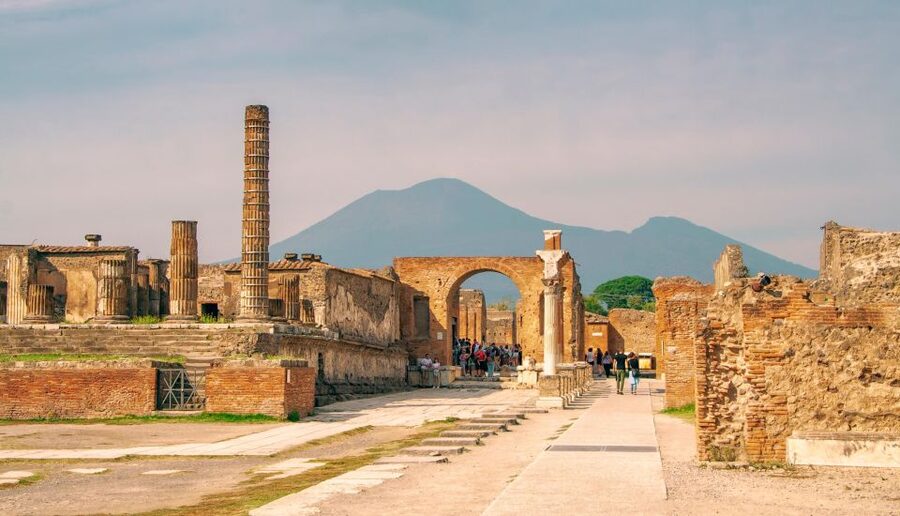
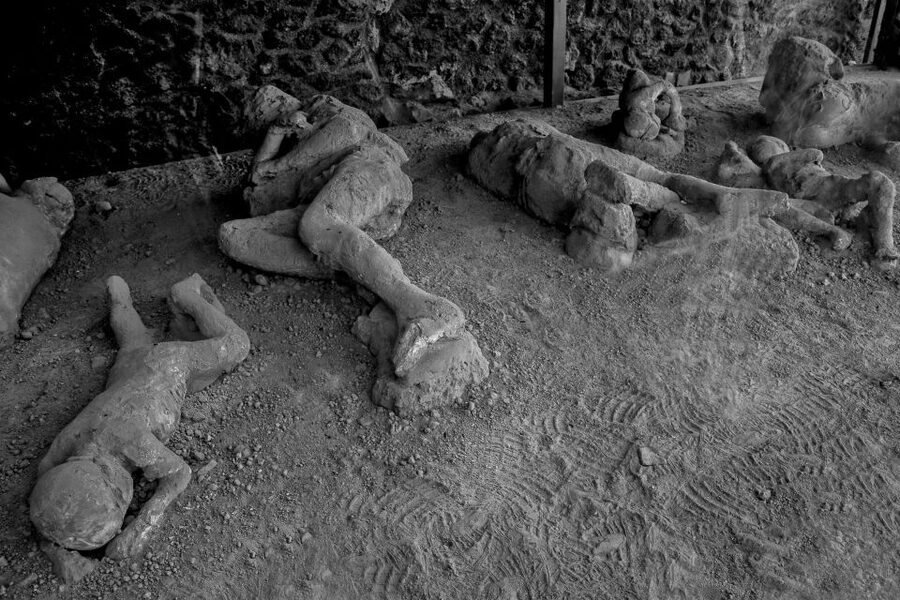
The plaster casts are among Pompeii’s most affecting sights. They bring the eruption into personal focus, showing the final moments of people caught by the disaster in 79 A.D.
This part of the visit can be emotional. A good guide provides context without turning the casts into a spectacle. The explanation should help you understand what happened during the eruption and why these remains became such a powerful part of Pompeii’s story.
The casts also balance the rest of the tour. The forum and baths show a functioning city. The casts show how abruptly that life ended. You get a clearer picture of both the ordinary world and the catastrophe that buried it.
Because the tour lasts two hours, the stop will be part of a wider route rather than a long, private discussion. If you want more time with the casts, note their location and return after the guide-led portion. You can remain inside the ruins as long as you wish after the tour ends.
A two-hour route that makes a huge site manageable
Pompeii is too large for most first-time visitors to understand fully in two hours. That is not a flaw in the tour so much as a fact about the archaeological park. The guide helps you use those two hours well by selecting major areas and explaining how they fit together.
I see this tour as a strong first pass. You get orientation, major sights, and enough background to continue alone with a better sense of what you are seeing. After the guide leaves, you may feel more comfortable examining side streets, houses, shops, and other areas without needing an explanation at every turn.
The tradeoff is coverage. One Italian participant estimated that the guided portion covered roughly 25 percent of the full park. That is useful information when planning your day. Do not book this expecting the entire site to be covered.
Buy or bring a map before you continue on your own. The tour details specifically suggest asking the guide for recommendations on other important places nearby, and a map will help you connect those suggestions with the actual site. Ask before the tour ends, while the guide can point out what deserves your remaining time.
Group size, guide style, and language
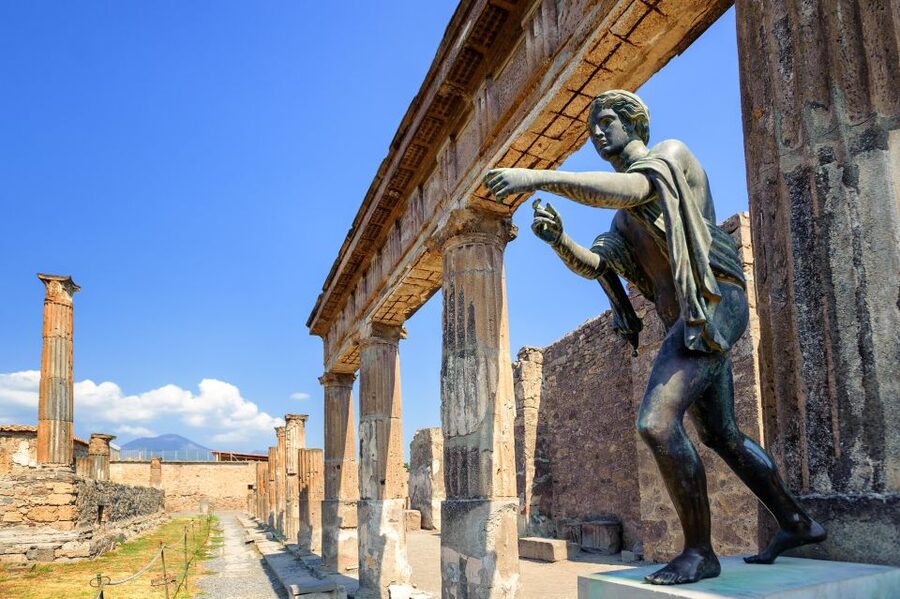
The maximum group size is 16. That is not a private tour, but it is more manageable than a large coach group. You should be able to hear the guide if everyone stays together, and the guide can usually respond to occasional questions.
The group may include both Italian- and English-speaking participants. A guide who handles both languages well can make this work, but bilingual explanations naturally take longer. If you want a fully private conversation or a custom pace, this is not the right format.
A French-language experience has also been provided for a group of two, but the stated tour languages are English and Italian. Do not assume French is guaranteed when booking this specific activity. Confirm the available language if it matters to you.
The guides named in participant feedback give a useful sense of the staff style. Imma is noted for being warm, available, and capable with a bilingual group. Roberta, referred to as Robin on an English tour, is described as professional and personable. Those details suggest that the guide can make a real difference, as it does on any archaeology tour.
You should also expect some time at the start for the guide to arrive and for the group to receive radio equipment. One participant felt that this cut into the promised two hours. The practical lesson is simple: the advertised duration is the total tour window, not necessarily two uninterrupted hours of walking and explanation.
Is $64 a fair price?
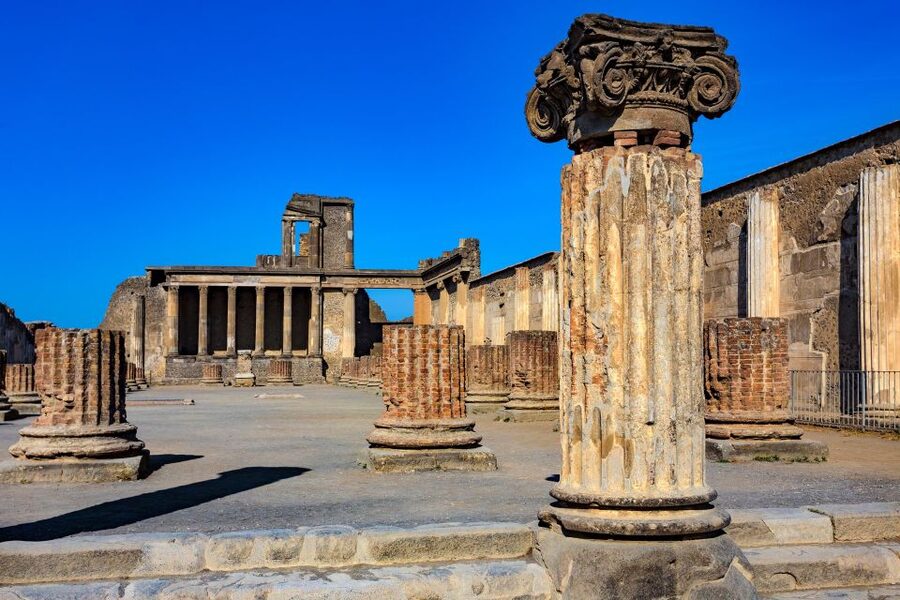
At $64 per person, the tour sits in a reasonable range for a two-hour guided visit because the price includes the daily Pompeii admission ticket and a regional archaeologist. If you would buy the entrance ticket anyway, the remaining amount pays for the guide, group organization, and express security access.
The value is strongest if you have limited time or feel unsure about reading the ruins alone. A well-planned two hours can give you more understanding than a longer wander without context. It also saves you from spending part of your day in the main entrance queue.
The value is weaker if you want to see every major area with detailed commentary. You will need to continue independently, and the Villa of the Mysteries is not included. That separate omission matters because visitors who want a full Pompeii day may need to arrange additional admission or confirm the current access rules before booking.
I would treat the $64 as payment for a focused introduction, not an all-day archaeological experience. If you use the guided visit to get oriented and then stay inside to explore more, the price makes better sense.
Who should book this Pompeii tour?
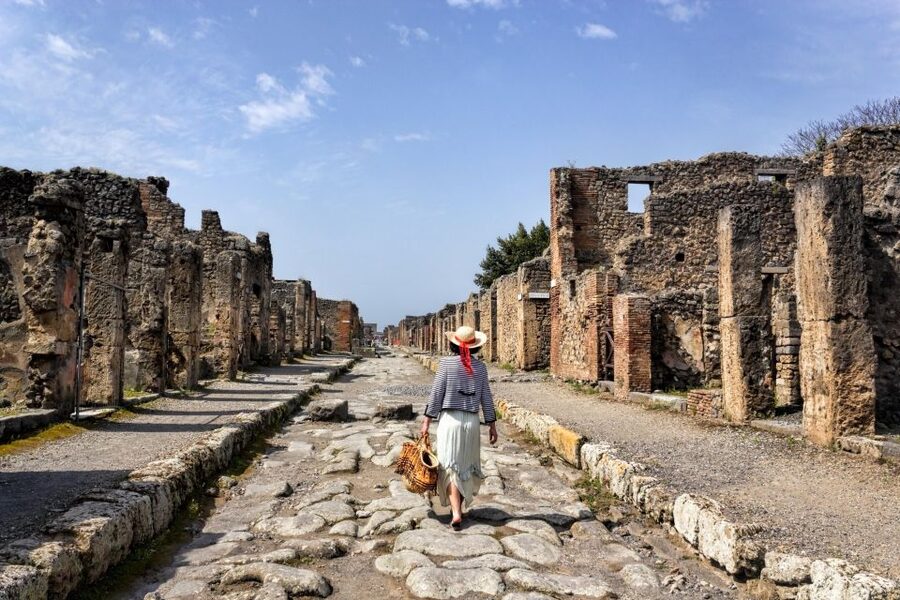
This tour suits you if you are visiting Pompeii for the first time and want a clear route through the most important areas. It is also a good match if you have only a few hours, dislike entrance queues, or prefer explanations from an archaeologist rather than reading every sign yourself.
Families and mixed-age groups may appreciate the two-hour length and the guide’s use of humor. The tour also works well for people who want structure at the start of a longer Pompeii visit.
You may want another option if you need a private pace, extensive access to every part of the park, or a guaranteed language other than English or Italian. It is also less suitable if you want to spend the whole day with one guide. The tour ends after two hours, even though you can remain inside independently.
Book with a plan for the rest of your visit. Keep a map handy, ask the guide what to see next, and leave enough time to explore beyond the core route.
Booking and cancellation details
You can reserve now and pay later, which keeps your plans flexible. Free cancellation is available up to 24 hours in advance for a full refund.
Starting times vary, so you need to check availability for your chosen date. The activity lasts two hours, and the live guide speaks English or Italian. The entry ticket is included, but the Villa of the Mysteries is not.
My verdict: a useful first look at Pompeii
I recommend this tour for the right kind of Pompeii visit: a focused introduction followed by independent exploring. The guide-led route gives you the forum, suburban baths, and plaster casts, while the archaeologist’s explanations connect the buildings to the people who used them.
The main limitation is coverage. Two hours cannot explain an archaeological park as vast as Pompeii, and the tour may lose some time to meeting arrangements, radio distribution, or bilingual commentary. Still, a small group, skip-the-line entry, included admission, and capable guides make this a sensible choice at $64.
Book it if you want help getting your bearings and plan to stay longer afterward. Skip it if you expect the guide to cover the entire site or want a private, highly customized visit.
FAQ
Where does the Pompeii tour meet?
The meeting point is Porta Marina Superiore, the main entrance to Pompeii’s ruins. Look for the guide holding the company sign.
How long does the guided tour last?
The guided tour lasts two hours.
What does the price include?
The price includes the daily entry ticket to Pompeii and a two-hour guided tour with a regional archaeologist.
Is the Villa of the Mysteries included?
No. The Villa of the Mysteries is not included in the price.
What languages are available?
The live tour guide is available in English or Italian.
How large is the group?
The shared tour has a maximum of 16 people.
Can I skip the entrance queue?
The activity includes an express security check and skip-the-line access at the main entrance.
Can I stay inside Pompeii after the tour?
Yes. You can remain inside the ruins and continue exploring after the guided tour ends.
Can I cancel for a full refund?
Yes. You can cancel up to 24 hours in advance for a full refund.
Can I reserve now and pay later?
Yes. The activity offers a reserve now and pay later option.
More Archaeological Site Tours in Pompeii
- Pompeii Private Tour with an Archaeologist and Skip The Line – 3 hours
★ 5.0 · 564 reviews - Pompeii Skip-the-line Tour with Archaeologist Guide
★ 5.0 · 559 reviews - Explore Pompeii with an Archaeologist
★ 5.0 · 511 reviews - Pompeii 3hours Villa of Mysteries tour with an Archaeologist
★ 4.8 · 486 reviews
Just added around Pompeii
- Pompeii and Herculaneum: Guided Tour with an Archaeologist★ 5.0 · 164 reviews
- Pompeii: Guided Tour with Archaeologist with max. 12 People★ 5.0 · 155 reviews
- Pompeii Small Group Tour – Tickets Included★ 4.7 · 72 reviews
- Pompeii: 2-Hour Guided Tour with an Archaeologist★ 4.9 · 151 reviews
- PompeiI Exclusive Tour with your Archaeologist in a Small Group★ 4.5 · 363 reviews
- Pompeii Private Tour with an Archaeologist Guide★ 5.0 · 184 reviews
- Pompeii Private Tour with an Archaeologist and Skip The Line★ 5.0 · 391 reviews
- Pompeii 3hours Villa of Mysteries tour with an Archaeologist★ 4.8 · 486 reviews
Pompeii History Tours, compared.
Pompeii: Entry Ticket and Guided Tour with an Archaeologist
Read our review →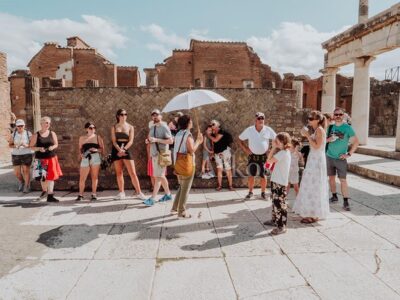
Pompeii: Small Group Tour with an Archaeologist
Read our review →Pompeii Small Group Tour with an Archaeologist
Read our review →
Discover the Ancient Ruins of Pompeii: Day Trip from Rome
Read our review →
Pompeii and Herculaneum Small Group Tour with an Archaeologist
Read our review →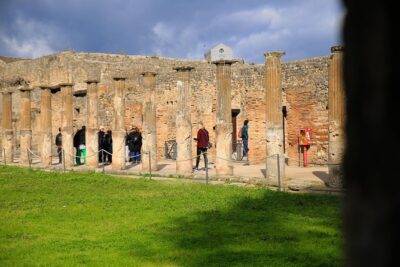
Skip the Line Guided Tour of Pompeii led by an Archaeologist
Read our review →
Pompeii: Tour with Archaeologist Guide & Skip-the-Line Entry
Read our review →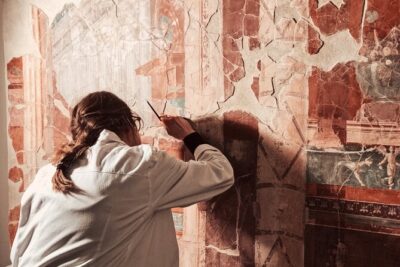
Pompeii Private Tour with an Archaeologist and Skip The Line – 3 hours
Read our review →Browse the lists this tour appears in