

Review · SPLIT
Split: Local History and Culture 90-Minute Walking Tour
Split’s Diocletian’s Palace is not a museum sealed behind velvet ropes. It is the working heart of the city, with homes, cafés, shops, lanes, and ancient stone all sharing the same space. This 90-minute walk is a quick way to understand how a Roman emperor’s retirement palace became modern Split.
I like the small-group feel, with groups capped at about 10 people, and I like the practical local advice from guides such as Mijo, especially restaurant, coffee, photo, and money-saving tips. The main consideration is the short format: you will get a strong introduction, not a slow, detailed visit to every corner.
Key points at a glance
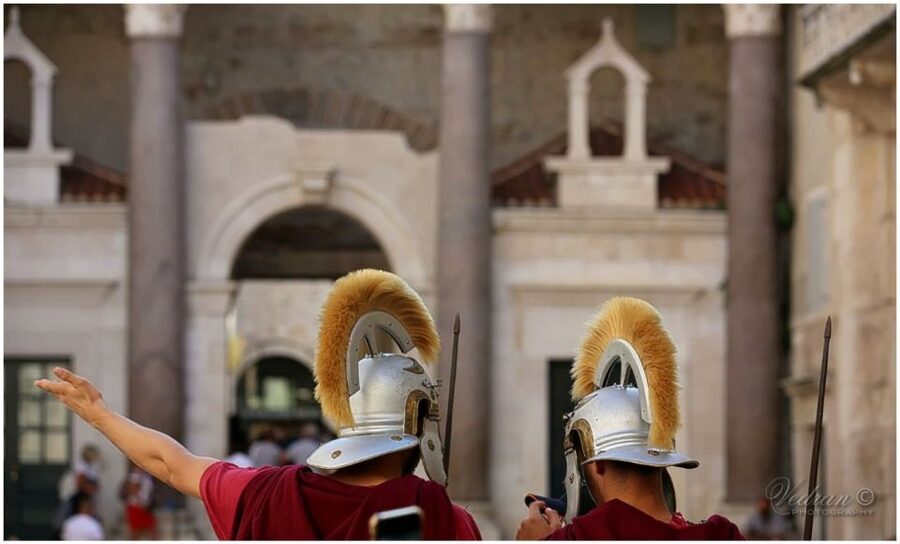
- Start beside the Golden Gate: Meet at Strossmayer Fountain in Đardin, just above the huge statue of Gregory of Nin.
- Walk through 1,700 years of history: See the Roman palace and the old city that grew around it.
- Learn from a local guide: Mijo’s tours combine historical facts, Croatian culture, humor, and everyday Split.
- Keep the group personal: Groups may be as small as two people and are limited to about 10.
- Get useful advice for the rest of your stay: Expect tips on restaurants, cafés, gelato, photo spots, local hangouts, and currency exchange.
- Time it well in summer: An early 8 a.m. start can mean cooler streets and fewer people in the old town.
Why Diocletian’s Palace makes this tour worthwhile
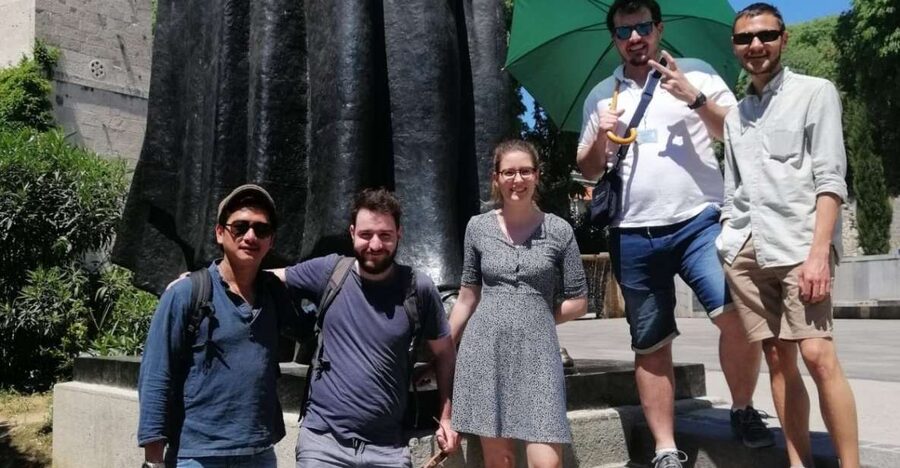
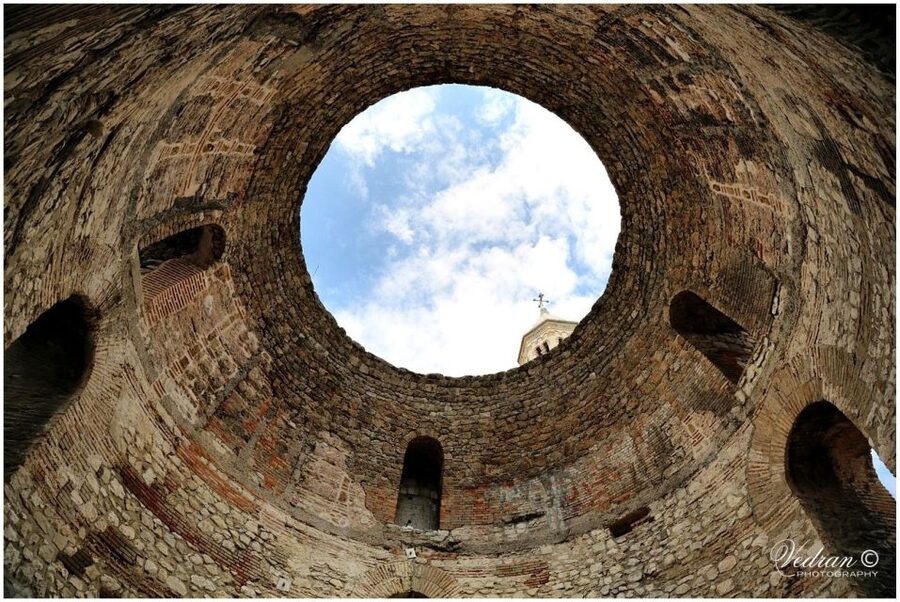
The most useful thing about this walk is its setting. Split’s old town is not simply a collection of ruins. The palace still shapes the city’s streets, entrances, courtyards, and daily routines. A guide helps you see the Roman plan beneath the modern life.
The palace was established by Roman Emperor Diocletian as his retirement residence. That detail alone changes how you look at the center of Split. This was not a modest country retreat. It was a grand complex built for an emperor, and its surviving walls and passageways now form the framework of the city.
I like tours that explain how a place works, rather than only pointing at old stones. Here, the guide connects ancient remains with present-day Croatian culture and local habits. You can ask questions about Split, Croatia, food, cafés, and the way people use the old center today.
The walk also includes places associated with Game of Thrones. That adds a modern pop-culture angle, but it does not replace the main subject, which is Split itself. If you know the show, these locations give the old town another layer. If you do not, the sites still fit naturally into the broader walk.
More History Walking Tours in Croatia
- Dubrovnik Old Town History Walking Tour
★ 5.0 · 1,684 reviews - Dubrovnik: Ancient City Walls & Wars Walking Tour
★ 5.0 · 1,270 reviews - Zagreb: City and WWII Tunnels Walking Tour
★ 4.9 · 1,230 reviews
Finding the fountain above the Golden Gate
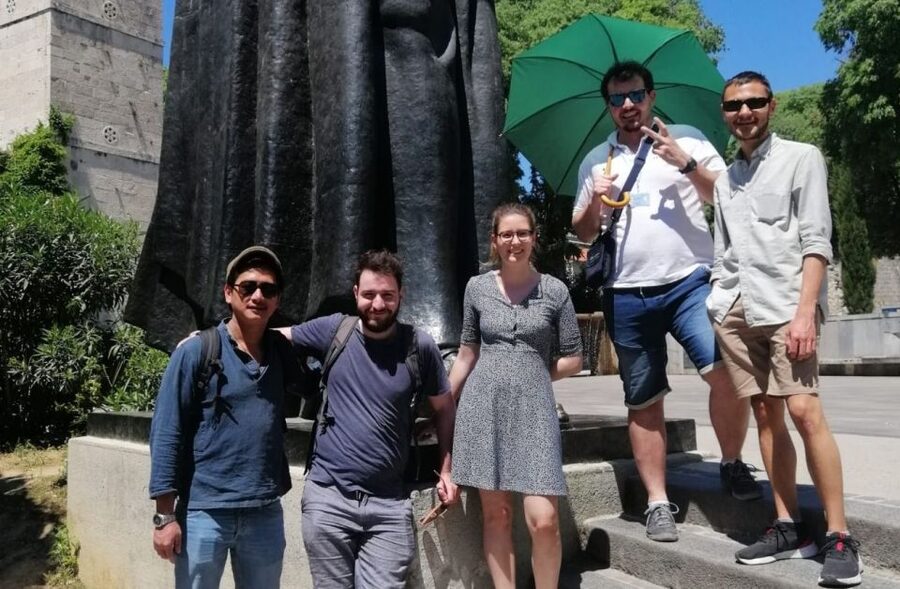
The meeting point is Strossmayer Fountain inside Strossmayer Park, also called Đardin. It is just above the Golden Gate, one of the most useful landmarks in Split’s old center.
When you reach the Golden Gate, look for the large statue of Gregory of Nin. The park is just above the statue, and the fountain sits in the middle of the green space. This is a more precise meeting point than simply being told to wait somewhere in the old town, where narrow lanes can make orientation tricky.
I would arrive a few minutes early. The Golden Gate and Gregory of Nin statue are easy landmarks, but the small park can still feel less obvious when you are moving through an unfamiliar city. Meeting outside the densest part of the palace also gives the group a clear place to gather before entering the maze of streets.
There is no hotel pickup or drop-off. You make your own way to the fountain, which is not a problem for most people staying in or near central Split. Food and drinks are also not included, so bring water, especially during a warm afternoon.
Walking through the Roman palace and old city
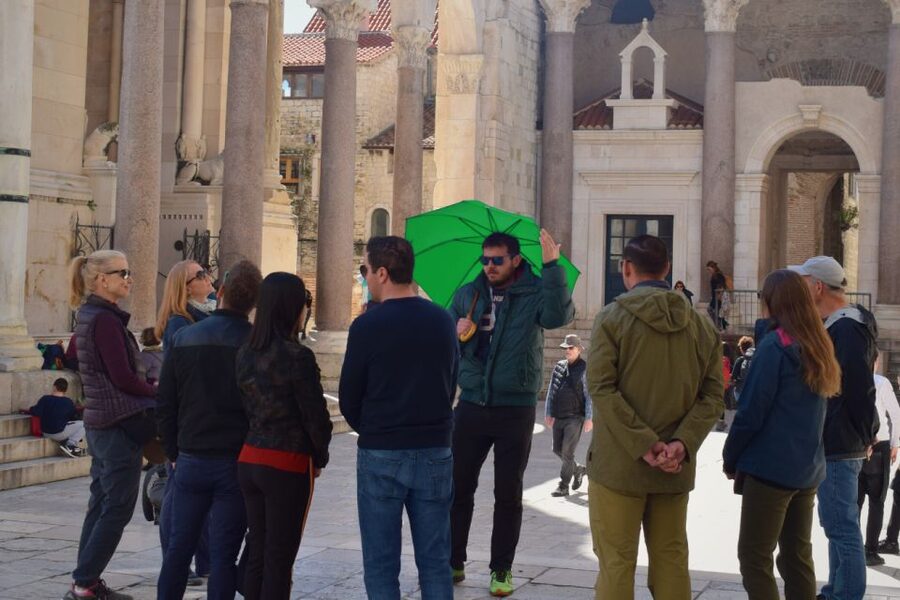
The central part of the tour focuses on Split’s inner city and the palace area protected by UNESCO. In 90 minutes, you should expect a brisk but manageable introduction to the main historic sights rather than a full archaeological study.
The palace is special because the old and new are mixed together. You may move from Roman masonry to a lived-in lane, then into a public square or a modern business operating inside the historic structure. A guide gives you the background needed to make sense of those changes.
The walk is also useful for orientation. Split’s old town contains narrow passages and interconnected streets that can seem confusing on a first visit. A local guide can help you understand the basic shape of the center, so you can return later to places that caught your eye.
I would not expect every detail of the palace to receive equal attention. The tour is designed to cover the top highlights of the inner city, and the 90-minute limit means the guide has to keep moving. That is a fair trade for a low-cost introduction, but anyone wanting extensive archaeological detail should allow time for independent exploring afterward.
The pace can suit most people who are comfortable walking through an old city. You will need practical shoes and clothes that suit the weather. Sunglasses, a hat, and water are sensible choices, especially in summer when stone streets can feel hot.
History told with humor and local context
The strongest feature of this experience is the guide’s approach. Mijo is repeatedly described as friendly, funny, engaging, and able to explain Split’s past in a clear way. His job is not just to recite dates. He uses stories, anecdotes, and humor to keep the history moving.
That matters in a city where the facts can pile up quickly. Roman history, Croatian culture, local customs, and modern city life can become a blur if they are delivered as a lecture. A conversational guide gives you room to ask questions and connect the information to what you are seeing.
The small size helps. Some departures have included only two people, while others have had groups of five or six. A group of this size makes it easier to hear, take photos, ask questions, and adjust the conversation to your interests. The stated maximum of about 10 keeps the experience more personal than a large city tour.
The guide also adapts the route to conditions. One account describes choosing shaded streets for a midday walk, which is a useful sign that the tour is not treated as a fixed script. Another small detail shows the personal touch: during a brief rain shower, Mijo lent an umbrella to a participant.
You should still keep expectations sensible. A small-group tour is not the same as a private tour, and exact group size depends on the date. The guide can make the walk feel personal, but public streets remain public streets. At times, other people may try to join a group, particularly around popular sights.
More Local Culture and Traditions Tours in Croatia:
- Amsterdam Food and Cultural Tour with Tastings
★ 5.0 · 4,315 reviews - Sevilla Food Tour: Tapas, Wine, History & Traditions
★ 5.0 · 3,468 reviews - Tromsø: Reindeer Camp and Sami Cultural Tour with Lunch
★ 4.7 · 3,326 reviews - Half Day Dominican Republic Cultural Tour : Small Group
★ 4.5 · 1,862 reviews
Split beyond the stones: food, coffee, and daily life
This tour earns extra value from what happens after the historical explanation. Mijo provides suggestions for restaurants, cafés, gelato, photo locations, local meeting places, and other activities.
That advice can save you time. Split’s central streets contain many places aimed at visitors, and it is not always easy to tell which choices match your budget or interests. A local guide can point you toward practical options and explain where people spend time with friends.
Some people have also received recommendations about currency exchange and money-saving choices. Those details may sound small, but they are exactly the sort of information that helps on the first day in a new city.
The tips are especially useful if you take the tour early in your stay. You can use the walk to get your bearings, then return to a café, restaurant, or photo spot later. Mijo has also sent written recommendations and discount information after the tour, though you should treat that as a helpful extra rather than the main product.
I like this local angle because it keeps the experience from being only about imperial history. You learn how the center functions now, not just what it looked like centuries ago. That makes the tour a good starting point for a longer visit.
Game of Thrones locations without losing the city
Game of Thrones sites are one of the advertised highlights. The connection gives fans a reason to look at familiar streets and stone settings in a new way.
Still, I would treat this as a Split history and culture tour with Game of Thrones elements, not as a dedicated filming-locations walk. The main focus remains Diocletian’s Palace, the UNESCO-protected old town, and local life.
That balance is a strength for mixed groups. Fans get a pop-culture connection, while people who have never watched the show still receive a useful introduction to Split. The filming references add interest without taking over the walk.
Because the available details do not name every filming location, I would not book this expecting a scene-by-scene guide to the series. Book it for the old town first, with the television locations as an added feature.
Choosing the best time for the 90-minute walk
The start time can change the character of the experience. An 8 a.m. departure is worth considering in warm months. Early streets can be cooler and calmer, and popular passageways may be easier to navigate before the day becomes busy.
An early start also works well on your first day in Split. You can learn the basic layout before spending the rest of the day exploring independently. It leaves time for breakfast, museums, markets, or a later meal.
A midday walk may offer the same historic content, but heat becomes a bigger factor. The guide may choose shaded streets, yet you should still bring water, sunglasses, and a hat. Comfortable clothes and walking shoes matter more than dressing up.
The tour lasts 90 minutes, so it fits neatly into a morning or afternoon plan. It can also work well for a cruise or short city visit, provided you can reach the meeting point on time. Since no transport is included, build in enough time to reach the fountain yourself.
Is $17 good value in Split?
At $17 per person, this is a strong-value introduction to the city. You are paying for a licensed professional guide, a walk through the UNESCO old town, local cultural context, and recommendations that can help shape the rest of your visit.
The price is most worthwhile for a first visit. If you already know Diocletian’s Palace well and prefer to explore independently, you may not need the structure of a guided walk. For everyone else, the cost is modest compared with the time saved by having the old town explained in a logical order.
The small-group format improves the value. You are not simply joining a large crowd and listening from the back. A group of two to 10 people gives you a better chance to interact with the guide and ask questions.
The tour does not include food, drinks, transportation, or hotel pickup. Those exclusions are clear and easy to plan around. Bring your own water and arrange your route to Strossmayer Fountain.
Free cancellation is available up to 24 hours before the tour for a full refund. You can also reserve now and pay later, which helps if your plans are still shifting.
Who should book this Split walking tour?
I would recommend it to first-time visitors who want a clear introduction before exploring alone. It also suits history fans, families with older children, couples, solo visitors, and anyone who prefers a smaller group.
The tour works particularly well for people who want more than dates and monuments. You hear about Croatian culture, local routines, food, coffee, photo spots, and practical city life. Mijo’s storytelling style also makes the material easier to follow for people who are not serious history buffs.
Families may appreciate the adaptable pace and conversational format. One parent described the experience as a lasting memory with a nine-year-old who enjoyed the stories. That does not mean every child will love a 90-minute history walk, but the humor and questions can help hold attention.
I would be less likely to choose it if I wanted a specialist archaeological tour, a private itinerary, or a full-day exploration of Split. The route covers highlights, and the limited time means some subjects will receive only a short explanation.
Final verdict: book it for your first look at Split
I would book this tour early in a Split visit, ideally for the first or second day. It gives you the palace’s basic story, a useful map of the old center, a look at Game of Thrones locations, and local suggestions for the hours that follow.
The best reasons to choose it are the small groups, Mijo’s personal and humorous guiding style, and the practical advice that continues beyond the 90-minute walk. The main limit is simple: 90 minutes can introduce Split, but it cannot cover every historical detail.
At $17, that is a sensible trade. You get a focused start, then you can return to the places that interest you most.
FAQ
How long does the Split walking tour last?
The tour lasts 90 minutes.
How much does the tour cost?
The listed price is $17 per person.
What language is the tour conducted in?
The live tour guide speaks English.
Where is the meeting point?
Meet at Strossmayer Fountain inside Strossmayer Park, also called Đardin. The fountain is just above the Golden Gate, near the large statue of Gregory of Nin.
What does the tour include?
The tour includes a licensed professional guide, the UNESCO-protected old town, major inner-city highlights, local cultural context, and recommendations from the guide.
Are hotel pickup, food, and drinks included?
No. Hotel pickup and drop-off, food, and drinks are not included.
Can I cancel for a full refund?
Yes. You can cancel up to 24 hours in advance for a full refund.
What should I bring?
Bring sunglasses, a hat, water, and comfortable clothes.
Just added around Croatia
- Split: Walking tour of Split with a ‘Magister’ of History★ 5.0 · 110 reviews
- Split: Historical & Gastro Treasures Tour with Green Market★ 4.9 · 144 reviews
- Split: Historical Tour of Salona, Klis Fortress and Trogir★ 4.1 · 108 reviews
- Split: Private Walking Tour in the Historical Town Center★ 5.0 · 25 reviews
- Šibenik: Medieval Night Walking Tour★ 5.0 · 27 reviews
- Šibenik: Croatia in a Day, Vistas, History, Olive Oil, Wine★ 5.0 · 30 reviews
- Dubrovnik: Red History Museum Regular Ticket★ 4.6 · 134 reviews
- Pula: Historic Sites Guided Walking Tour★ 4.8 · 78 reviews
Split History Tours, compared.

Walking Tour of Split with a ‘Magister’ of History
Read our review →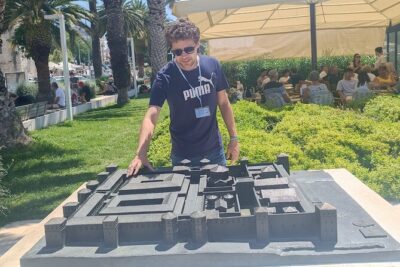
SPLIT-PRIVATE Walking Tour of Diocletian’s Palace & Old Town
Read our review →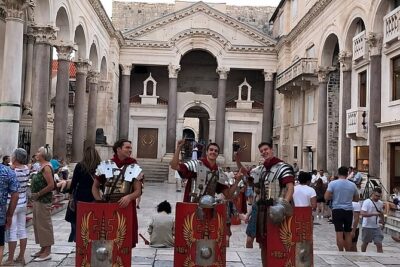
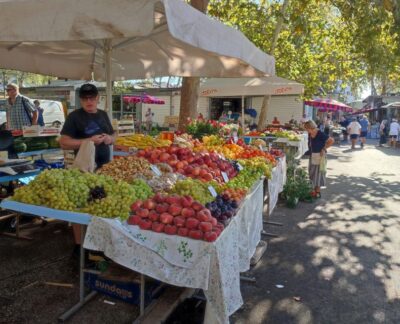
Split: Historical & Gastro Treasures Tour with Green Market
Read our review →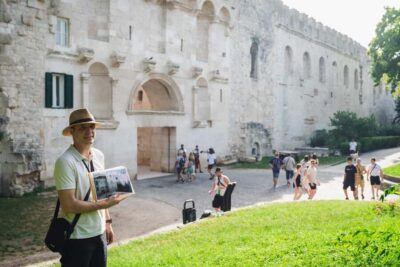
Split: Walking tour of Split with a ‘Magister’ of History
Read our review →
Split: Historical Tour of Salona, Klis Fortress and Trogir
Read our review →Browse the lists this tour appears in