Review · POMPEII
Pompeii Private Tour with an Archaeologist Guide
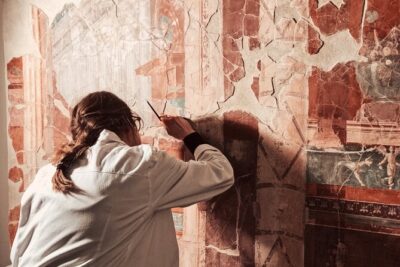
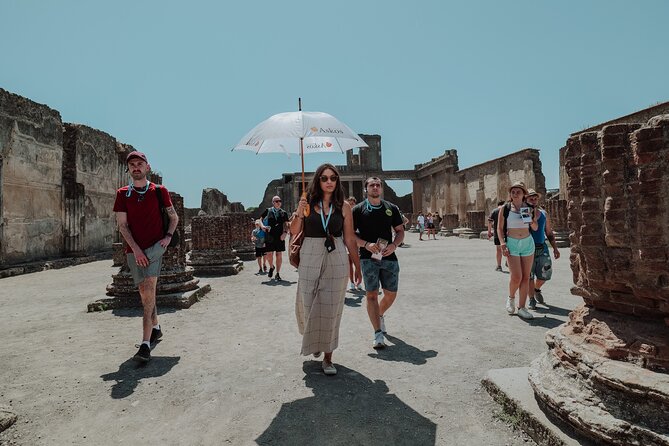
Pompeii becomes far more readable when an archaeologist guide explains what you are seeing. In two hours, you move from grand homes and public baths to a street-side thermopolium, ancient Roman fast food, then finish at the Forum. The ruins stop looking like scattered walls and start making practical sense.
I like the private format, since your group can ask questions without competing with a crowd. I also like the route’s range: the House of the Faun shows wealth, the Stabian Baths reveal public life, and Via dell’Abbondanza gives you a feel for ordinary movement through the city.
The main drawback is time. Pompeii is huge, and two hours gives you a strong introduction rather than a complete visit. The entrance ticket is also extra, adding roughly €20 per person according to tour feedback, so the real cost is higher than the headline price.
Key things to know before booking
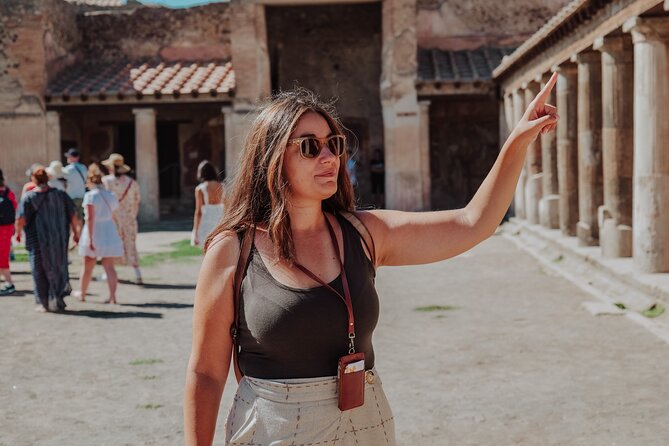
- Private attention from an archaeologist: Only your group takes part, so you can ask questions and request a slower pace.
- A useful two-hour route: The tour covers the House of the Vettii, Lupanar, theaters, baths, major homes, shops, and the Forum.
- Pompeii life, not just Pompeii monuments: The thermopolium, public baths, street, and food market help explain daily routines.
- English is offered: Guides including Rossana, Mena, Paolo, Jolanda, and others have led tours praised for clear explanations and enthusiasm.
- Admission is separate: The tour price is $178.45 per person, but you must buy the Pompeii entrance ticket yourself.
- Wear proper shoes: Ancient paving and uneven ruins make closed shoes a much better choice than flip-flops.
Why a private archaeologist changes Pompeii
Pompeii is not difficult because it lacks things to see. It is difficult because it has too many things to see, spread over a large archaeological site. You can walk past a painted room, a public fountain, or a shop counter without knowing why it mattered.
A trained guide gives those fragments a purpose. The best explanations here focus on how people lived: where they bathed, ate, worked, entertained themselves, displayed wealth, and gathered for public business. Guides such as Paolo have been praised for helping visitors picture daily life, while Antonella encouraged visitors to think like archaeologists rather than simply look at ruins.
That approach suits Pompeii especially well. Many buildings are partly preserved, and some interpretations remain uncertain. A good guide can tell you what is clear, what is likely, and what remains open to debate. That is more useful than presenting every theory as settled fact.
The private setup also matters for families and mixed-ability groups. One guide, Ivan, adjusted the pace for a visitor with a broken foot, finding places to rest while continuing the explanation. Another guide, Mena, kept children engaged during the visit. You can ask for pauses, return to a subject, or spend longer in a room that catches your attention.
More Ancient History Tours in Italy
- Pompeii: Entry Ticket and Guided Tour with an Archaeologist
★ 4.8 · 19,459 reviews - Pompeii: Small Group Tour with an Archaeologist
★ 4.8 · 12,264 reviews - Pompeii Small Group Tour with an Archaeologist
★ 5.0 · 6,593 reviews
Meeting at Porta Marina Superiore
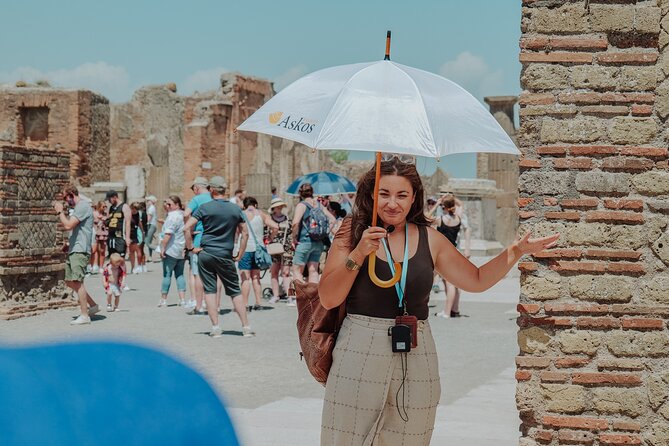
The meeting point is at the main entrance of the archaeological site, called Porta Marina Superiore, at Via Villa dei Misteri 1 in Pompei. The guide carries an Askos Tours sign, which should make the meeting easier in a busy entrance area.
You need to arrange your own way to Pompeii. Transportation is not included, and the guide meets you at the ruins rather than collecting you from accommodation. At the end, the tour returns to the same general meeting location, and the guide can offer practical advice about reaching your accommodation or the closest train station.
Allow time to find the entrance and buy or organize your admission ticket. The tour price covers the private archaeological guidance, not entry to the park. This distinction deserves attention because the tour information can be easy to skim, and one visitor found the later messages confusing about the separate admission charge.
Casa dei Vettii and the House of the Faun
The House of the Vettii is an excellent early stop because it shows how a wealthy Pompeian household presented itself. You can expect the guide to draw attention to the home’s rooms, decoration, and the way architecture reflected social position.
The House of the Faun offers another view of elite life on a grander scale. Its size makes it useful for understanding that Pompeii was not made up only of modest homes and shops. Some residents had large houses designed to impress, receive people, and display status.
You may spend about ten minutes at each house. That is enough for a focused explanation, but not enough to inspect every room at length. If domestic architecture and wall decoration are your main interests, tell the guide early. The private format gives you a better chance of shaping the emphasis.
The route also helps you compare homes with public places. The point is not simply that one house was large or beautifully decorated. It is that Pompeii’s streets contained sharp contrasts between elite residences, commercial spaces, working neighborhoods, and civic buildings.
Lupanar and the thermopolium
The Lupanar is one of Pompeii’s most discussed buildings. A guide can place it in the context of Roman commercial and social life instead of reducing it to a sensational stop. You will see how the building fits into the wider city and can ask questions about what is known and what is inferred.
Next comes the House and Thermopolium of Vetutius Placidus. A thermopolium was a shop serving prepared food and drink, and this stop gives you a direct look at the city’s practical side. Several people who enjoyed this tour particularly valued seeing the ancient version of fast food.
This is where the visit becomes especially relatable. Pompeii was not only a place of villas, temples, and public ceremonies. It was also a city where people bought food, walked to work, met others, and handled ordinary errands. The guide’s job is to connect the counter, street, and room layout with those everyday routines.
More Ancient History Tours in Pompeii
- Discover the Ancient Ruins of Pompeii: Day Trip from Rome
★ 3.5 · 2,247 reviews - Pompeii and Herculaneum Small Group Tour with an Archaeologist
★ 5.0 · 1,350 reviews - Skip the Line Guided Tour of Pompeii led by an Archaeologist
★ 5.0 · 703 reviews - Pompeii: Tour with Archaeologist Guide & Skip-the-Line Entry
★ 4.5 · 623 reviews
Teatro Grande and Pompeii’s public entertainment
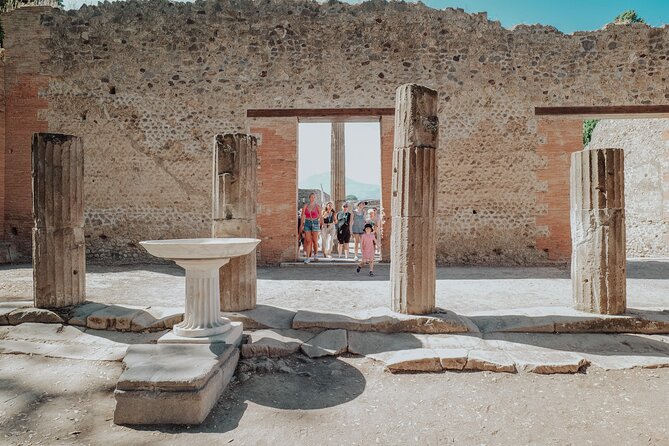
The Teatro Grande receives a shorter stop, around five minutes, but it adds an important public dimension. After seeing private houses and commercial buildings, you reach a place designed for a large audience.
The nearby theaters help you picture Pompeii as a social city, not a silent collection of residences. Public entertainment brought people together and gave the city a shared rhythm. Your guide can explain the theater area and help you understand why it mattered within the city’s public life.
Five minutes is a brisk visit. Think of this as an orientation rather than a detailed theater study. If performances and ancient entertainment are your priority, ask for more context, knowing that another part of the route may receive less attention.
Stabian Baths and the Forum Baths
The Stabian Baths are among the most useful stops for understanding Roman routines. Public bathing was about more than washing. It was part of social life, and the layout helps you consider how people moved through shared spaces.
The Forum Baths provide a second look at bathing facilities, allowing your guide to point out differences in location, scale, or function. Seeing both bath complexes is valuable because it keeps the idea from becoming abstract. You are not just hearing that bathing mattered. You are looking at the rooms where that routine took place.
The baths can also be a relief from a route dominated by large houses. They show civic infrastructure and shared facilities. Guides praised for making ancient life understandable tend to shine here, because the subject connects naturally with modern habits and public spaces.
The site has uneven paving, and you may be standing for much of the tour. Closed shoes are strongly advisable. Flip-flops are a poor match for the ancient streets and rough surfaces.
Via dell’Abbondanza and the Macellum
Via dell’Abbondanza is one of the route’s most important sections because it gives you a street-level view of Pompeii. Walking along it helps you understand the city as a functioning place rather than a series of isolated buildings.
Look for the practical details your guide points out. Doorways, shop fronts, paving, and the relationship between street and building can tell you how people moved and where business happened. The route is especially useful for visitors who want to understand ordinary life rather than only see famous monuments.
The Macellum was a market building in the Forum area. It adds another piece to the city’s food and trade network. After the thermopolium, the Macellum helps widen the picture from one prepared-food counter to a larger public market setting.
The drawback is pace. Ten minutes for a street section can pass quickly, especially if the guide stops often to explain details. You will see the main points, but you may want additional time afterward to walk the street again independently.
House of Menander and the Forum Granaries
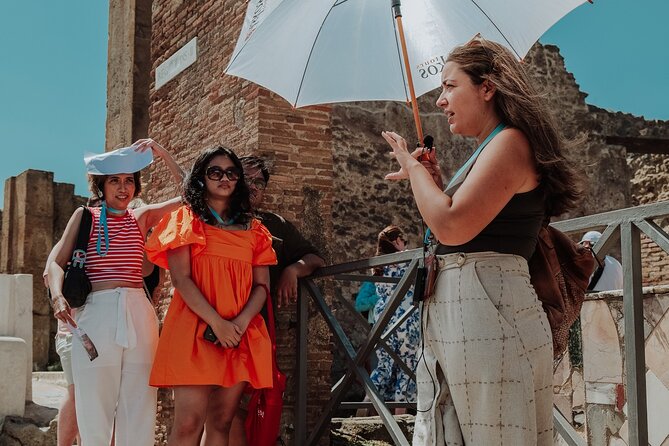
The House of Menander returns you to a substantial private residence. Its name refers to Menander, a Greek playwright, and the house provides another chance to look at decoration, domestic space, and the status of the people who lived there.
The Forum Granaries offer a different kind of evidence. Rather than a private home or entertainment site, they relate to storage and the practical management of goods. The remains help you think about supply, trade, and the work required to support a city.
These stops are a good example of why an informed route helps. Without context, a storage building can seem less exciting than a decorated villa. With an explanation, it becomes part of the city’s working system. Pompeii is most rewarding when you connect grand spaces with the less glamorous structures that kept daily life going.
Ending at the Forum
The tour finishes at the Forum, Pompeii’s central public space and one of its essential sights. This is a logical ending because the Forum brings many themes together: politics, religion, commerce, public gatherings, and the city’s visual center.
By this point, you will have seen how people lived in houses, ate at food counters, used baths, watched performances, and moved through streets. The Forum then gives you the civic setting where public life was displayed and organized.
Ten minutes is enough for orientation, but not for a full examination of every surrounding building. The site is large, and one visitor felt that two hours with the guide plus one hour alone was still not enough. I agree that you should treat this tour as a focused introduction, not the final word on Pompeii.
The guide leaves you at the ruins, but can suggest what to see next. If you have time, continuing on your own after the guided portion is a sensible plan. You will already know the basic layout and can choose between more houses, streets, public buildings, or quieter corners.
What the $178.45 price really buys
At $178.45 per person, this is not a budget way to enter Pompeii. The admission ticket is extra, and there is no transportation included. Group discounts may improve the cost for a larger party, so check the final price for your group before deciding.
The value comes from private attention, not from the length of the visit. You are paying for an archaeologist who can explain the remains, answer your specific questions, adjust the pace, and help you avoid wandering without a plan.
For two people, the price may feel high. One visitor described the private option as expensive for two but still worthwhile because the guide focused on the subjects that mattered to the group. For a family or larger party sharing one guide, the calculation can look better, especially if children or older relatives need a flexible pace.
A shared tour may cost less, but you usually give up control over the rhythm and questions. If you have only half a day in Pompeii, the private format can make better use of your limited time. If you have a full day and enjoy reading signs and exploring alone, you may prefer to buy entry and investigate independently.
Who will get the most from this tour
I would choose this experience if you want Pompeii explained through daily life, not just dates and names. It suits first-time visitors, families, people with limited time, and anyone who finds large archaeological sites hard to organize.
It is also useful if you have particular interests. Ask for more attention to homes if you care about domestic life, or focus on baths, food, and streets if you want a picture of ordinary routines. Guides such as Julia have used modern comparisons to make Roman social life easier to grasp, while Paolo has been praised for bringing incomplete ruins to life without losing sight of what is conjecture.
The tour can work in rain as well as sunshine, though you should dress for changing conditions and uneven ground. Most people can participate, and service animals are allowed. You will need to be comfortable walking over ancient paving and remaining on your feet for much of the two hours.
Booking, timing, and practical details
The experience is offered in English and is usually booked well ahead, with an average booking time of about 27 days. That does not guarantee you need to reserve exactly that early, but it is a useful sign that planning ahead is sensible.
Confirmation arrives at booking. The activity is private, so only your group participates. Free cancellation is available up to 24 hours before the local start time. Cancellations or changes made inside that window are not accepted for a refund.
Bring water, use closed shoes, and arrive at Porta Marina Superiore with enough time to meet the guide. Remember that you are arranging transportation and park admission separately. These are small planning points, but handling them in advance keeps the short tour focused on Pompeii rather than ticket confusion.
Should you book the Pompeii private tour?
Book it if you want clear context, flexible pacing, and a carefully chosen introduction to a very large site. The archaeologist guides are the main reason to choose this experience, with names such as Rossana, Mena, Paolo, Jolanda, Silvia, Michele, and Antonella receiving particularly warm praise for enthusiasm, patience, and their ability to connect ruins with real life.
Do not book it expecting to see every corner of Pompeii in two hours. You will cover major homes, the Lupanar, food shops, theaters, baths, a market, streets, and the Forum, but each stop is brief.
For most first-time visitors with limited time, I think the private guide is worth considering, especially if you are traveling as a family or want to ask many questions. Add the entrance ticket to your budget, wear sensible shoes, and plan extra time afterward if Pompeii captures your attention. That combination gives you the best balance of expert help and independent discovery.
FAQ
How long does the Pompeii private tour last?
The tour lasts approximately two hours. The route includes major homes, public buildings, streets, baths, theaters, markets, and the Forum.
Is the Pompeii entrance ticket included?
No. The Pompeii entrance ticket is not included in the tour price. One tour participant reported paying around €20 per person for admission, but the current fee should be checked when planning.
Where does the tour meet?
You meet the guide at Porta Marina Superiore, the main entrance to the archaeological site, at Via Villa dei Misteri 1, 80045 Pompei, Italy. The guide carries an Askos Tours sign.
Where does the tour end?
The tour ends at the same general address at Via Villa dei Misteri 1. The guide leaves you at the ruins but can help with information about reaching your accommodation or the closest train station.
Is this a private tour?
Yes. Only your group takes part in the activity, and the guide can adjust the pace and answer your questions directly.
Is transportation included?
No. Transportation to and from Pompeii is not included. You must make your own way to the archaeological site.
What should I wear for the tour?
Closed shoes are recommended. The ruins can be difficult to walk through in flip-flops because of uneven ancient paving and rough surfaces.
More Archaeological Site Tours in Pompeii
- Pompeii Skip-the-line Tour with Archaeologist Guide
★ 5.0 · 559 reviews - Explore Pompeii with an Archaeologist
★ 5.0 · 511 reviews - Pompeii 3hours Villa of Mysteries tour with an Archaeologist
★ 4.8 · 486 reviews - Pompeii and Herculaneum: Guided Tour with an Archaeologist
★ 5.0 · 164 reviews
More Private History Tours in Italy
- Pompeii Private Tour with an Archaeologist and Skip The Line – 3 hours
★ 5.0 · 564 reviews - Pompeii Private Tour with an Archaeologist and Skip The Line
★ 5.0 · 391 reviews - PompeiI Exclusive Tour with your Archaeologist in a Small Group
★ 4.5 · 363 reviews - Pompeii: Exclusive Tour with Archaeologist and Entry Tickets
★ 4.9 · 634 reviews
Just added around Pompeii
- Pompeii and Herculaneum: Guided Tour with an Archaeologist★ 5.0 · 164 reviews
- Pompeii Guided Tour with Archaeologist★ 4.6 · 27 reviews
- Pompeii: Guided Tour with Archaeologist with max. 12 People★ 5.0 · 155 reviews
- Pompeii Small Group Tour – Tickets Included★ 4.7 · 72 reviews
- Pompeii: 2-Hour Guided Tour with an Archaeologist★ 4.9 · 151 reviews
- PompeiI Exclusive Tour with your Archaeologist in a Small Group★ 4.5 · 363 reviews
- Pompeii Private Tour with an Archaeologist and Skip The Line★ 5.0 · 391 reviews
- Pompeii 3hours Villa of Mysteries tour with an Archaeologist★ 4.8 · 486 reviews
Pompeii History Tours, compared.
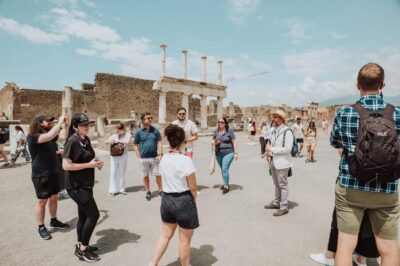
Pompeii: Entry Ticket and Guided Tour with an Archaeologist
Read our review →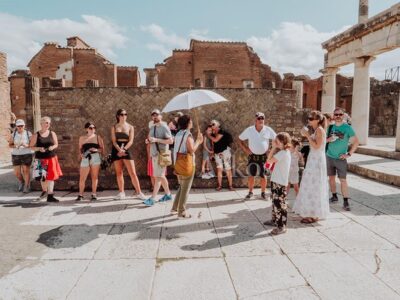
Pompeii: Small Group Tour with an Archaeologist
Read our review →Pompeii Small Group Tour with an Archaeologist
Read our review →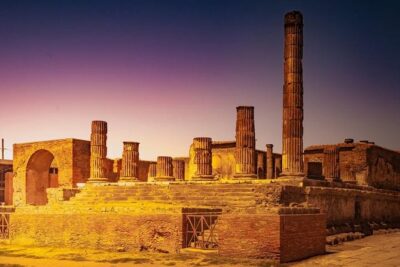
Discover the Ancient Ruins of Pompeii: Day Trip from Rome
Read our review →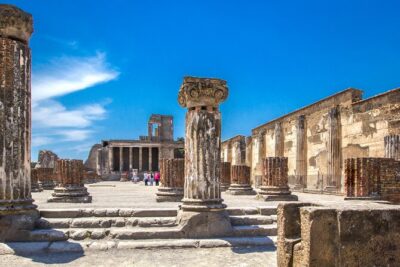
Pompeii and Herculaneum Small Group Tour with an Archaeologist
Read our review →
Skip the Line Guided Tour of Pompeii led by an Archaeologist
Read our review →
Pompeii: Tour with Archaeologist Guide & Skip-the-Line Entry
Read our review →