Review · POMPEII
Pompeii Private Tour with an Archaeologist and Skip The Line
Pompeii makes the most sense when someone helps you read it. This two-hour private walk with an archaeologist takes you from theaters and temples to fast-food counters, bathhouses, a brothel, and the casts of people killed in the eruption of 79 AD. Guides such as Luisa, Eliana, Raffaele, and Viktoria tailor the route to families, older visitors, or anyone with a short window.
I like the focused route and the private format. You can ask questions without holding up a group, and your guide can adjust the pace or explain details that are easy to miss alone. I also like the practical crowd strategy, especially later departures such as 5 p.m., which can mean less heat and fewer people.
The main catch is important: the €19 entrance ticket is not included. The skip-the-line benefit applies after you have bought your ticket online or reached the entrance with a ticket in hand. If you buy on site during a busy period, you may still face the ticket office queue.
Key points to know before booking
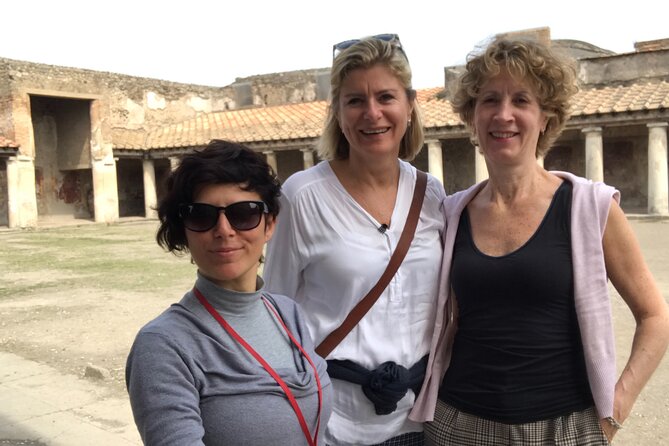
- Two hours of private guiding: Only your group participates, with a maximum of 10 people.
- A strong first visit route: See the Forum, Basilica, theaters, baths, brothel, gladiator barracks, casts, and Casa del Fauno.
- Tickets cost extra: Admission is €19 per person, while visitors under 18 enter free with identification.
- Online tickets matter: A purchase link is sent before the tour so you can avoid the ticket office line.
- Guides adapt the visit: The route and explanations can suit children, older family members, or specific interests.
- The best value comes from the guide: The price is $375.05 per group, not per person, so it makes more sense for a family or larger party than for one or two people.
Why a private Pompeii guide changes the visit
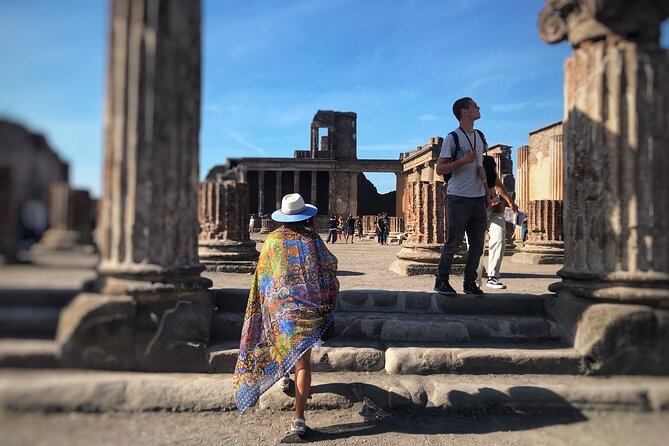
Pompeii is not a compact ruin with a single grand monument at its center. It is a broad ancient city, with streets, houses, shops, temples, public buildings, theaters, baths, and food counters spread across a large archaeological park.
That scale creates a problem. You can walk for two hours and see plenty, yet still miss the clues that explain how the city worked. A guide can point out raised sidewalks, painted decoration, household layouts, public fountains, and the difference between a private home and a civic building. The best guides also turn plain stone walls into a picture of daily life.
The private setup is useful because the guide can respond to you. With children, the focus may shift toward gladiators, theater, food, and the eruption. With adults interested in Roman politics or architecture, more time can go to the Forum, Basilica, temples, and wealthy homes.
Past visitors had especially warm words for Luisa, who is praised for avoiding thick crowds while still covering the key areas. Eliana is described as enthusiastic and flexible, while Raffaele is noted for keeping both adults and children interested. Other named guides include Luciana, Mattia, Antonio, Danilo, Viktoria, Marina, Francesco, Max, and Roberto.
The quality of a private experience can depend on the individual guide assigned to your booking. One low-rated account found the explanations too informal and not detailed enough, while other accounts describe guides who were passionate, patient, and very well prepared. If you have a particular interest, tell the company before the visit and ask for the route to reflect it.
More Ancient History Tours in Italy
- Pompeii: Entry Ticket and Guided Tour with an Archaeologist
★ 4.8 · 19,459 reviews - Pompeii: Small Group Tour with an Archaeologist
★ 4.8 · 12,264 reviews - Pompeii Small Group Tour with an Archaeologist
★ 5.0 · 6,593 reviews
Meeting your guide at Piazza Esedra
The meeting point is Piazza Esedra, 10, in Pompei. The activity ends back at the same meeting point.
You receive confirmation when you book, and the company supplies instructions and a link for buying the entrance ticket. Read those instructions closely. The key distinction is simple: the guide service includes skip-the-line assistance, but the archaeological park ticket is separate.
The company recommends buying ahead during the high season. Adults pay €19, and visitors under 18 enter free, but children must bring an ID card or passport because staff may check their date of birth.
Arrive with your ticket ready if you want the smoothest start. Buying at the entrance is possible, but it can add a wait. This is the single detail most likely to cause frustration because the advertised price and the entrance cost are separate charges.
The Small Theater and Teatro Grande
The Small Theater, or Odeion, is a smart opening stop. Your guide explains how the Romans designed the space for clear sound, giving you a quick lesson in ancient theater construction rather than just another look at old stone seating.
You then move to Teatro Grande, the larger and more important theater in the park. It helps to see both venues together. The smaller theater suggests an intimate performance setting, while the Great Theater shows the scale of public entertainment in Pompeii.
The theater area is also a good place to ask questions about Roman leisure. The route does not treat Pompeii only as a place of death. It shows a working city where people watched performances, attended religious ceremonies, shopped, ate, bathed, and handled legal matters.
The listed stop at the Great Theater is about 15 minutes. That is enough for an explanation and a close look, but not enough for a slow architectural study. If theater design is your main interest, tell your guide at the beginning.
Via dell’Abbondanza and everyday Pompeii
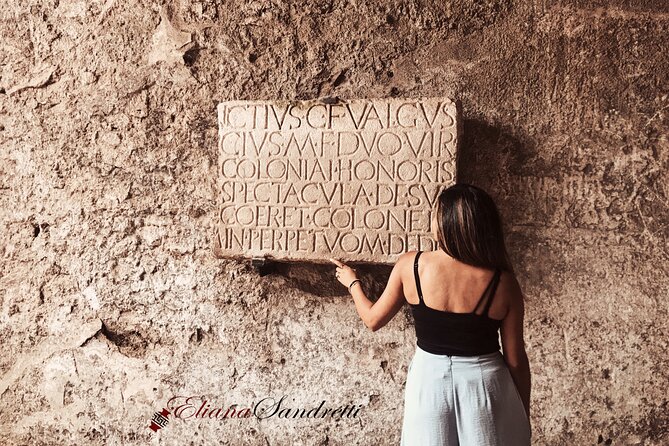
Crossing Via dell’Abbondanza gives you a sense of the city as a lived-in place. This was one of Pompeii’s main streets, and the route uses it to connect major sights.
Here the tour moves from grand public buildings to ordinary routines. You see shops, food outlets, and fast-food counters, details that make ancient Pompeii feel practical rather than distant. The remains show that residents bought prepared food, used commercial spaces, and moved through a busy urban center.
I find this part especially useful because grand temples alone can make Roman life seem abstract. A shopfront or food counter raises more immediate questions: What did people eat? How did they pay? Who worked there? How did a street function before modern traffic and signage?
The two-hour schedule means you will not stop at every doorway. That is a fair trade if you want a clear route through the main areas. You can ask for a slower look at commercial spaces if food or daily life interests you more than elite houses.
More Ancient History Tours in Pompeii
- Discover the Ancient Ruins of Pompeii: Day Trip from Rome
★ 3.5 · 2,247 reviews - Pompeii and Herculaneum Small Group Tour with an Archaeologist
★ 5.0 · 1,350 reviews - Skip the Line Guided Tour of Pompeii led by an Archaeologist
★ 5.0 · 703 reviews - Pompeii: Tour with Archaeologist Guide & Skip-the-Line Entry
★ 4.5 · 623 reviews
Granai del Foro and the casts
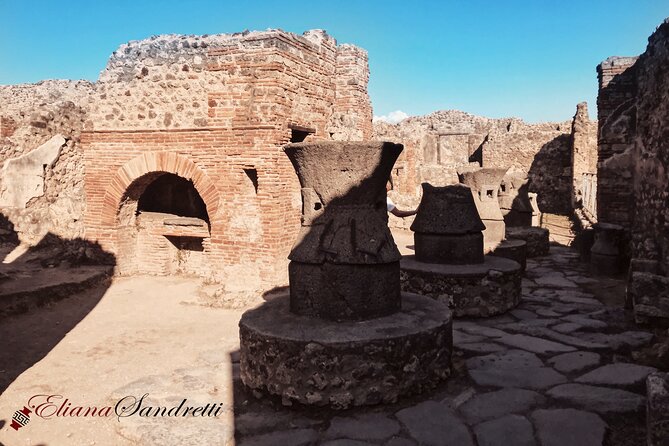
At the Granai del Foro, or Forum granaries, you see an archaeological deposit containing amphorae and work tools. This is one of the most sobering sections because the building also holds casts of people who died during the eruption.
The casts are not simply dramatic objects. They connect the disaster to individual human beings, showing the final positions of people caught by the eruption. Your guide can provide the historical setting and explain why the remains are displayed in this area.
Give yourself a little emotional room here. Some visitors find the casts difficult, especially children. The private format helps because you can ask for a shorter explanation, move on, or spend more time understanding the evidence.
The granaries also help balance the emotional weight. Amphorae and tools return the focus to storage, work, and trade. You are seeing both the city’s ordinary material life and the sudden event that preserved it.
The Stabian Baths
The Stabian Baths are presented as Pompeii’s best-preserved spa complex. This is a valuable stop because Roman baths were not only places to wash. They were social spaces, part of public life and urban routine.
Your guide can explain how the different rooms worked and how Roman heating systems made bathing possible. Even when you are looking at broken walls, the layout helps you picture a sequence of hot, warm, and cooler spaces.
The stop is listed at about 15 minutes. That gives you a useful introduction without letting the baths take over the whole visit. If you enjoy engineering or Roman public life, ask for extra detail here.
The ground can be uneven, and Pompeii involves a fair amount of walking. The route can be adjusted for older family members, as Luciana did for one family with elderly parents. Still, wear comfortable shoes and expect sun exposure, especially in the middle of the day.
The Forum, Basilica, and temples
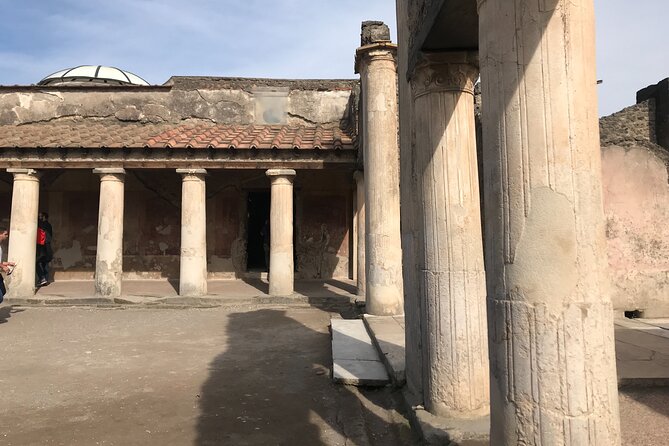
The Forum was Pompeii’s main square, surrounded by markets and religious buildings. It is the civic heart of the visit, and your guide places the city’s temples and public spaces in context.
The nearby Basilica was the ancient court, where legal business took place. Seeing it after the Forum helps you understand that Pompeii was not just a residential town. It had formal spaces for government, commerce, worship, and justice.
The Temple of Jupiter adds another layer to the main square. The Temple of Venus, identified as the city’s important place of worship, shows how religion shaped Pompeii’s public identity.
These buildings are easier to understand when you know what to look for. Ask your guide which features are original, restored, or reconstructed, and how the spaces may have been used. A short stop can otherwise become a blur of columns and foundations.
The Forum stop is listed at about 10 minutes, with additional time at the Basilica. That is enough for a strong overview, though not for every temple and civic building in detail. The route favors breadth, giving you a working picture of the city before moving to homes and entertainment.
Gladiator barracks and the Lupanare
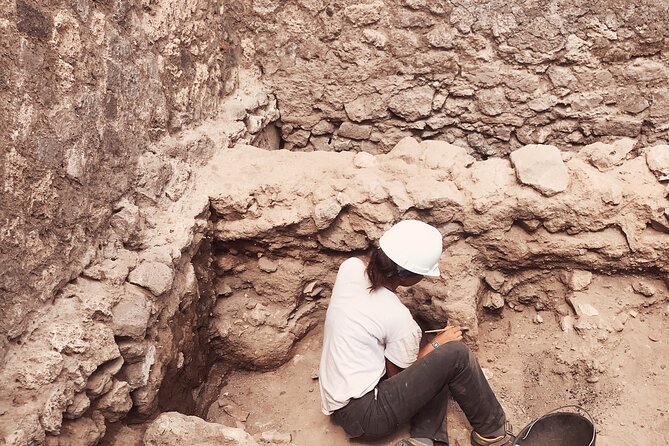
The Quadriporticus of the theaters is associated with the gladiator barracks. You can see where gladiators lived and trained, adding a human dimension to the arena culture that is often reduced to movie scenes.
The site is particularly useful for families with older children and teenagers. It gives the guide a chance to explain the difference between public entertainment and the lives of the people who performed in it.
The route then reaches Vicolo del Lupanare, the ancient red-light district. The brothel is one of Pompeii’s most talked-about stops, but it is worth more than a quick novelty photograph. Its small rooms and surviving decoration open a window onto commercial sex, privacy, and social rules in Roman society.
Use your guide’s judgment here. The subject may not suit every child, and a private guide can explain the area at an appropriate level. The stop is listed at about 15 minutes and is free once you have entered the park.
Casa del Fauno and Pompeii’s wealthy side
Casa del Fauno is one of Pompeii’s largest and most luxurious residences. After streets, shops, baths, temples, and public buildings, this house shows how the wealthy lived.
The name comes from a statue of a faun, and the residence is known for its grand scale and decorative work. Your guide can help you read the rooms as a connected home rather than a collection of walls. Look for the contrast between reception areas, courtyards, and spaces meant for household activity.
This is also the point where a private archaeologist can add real value. A quick solo visit may leave you impressed by the size but unsure how the rooms related to one another. The guide explains what the layout says about status, hospitality, and domestic life.
Casa del Fauno is a strong final stop because it gathers several themes from the visit: wealth, art, architecture, family life, and the sharp divide between public and private space.
What two hours really gives you
Two hours is enough for a well-chosen introduction, not a complete exploration of Pompeii. The route covers many major areas, but each stop is necessarily short. You will see the Forum, Basilica, temples, theaters, baths, gladiator barracks, brothel, casts, and Casa del Fauno, yet you will not study every street or house.
That is why the guide’s route planning matters. One guide may spend more time on public life, another on architecture, and another on family-friendly storytelling. The company describes the experience as tailor-made, so communicate your priorities before you arrive.
Several people used the guided visit as a first pass, then continued alone afterward. That is a sensible plan. The guide gives you a map and directions at the end, and you can revisit areas that caught your attention.
A late-afternoon departure can be a smart choice. Antonio guided one 5 p.m. visit, when the heat and crowds were lower. Conditions vary, but the timing may suit you if you want a calmer walk and less intense sun.
Is $375.05 good value?
The price is $375.05 for your private group of up to 10 people. Entrance is extra, at €19 per adult. For a full group, the guiding cost works out to a reasonable amount per person, especially when compared with several separate small-group bookings.
For one or two people, the price is harder to justify. You are paying for privacy, flexibility, and a specialist guide rather than simply access to the ruins. If your budget is tight and you enjoy reading signs and maps alone, a self-guided visit may be better value.
For a family, extended family, or group of friends, the calculation improves. You can ask questions, pause for photographs, adjust the pace, and avoid being tied to strangers’ interests. The private format also helps if some people have already visited Pompeii or if children need a more active explanation.
Food, drinks, and tips are not included. Bring water and plan your own meal around the visit. The company provides a support link with information before and during the experience, which helps with the separate ticket purchase.
Weather, cancellations, and practical limits
The experience requires good weather. If poor weather cancels the visit, you can choose another date or receive a full refund. You can also cancel for a full refund up to 24 hours before the start time, while later cancellations and changes are not accepted.
Most people can participate, and service animals are allowed. The route involves walking over an archaeological site, so ask about pace and rest needs when you book. The guides have adjusted routes for older parents and sought shade for children during hot weather.
The tour is offered in English. A different language may be possible on request, but do not assume it is available unless arranged ahead of time.
Who should book this Pompeii tour?
Book it if you have only two hours, want an archaeologist-led explanation, or are visiting with family members who will benefit from a flexible pace. It is also a good choice if you dislike large groups and want to ask questions freely.
It suits first-time visitors particularly well because the route covers the essential public, private, religious, and commercial areas. Returning visitors may also enjoy it if they want a different angle or access to details they missed before.
Think twice if you want a long, unhurried day inside the archaeological park. Two hours passes quickly, and the admission cost is separate. Also think twice if the price is too high for your group size.
For most families and groups of friends, I would book it, but I would buy the park tickets online first, confirm the meeting instructions, and tell the company what matters most to you. That small amount of preparation prevents the main surprise and gives the guide a better chance to shape the visit around you.
FAQ
Is the Pompeii entrance ticket included?
No. The entrance ticket costs €19 per person. Admission is free for anyone under 18, but children must bring an ID card or passport so their birth date can be checked.
How do I use the skip-the-line access?
The company sends a link before the tour so you can buy tickets online in advance. The skip-the-line benefit applies after you have purchased your ticket. If you buy at the site, you may still need to wait at the ticket office.
How long does the private tour last?
The guided visit lasts approximately two hours.
How many people can join the private tour?
Your private group can include up to 10 people. Only your group participates in the activity.
Where does the tour begin and end?
The meeting point is Piazza Esedra, 10, 80045 Pompei, Italy. The activity ends back at the meeting point.
Is the tour offered in English?
Yes. The standard tour is offered in English. A multilingual tour may be possible by request.
What happens if the weather is bad?
If poor weather causes the experience to be canceled, you can choose another date or receive a full refund.
Can I cancel the tour?
Yes. You can cancel at least 24 hours before the start time for a full refund. Cancellations or changes made less than 24 hours before the start time are not accepted.
More Archaeological Site Tours in Pompeii
- Pompeii Skip-the-line Tour with Archaeologist Guide
★ 5.0 · 559 reviews - Explore Pompeii with an Archaeologist
★ 5.0 · 511 reviews - Pompeii 3hours Villa of Mysteries tour with an Archaeologist
★ 4.8 · 486 reviews - Pompeii and Herculaneum: Guided Tour with an Archaeologist
★ 5.0 · 164 reviews
More Private History Tours in Italy
- Pompeii Private Tour with an Archaeologist and Skip The Line – 3 hours
★ 5.0 · 564 reviews - PompeiI Exclusive Tour with your Archaeologist in a Small Group
★ 4.5 · 363 reviews - Pompeii Private Tour with an Archaeologist Guide
★ 5.0 · 184 reviews - Pompeii: Exclusive Tour with Archaeologist and Entry Tickets
★ 4.9 · 634 reviews
Just added around Pompeii
- Pompeii and Herculaneum: Guided Tour with an Archaeologist★ 5.0 · 164 reviews
- Pompeii Guided Tour with Archaeologist★ 4.6 · 27 reviews
- Pompeii: Guided Tour with Archaeologist with max. 12 People★ 5.0 · 155 reviews
- Pompeii Small Group Tour – Tickets Included★ 4.7 · 72 reviews
- Pompeii: 2-Hour Guided Tour with an Archaeologist★ 4.9 · 151 reviews
- PompeiI Exclusive Tour with your Archaeologist in a Small Group★ 4.5 · 363 reviews
- Pompeii Private Tour with an Archaeologist Guide★ 5.0 · 184 reviews
- Pompeii 3hours Villa of Mysteries tour with an Archaeologist★ 4.8 · 486 reviews
Pompeii History Tours, compared.
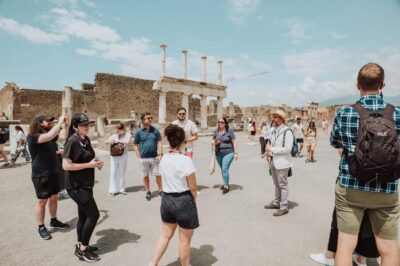
Pompeii: Entry Ticket and Guided Tour with an Archaeologist
Read our review →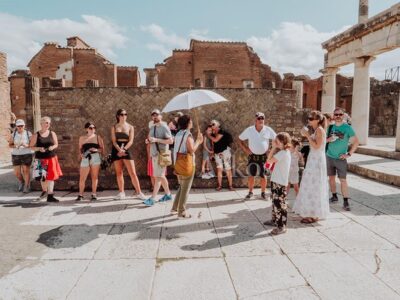
Pompeii: Small Group Tour with an Archaeologist
Read our review →Pompeii Small Group Tour with an Archaeologist
Read our review →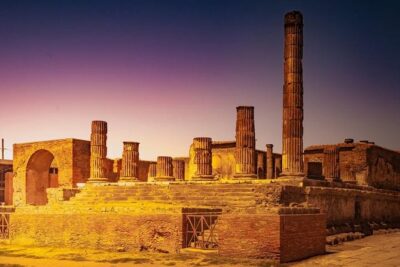
Discover the Ancient Ruins of Pompeii: Day Trip from Rome
Read our review →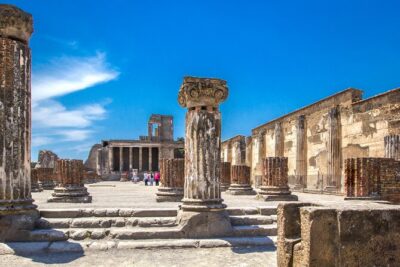
Pompeii and Herculaneum Small Group Tour with an Archaeologist
Read our review →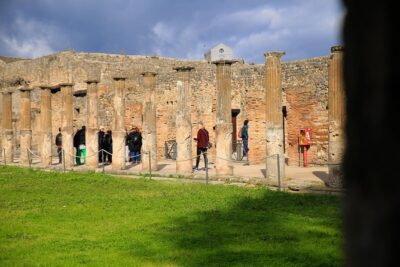
Skip the Line Guided Tour of Pompeii led by an Archaeologist
Read our review →
Pompeii: Tour with Archaeologist Guide & Skip-the-Line Entry
Read our review →