
Review · SPLIT
Experience Split History Walking Tour With Local Historian
Split’s old center is not a museum behind glass. People live among Roman walls, laundry hangs near ancient stone, and cafés fill spaces once used by emperors. This two-hour walk puts that unusual mix at the center, with a local historian explaining how Diocletian’s retirement palace became the heart of modern Split.
I like the small group limit of 12 and the use of 3D reconstruction images, which help you picture buildings that are now partly ruined or altered. I also like the range: you get the grand Peristil and cathedral, then smaller details such as a narrow church, a narrow street, a lost sphinx head, and a secret garden. The main consideration is mobility, since this is a standing and walking tour through old stone surfaces and is not suitable for wheelchair users or people with mobility impairments.
Key points to know before you book
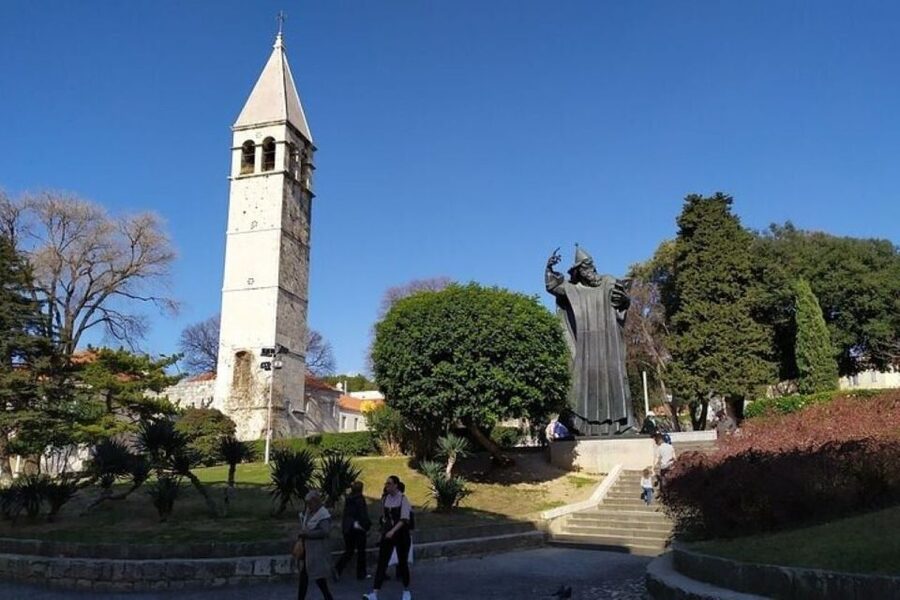
- Start at the Golden Gate: Enter Diocletian’s Palace through its northern gate, beside the eight-meter statue of Gregory of Nin.
- Follow the palace from Roman power to local life: Peristil, Jupiter’s Temple, the cathedral, Vestibule, cellars, and Riva all show different chapters of Split.
- Expect a historian’s approach: The guide covers politics, religion, architecture, legends, Croatian culture, and everyday life.
- Look for details others miss: The route includes a narrow church, narrow street, lost sphinx head, and secret garden.
- Use the 3D images: A display book helps you see how parts of the palace may have looked in earlier periods.
- Finish in the medieval center: The walk ends at People’s Square after visiting Fruit Square and the Riva.
Why Diocletian’s Palace feels different from a normal monument
The first useful thing to understand is that Diocletian’s Palace is not a single, empty attraction. It is a working part of Split. Shops, homes, restaurants, churches, courtyards, and public spaces occupy the old Roman complex, so the tour is as much about adaptation as preservation.
The palace was built for the Roman emperor Diocletian, who retired to the area connected with his birthplace and spent his later years there. Your guide explains his life in and out of the palace, along with the purpose of the buildings around you. That context matters because the stones alone cannot tell you why the palace was built or how it changed after Roman rule.
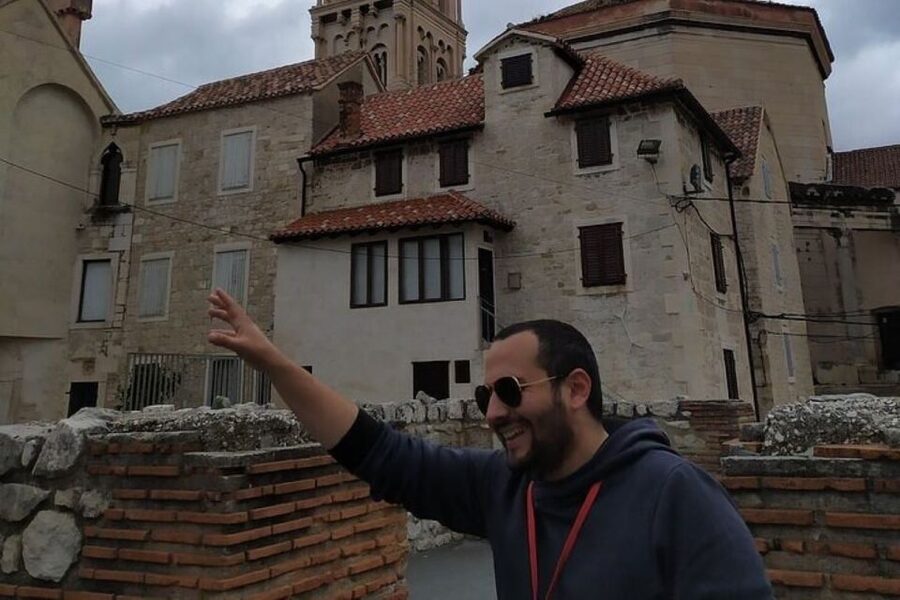
A professional historian leads the walk, and Boris is the guide named in the available booking feedback. If he is leading your group, expect patient answers and plenty of background on palace history, Croatian culture, religion, and Split’s sense of community. The tour is offered in English or Croatian.
The group can include no more than 12 people. That is a useful limit in Split, where narrow passages and busy squares can make a large group hard to follow. The pace is described as easy, but you should still expect two hours on foot, with repeated stops on stone paving.
More History Walking Tours in Croatia
- Dubrovnik Old Town History Walking Tour
★ 5.0 · 1,684 reviews - Dubrovnik: Ancient City Walls & Wars Walking Tour
★ 5.0 · 1,270 reviews - Zagreb: City and WWII Tunnels Walking Tour
★ 4.9 · 1,230 reviews
Beginning at the Golden Gate and Gregory of Nin
Meet at the Golden Gate, the northern entrance to the palace. This is a practical starting point because it gives you an immediate sense of scale. The gate once formed part of the fortified Roman approach, and you enter through it much as the emperor and empress once did.
Before moving inside, the guide gives a general introduction to Split and Croatia, then explains the name, purpose, and importance of the gate. This opening helps you get your bearings before the palace streets begin to blur together.
Across from the gate is the large statue of Gregory of Nin, an important Croatian religious figure. The guide explains who he was and why the statue matters. You may notice people touching the statue’s toe, a small local custom that has made the bronze foot unusually polished. The tour uses this stop to connect the Roman setting with later Croatian history.
The opening section takes about 15 minutes at the Golden Gate, followed by roughly eight minutes with Gregory of Nin. That is enough time to establish the setting without spending too long on one monument.
Peristil, the palace square, and imperial theater
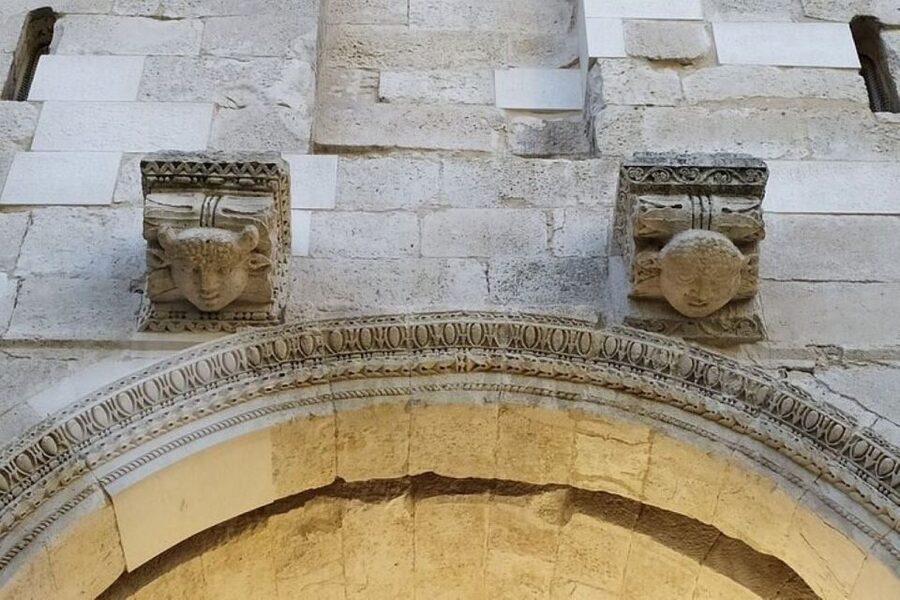
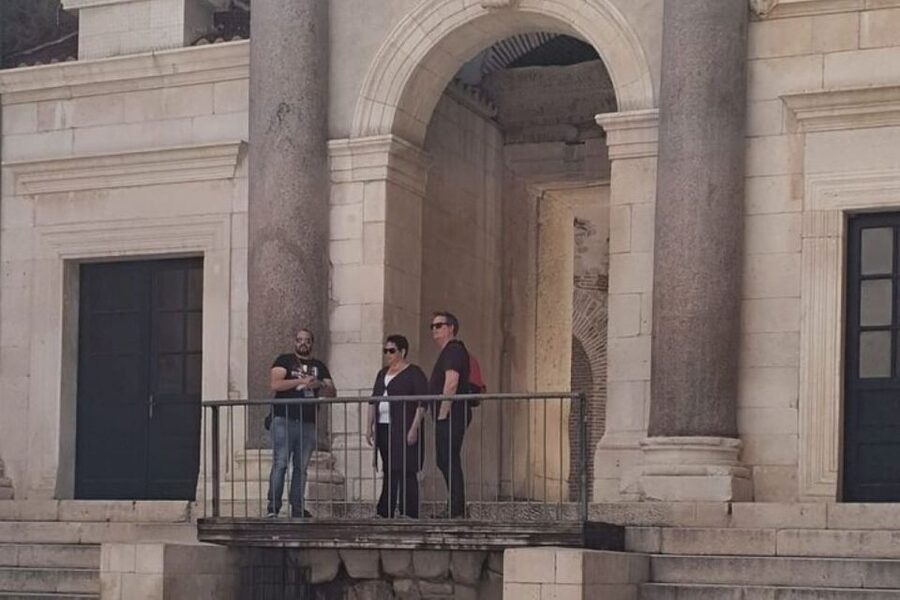
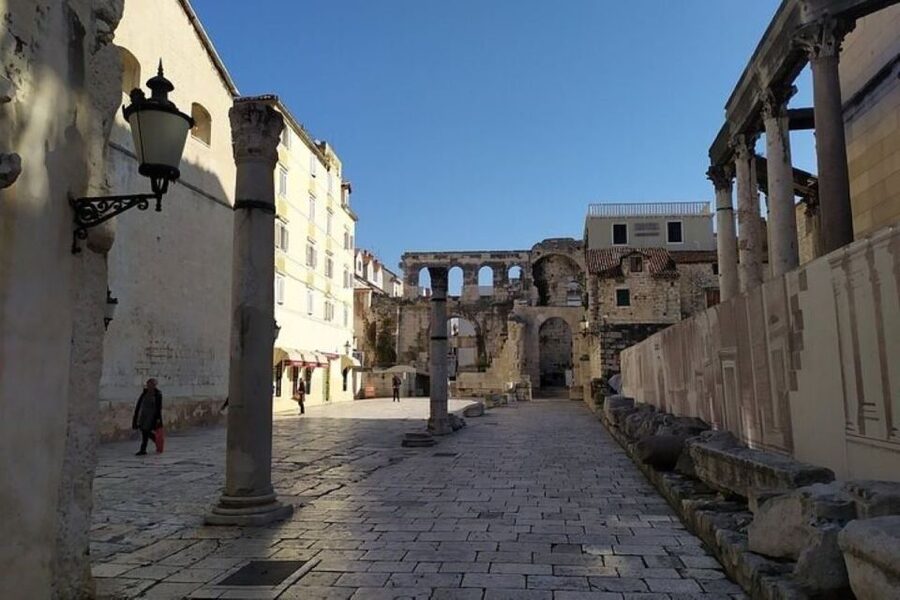
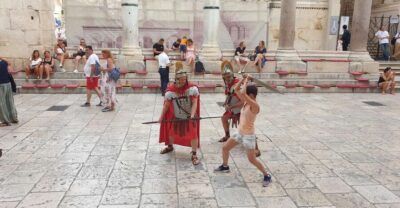
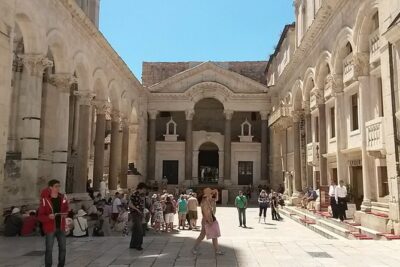
Once inside the palace, the route moves toward Peristil, the main square. This is one of the key moments of the walk. Tall stone columns and monumental walls frame the space, and the guide explains how it worked as a ceremonial area connected with the emperor.
Peristil is visually striking, but it can also feel crowded and confusing if you arrive without context. The guide’s job here is to explain how people moved through the palace and how the square related to the buildings around it. You get about 15 minutes at Peristil, which gives you time to look upward, study the stonework, and take photographs without rushing through the explanation.
The tour then covers the Cathedral of Saint Domnius, once associated with Diocletian’s mausoleum. The building’s present identity reflects the change from imperial Roman power to Christian Split. You hear about that shift rather than viewing the cathedral as an isolated church.
Jupiter’s Temple is another important stop. The guide explains its original religious purpose and the stories attached to it. The visit lasts about 10 minutes, enough for a focused explanation. Since the tour information does not promise an interior visit to every site, you should think of this as a guided look at the location and its meaning, not a full cathedral or temple admission tour.
Vestibule, cellars, and the palace below street level
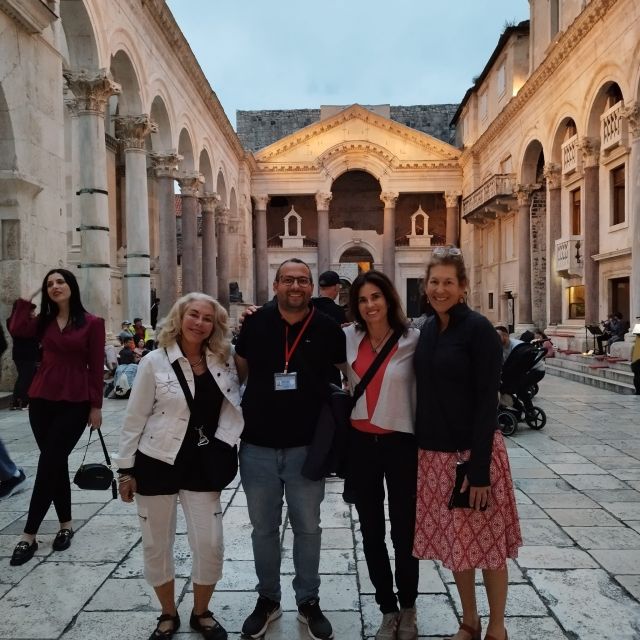
The Vestibule offers another view of Roman design. This circular space once formed part of the approach to the emperor’s private quarters. Its shape and acoustics make it easy to imagine why it served as a formal threshold rather than an ordinary passage.
The tour allows about 10 minutes here. That is useful because the Vestibule is one of those places that can look simple until someone points out its role in the larger plan of the palace.
The Central Substructures, often called Diocletian’s Cellars, show how much of the ancient layout survives below the modern city. The underground rooms supported the upper palace and helped preserve its original floor plan. They also offer a clearer idea of how the imperial apartments were arranged.
The walk includes about 10 minutes in the cellars. A practical point: the booking information does not state that an admission ticket is included, so check the current arrangements when you reserve. The tour does provide skip-the-ticket-line access, but you should not assume that every interior admission is covered in the $37 price.
One especially useful feature is the display book with 3D reconstruction images and pictures. These images can make a real difference in the cellars and around ruined sections. Instead of staring at bare walls and trying to guess what stood there, you can compare the remains with a visual reconstruction.
Same city, a different century:
- Zagreb: City & History Walking Tour & WW2 Tunnels
★ 4.9 · 1,202 reviews - Walking Tour of Split with a ‘Magister’ of History
★ 5.0 · 1,122 reviews - Dubrovnik Combo: Old Town & Ancient City Walls
★ 5.0 · 1,019 reviews - Split Walking Tour with Professor of History
★ 5.0 · 926 reviews
Secret corners inside the Roman core
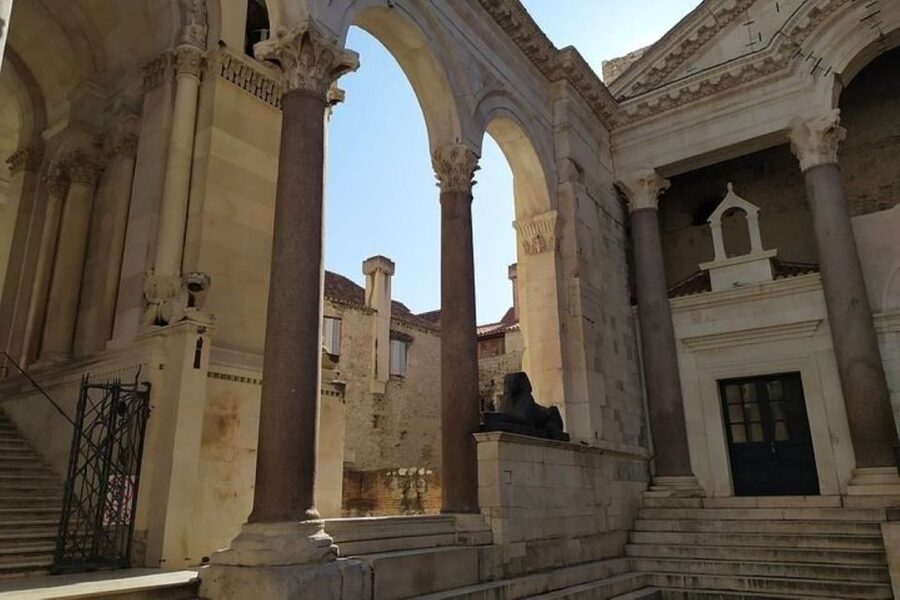
The route includes a short secret stop and a hidden-gem stop, each lasting only a few minutes. These are not grand monuments, and that is the point. The guide brings attention to small features that are easy to pass without noticing.
The tour specifically mentions Split’s narrowest church, narrowest street, a lost sphinx head, and a secret garden. The exact order may vary, but these details add texture to the larger Roman story. They also give you places to revisit after the formal tour if you want to look more closely.
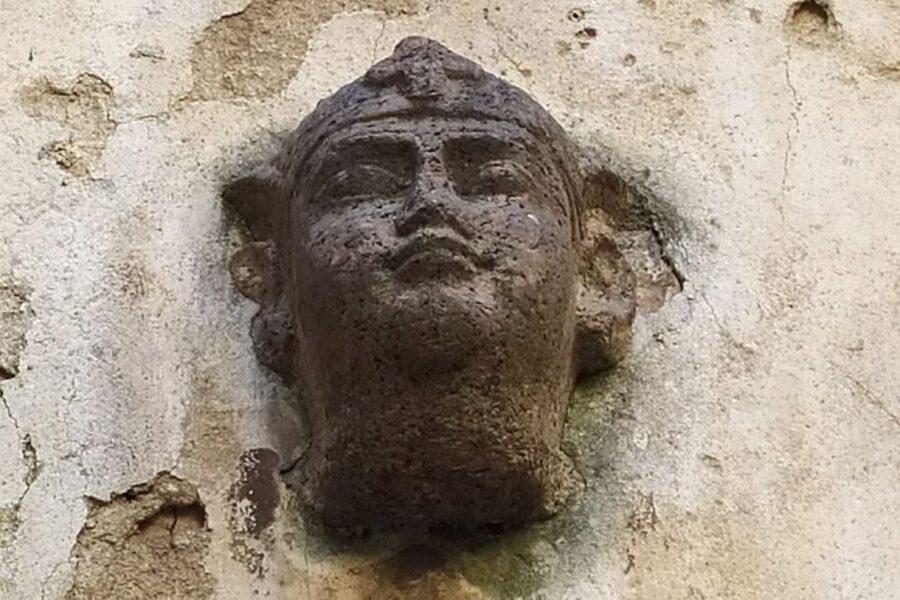
The lost sphinx head links Split to Diocletian’s fascination with Egyptian imagery. The narrow passageways show how the old palace was adapted to later needs. The secret garden offers a quieter contrast to Peristil and the busy routes through the center.
Do not expect long visits at each of these points. One listed stop lasts only two minutes. Their value comes from the guide’s explanation and from learning what to notice later, not from spending a large part of the two-hour walk in each place.
Riva and the transition from Roman to modern Split
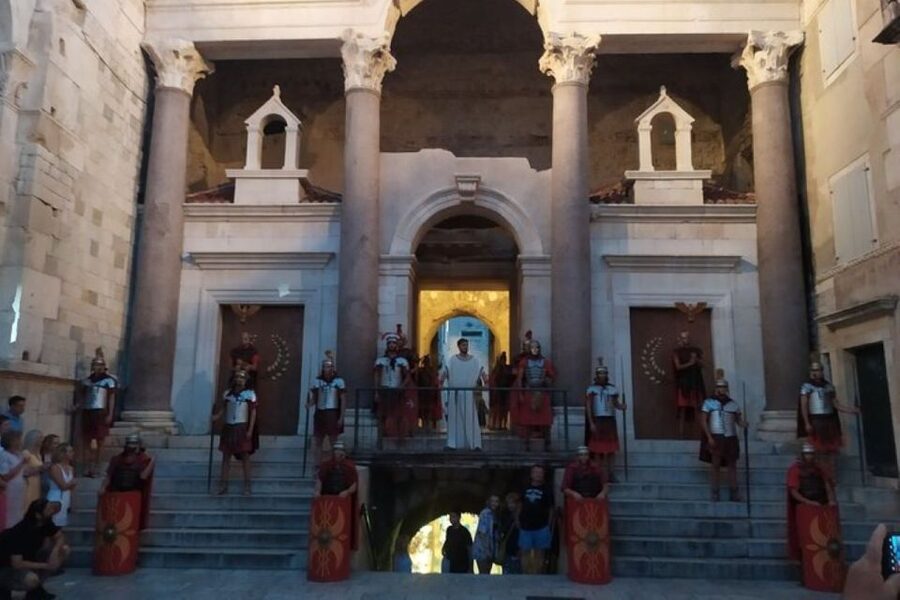
After the palace, the route reaches Riva, Split’s waterfront promenade. This is where the guide connects the Roman and medieval periods with present-day life. The stop is short, about five minutes, but the change in mood is useful.
Riva is not simply a scenic pause. It helps you see how Split functions today. The guide introduces the local pomalo way of life, a relaxed attitude associated with taking things at a slower pace. You do not need a lecture on local character to notice the difference between the formal Roman square and the open waterfront, but the explanation gives that contrast a name and a cultural setting.
This is also one of the places where practical advice can pay off. The guide has offered food and ice cream suggestions, including a well-regarded recommendation for ice cream. Food and drinks are not included, so plan to pay separately if you stop after the walk.
Fruit Square and People’s Square
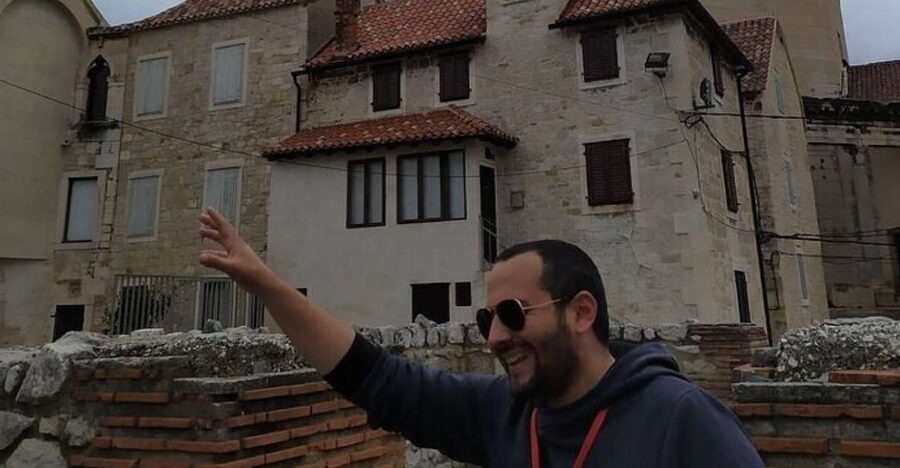
Fruit Square, officially connected with the name Vocni trg, brings the tour into Split’s medieval and later urban life. Its architecture and stories show how the city grew around the old palace rather than remaining fixed in Roman times.
The guide spends about 10 minutes here, pointing out details in the buildings and explaining events linked with the square. This is a good place to understand that Split’s identity was shaped by many periods, not only the emperor’s palace.
People’s Square, or Narodni trg, is the final stop. It is also where the tour ends. The square gives you a useful finish because it sits outside the most concentrated Roman remains and shows Split as a functioning civic center.
You finish with a better sense of how the old palace, medieval squares, waterfront, churches, and modern daily life fit together. The ending is also convenient if you want to continue exploring on your own, stop for food, or return to one of the palace sites for a longer look.
What the two-hour format does well
At $37 per person, this is not the cheapest way to walk through Split, but the value depends on how much context you want. You are paying for a licensed local guide with a master’s degree in history, a small group of up to 12, and visual reconstruction material.
I think the price is fair for a first visit if you want to understand the palace rather than simply photograph it. A self-guided walk can show you the same streets, but it may not explain why a Roman mausoleum became a cathedral or how an imperial residence turned into a living city.
The two-hour length also works well before a longer day of sightseeing. You cover the main Roman sights, two medieval squares, Riva, and several lesser-known details without giving up half a day. The tradeoff is that most stops are introductions. If you want to study the cathedral, cellars, or temple in detail, you will need time afterward.
Who should book this Split walking tour
I would choose this tour if you are visiting Split for the first time, enjoy history, or want a clear introduction before exploring alone. It suits people who prefer a small group and who like asking questions instead of listening to a fixed speech.
It is also a good match if you want more than Roman architecture. The tour brings in religion, Croatian culture, local customs, legends, and everyday life. That broader approach helps explain why Split feels like a city built inside an ancient monument.
You should think twice if you dislike walking on uneven old paving, need step-free access, or want a long interior visit at every major site. The experience is not suitable for wheelchair users or people with mobility impairments. Wear comfortable shoes, and bring water or a hat on sunny days.
The walk is offered in English and Croatian. Hotel pickup and drop-off are not included, so you make your own way to the Golden Gate and leave from People’s Square.
Should you book it?
Book this tour if you want the Roman palace explained as part of a living Croatian city. The best reasons are the small group, the historian-led storytelling, Boris’s clear reputation as a patient guide when he leads, and the mix of major sights with details you would likely miss alone.
Skip it if you already know Diocletian’s Palace well or prefer to spend two hours inside one monument at your own pace. For most first-time visitors, though, the $37 cost buys useful orientation, strong historical context, and practical ideas for what to see, eat, and explore after the walk.
FAQ
How long does the Split History Walking Tour last?
The tour lasts two hours.
How much does the tour cost?
The price is $37 per person.
Where does the tour start?
It starts at the Golden Gate, the northern gate of Diocletian’s Palace, opposite the eight-meter statue of Gregory of Nin.
Where does the tour finish?
The tour finishes at People’s Square, also known as Narodni trg.
What language is the tour offered in?
The tour is offered in English and Croatian.
What sights are included?
The route includes the Golden Gate, Gregory of Nin, Diocletian’s Palace, Peristil, Jupiter’s Temple, the Cathedral of Saint Domnius, Vestibule, Diocletian’s Cellars, Riva, Fruit Square, and People’s Square. It also includes several short stops featuring lesser-known places.
Is food included?
No. Food and drinks are not included.
Is the tour suitable for wheelchair users?
No. The tour is not suitable for wheelchair users or people with mobility impairments. Comfortable shoes are recommended, and water or a hat is advised on sunny days.
Just added around Croatia
- Split: Local History and Culture 90-Minute Walking Tour★ 5.0 · 194 reviews
- Split: Walking tour of Split with a ‘Magister’ of History★ 5.0 · 110 reviews
- Split: Historical & Gastro Treasures Tour with Green Market★ 4.9 · 144 reviews
- Split: Historical Tour of Salona, Klis Fortress and Trogir★ 4.1 · 108 reviews
- Split: Private Walking Tour in the Historical Town Center★ 5.0 · 25 reviews
- Šibenik: Medieval Night Walking Tour★ 5.0 · 27 reviews
- Šibenik: Croatia in a Day, Vistas, History, Olive Oil, Wine★ 5.0 · 30 reviews
- Dubrovnik: Red History Museum Regular Ticket★ 4.6 · 134 reviews
Split History Tours, compared.
Walking Tour of Split with a ‘Magister’ of History
Read our review →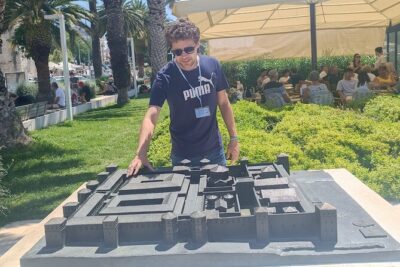
SPLIT-PRIVATE Walking Tour of Diocletian’s Palace & Old Town
Read our review →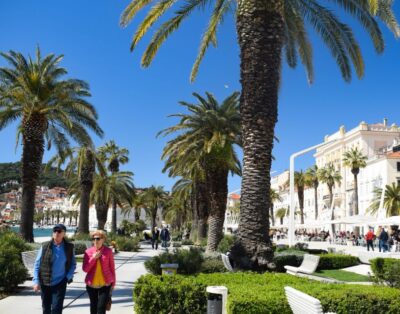
Split: Local History and Culture 90-Minute Walking Tour
Read our review →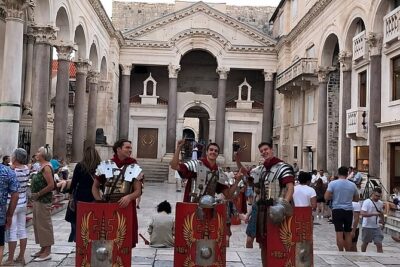
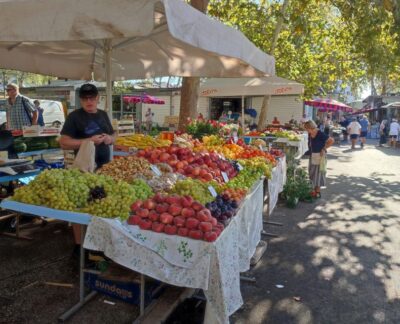
Split: Historical & Gastro Treasures Tour with Green Market
Read our review →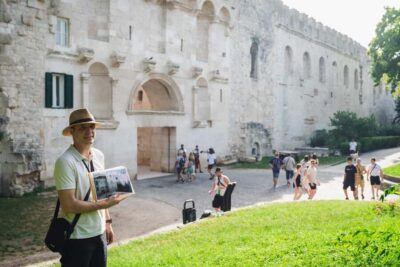
Split: Walking tour of Split with a ‘Magister’ of History
Read our review →Browse the lists this tour appears in