Review · HIROSHIMA
Hiroshima & Miyajima Island Private Tour: History & Culture
Hiroshima is best understood in two parts: the quiet weight of Peace Memorial Park and the beauty of Miyajima Island. This private tour connects both in one thoughtful day, with a local guide to explain the A-bomb’s human cost, point out small details, and keep the pace suited to your group. The move from the stark A-Bomb Dome to the deer and sea views of Miyajima gives the day a useful emotional balance.
I especially like the personal guiding and the chance to try local foods such as oysters, okonomiyaki, and momiji manju. I also like that the tour uses ordinary trains and a ferry instead of private transport, giving you a feel for how Hiroshima works. The main drawback is the tight six-hour schedule: Peace Park, the museum, and Miyajima make a full day, not a slow one.
Key points to know before booking
- The tour links two major sights: Hiroshima Peace Memorial Park and Miyajima Island in six hours.
- The Peace Museum receives about 40 minutes: enough for a guided introduction, but not a long, unhurried visit.
- You travel by train and ferry: useful to know if you prefer a car-free day, but allow for walking and public transport.
- The guide can adjust the pace: past bookings included families with children, teenagers, and people arriving late from a cruise.
- Local food is part of the appeal: oysters, okonomiyaki, and momiji manju may be suggested, but meals cost extra.
- Miyajima includes more than the torii gate: you also visit Itsukushima Shrine, Daisho-in, and Omotesando shopping street.
Why this Hiroshima and Miyajima pairing works
A first visit to Hiroshima can feel split between two very different places. Peace Memorial Park asks for quiet attention. Miyajima offers shrines, forested hills, island paths, shops, sea air, and deer wandering near the streets.
This tour puts those experiences together without treating either as a quick photo stop. You begin with the city’s central memorial sites, then ride toward Miyajima by train and ferry. That change of setting helps you process the difficult material from the morning while adding a broader view of Hiroshima’s culture.
The private format matters here. You can ask questions about the bombing, modern Hiroshima, Japanese religious customs, or local food without worrying about holding up a large group. Guides named Nabeel, Yasmin, Malek, Abdeel, and Samy have led bookings, and the strongest praise has focused on clear English, patience, sensitivity, and the ability to adjust the day.
At $69 per person, the price is appealing for a six-hour private or small-group experience, especially if you value a guide rather than simply buying entry tickets. You should still check the exact booking option for transport costs. The activity includes a private guide and Peace Memorial Museum admission, while private car transport and food are not included. The published schedule uses public trains and a ferry, and one booking account says attraction and transport costs were covered, so confirm this point before paying.
More Local Culture and Traditions Tours in Japan
- Kyoto Gion: 2-Hour Geisha Culture & History Walking Tour
★ 5.0 · 1,186 reviews - Nara: Half-Day UNESCO Heritage & Local Culture Walking Tour
★ 4.8 · 250 reviews - Tokyo: The Best of Izakaya in Shinjuku Food & Cultural Tour
★ 4.9 · 221 reviews
Peace Memorial Museum: a serious beginning
The day usually starts at a selected meeting point or at your accommodation if it is within reasonable walking distance. If you meet at Hiroshima Station, the stated point is the Shinkansen Exit on the second floor, in front of Starbucks. Your guide confirms the exact point before the tour.
The Peace Memorial Museum receives about 40 minutes of guided time. That is enough for your guide to explain the main exhibits and give the visit shape, but it is not enough for every display if you read everything carefully. The museum can be confronting. You may want extra time here, especially if the subject is important to you or you are visiting with older children and teenagers.
A guide is useful because the museum presents more than dates and military facts. You can ask about the people affected, the city before the bombing, and the way Hiroshima rebuilt itself. One guide continued with historical explanation when the museum was closed on a particular booking, which shows the benefit of having a person who can adapt rather than simply ushering you through a fixed route.
I would not treat this part as entertainment. Give yourself a little quiet time before and after the museum. Comfortable shoes matter, but so does mental preparation. The tour handles the subject respectfully, according to the detailed accounts of the guides’ approach.
Peace Memorial Park and the A-Bomb Dome
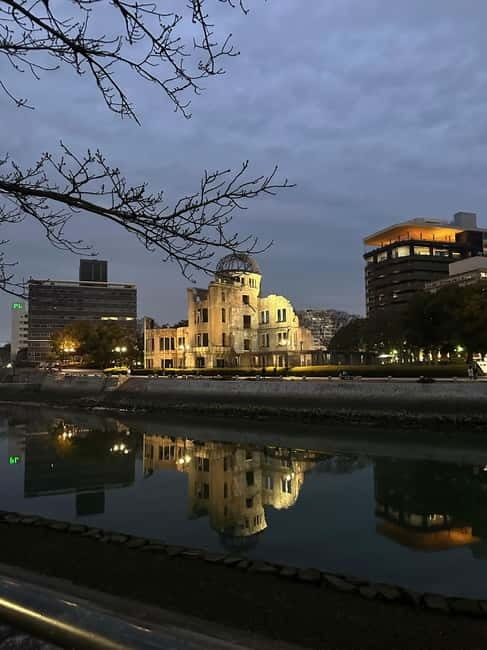
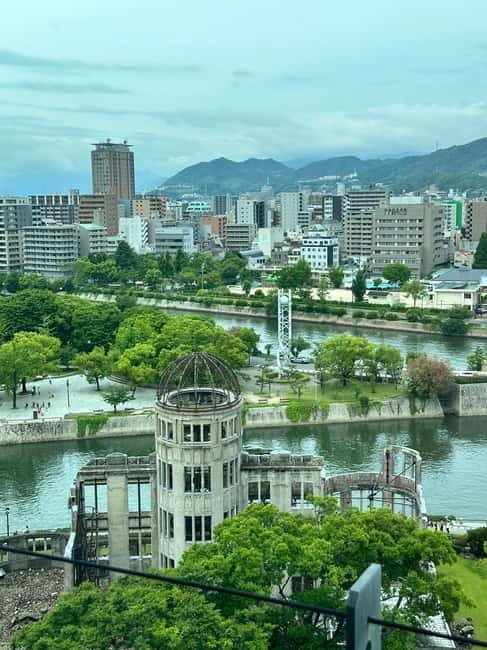
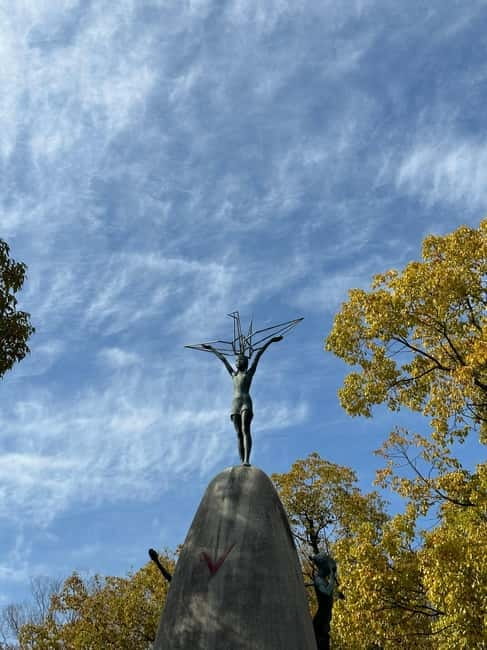
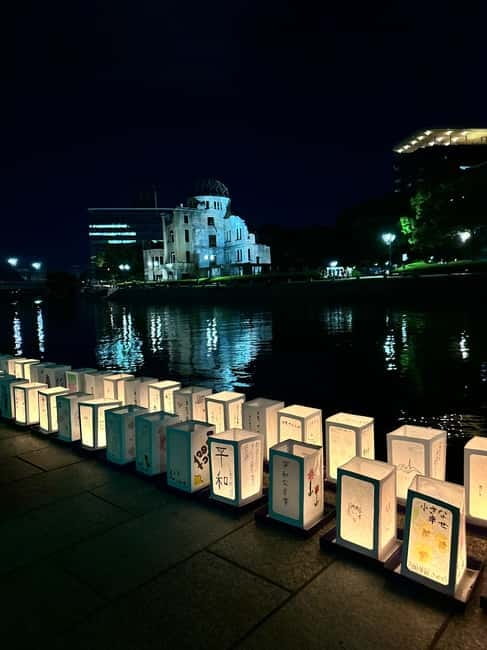
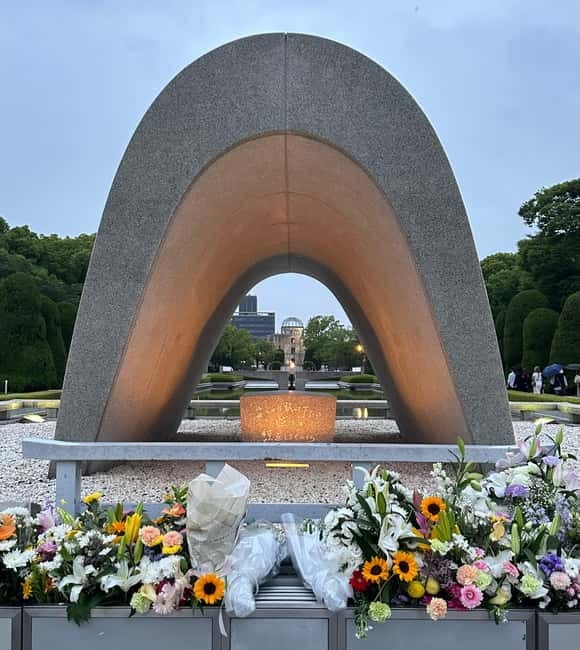
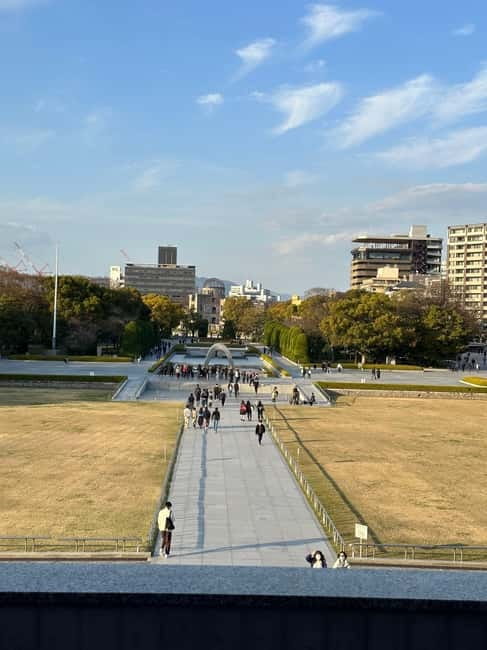
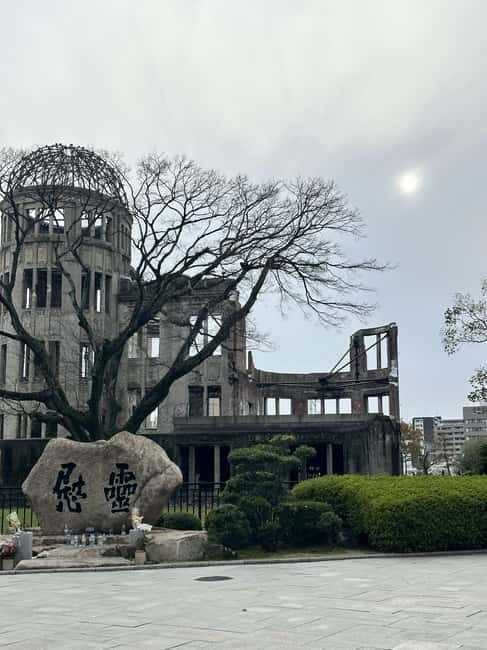
The park receives about 50 minutes of guided attention, followed by around 10 minutes at the A-Bomb Dome. This is where the morning’s ideas become physical. The open park, memorial spaces, river setting, and preserved dome create a direct connection between the museum displays and the city around you.
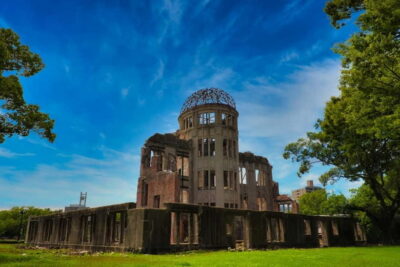
The A-Bomb Dome is one of Hiroshima’s most recognizable sights, but the value here is not just its appearance. Your guide can explain why this damaged building remains in place and how it fits into the wider memorial area. The short scheduled stop keeps the tour moving toward Miyajima, though anyone wanting a long reflective visit may wish for more time.
The guides’ personal stories and local insight are a central part of the experience. The information provided does not specify that every guide has a family connection to the bombing, so you should not expect that. What you can expect is an English-speaking guide who explains the setting and answers questions in a respectful way.
Families may find this section especially useful. One booking included teenagers and described the museum and memorial as an important educational experience. The subject is difficult, but a good guide helps young people understand it without turning the visit into a lecture.
The train and ferry to Miyajima
The listed route includes about 35 minutes by train and 10 minutes by ferry. These transfers are not wasted time. They show you the practical connection between Hiroshima city and Miyajima, while giving you a break after the serious first half of the day.
You will need to walk between some stops, and the total route includes another 15-minute walk later in the day. This is not a private vehicle tour. If you want door-to-door transport or have limited mobility, check the route details carefully even though the activity is marked wheelchair accessible. Public transport, ferry boarding, and busy sightseeing areas can require more effort than the label alone suggests.
The ferry ride is short, but it provides the first clear sense that you are leaving the city. Miyajima is officially known as Itsukushima, and the island is closely associated with its shrine and torii gate. Weather, tide, and the time of day affect how the gate appears, so your guide can help explain what you are seeing rather than leaving you to guess.
More Private History Tours in Japan
- From Tokyo: Nikko World Heritage Site Private Full-Day Trip
★ 4.9 · 243 reviews - 2.5 Hour Private History and Culture Tour in Himeji Castle
★ 5.0 · 185 reviews - Tokyo: Nikko World Heritage Private Day Trip Hotel Pick-up
★ 4.8 · 145 reviews - From Tokyo: Nikko World Heritage Sight Full Day Private Tour
★ 4.9 · 127 reviews
The floating torii gate and Itsukushima Shrine
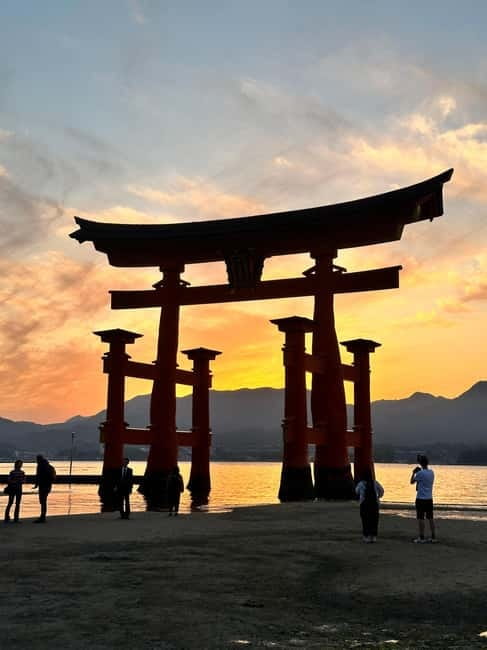
The tour allows about 20 minutes for the floating torii gate and another 20 minutes at Itsukushima Shrine. These are separate stops on the schedule, but they work as one cultural visit.
The torii gate is famous because it appears to float in the water at high tide. The exact view depends on conditions, and the tour does not promise a particular tide or a gate visit by boat. You see it from the island area and learn about its place in the shrine complex.
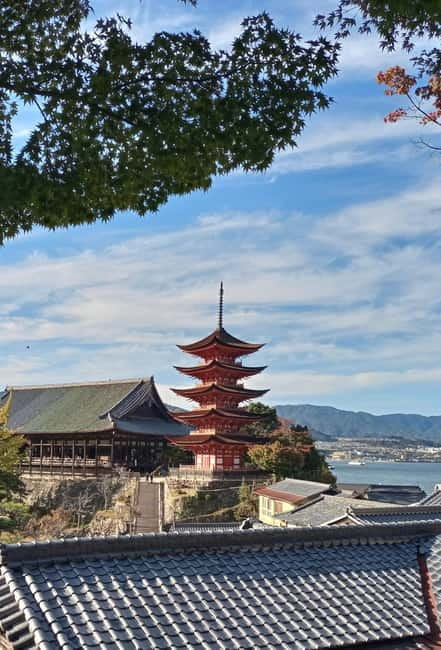
Itsukushima Shrine is the main cultural reason to come to Miyajima. The bright shrine buildings, water-facing design, and island setting feel very different from Peace Memorial Park. Your guide can add context about the sacred character of the island and help you notice details that are easy to miss during a quick walk.
Twenty minutes at the shrine is fairly brisk. It works for a first look, but you should not expect enough free time to linger at every hall or take a relaxed set of photographs. The tour is trying to fit a large amount into six hours, and that tradeoff is clear here.
Daisho-in and the quieter side of Miyajima
Daisho-in receives about 40 minutes, making it one of the longer stops on the island. This is a useful choice because Miyajima is not only a torii gate and a shopping street.
The temple adds another layer of Japanese religious culture and gives your guide room to explain local traditions. The schedule calls for a guided visit, so you are not simply left to wander. If you enjoy temples, symbols, and small details, this may become one of your favorite parts of the afternoon.
The route is still active, with walking between the shrine area, temple, shops, and ferry. You may find the day tiring in hot weather or after a cruise arrival. The guide can slow the pace, and the private setup makes that more realistic than on a large coach tour, but six hours remains a compact window.
The free-roaming deer are part of Miyajima’s appeal. They often approach people and make good photographs, but you should treat them as animals, not toys. The supplied information promises the chance to meet them, not a guaranteed animal interaction at a specific place or time.
Omotesando Street and local food
Omotesando Shopping Street receives about 30 minutes for a break, shopping, and walking. This is where the tour becomes more casual. You can browse shops, look for snacks, and get a quick sense of the island’s commercial side.
Food is not included, but the guide can suggest local specialties. Fresh oysters fit Miyajima’s coastal setting. Hiroshima-style okonomiyaki gives you a hearty local meal, while momiji manju, a maple-leaf-shaped sweet, is an easy snack or souvenir.
Because the stop is only about 30 minutes, you may need to choose between eating, shopping, and photographing the street. If food is a priority, tell your guide early. The guide may know a suitable small place for the day, but the tour does not promise a particular restaurant or tasting menu.
This is one of the strongest reasons to choose a private tour. You can say that you want oysters, a fast snack, or time for shopping. You can also skip a food stop if the memorial sites or shrine matter more to you. Just remember that your food and drinks are extra.
What the guides add
The most repeated strengths are clear English, patience, and care. Nabeel is described as friendly, attentive, and strong on the history of the atomic bombing. Malek is praised for explaining local history clearly and adapting the tour to personal preferences. Yasmin and Nabeel are described as respectful and engaging, while Abdeel helped a late-arriving cruise group feel secure in an unfamiliar place.
Samy is also described as an excellent guide with strong knowledge of the area. These names reflect the guides associated with different bookings, not a promise that you will receive a particular person. Your guide depends on availability and the booking option.
That distinction matters. The tour’s quality depends heavily on the individual guide, but the pattern in the supplied accounts is consistent: the guides explain rather than recite, and they take care with the difficult parts of Hiroshima’s past. You should still tell the guide what you want from the day. A family with children may need more breaks. A history-focused visitor may want more time at the museum. A food-focused visitor may want help choosing lunch.
Timing, walking, and practical value
Six hours is enough to sample both Hiroshima and Miyajima, but not enough to explore either one at a slow pace. The schedule includes roughly 40 minutes at the museum, 50 minutes in the park, short time at the dome, train and ferry transfers, shrine visits, Daisho-in, and a shopping break.
Wear comfortable shoes. You will walk through memorial grounds, stations, ferry areas, shrine approaches, temple grounds, and shopping streets. The activity is marked wheelchair accessible, but the exact ease of each transfer is not explained, so anyone with mobility concerns should confirm the route and meeting point before booking.
The tour can finish at one of four listed drop-off locations: Hiroshima Station Shinkansen Exit, Itsukaichi Station South Entrance, the taxi stand at Peace Memorial Park, or Hiroshima Port Cruise Terminal. This flexibility is valuable if you are catching a train, returning to a ship, or continuing your sightseeing from the port.
There is no private car, and no car pickup. Accommodation pickup is available only when it is within a reasonable walking distance. That keeps the price low, but it also means you must reach the meeting point yourself unless your accommodation qualifies.
Cancellation is flexible: you can cancel up to 24 hours in advance for a full refund. You can also reserve now and pay later. These terms help if your Hiroshima plans depend on a ship schedule or changing train arrangements.
Who should book this tour
I would choose this experience if you want a well-organized first look at both Hiroshima and Miyajima, but do not want to manage the route alone. It suits couples, families, solo visitors, and small groups who value conversation and local food advice.
It is particularly useful for people arriving by cruise, since one guide adjusted communication for a delayed disembarkation. It also suits parents with teenagers, since the guide can explain the Peace Museum in plain English and adjust the rhythm between serious and lighter stops.
You may prefer separate full-day visits if you want several hours in the museum, a long temple visit, shopping time, or a slower meal. This is a broad introduction, not a leisurely island retreat. The private format helps, but it cannot remove the distance between sites or add hours to the day.
Should you book Hiroshima and Miyajima in six hours?
Book it if you want the key memorial sites, Miyajima’s shrine, Daisho-in, deer, and local food suggestions in one day, with a guide who can explain the difficult material and adjust the pace. At $69 per person, the format offers good value for a private or small-group day, especially when shared with family or friends.
Before you commit, confirm the exact guide, meeting point, group size, and whether train and ferry fares are included in your selected option. If you accept a brisk schedule and ordinary public transport, this is a practical and meaningful way to see two very different sides of Hiroshima.
FAQ
How long does the Hiroshima and Miyajima tour last?
The tour lasts six hours.
What language does the guide speak?
The live guide speaks English.
Is the tour private?
Private and small-group options are available. The exact group type depends on the option you choose.
Does the tour include Peace Memorial Museum admission?
Yes. Entrance to the Peace Memorial Museum is included.
Is food included in the price?
No. Food and drinks are not included. You may receive suggestions for oysters, okonomiyaki, momiji manju, and other local foods, but you pay for any food yourself.
Is private car transport included?
No. Private transportation is not included. The route uses a train, a ferry, and walking.
Can the guide pick me up at my hotel?
Pickup is available from your accommodation only if it is within a reasonable walking distance. There are no car pickups.
Where do I meet the guide at Hiroshima Station?
Meet at the Shinkansen Exit on the second floor, in front of Starbucks, if you select Hiroshima Station as your meeting point. The guide confirms the exact details the day before.
Is the tour wheelchair accessible?
The activity is marked wheelchair accessible. Since the route includes trains, a ferry, and walking, confirm the specific access needs and meeting point before booking.
What should I bring?
Bring comfortable shoes. You should also plan for your own food and drinks, since they are not included.
Can I cancel the tour?
Yes. You can cancel up to 24 hours in advance for a full refund.
Can I reserve without paying immediately?
Yes. The reserve now and pay later option lets you hold your place without paying at the time of booking.
Just added around Japan
- Private sake pairing@ancient underground★ 5.0 · 27 reviews
- Tokyo: Asakusa & Sensoji ー Oldest Temple Walking Tour (2hrs)★ 5.0 · 213 reviews
- [30 minutes] Rickshaw tour around Asakusa [History, sightseeing, Tokyo Skytree]★ 5.0 · 38 reviews
- Tokyo: Edo Castle & East Garden of the Imperial Palace Tour★ 4.7 · 112 reviews
- Tokyo: Imperial Palace, the history of Japan (ENGLISH GUIDE)★ 5.0 · 77 reviews
- Tokyo: Customized Private Historical Guided Photoshoot Tour★ 5.0 · 25 reviews
- Osaka: Dark Side of Osaka Night Walking Tour★ 4.9 · 89 reviews
- Osaka: Osaka Castle & Historical Museum Guided Tour★ 4.8 · 28 reviews
Hiroshima History Tours, compared.
Hiroshima Historical Walking Tour – Why A-Bomb was Dropped
Read our review →
Hiroshima Peace (Heiwa) Walking Tour at World Heritage Sites
Read our review →
Miyajima Half-day Trip Historical Walking Tour
Read our review →
Hiroshima: History of Hiroshima Group Walking Tour
Read our review →
Hiroshima: Peace Walking Tour of World Heritage Sites
Read our review →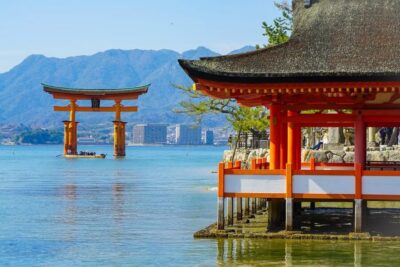
Hiroshima: Miyajima Half-day Historical Walking Tour
Read our review →