
Review · HIROSHIMA
Hiroshima: History of Hiroshima Group Walking Tour
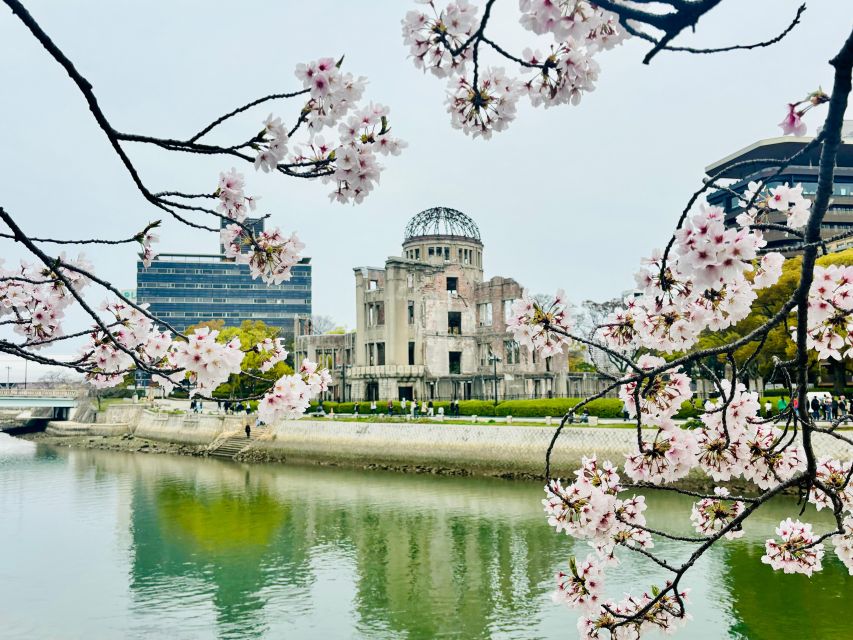
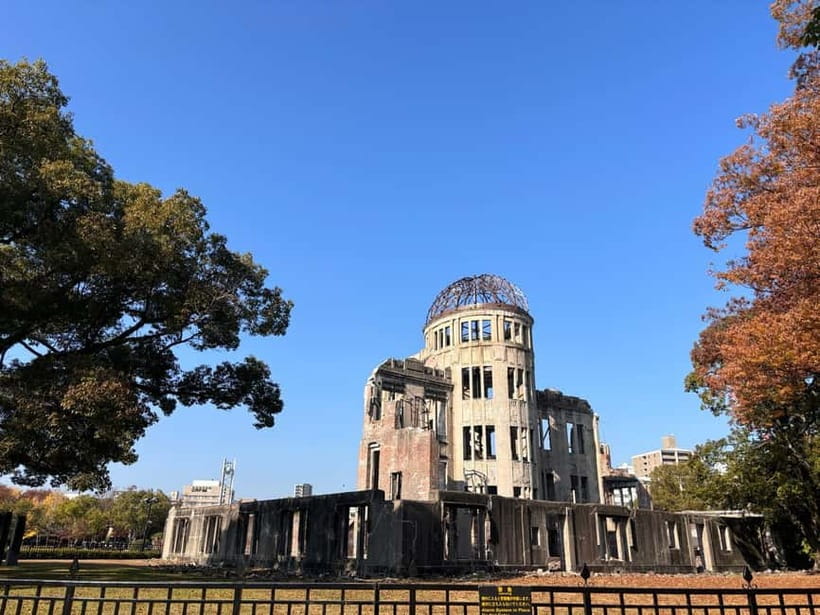
Hiroshima’s Peace Memorial Park is easy to walk through but difficult to understand on your own. This two-hour tour connects the monuments, survivor stories, and the exact places tied to the bombing, ending at the Atomic Bomb Dome, the only structure left standing after the blast.
I like two things right away: the route includes lesser-known memorials, not just the famous cenotaph and dome, and the guides explain Hiroshima before, during, and after the bombing. Guides such as Cva, Moe, Tomas, and Sada are praised for clear English, personal family connections, and giving people time to ask questions.
The main consideration is the group format. One booking described a group large enough to make listening harder, so the experience may feel less personal on busy days. Still, at $35 for two hours, with entry to the National Peace Memorial Hall included, it offers strong value.
Key points at a glance
- Personal connections: Some guides, including Moe and Sada, share family links to survivors, adding a human layer to the history.
- A full Peace Park route: You visit the Gates of Peace, cenotaph, Flame of Peace, Children’s Monument, Peace Bell, burial mound, and more.
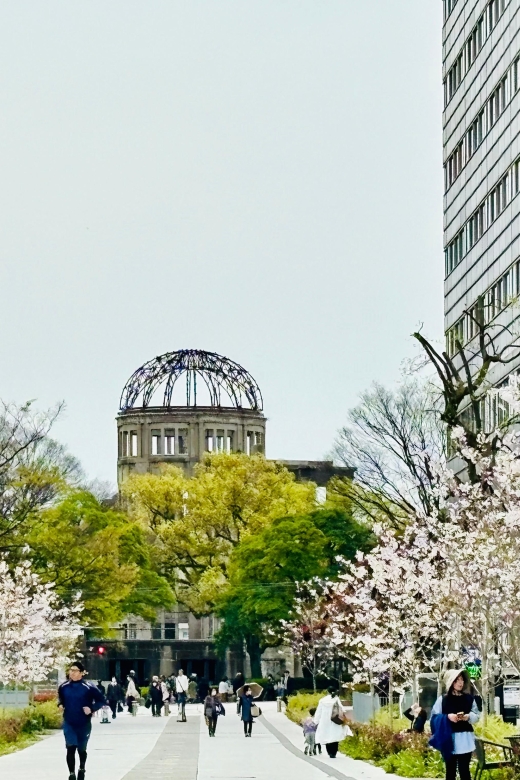
- The exact blast center: The tour ends at the Hypocenter, helping you connect broad historical events to one precise place.
- Atomic Bomb Dome finale: The famous ruin comes after the park’s memorials, giving its meaning greater context.
- Room for questions: Guides such as Cva are praised for encouraging participation and not rushing the group.
- Practical setup: The tour is in English, lasts two hours, welcomes wheelchair users, and begins beside Mario Italian restaurant.
Why a guided walk helps in Hiroshima
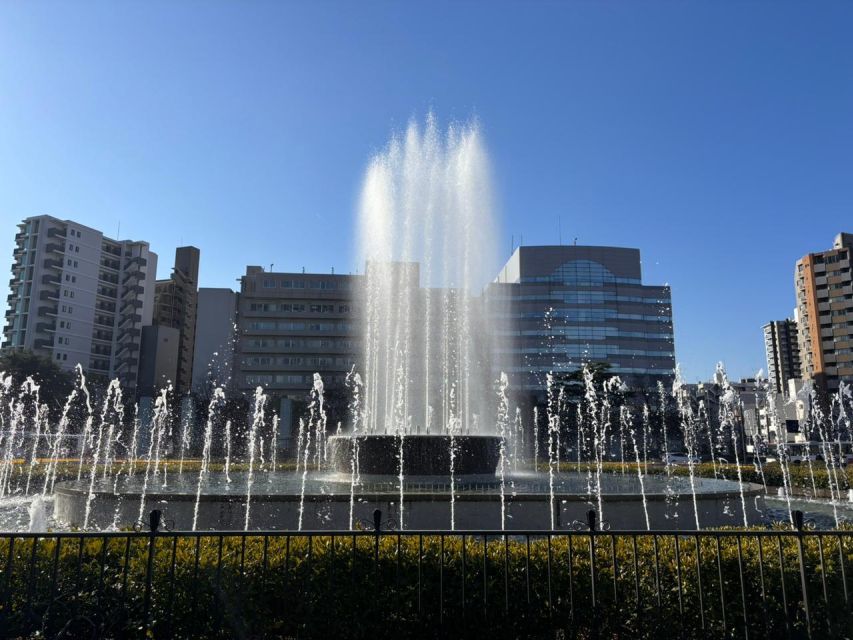
The Peace Memorial Park is open, spacious, and quiet. That can make it seem simple to explore, but many memorials are easy to pass without knowing why they are there. A guide gives each one a place in the larger story.
This is especially useful because Hiroshima’s story has several parts. You learn about the city before the bombing, why it was selected as the primary target, what happened on August 6, 1945, and how the city rebuilt itself afterward. The route also includes the experiences of victims and survivors, rather than treating the bombing as only a military event.
I appreciate the promised balance. The subject is painful, and the strongest guides handle it with care instead of turning the tour into a dry lecture. Cva is repeatedly praised for mixing serious explanation with warmth and humor, while Moe is noted for bringing her family’s experience into the story. That kind of personal link can make the past feel close, but a guide still needs sensitivity. The feedback suggests that this is usually handled well.
You should expect a reflective walk, not a light sightseeing circuit. The tour is suitable for anyone who wants historical context, but it may feel heavy at times. That is part of the value of visiting Hiroshima, though you should leave enough emotional space afterward rather than scheduling a rushed activity immediately after.
More History Walking Tours in Japan
- Tokyo: Imperial Palace and Shogun Historical Walking Tour
★ 5.0 · 2,251 reviews - Kyoto Gion: 2-Hour Geisha Culture & History Walking Tour
★ 5.0 · 1,186 reviews - Tokyo Castle & Imperial PalaceーShogun Walking Tour
★ 4.7 · 1,068 reviews
Starting at the Gates of Peace
Meet your guide in front of the Gates of Peace, next to Mario Italian restaurant. This is a useful landmark, but check the exact position before setting out, since one booking specifically suggested a message confirming the meeting point the night before.
The route begins with the Mother and Baby in the Storm monument. Its short five-minute stop introduces the human cost of the bombing through a work focused on a parent and child. It is a brief opening, but it sets the tone for the rest of the walk.
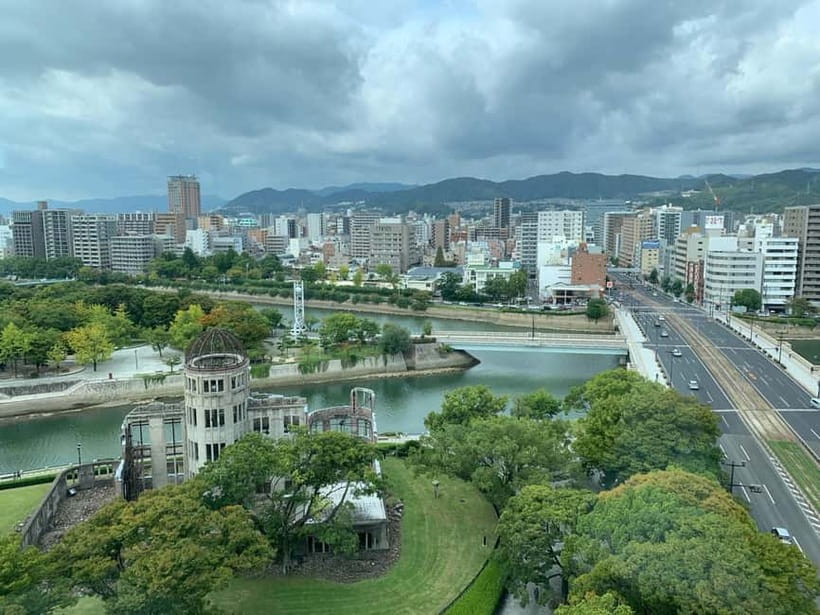
Next comes the Prayer Fountain, where you spend about ten minutes. The fountain gives the guide a chance to explain the symbolism of water and the memorial setting. You also get scenic views as you move through the park, though this is not a sightseeing walk built around city panoramas. The important views are the monuments and the spaces between them.
Cenotaph, Flame of Peace, and the park’s central message
The Hiroshima Victims Memorial Cenotaph receives about ten minutes. This is one of the central memorials in the park, and the guide explains its purpose within the wider remembrance of the atomic bomb victims.
The Flame of Peace follows for about five minutes. The short stop works well in a two-hour route, since you see the major symbols without lingering so long at one location that the later stops become rushed. I like this part of the sequence because the guide can connect the cenotaph, the flame, and the park’s message of peace before moving indoors.
The route is not simply a list of statues. The guides are expected to connect these sites with survivor testimonies and accounts of what happened on the day of the bombing. That connection is what you pay for. Without it, several of the monuments would be meaningful but difficult to place.
Fifteen minutes inside the National Peace Memorial Hall
Entrance to the Hiroshima National Peace Memorial Hall for Atomic Bomb Victims is included. You spend about fifteen minutes there, followed by a further stop with guided time and free time listed for roughly twenty minutes.
This indoor portion matters for two reasons. First, it gives you a change from walking outdoors, which is helpful in heat, rain, snow, or winter cold. Second, it adds a quieter setting for remembrance and testimony. The route is not limited to monuments viewed from the outside.
The free time is useful if you want to pause, look more closely, or ask a question that did not fit while the group was moving. Do not expect to examine every display in detail during this tour. The overall experience is an introduction and guided framework, not a full museum visit. If you want extended time with exhibits, return on your own after the walk.
Same city, a different century:
- Kyoto: Fushimi Inari, Kinkakuji, Bamboo Grove 1 Day Bus Tour
★ 4.8 · 4,316 reviews - World Heritage Shirakawa-go and Experience Tours from Kanazawa
★ 5.0 · 4,049 reviews - World Heritage Kyoto & Nara Uji Authentic Matcha Experience
★ 5.0 · 1,573 reviews - Kanazawa: World Heritage Shirakawa-go Morning Guided Tour
★ 4.9 · 988 reviews
Children’s Peace Monument and the story of young victims
The Children’s Peace Monument receives about ten minutes, including a photo stop and guided explanation. This is one of the park’s most recognizable places, and it brings attention to children affected by the bombing and its aftermath.
The stop is particularly useful for families, although the material remains serious. The guide’s job here is not simply to point out a famous landmark, but to explain the story and the meaning behind it. The supplied route description also emphasizes symbols that can be missed when you walk alone.
You will probably want a photograph, but give yourself time to listen before taking one. Hiroshima asks for a different pace from an ordinary city tour. The best moments come when the guide lets the group stop, think, and then continue.
Burial mound and Korean victims’ cenotaph
The Atomic Bomb Memorial Burial Mound is another ten-minute stop. It broadens the story beyond the most familiar names and structures. You learn about the people remembered there and how the city created places of remembrance for those who died.
The Korean Atomic Bomb Victims Cenotaph follows, with about five minutes for a guided visit. Including it is important because it shows that the bombing affected people from different backgrounds, not only residents identified with Hiroshima. The short stop may leave you wanting more detail, but it gives the memorial a place in the route.
This is one of the tour’s better features. Many first-time visitors naturally focus on the dome, cenotaph, and Children’s Monument. Smaller memorials help you see that the park records many different experiences. A guide can explain why each one matters, which is hard to learn from a quick walk past.
Peace Bell and the final route toward the dome
The Peace Bell gets about ten minutes, including time for photographs. Your guide explains its role as a symbol of peace and places it within the park’s wider message.
At this stage, the route has covered memorials to victims, children, survivors, and particular communities. That makes the next sections feel like a continuation rather than a collection of separate stops. The tour keeps returning to the same questions: What was Hiroshima before the attack? Why was it chosen? What did the bombing do to the city and its people? How did Hiroshima rebuild and turn its experience into a message for peace?
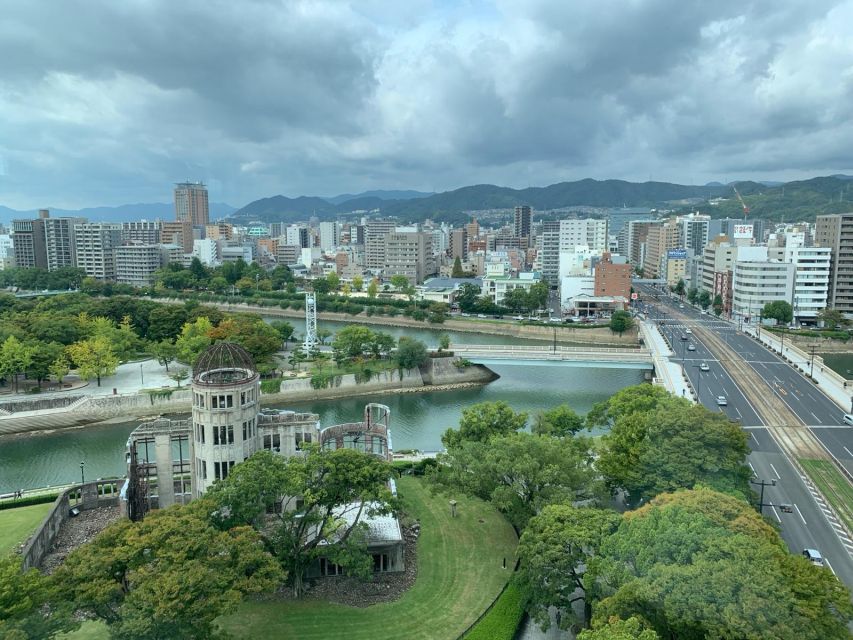
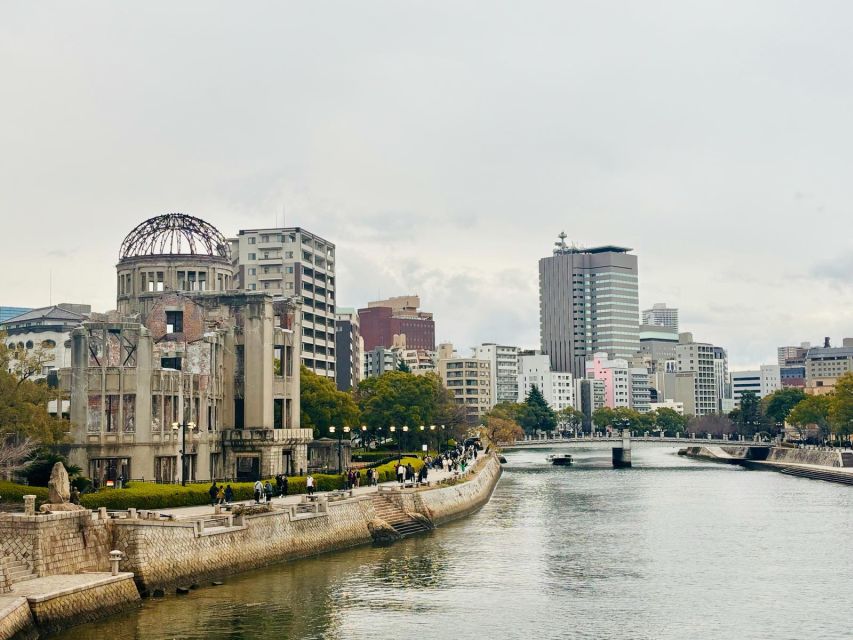
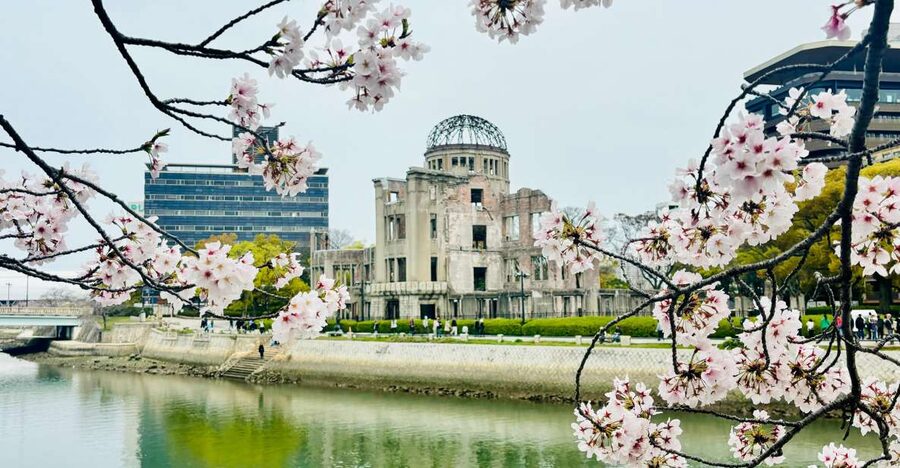
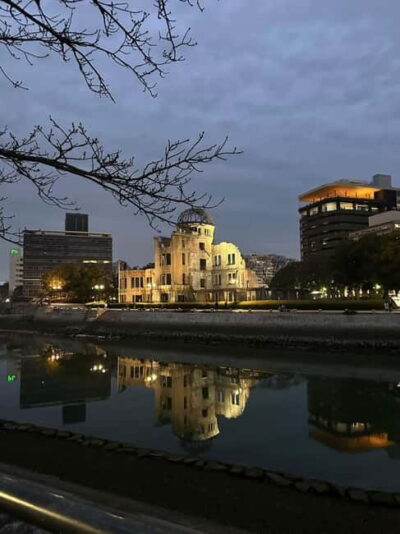
The route then reaches the Atomic Bomb Dome. You get about fifteen minutes for a guided visit, sightseeing, and photographs. The ruin is powerful partly because it is so visible. It gives you a physical point of reference for the blast and the destruction that followed.
The dome is also a good final major landmark because the guide has already explained the people and memorials connected to it. You are less likely to treat it as just an old building or a photographic stop. Its meaning comes from the stories you have heard across the park.
Finishing at the Hypocenter
The final stop is the Hypocenter, marked by the Hiroshima Atomic Bomb Hypocenter Monument. You spend about ten minutes there.
Ending at the exact point directly beneath the explosion gives the walk a clear finish. The dome is the image most people know, but the Hypocenter helps you grasp the event geographically. The tour moves from a broad understanding of Hiroshima’s memorial park to one precise location.
This conclusion may feel stark. That is appropriate. You are not finishing at a café or a broad city viewpoint, but at a place tied directly to the bombing. The guide can bring together the earlier discussion of August 6, the immediate destruction, long-term effects, survivor stories, and Hiroshima’s present message of peace.
The guides make or break the experience
The tour uses English-speaking guides from varied educational and cultural backgrounds, including study in tourism, anthropology, history, and peace studies. The supplied information names no single permanent guide, and bookings have been led by people including Cva, Moe, Tomas, Toma, Nisa, Aya, Sada, Ali, Han, Shiva, Syed, and Wajid.
That variety matters. One guide may focus more on academic context, while another may bring family stories or local connections. Cva is praised for asking questions, including everyone, and keeping a steady pace. Moe is praised for personal family accounts. Sada is noted for explaining Hiroshima’s culture, food, recovery, and daily life as well as the bombing.
Several bookings describe guides as fluent, friendly, careful, and open to questions. One guide continued effectively in heavy snow, which is a useful reminder that weather does not necessarily cancel the experience. The walk runs outdoors, so you should wear comfortable shoes and dress for the forecast.
A guide’s personal connection can be moving, but you should not expect every guide to share the same family story. The consistent benefit is the guided interpretation of the park and the chance to ask questions in English.
Value, group size, and comfort
At $35 per person, this is a good buy if you want a structured introduction to Hiroshima. You receive two hours with a live English guide and entry to the National Peace Memorial Hall. Visiting the park itself costs nothing, so the value comes from the route, explanation, survivor accounts, and help linking the monuments together.
The walk covers a lot in two hours. Stops range from five to fifteen minutes, with about twenty minutes allowing some free time. That gives you a broad overview, but not the chance to study every memorial at length.
Group size is the main variable. One booking described a group that was too large for comfort, even though the guide performed well. In a bigger group, it may be harder to hear, ask questions, or stand close to a monument. If you prefer a quiet private experience, this may not be the right format.
The activity is listed as wheelchair accessible. The route is within the Peace Memorial Park and includes the indoor memorial hall, though you should still confirm any specific mobility needs when booking. Comfortable shoes remain a good idea for everyone.
Free cancellation up to 24 hours ahead and reserve-now, pay-later booking make it easier to fit into a changing Japan itinerary. Starting times vary, so you need to check availability when choosing a date.
Who should book this Hiroshima walk?
I would choose this tour for a first visit to Hiroshima, especially if you want to understand the park before exploring the museum or surrounding city on your own. It also suits people who already know the basic story but want local interpretation, survivor accounts, and less familiar memorials.
Families can benefit from the clear route and interactive guiding, though parents should prepare children for difficult material. The walk also works well for visitors with limited time, since it covers major landmarks in two hours without requiring separate planning for each stop.
You may want something else if you prefer to read every exhibit slowly, avoid group tours, or spend a long time at one memorial. In that case, use this walk as an orientation and return independently for a longer visit.
Should you book it?
Yes, if you want a respectful, efficient introduction to Hiroshima’s Peace Memorial Park. The strongest reasons are the full sequence of memorials, the included National Peace Memorial Hall, the final stop at the Hypocenter, and guides who often bring unusual detail or family connections to the story.
Book with realistic expectations. This is an emotional group walk, not a private seminar, and a large group can reduce the personal feel. But for $35, two hours, and an English-speaking guide who can explain what you would likely miss alone, it is a sensible choice for most first-time visitors.
FAQ
How long does the Hiroshima history walking tour last?
The tour lasts two hours.
How much does the tour cost?
The listed price is $35 per person.
Is the tour conducted in English?
Yes. The live tour guide language is English.
Where does the tour begin?
Meet in front of the Gates of Peace, next to the Italian restaurant Mario.
Where does the tour finish?
The tour finishes at the Hiroshima Atomic Bomb Hypocenter Monument.
Is entry to the Peace Memorial Hall included?
Yes. Entrance to the Hiroshima National Peace Memorial Hall for Atomic Bomb Victims is included.
Which major landmarks are included?
The route includes the Gates of Peace, Mother and Baby in the Storm, Prayer Fountain, Hiroshima Victims Memorial Cenotaph, Flame of Peace, National Peace Memorial Hall, Children’s Peace Monument, Atomic Bomb Memorial Burial Mound, Korean Atomic Bomb Victims Cenotaph, Peace Bell, Atomic Bomb Dome, and Hypocenter.
Is the tour wheelchair accessible?
Yes, the activity is listed as wheelchair accessible.
What should I bring?
Bring comfortable shoes and clothing suitable for the weather.
Can I cancel for a full refund?
Yes. You can cancel up to 24 hours in advance for a full refund.
Can I reserve now and pay later?
Yes. The booking option allows you to reserve your place and pay later.
Just added around Japan
- Private sake pairing@ancient underground★ 5.0 · 27 reviews
- Tokyo: Asakusa & Sensoji ー Oldest Temple Walking Tour (2hrs)★ 5.0 · 213 reviews
- [30 minutes] Rickshaw tour around Asakusa [History, sightseeing, Tokyo Skytree]★ 5.0 · 38 reviews
- Tokyo: Edo Castle & East Garden of the Imperial Palace Tour★ 4.7 · 112 reviews
- Tokyo: Imperial Palace, the history of Japan (ENGLISH GUIDE)★ 5.0 · 77 reviews
- Tokyo: Customized Private Historical Guided Photoshoot Tour★ 5.0 · 25 reviews
- Osaka: Dark Side of Osaka Night Walking Tour★ 4.9 · 89 reviews
- Osaka: Osaka Castle & Historical Museum Guided Tour★ 4.8 · 28 reviews
Hiroshima History Tours, compared.
Hiroshima Historical Walking Tour – Why A-Bomb was Dropped
Read our review →
Hiroshima Peace (Heiwa) Walking Tour at World Heritage Sites
Read our review →
Miyajima Half-day Trip Historical Walking Tour
Read our review →
Hiroshima: Peace Walking Tour of World Heritage Sites
Read our review →
Hiroshima: Miyajima Half-day Historical Walking Tour
Read our review →
Hiroshima & Miyajima Island Private Tour: History & Culture
Read our review →Browse the lists this tour appears in