
Review · HIROSHIMA
Hiroshima: Peace Walking Tour of World Heritage Sites
Hiroshima’s most important sights are easy to visit on your own, but the meaning behind them is not always easy to grasp. This walking tour adds a local voice to the Peace Memorial Museum, the park, the Atomic Bomb Dome, and the Aorigi Tree, then gives you room to breathe at Orizuru Tower.
I like two things especially. First, guides such as Yuji, Yuki, Yasue, and Fumiko explain the past with care and answer questions rather than delivering a cold speech. Second, folding a paper crane and sharing lunch after the museum gives the day a human finish. The main drawback is the museum itself: it can be crowded, and the material is painful to absorb.
Key points at a glance
- Local stories matter: Guides from Hiroshima, including Yasue and Yuki, bring family memories and local perspective to a difficult subject.
- The museum is the emotional center: You receive a guided visit to the Peace Memorial Museum, where artifacts and personal stories require time and quiet.
- Orizuru Tower changes the pace: The observatory offers wide city views, while paper-crane making connects the tour to Hiroshima’s peace message.
- Lunch is included: The meal often features Hiroshima-style okonomiyaki, though food choices are limited for some diets.
- The walking route is packed: In roughly 270 minutes, you cover a shrine, museum, park, A-Bomb Dome, tree, and tower.
- Small groups help: Private and small-group options let you ask questions and move at a more personal pace.
Why a guide changes Hiroshima’s peace sites
A visit to Hiroshima can become a list of famous stops: museum, park, dome, photo, lunch. That approach misses the point. These places are linked by stories about ordinary people, local customs, survival, rebuilding, and the choices Hiroshima made after August 1945.
A good guide gives those connections shape. Yuji, for example, has been praised for his clear English and careful handling of emotional moments. Yasue is from Hiroshima and brings a personal sense of purpose to the city’s peace message. Yuki has shared local stories and answered questions with energy, while Fumiko has been noted for her warm manner and group photos.
The guides are not all the same, and that is part of the appeal. Some add family connections to the bombing. Others focus on city landmarks, shrine customs, or the revival of Hiroshima. You should expect an English-speaking local guide, but not a single fixed personality or identical speech each time.
The tour is also useful if you have only one day in Hiroshima. It gathers the main peace sights into one half-day route, so you spend less time finding your way between them and more time asking why each place matters.
More History Walking Tours in Japan
- Tokyo: Imperial Palace and Shogun Historical Walking Tour
★ 5.0 · 2,251 reviews - Kyoto Gion: 2-Hour Geisha Culture & History Walking Tour
★ 5.0 · 1,186 reviews - Tokyo Castle & Imperial PalaceーShogun Walking Tour
★ 4.7 · 1,068 reviews
Starting at Montbell and Shirakami-sha Shrine
The meeting point is in front of the Montbell store near Kamiya-cho-nishi Station, about a one-minute walk from the station. Look for the guide holding an orange sign marked Magical Trip Tour. Arrive early. You are expected at the meeting point 10 minutes before the start, and arriving more than 15 minutes late means you may be unable to join without a refund or rescheduling.
The first stop is Shirakami-sha Shrine, visited for about 25 minutes. This is a useful opening because it introduces Japanese religious customs before the tour moves into the weightier subject of the bombing. A guide may show you the proper way to enter and offer a blessing, as Kippei did for one participant.
That small lesson helps you read the city more carefully. Hiroshima is not only a place of wartime memory. It is also a living Japanese city, with shrines, shops, restaurants, and everyday rituals continuing beside places of mourning.
Inside the Peace Memorial Museum
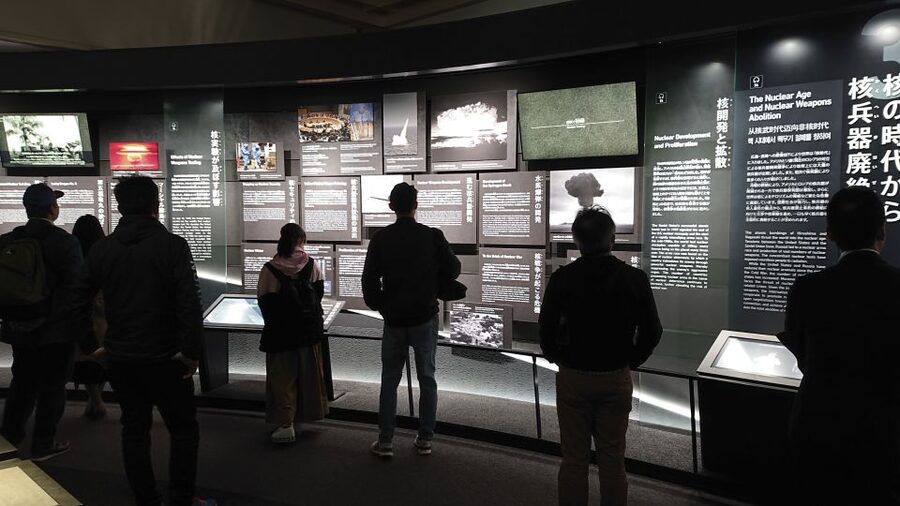
The Peace Memorial Museum is the heart of the tour. You spend about an hour here with the guide, examining the bombing through objects, photographs, written accounts, and personal stories.
This is not a light sightseeing stop. The museum presents the human cost of the atomic bomb in direct and often upsetting detail. You may need to pause, and you should not feel pressured to move quickly through material that affects you. Kippei was praised for allowing a visitor to proceed at a personal pace and take a break when needed.
Crowds can make this part harder. One visitor found the museum so busy that the group had to move faster than ideal. That is a real limitation, not a fault you can place on the guide. A guided visit gives you context and helps you notice important displays, but it cannot guarantee a quiet museum.
I value the guide’s presence here because the museum can leave you with many questions. A guide can explain a local reference, clarify what you are seeing, and connect a small artifact to the wider story of Hiroshima. Some guides also add family memories or a local view of the bombing and recovery. You should expect sensitivity rather than a debate-style presentation.
Give yourself emotional room on this day. The tour’s message is not only about destruction. It also shows how Hiroshima’s people carried on, rebuilt their city, and turned memory into a call for peace.
Walking through Peace Memorial Park
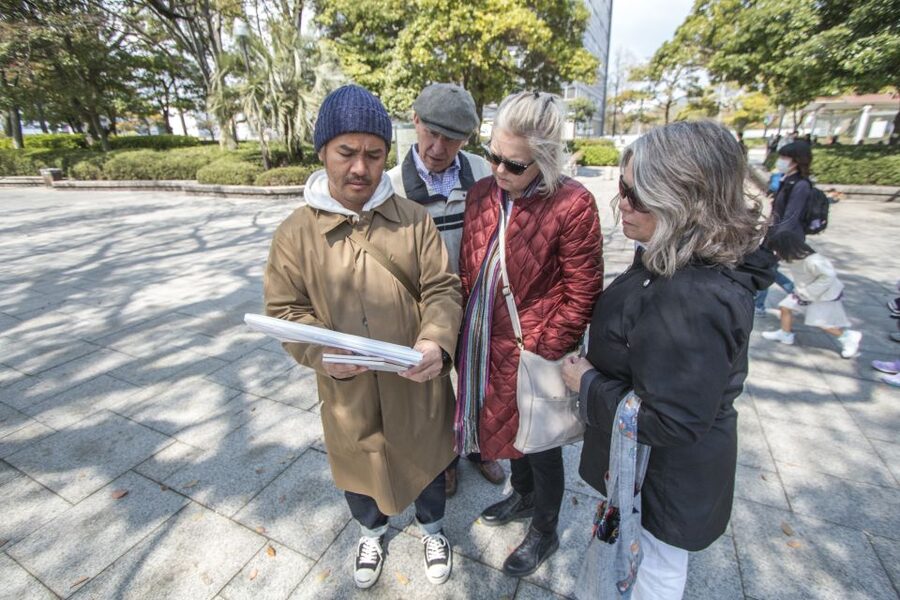
After or alongside the museum visit, the route continues through Hiroshima Peace Memorial Park. The park gives you space to think about what you have just seen indoors.
The guide points out important locations and explains how they relate to the bombing. This is where the museum’s objects become tied to actual places in the city. You are not simply looking at a display about Hiroshima. You are walking through the area where the city’s story unfolded.
The park is also where the tour’s pace can feel most balanced. The museum is concentrated and intense. Outside, you can listen, look around, and ask questions while moving between memorials. The supplied schedule allows about an hour for the park and a guided visit to the Atomic Bomb Dome, although the exact order may vary.
Comfortable shoes are sensible. This is a walking tour with several stops, and the full experience lasts about 270 minutes. It is not an extreme hike, but it is a substantial half-day on foot.
More UNESCO World Heritage Tours in Japan:
- World Heritage Shirakawa-go and Experience Tours from Kanazawa
★ 5.0 · 4,049 reviews - World Heritage Kyoto & Nara Uji Authentic Matcha Experience
★ 5.0 · 1,573 reviews - Kanazawa: World Heritage Shirakawa-go Morning Guided Tour
★ 4.9 · 988 reviews - Hiroshima Peace (Heiwa) Walking Tour at World Heritage Sites
★ 5.0 · 872 reviews
The Aorigi Tree and the Atomic Bomb Dome
The Aorigi Tree offers one of the tour’s smaller but more hopeful moments. It is presented as a symbol of life and hope after the atomic bomb. Details like this help you understand that Hiroshima’s memory is not limited to the moment of destruction. The city also remembers the first signs of survival.
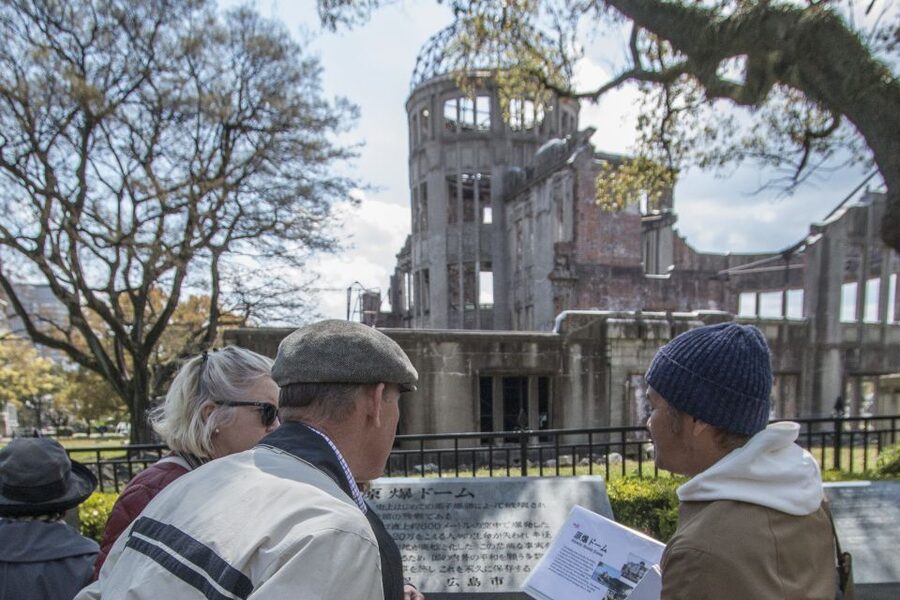
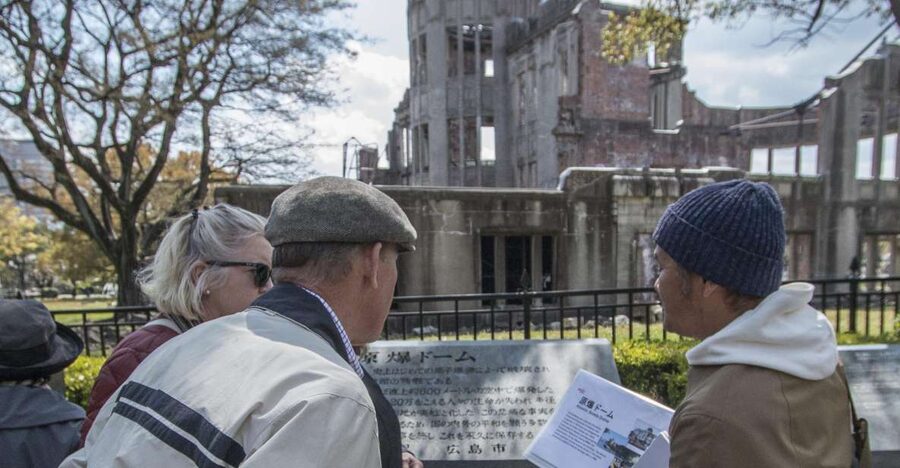
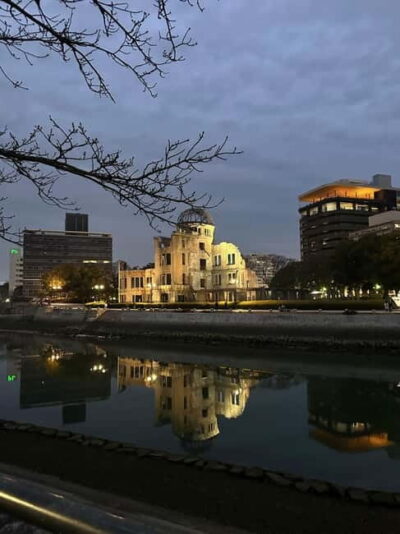
The Atomic Bomb Dome is the clearest visual marker of the 1945 bombing. Its damaged structure remains beside the river as a UNESCO World Heritage Site. Seeing it with a guide gives you more than a familiar photograph. You learn how the building fits into the surrounding park and why preserving it matters.
This stop can feel quiet and sobering. The dome is not a restored monument designed to look beautiful. Its power comes from the fact that it remains visibly damaged while the city around it has been rebuilt.
Some schedules place the Dome before Orizuru Tower, while the activity description presents the tower and lunch as the later portion of the day. The route includes both, along with the Aorigi Tree. Ask your guide about the exact order when you meet.
Orizuru Tower and the paper-crane activity

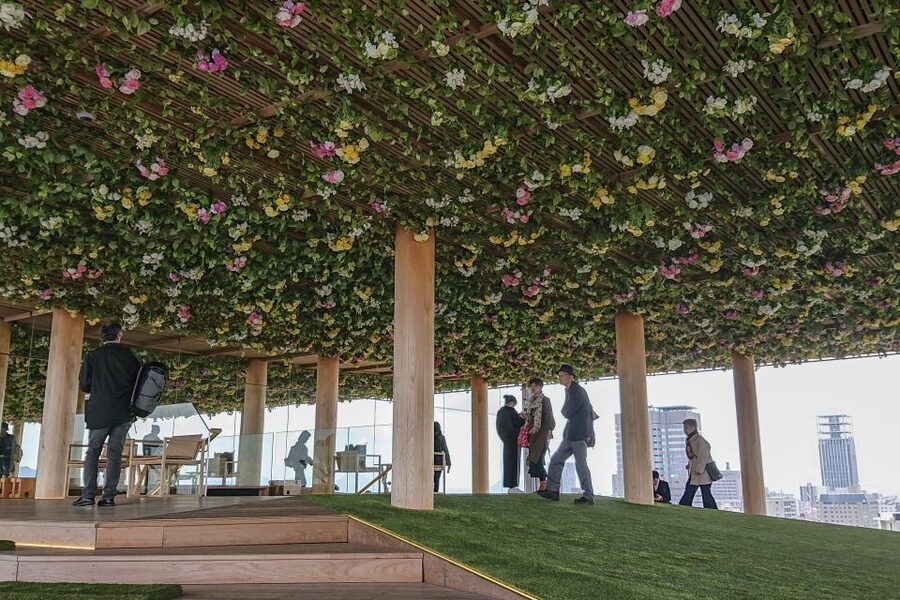
Orizuru Tower is the tour’s change of mood. After the museum and memorial sites, you go up to the observatory for wide views over Hiroshima. The breeze and open outlook give you a physical break from the enclosed museum and the heavy subject matter.
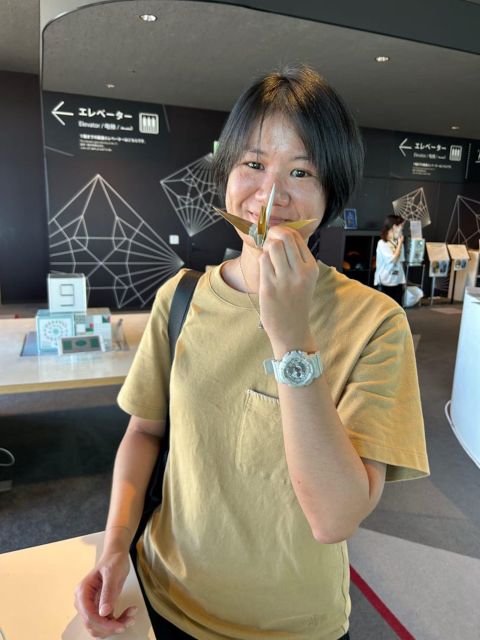
The tower also connects the day to the orizuru, or folded paper crane. The crane is a symbol of peace, and you learn how to make one and make a wish for peace. This is not just a craft added to fill time. It gives you a simple action linked to the message you have been hearing all day.
One especially memorable detail is the chance to watch a paper crane spiral down to join thousands of others in the building’s glass wall. The activity can feel personal without becoming theatrical. Some guides also write visitors’ names in Japanese, adding a small local touch.
Your Orizuru Tower entry may let you return for sunset, which is worth checking with the guide or tower staff. That possibility adds value to the admission, especially if you have time later in the day.
Lunch and the value of the $92 price
Lunch is included in the $92 price, and it usually gives you a chance to try Hiroshima’s famous okonomiyaki. The meal brings the group together after several serious hours and lets you talk with the guide in a less formal setting.
The included food is one reason the price feels reasonable. You are paying for admission to the Peace Memorial Museum and Orizuru Tower, a local guide for about four and a half hours, lunch, and tour photos. You also receive the benefit of a planned route through several major sites.
Still, value depends on how you like to travel. If you prefer to move alone, read everything at your own speed, and choose your own restaurant, you can visit much of this area independently. The tour earns its cost through explanation, organization, and local conversation rather than transport or luxury.
Food restrictions need careful attention. Vegetarian choices are limited, and gluten intolerance is listed as unsuitable for this activity. Tell the operator about allergies or dietary needs at least one day ahead. Even then, allergy-free meals and all dietary requests cannot be guaranteed because the food is prepared in kitchens not operated by MagicalTrip.
The meal is commonly described as tasty, but it may not offer a wide choice of okonomiyaki styles. If you have already eaten the dish elsewhere or want a particular version, keep your expectations modest.
Timing, group size, and the right kind of visitor
The tour lasts 270 minutes, though it is also described as a five-hour tour. Plan on roughly half a day and avoid scheduling a train, ferry, or major attraction immediately afterward. The museum’s crowds and the group’s pace can affect the exact finish time.
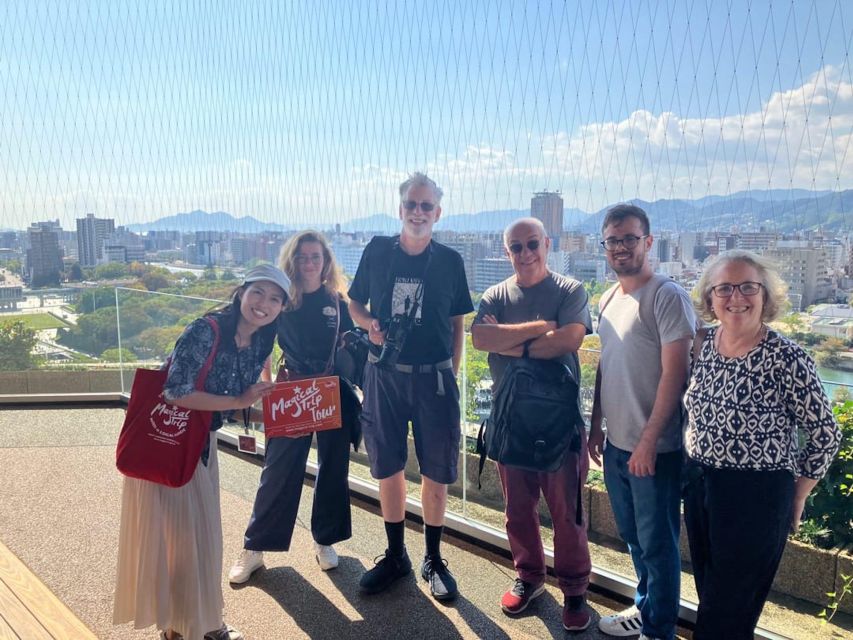
Private and small-group options are available. A small group is useful here because the subject invites questions and personal discussion. One group of six was considered a comfortable size, and several guides have been praised for giving each person attention.
I would choose this tour if you want structure, context, and a local voice. It suits first-time visitors, families with older children or teenagers, and anyone making a short stop in Hiroshima. One family with three teenage sons found it among the highlights of a 10-day Japan trip, which suggests the tour can hold young people’s attention when the guide presents the subject clearly.
The experience may be less suitable if you dislike guided pacing or find museums difficult when crowded. It is also not a good fit for anyone with gluten intolerance, and vegetarians should confirm what lunch can include before booking.
The emotional weight deserves honest notice. You will see painful material. The tour aims for hope, but it does not soften the suffering to make the visit easy. That balance is a strength for many people, though you should leave space afterward to rest or think.
What makes this tour worth booking
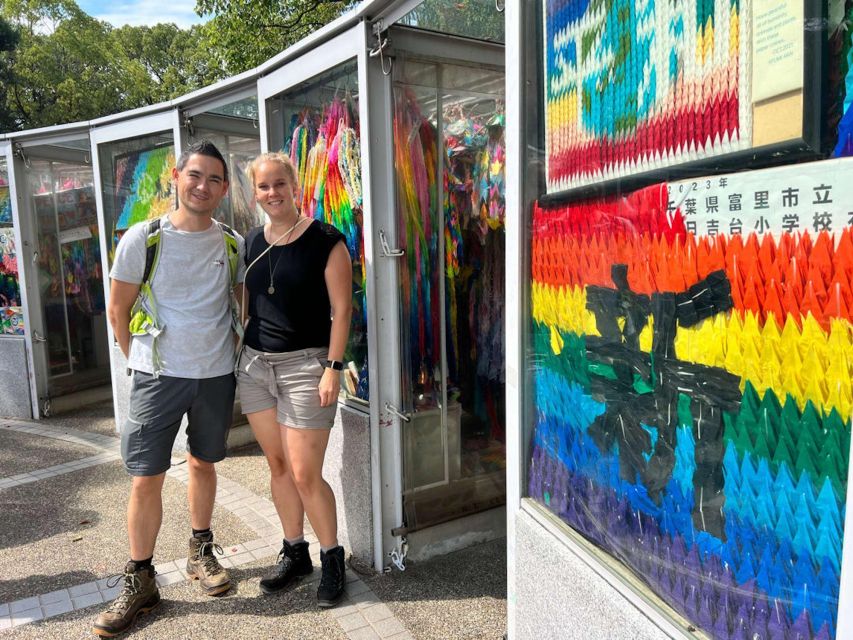
The best part of this experience is not any single admission ticket. It is the movement from shrine, to museum, to park, to surviving tree, to damaged dome, and finally to a paper crane and a meal.
I like the way the route lets you see Hiroshima as both a place of memory and a functioning city. Guides such as Naoya, Aki, Eri, and Kippei have been praised for adding facts, answering questions, taking photos, and noticing when someone needs a pause. Those personal touches matter on a serious day.
The tour also avoids ending at the darkest point. Orizuru Tower, the crane activity, and lunch do not erase what you have seen. They give you a way to carry it forward, which fits Hiroshima’s message of peace and renewal.
Book it if you want a guided introduction to Hiroshima’s World Heritage and peace sites, especially when your time is limited. Skip it if you want a fully independent visit, need strict dietary control, or prefer to spend several hours studying the museum without a group schedule.
FAQ
How long does the Hiroshima Peace Walking Tour last?
The activity lasts 270 minutes, or about four and a half hours. It is also described as a five-hour tour, so allow roughly half a day.
Where is the meeting point?
Meet in front of the Montbell store near Kamiya-cho-nishi Station. It is about a one-minute walk from the station.
How do I find the guide?
The guide will hold an orange sign marked Magical Trip Tour. Arrive 10 minutes before the scheduled start.
Which language is the tour offered in?
The tour is offered in English with a live guide.
What admission fees are included?
Entry to the Hiroshima Peace Memorial Museum and Orizuru Tower is included. Lunch, tour photos, and the local guide are also included.
Is lunch suitable for vegetarians or people with allergies?
Vegetarian options are limited. Dietary requests or allergies must be reported at least one day before the tour, but allergy-free meals and all dietary restrictions cannot be guaranteed. The activity is not suitable for people with gluten intolerance.
Can I cancel or pay later?
You can cancel up to 24 hours in advance for a full refund. A reserve-now, pay-later option is available, so you do not have to pay at the time of booking.
Just added around Japan
- Private sake pairing@ancient underground★ 5.0 · 27 reviews
- Tokyo: Asakusa & Sensoji ー Oldest Temple Walking Tour (2hrs)★ 5.0 · 213 reviews
- [30 minutes] Rickshaw tour around Asakusa [History, sightseeing, Tokyo Skytree]★ 5.0 · 38 reviews
- Tokyo: Edo Castle & East Garden of the Imperial Palace Tour★ 4.7 · 112 reviews
- Tokyo: Imperial Palace, the history of Japan (ENGLISH GUIDE)★ 5.0 · 77 reviews
- Tokyo: Customized Private Historical Guided Photoshoot Tour★ 5.0 · 25 reviews
- Osaka: Dark Side of Osaka Night Walking Tour★ 4.9 · 89 reviews
- Osaka: Osaka Castle & Historical Museum Guided Tour★ 4.8 · 28 reviews
Hiroshima History Tours, compared.
Hiroshima Historical Walking Tour – Why A-Bomb was Dropped
Read our review →
Hiroshima Peace (Heiwa) Walking Tour at World Heritage Sites
Read our review →
Miyajima Half-day Trip Historical Walking Tour
Read our review →
Hiroshima: History of Hiroshima Group Walking Tour
Read our review →
Hiroshima: Miyajima Half-day Historical Walking Tour
Read our review →
Hiroshima & Miyajima Island Private Tour: History & Culture
Read our review →Browse the lists this tour appears in