
Review · KYOTO
Kyoto: Private 2.5 Hour Historical Walking Tour
Kyoto’s religious sites make far more sense when someone explains what you are seeing. This private walk links Yasaka Shrine, Entokuin, Yasaka Kōshin-dō, and Kiyomizu Temple in one tidy route, with room for questions instead of a rushed checklist.
I like the calm stop at Entokuin, where dry gardens and traditional rooms give you a quieter look at Kyoto. I also like the personal teaching style reported by many guests, especially the hand-drawn maps, pictures, and notes used by guides such as Hisako. The main consideration is cost: temple admission is extra, and the route includes hills, steps, and crowded lanes.
Key points at a glance
- A private route for up to five people: At $80 per group, the price is especially fair when shared by a family or small party.
- A useful first look at Kyoto customs: Your guide explains how to worship at a Shinto shrine before you visit the Buddhist temples.
- Entokuin is the quiet pause: Its dry gardens, sliding-door paintings, and traditional rooms offer a break from Kyoto’s busiest sights.
- The walk ends at Kiyomizu-dera: You get the wooden stage, mountain views, Koyasu Pagoda, sacred water, and Jishu Shrine.
- Visual teaching is a real strength: Guides have used their own drawings, maps, and illustrated folders to explain difficult historical subjects.
- Plan for extra costs and walking: Transportation, food, drinks, temple admission, and insurance are not included.
Why this short Kyoto walk works
Kyoto can be hard to read at street level. A red gate, a stone basin, a wooden hall, and a line of worshippers may all look beautiful, but you may not know what each action means or how Shinto and Buddhism fit together. This tour gives you that basic framework while you walk through one of the city’s most rewarding old districts.
The route is private, so you can ask about Japanese history, religion, architecture, or modern life without waiting for a group to catch up. Several guides have been praised for answering questions patiently and adapting the pace for photographs, short rests, and family needs. One guide even switched between Japanese and English to help children understand.
The walk is listed in different places as two hours and 2.5 hours. The detailed schedule adds up to about two hours and five minutes of walking and visits, while the title describes a 2.5-hour experience. I would reserve roughly 2.5 hours so you do not feel pressed, particularly at Kiyomizu-dera.
More History Walking Tours in Japan
- Tokyo: Imperial Palace and Shogun Historical Walking Tour
★ 5.0 · 2,251 reviews - Kyoto Gion: 2-Hour Geisha Culture & History Walking Tour
★ 5.0 · 1,186 reviews - Tokyo Castle & Imperial PalaceーShogun Walking Tour
★ 4.7 · 1,068 reviews
Meeting at Yasaka Shrine’s red gate
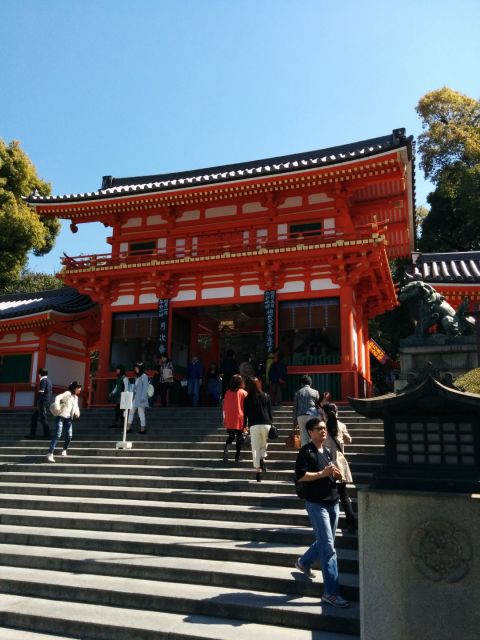
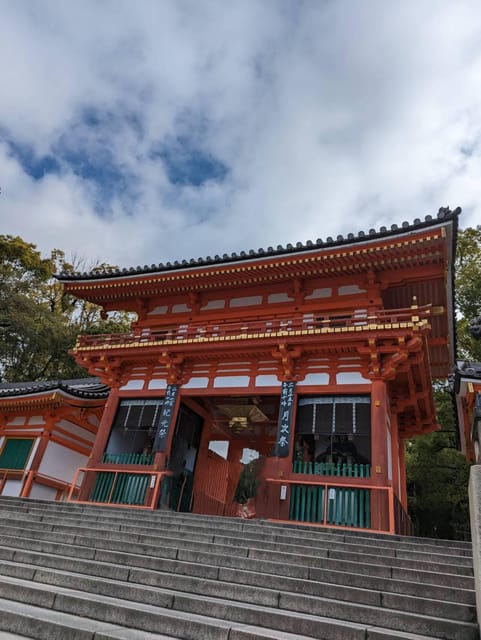
The tour begins at the west gate, also called the Nishiromon Gate, of Yasaka Shrine. This is the large red gate at the end of the approach from central Kyoto. If you arrive by train, use Gion-Shijo Station on the Keihan Line or Kyoto-Kawaramachi Station on the Hankyu Line, then walk east along Shijo Street toward the shrine.
By bus, get off at the Gion stop. Stone steps lead up toward the red gate, where you meet the guide. Arrive with comfortable shoes and a little spare time, since the area can be busy and the meeting point is on foot from the stations.
Your guide begins with a map of Kyoto and a short explanation of the city’s place in Japanese history. This opening is useful because the tour covers several centuries and touches on emperors, shoguns, samurai, religious traditions, and Kyoto’s role as the imperial capital. Guides including Hisako and Hiroko have used folders, drawings, and simple diagrams to make those subjects easier to follow.
Yasaka Shrine and the basics of worship
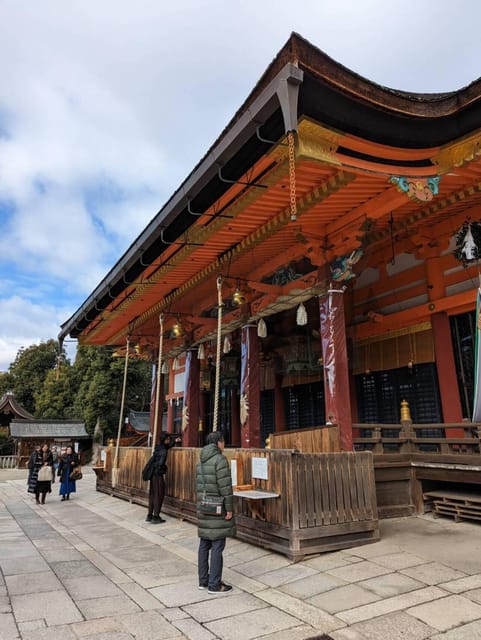
Yasaka Shrine is a good place to begin because your guide can explain Shinto practice before you encounter several Buddhist temples. You will learn how to approach a shrine and how to worship there, rather than copying other people without knowing what you are doing.
The explanation also gives you a way to recognize the difference between a Shinto shrine and a Buddhist temple during the rest of your Japan trip. That is one of the tour’s practical strengths. You are not just being told dates and names. You are given a set of clues you can use later.
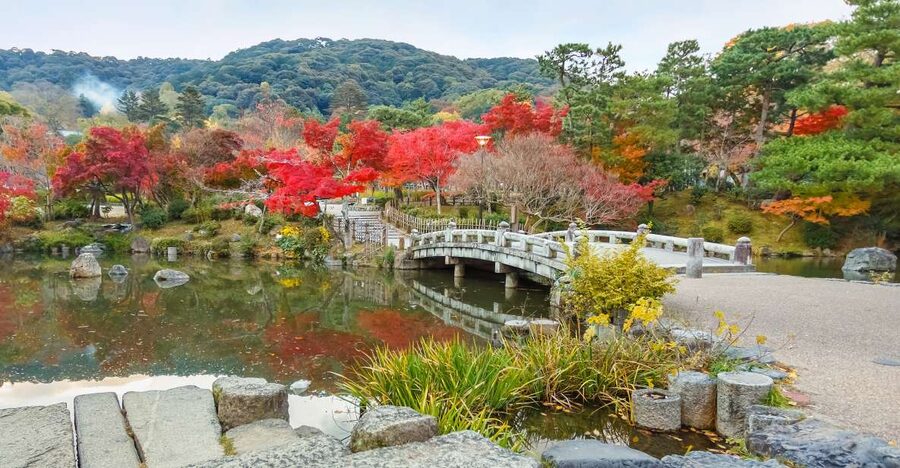
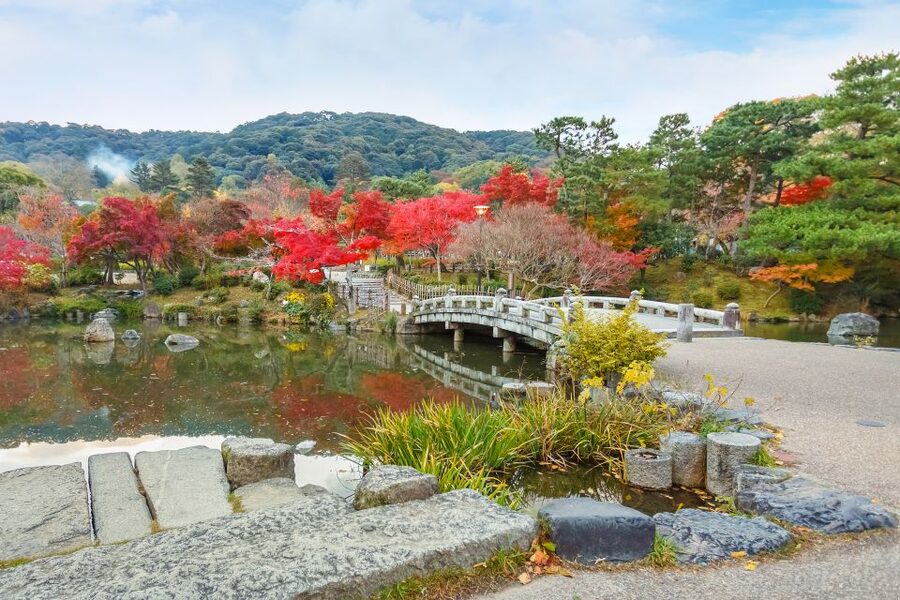
From Yasaka Shrine, the route passes through Maruyama Park. The park links the shrine area with the older lanes of eastern Kyoto, and the walk helps shift the mood from a major public shrine to smaller temples and traditional streets.
Nene-no-michi and the story behind Entokuin
The next section follows Nene-no-michi, a well-known street named for Nene, the wife of Toyotomi Hideyoshi. Hideyoshi was one of Japan’s major political leaders in the late 16th century, and Nene is closely associated with Entokuin.
The guide’s historical context matters here. Without it, Nene-no-michi is simply a handsome stone-paved street. With it, the route connects the lane, the temple, and the political world of medieval and early modern Japan.
Entokuin is the first substantial visit, with about 40 minutes scheduled. It is a Zen temple with dry gardens, traditional Japanese rooms, and paintings on sliding doors. This is where I would expect the tour to slow down in the best way.
Dry gardens do not use ponds or streams to create their effect. Instead, carefully placed rocks, gravel, and plants suggest natural scenes. Your guide can help you notice the arrangement rather than treating the garden as a pretty backdrop for photographs.
The temple rooms are another reason to allow time here. You can see the proportions and simple materials of traditional Japanese interiors, as well as the artwork on the sliding doors. A number of guests have particularly enjoyed this quiet temple stop, and one account also mentions a calligraphy experience. Since activities can vary, confirm whether calligraphy is part of your specific departure if that matters to you.
Entokuin is likely to appeal most to people who want some quiet between famous sights. It is not the largest temple on the route, and the admission fee is not included, but the smaller scale makes it easier to focus on design, religious practice, and the guide’s explanation.
More Private History Tours in Japan
- From Tokyo: Nikko World Heritage Site Private Full-Day Trip
★ 4.9 · 243 reviews - 2.5 Hour Private History and Culture Tour in Himeji Castle
★ 5.0 · 185 reviews - Tokyo: Nikko World Heritage Private Day Trip Hotel Pick-up
★ 4.8 · 145 reviews - From Tokyo: Nikko World Heritage Sight Full Day Private Tour
★ 4.9 · 127 reviews
Kōshin-dō and the red-and-pink street view
After Entokuin, you walk for about 10 minutes to Yasaka Kōshin-dō Temple. The visit is scheduled for 15 minutes. Kōshin-dō is associated with the Kōshin faith and is easy to recognize for its colorful hanging balls, which create a strong contrast with the surrounding traditional streets.
The stop is brief, so think of it as a focused look rather than a long temple visit. Your guide can explain the religious ideas connected with the site and point out details you might walk past alone.
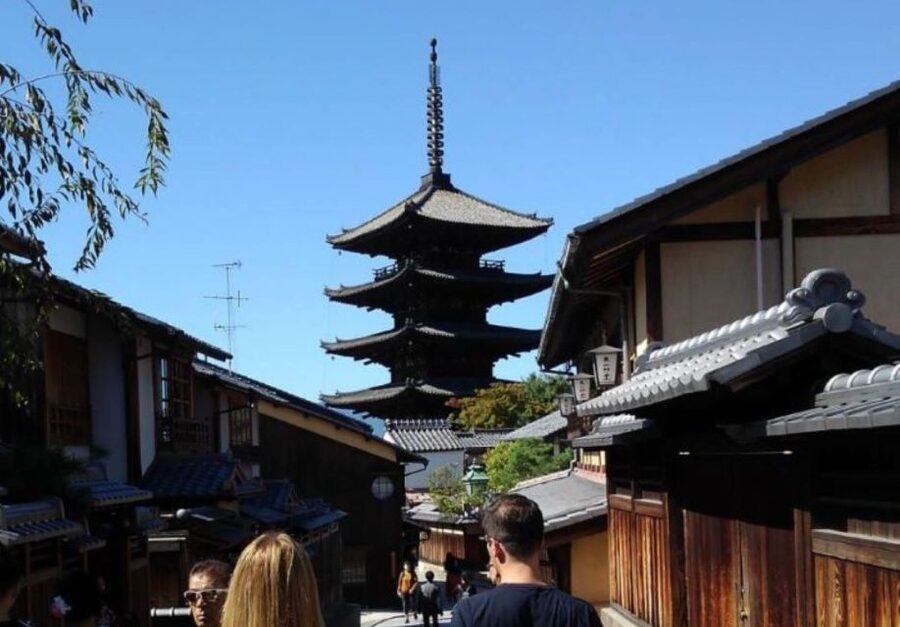
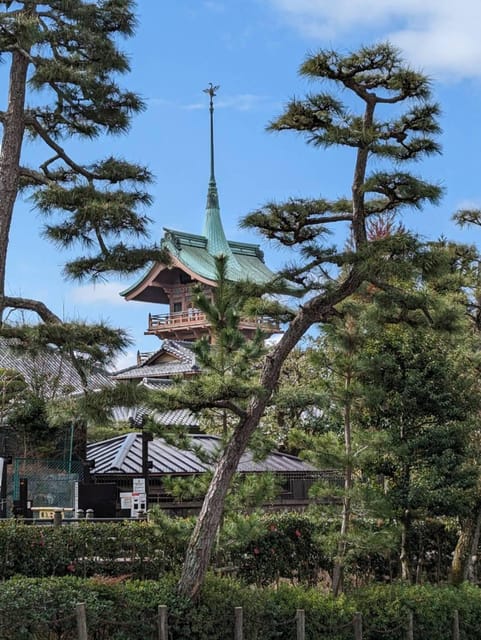
The next 10-minute stop is a viewpoint near Yasaka-no-to, the five-storied pagoda commonly called Yasaka-no-to Pagoda. You see the pagoda from outside, and the nearby street is a popular photo location. This is one of the route’s strongest visual moments, especially if you want a classic Kyoto scene with the pagoda rising above the old neighborhood.
The limitation is equally clear: this is an exterior view, not a visit inside the pagoda. If you are looking for a long architectural tour, this stop will feel short. If you want a memorable photograph and a useful explanation of the district, it earns its place.
The final climb to Kiyomizu-dera
The longest walk of the route comes before Kiyomizu-dera, with about 15 minutes on foot. The approach is through one of Kyoto’s busiest sightseeing areas, and the streets can feel crowded. Wear shoes with good support, and be ready for slopes and steps.
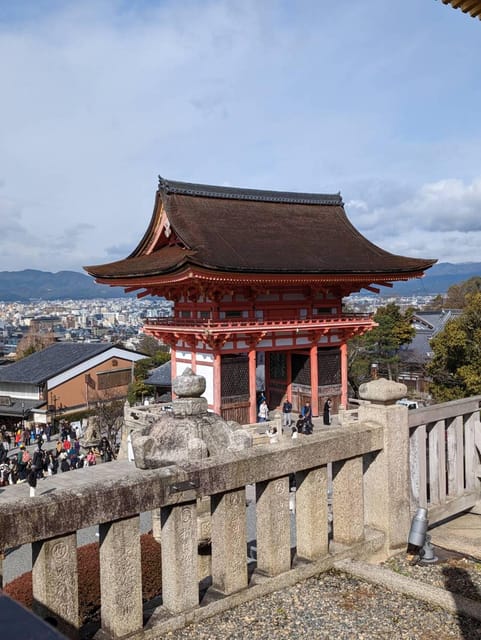
Kiyomizu-dera is the tour’s main finish. The temple was originally built in the 8th century and is dedicated to Kannon Bodhisattva. Your guide points out Buddhist statues, explains the site’s religious role, and helps you see more than the famous wooden platform.
The main hall’s stage is built without nails, a detail worth pausing over because it shows the skill of traditional Japanese timber construction. From the stage, you can look across the surrounding scenery toward the three-storied Koyasu Pagoda.
Koyasu means easy birth, and women visit the pagoda to pray for a safe delivery. This small detail is a good example of how the tour connects architecture to living religious practice. You are not only looking at a pagoda. You are learning why people come to it.
Kiyomizu means pure water. A stream runs down from the mountain behind the temple and has not dried up, according to the supplied description. Many people line up to drink the water, so your guide can explain the custom and the meaning attached to the temple’s name.
You can also see an iron stick and iron clogs donated to the temple. The iron stick is very heavy, and visitors may try to lift it. It is a simple, physical moment after so much history and symbolism, and it gives the visit a bit of fun.
The tour ends after you leave the main hall. Before saying goodbye, the guide explains Jishu Shrine, associated with matchmaking. This final note gives you one more look at the way religious sites in Kyoto collect different customs, hopes, and traditions in one precinct.
The guide makes the difference
The strongest part of this experience is the guide, not transportation or special access. The route itself is easy to find and can be walked independently, but interpretation changes what you notice.
Hisako is praised for clear explanations of Japanese religion, imperial history, nobility, shogunates, philosophy, language, and aesthetics. Other departures have been led by Hiroko, Hiroshita, and Takayuki Ishii. Since guide assignment can vary, do not assume one particular person will lead your booking unless the provider confirms it.
The teaching materials are unusually personal. Guides have brought hand-drawn maps, watercolor pictures, pencil sketches, and folders with bullet points. These tools are useful when dates and religious terms begin to blur together. A simple drawing of a pagoda or a map of Kyoto can make the explanation stick.
The tour also leaves space for conversation. Guides have answered questions about present-day Japan, gender differences, other destinations such as Kanazawa, and customs you may encounter later. That makes this a good choice if you are curious and want a discussion rather than a fixed speech.
One small caution: the quality of the experience depends heavily on your guide and your own interest. A few people have wanted more proactive explanation. If you prefer a fast-moving tour with constant narration and little discussion, this quieter, question-led style may feel less energetic.
What the $80 price really buys you
The price is $80 per private group of up to five people. For five people, that works out to $16 each before admission fees. For two people, it is $40 each, which is still reasonable if you value private attention, but it is not the cheapest way to see these sites.
The price includes the guide only. You pay separately for transportation to the meeting point, food, drinks, temple admission, and insurance. One person needed a taxi during a tour, so keep some room in your budget for transport if your group has limited walking ability or is running late.
The value is best when you book early in your Kyoto stay. The explanations about shrine and temple customs will help you understand later visits, and the guide can suggest other places to see. I would choose this tour at the start of a Kyoto visit rather than on the last morning, when you have less time to use what you learn.
Free cancellation is available up to 24 hours before the tour for a full refund, and you can reserve now and pay later. Starting times depend on availability.
Who should book this walk
I would recommend it to first-time Kyoto visitors who want cultural context without committing to a full-day tour. It also suits couples, families, and small groups who prefer a private conversation to a large group with headphones.
History and religion fans will get the most from it. The tour goes beyond temple names and photo stops, and the guides can discuss Shinto, Buddhism, political history, architecture, and daily customs.
Families should consider the age and attention span of their children. The material can be difficult for younger kids, although a guide may adjust the language and pace. The walking distance is manageable for many people, but the route includes stone streets, steps, and the busy approach to Kiyomizu-dera.
You may want to skip it if you have already spent several days studying Kyoto’s major temples and only want independent photography time. You should also avoid booking it if you dislike paying separate admission fees or prefer transportation between sights.
Should you book it?
Book this private walk if you want Kyoto’s temples and shrines to become understandable, not just attractive. The combination of Entokuin’s quiet Zen rooms, Yasaka-no-to’s pagoda view, and Kiyomizu-dera’s famous stage gives you strong sights, while the guide supplies the meaning behind them.
For the best value, bring four or five people, wear comfortable shoes, and schedule it near the beginning of your stay. If you are genuinely curious about Japan and willing to ask questions, the guide’s drawings and personal explanations can make this modestly priced walk one of the most useful introductions to Kyoto.
FAQ
Where does the tour begin?
It begins at the west gate, also called the red gate or Nishiromon Gate, of Yasaka Shrine.
Where does the tour finish?
The tour finishes at Kiyomizu-dera, after the visit to the main hall and an explanation of Jishu Shrine.
How long does the walking tour last?
The activity information gives a duration of two hours, while the tour title describes 2.5 hours. The detailed schedule totals about two hours and five minutes, so allow about 2.5 hours.
Is the tour private?
Yes. It is a private group tour for up to five people.
What language is the tour in?
The live guide speaks English.
Are temple admission fees included?
No. Admission fees to the temples are not included, and you also pay separately for transportation, meals, and drinks.
What should I bring?
Bring comfortable shoes. The route is on foot and includes streets, slopes, and steps.
Just added around Japan
- Private sake pairing@ancient underground★ 5.0 · 27 reviews
- Tokyo: Asakusa & Sensoji ー Oldest Temple Walking Tour (2hrs)★ 5.0 · 213 reviews
- [30 minutes] Rickshaw tour around Asakusa [History, sightseeing, Tokyo Skytree]★ 5.0 · 38 reviews
- Tokyo: Edo Castle & East Garden of the Imperial Palace Tour★ 4.7 · 112 reviews
- Tokyo: Imperial Palace, the history of Japan (ENGLISH GUIDE)★ 5.0 · 77 reviews
- Tokyo: Customized Private Historical Guided Photoshoot Tour★ 5.0 · 25 reviews
- Osaka: Dark Side of Osaka Night Walking Tour★ 4.9 · 89 reviews
- Osaka: Osaka Castle & Historical Museum Guided Tour★ 4.8 · 28 reviews
Kyoto History Tours, compared.
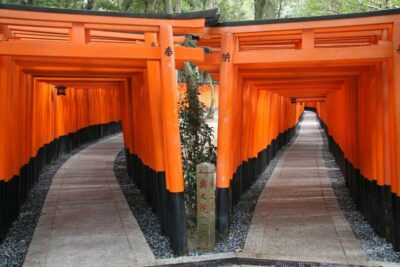
Kyoto: Fushimi Inari, Kinkakuji, Bamboo Grove 1 Day Bus Tour
Read our review →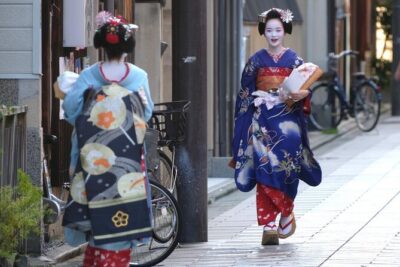
Kyoto Gion: 2-Hour Geisha Culture & History Walking Tour
Read our review →
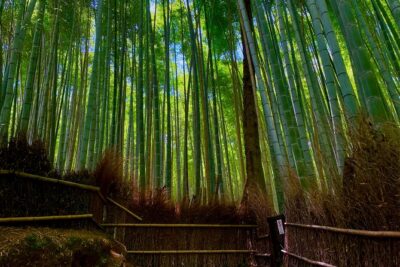
Kyoto Early Bird English Tour: Fushimi-Inari and Arashiyama
Read our review →
Kyoto: Nara & Traditional Matcha Experience Bus Tour
Read our review →
Browse the lists this tour appears in