
Review · KYOTO
Kyoto: Gion Hidden Gems & Geisha Culture Tour
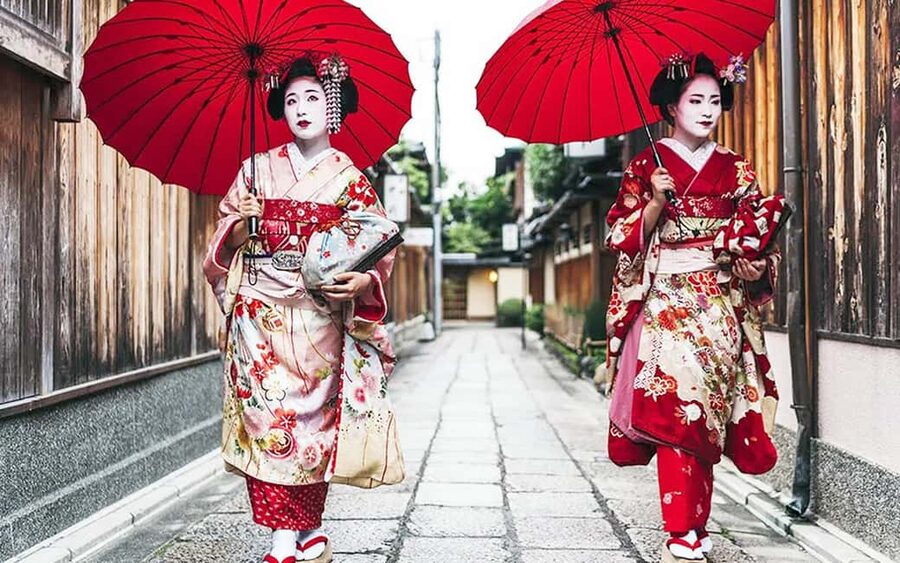
Gion’s best moments often come after the main crowds thin out. This two-hour walk takes you from the willow-lined Shirakawa Canal through shrines, old wooden houses, and narrow lanes before ending on Hanamikoji Street, where you may see a geisha heading to work. I like the evening setting and the way the route mixes famous sights with quieter corners. Guides such as Uta, Dan, Mai, and Takumi are praised for clear explanations and useful restaurant tips. The main drawback is pace: you cover a lot in two hours, so anyone with limited mobility may find it demanding.
I also like the price. At $23 per person, you are paying mainly for a local guide who explains what you are seeing, not for admission-heavy sightseeing. The walk includes a 1,000-year-old shrine, Edo-period townhouses, Yasaka Shrine, Ninenzaka, Hōkan-ji, and the geisha district. You should not book it expecting a guaranteed geisha sighting, though. That part depends on timing and luck.
Key points to know
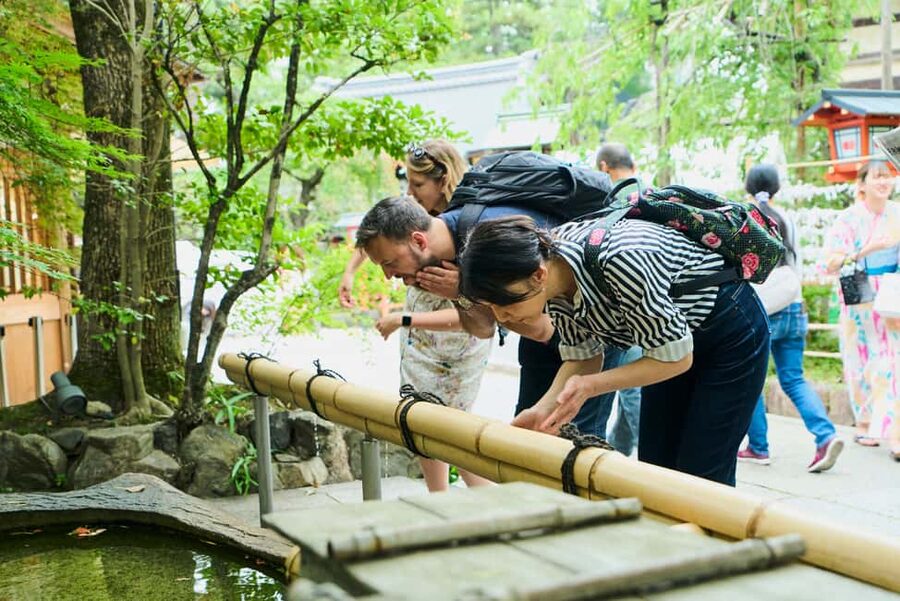
- Evening Gion setting: Later departures can be calmer and give the lantern-lit lanes a more atmospheric feel.
- A brisk two-hour route: You walk between Gion Shirakawa, shrines, Ninenzaka, Hōkan-ji, Yasui Kompira-Gu, and Hanamikoji Street.
- Geisha culture explained with care: You learn about geiko and maiko training, dances, kimonos, and elaborate hairstyles.
- Useful local advice: Guides have shared restaurant recommendations and suggestions for what to eat after the walk.
- A strong first-day introduction: The route helps you understand Kyoto’s old districts before you explore them alone.
- Not designed for every walker: It is unsuitable for wheelchair users and people with mobility impairments.
Why this Gion walk works best at night
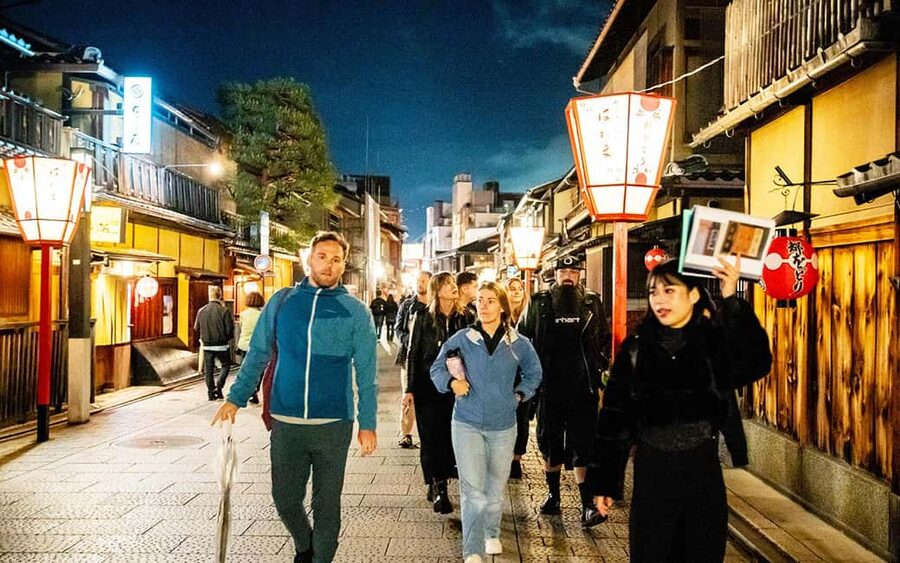
Gion changes as the day winds down. The stone paths and wooden facades remain, but the daytime crush can ease, especially on later departures. You may still encounter crowds around popular sights, yet the quieter lanes feel more suited to a walking tour than to a quick photo stop.
The tour begins near Shijo Ohashi, a convenient place to meet before entering the older part of Gion. From there, your guide leads you toward Gion Shirakawa, where the canal, willow trees, tea houses, and stone paving create one of Kyoto’s most recognizable scenes.
I would choose an evening time if your schedule allows. Several people have found the late setting calmer, and the walk can flow naturally into dinner afterward. Just remember that darkness does not guarantee solitude, and rain can affect the mood and photography.
More Local Culture and Traditions Tours in Japan
- Kyoto Gion: 2-Hour Geisha Culture & History Walking Tour
★ 5.0 · 1,186 reviews - Nara: Half-Day UNESCO Heritage & Local Culture Walking Tour
★ 4.8 · 250 reviews - Tokyo: The Best of Izakaya in Shinjuku Food & Cultural Tour
★ 4.9 · 221 reviews
Gion Shirakawa and the canal-side opening
Gion Shirakawa gives you an immediate sense of the district’s character. The canal runs beside traditional buildings, and the willow trees soften the view. It is a photogenic beginning, but a guide adds something a camera cannot: context about why this small stretch matters within Gion’s entertainment district.
The opening stop is also useful for getting your bearings. Rather than dropping you straight into a maze of lanes, the guide establishes the setting and points out the architectural details you might otherwise pass without noticing.
This is a photo stop, not a long sit-down visit. Keep your camera ready, but do not expect a lengthy pause. The group then moves on through the district, so comfortable shoes matter more than dress shoes, even if you are planning dinner afterward.
Tatsumi-jinja Shrine and the quieter side of Gion
Tatsumi-jinja is one of the smaller shrine stops on the route. Its value is not size. It gives you a chance to see a more intimate religious site while your guide explains the customs and local meaning connected with the area.
This is the kind of stop that benefits from narration. On your own, you might photograph the entrance and continue. With a guide, you can ask questions and connect the shrine to the surrounding streets, tea houses, and older buildings.
The tour is not a temple admission circuit. It is a moving walk with several visits and photo stops. That keeps the cost low, but it also means you should expect brief explanations rather than long periods inside each site.
Yasaka Shrine and the old Kyoto setting
Yasaka Shrine is one of the major points on the walk. Here, the scale changes from a small neighborhood shrine to a more prominent Kyoto landmark. Your guide can help explain what you are looking at and how the shrine fits into the city’s religious and cultural life.
The route then carries on through older streets and toward the hillside districts. Along the way, Edo-period wooden townhouses help show what old Kyoto looked like before modern development changed much of the city.
The buildings are a major reason to take this tour with someone who pays attention to detail. A narrow frontage, wooden lattice, or recessed entrance can look like background scenery when you are walking quickly. The guide turns those features into part of the story.
Same city, a different century:
- Kyoto: Fushimi Inari, Kinkakuji, Bamboo Grove 1 Day Bus Tour
★ 4.8 · 4,316 reviews - World Heritage Shirakawa-go and Experience Tours from Kanazawa
★ 5.0 · 4,049 reviews - Tokyo: Imperial Palace and Shogun Historical Walking Tour
★ 5.0 · 2,251 reviews - World Heritage Kyoto & Nara Uji Authentic Matcha Experience
★ 5.0 · 1,573 reviews
Ninenzaka and Hōkan-ji Temple
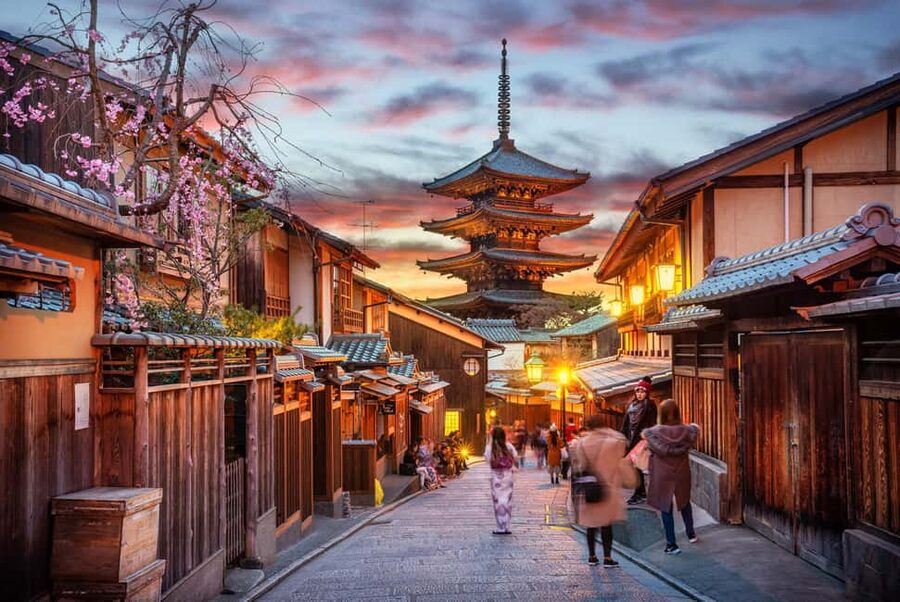
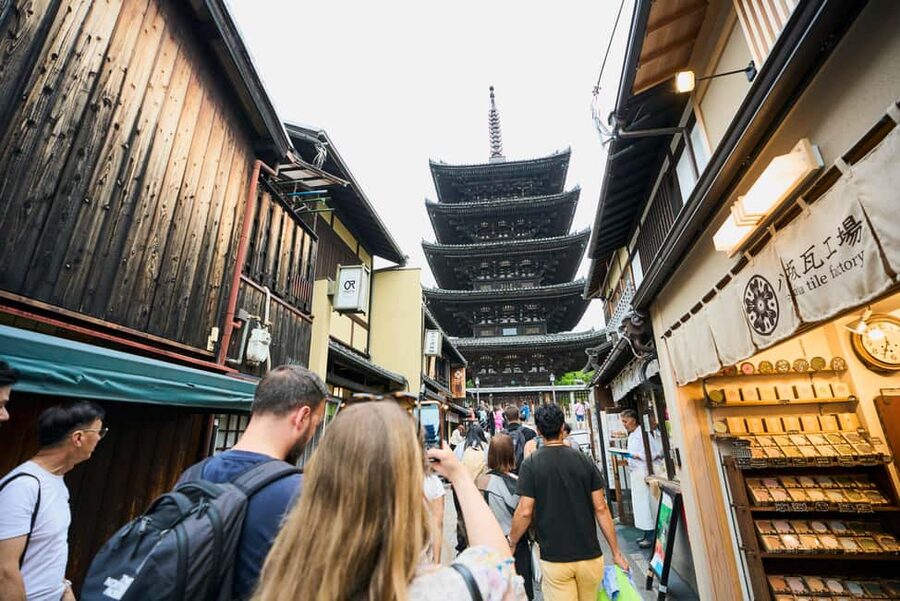
Ninenzaka brings you into one of Kyoto’s most recognizable old streets. Its slope, stone paving, and preserved wooden buildings make it a popular place for photographs. It is also one of the busier parts of the route, so do not assume the entire walk takes place on empty lanes.
The advantage of visiting Ninenzaka with a guide is simple: you can move through the area with a clearer sense of what deserves your attention. The disadvantage is that this section may feel crowded, particularly during popular hours or good weather.
Hōkan-ji Temple, often recognized by its tall pagoda, adds a strong visual landmark. The tour includes a guided pass and photo stop, rather than promising an extended temple visit. Photography is allowed, but flash photography is not permitted inside temples. Follow the guide’s instructions and be respectful around worshippers.
You may find this portion more scenic than quiet. The peaceful atmosphere returns later, but Ninenzaka is a public sightseeing area with plenty of foot traffic.
Yasui Kompira-Gu and the meaning behind the stop
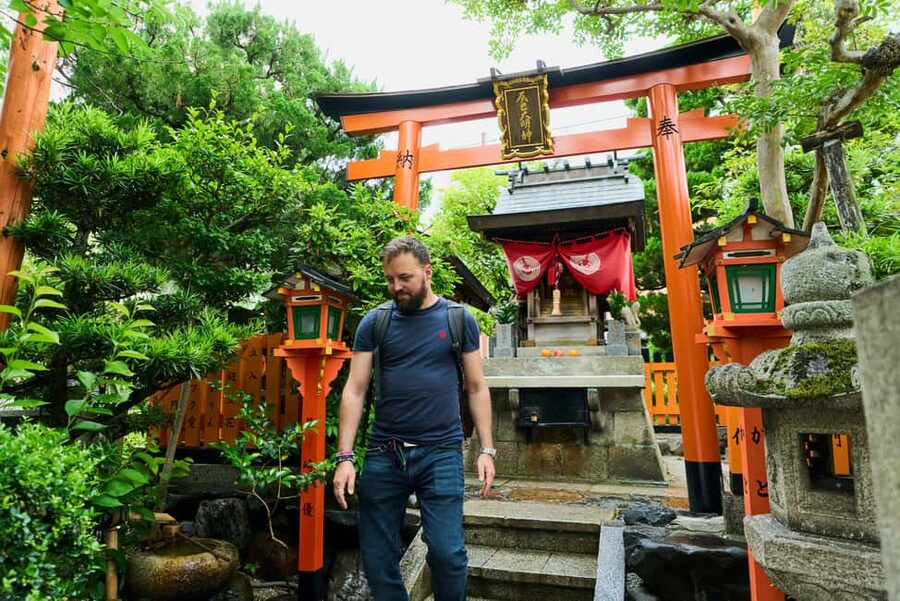
Yasui Kompira-Gu is another shrine visit and one of the places where a guide can provide useful cultural background. The site is known for its distinctive role in local religious practice, and the stop gives you time to ask questions instead of simply walking past.
The route has a good rhythm here. You have already seen the canal, a small shrine, Yasaka Shrine, old houses, a famous slope, and Hōkan-ji. Yasui Kompira-Gu adds a different kind of stop before the final stretch into the geisha district.
Do not expect every part of the tour to have the same visual impact. Some stops are about a famous view, while others are valuable because they help explain how Kyoto’s shrines and neighborhoods work. That variety keeps the walk from becoming a string of identical photo opportunities.
Hanamikoji Street and the chance to see a geiko
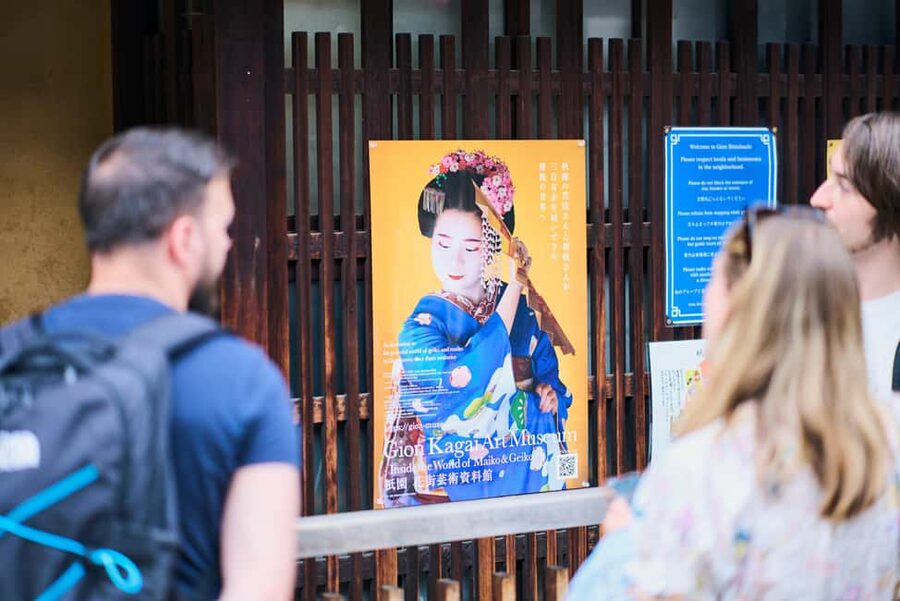
The walk ends on Hanamikoji Street, the heart of Gion’s geisha district. This is where the tour’s cultural focus comes together. Your guide explains the strict training of geiko and maiko, their graceful dances, and the work involved in their kimonos and hairstyles.
The words matter. In Kyoto, geiko refers to a professional geisha, while maiko are apprentices. A good guide helps you understand the difference without reducing either role to a costume show.
You may see a geiko or maiko walking to an evening engagement. Some people on this tour have seen one or even both, but it is never guaranteed. If you do, watch from a respectful distance and avoid treating the person like a public attraction. The tour is at its best when it helps you understand the people and customs of Gion rather than turning the district into a backdrop.
Hanamikoji is also a practical ending point. You can continue exploring, find dinner, or return to your accommodation from the surrounding area. Several guides, including Dan and Takumi, have offered restaurant suggestions that make the end of the tour more useful.
What the guides add to the experience
The guide is the main reason this tour offers good value at $23. You are not paying for transportation, a meal, or a formal performance. You are paying for two hours of explanation, direction, and local perspective.
The guides named in the feedback include Uta, Dan, Mai, Takumi, Wajid, Kenta, Noa, Alex, Oliver, Isako, Amane, Ukyo, and Uta. The strongest pattern is not one single guide, but the consistency of the experience: clear English, friendly conversation, patience with questions, and historical explanations pitched for visitors.
Several guides have been praised for keeping the group together. Noa was noted for waiting until everyone caught up before continuing, while Takumi kept a larger group engaged. That matters on a walking route with uneven streets, photo stops, and regular crossings.
English ability also appears to be a strength. Kenta explained Japanese history and geisha culture, while Wajid broke down Japanese terms in a way that made the ideas easier to follow. You should still expect different personalities from different guides. Some will tell more stories, while others may focus more closely on facts and landmarks.
How hard is the two-hour walk?

This is not a strenuous hike, but it is an active city walk. You move between several districts, shrines, streets, and temple views in a short period. One person described the pace as quick but necessary to fit the stops into two hours.
Wear shoes that you can comfortably walk in. Bring water, especially in warm or humid weather, and use sunscreen. The route includes stone-paved paths and older streets, so this is not a good choice if you need step-free access or use a wheelchair.
Rain does not automatically cancel the experience. The walk goes ahead in wet weather, so bring an umbrella or raincoat. Bad weather can reduce the pleasure of the views and make photography harder, but it can also make the streets quieter. There is no promise of shelter at every stop, so dress for the forecast.
What the $23 price really gets you
At $23, this is an inexpensive way to add structure to your first look at Gion. You get an English-speaking local guide and a route that links several places you might otherwise visit as disconnected stops.
The value is strongest if you want cultural background. If you only want photographs, you can walk through Gion on your own for free. The tour earns its price by explaining geiko and maiko traditions, pointing out older architecture, answering questions, and leading you through lanes you might miss.
The two-hour length is also practical. It does not take over an entire day, and it leaves time for dinner or another Kyoto sight. The tradeoff is that no single stop receives a long visit. You are buying a broad introduction, not an in-depth temple study or a geisha performance.
The booking terms add flexibility: you can cancel up to 24 hours before the start for a full refund, and you can reserve while paying later. Starting times vary, so check the available slot when booking.
Who should book this Gion experience?
I would recommend it to a first-time Kyoto visitor who wants help reading the city. The route gives you a useful overview of Gion’s streets, shrines, wooden houses, and geisha culture without requiring a full-day commitment.
It also suits anyone who prefers an evening activity before dinner. The walk can help you decide where to eat, and the guides have provided restaurant recommendations. Families can enjoy it too, although younger children need to manage a steady walking pace. One guide was especially good with children aged eight and ten.
You may want to skip it if you dislike group walking tours, need frequent rest stops, or want guaranteed access to interiors. You should also skip it if your only goal is to meet or photograph a geisha. The sighting is a possibility, not the product.
Should you book it?
Book this tour if you want a low-cost, well-organized introduction to Gion with a real person explaining what you see. The combination of Gion Shirakawa, old shrines, Edo-period houses, Ninenzaka, Hōkan-ji, Yasui Kompira-Gu, and Hanamikoji gives you a lot in two hours.
Choose a later departure if you prefer fewer crowds and a more atmospheric walk. Wear good shoes, bring water and rain protection, and keep your expectations sensible about seeing a geiko or maiko.
I would make this an early Kyoto activity, especially on a first visit. Afterward, you will recognize the district more easily and have a better sense of where to return on your own.
FAQ
How long does the Gion tour last?
The tour lasts two hours.
What language is the tour conducted in?
The tour is conducted in English by a live local guide.
Where does the tour meet?
Meet at the McDonald’s Shijo Ohashi store at 105-1 Hashimoto-cho, Shimogyo-ku, Kyoto-shi, Kyoto. The guide waits beside the restaurant with a sign saying Local Guide Stars.
Which places are visited?
The route includes Gion Shirakawa and the Shirakawa Canal, Tatsumi-jinja Shrine, Yasaka Shrine, Ninenzaka, Hōkan-ji Temple, Yasui Kompira-Gu Shrine, and Hanamikoji-dori.
Is seeing a geisha guaranteed?
No. The tour gives you a chance to see a geiko or maiko on Hanamikoji Street, but a sighting is not guaranteed.
What will I learn about geisha culture?
You will learn about geiko and maiko training, their dances, kimono craftsmanship, and traditional hairstyles.
Can I take photographs?
Yes. Photography is allowed, but flash photography is not permitted inside temples.
What should I bring?
Bring comfortable walking shoes, water, and sunscreen. If rain is expected, bring an umbrella or raincoat.
Does the tour operate in bad weather?
Yes. The tour takes place in the rain, so you should prepare with suitable rain protection.
Is the tour suitable for wheelchair users?
No. The tour is not suitable for wheelchair users or people with mobility impairments.
Just added around Japan
- Private sake pairing@ancient underground★ 5.0 · 27 reviews
- Tokyo: Asakusa & Sensoji ー Oldest Temple Walking Tour (2hrs)★ 5.0 · 213 reviews
- [30 minutes] Rickshaw tour around Asakusa [History, sightseeing, Tokyo Skytree]★ 5.0 · 38 reviews
- Tokyo: Edo Castle & East Garden of the Imperial Palace Tour★ 4.7 · 112 reviews
- Tokyo: Imperial Palace, the history of Japan (ENGLISH GUIDE)★ 5.0 · 77 reviews
- Tokyo: Customized Private Historical Guided Photoshoot Tour★ 5.0 · 25 reviews
- Osaka: Dark Side of Osaka Night Walking Tour★ 4.9 · 89 reviews
- Osaka: Osaka Castle & Historical Museum Guided Tour★ 4.8 · 28 reviews
Kyoto History Tours, compared.
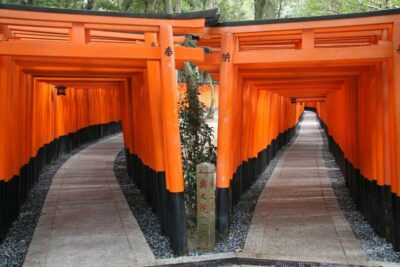
Kyoto: Fushimi Inari, Kinkakuji, Bamboo Grove 1 Day Bus Tour
Read our review →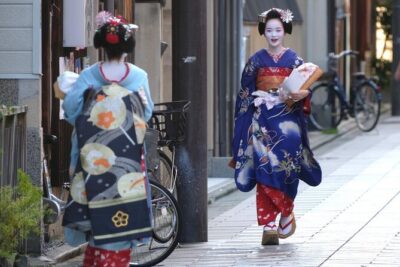
Kyoto Gion: 2-Hour Geisha Culture & History Walking Tour
Read our review →
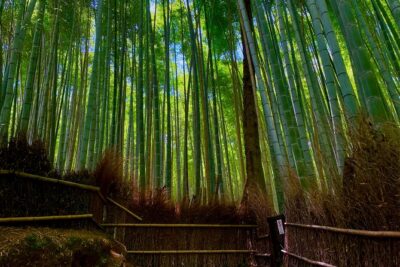
Kyoto Early Bird English Tour: Fushimi-Inari and Arashiyama
Read our review →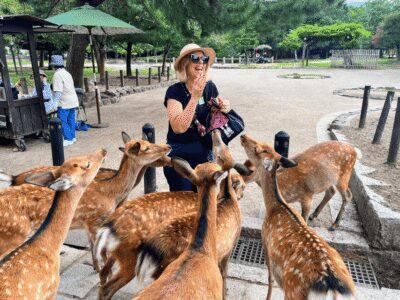
Kyoto: Nara & Traditional Matcha Experience Bus Tour
Read our review →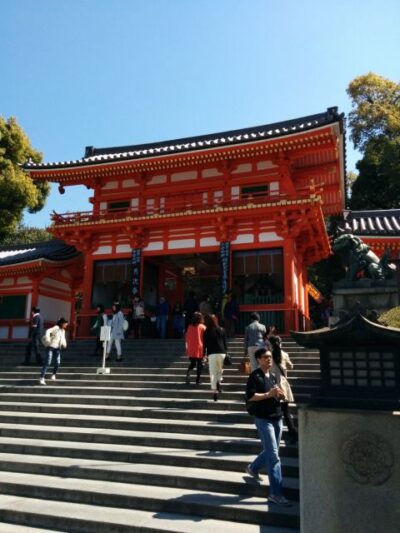
Browse the lists this tour appears in