
Review · KYOTO
Kyoto: Nara & Traditional Matcha Experience Bus Tour
Nara’s famous deer are only part of the appeal here. In one long day from Kyoto, you’ll see the Great Buddha at Todaiji, the lantern-lined grounds of Kasuga Taisha, and the Phoenix Hall at Byodoin before making matcha in Uji.
I like the efficient mix of major sights and hands-on culture. I also like the guides’ personal touch: At-Chan, Mai, Nanami, Yuta, and others have taught Japanese phrases, helped with directions, and kept groups moving without making the day feel like a race. The drawback is the pace. At 510 minutes, with several walks, stairs, hills, and long coach rides, this is not a restful outing or a good fit for wheelchair users.
Key points to know before booking
- Todaiji’s Great Buddha: Enter one of Japan’s largest wooden buildings and see the enormous bronze Buddha at the heart of the temple.
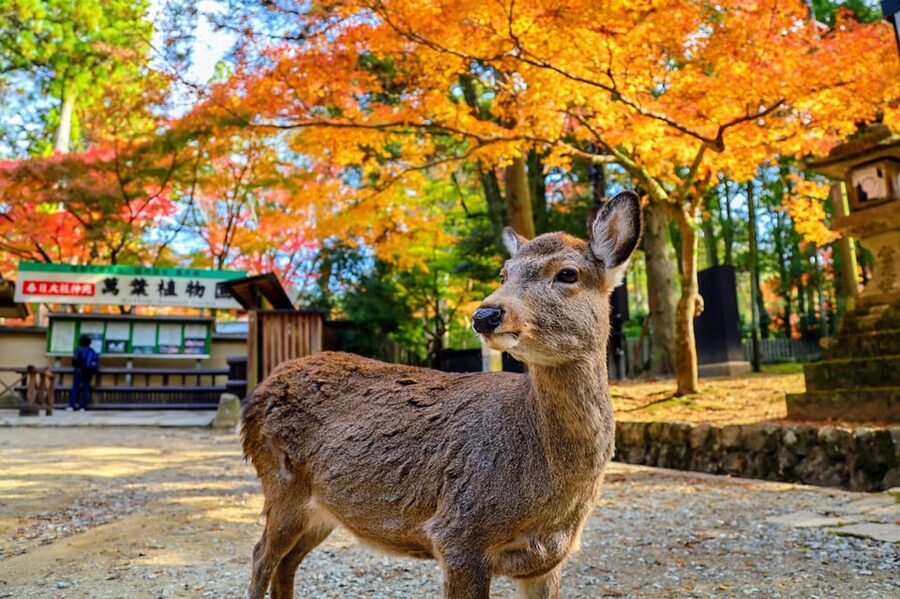
- Nara Park deer: Feed the free-roaming deer with rice crackers, but keep your hands clear once the food is gone. They can nip.
- Kasuga Taisha lanterns: Spend time among thousands of stone lanterns at one of Nara’s most atmospheric shrines.
- Uji matcha lesson: Learn how finely ground green tea is made, then prepare matcha yourself in the tea-producing Uji area.
- Practical coach travel: The air-conditioned bus has free Wi-Fi, regular ventilation, and an antibacterial coating.
- A full day for $122: Temple admissions, transport, the matcha activity, and an English-speaking guide are included. Lunch costs extra unless you select the meal option.
Why this Nara and Uji combination works
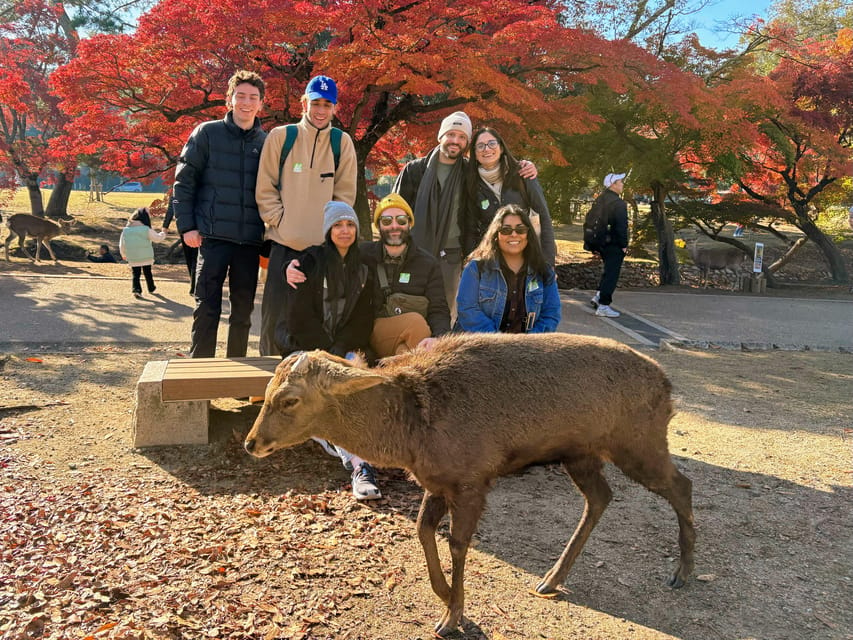
Kyoto has enough temples to fill several days, but Nara and Uji give you a welcome change of pace. Nara feels broad and open, with deer moving through wooded temple grounds. Uji is smaller in scale and closely tied to Japanese tea culture.
This tour joins the two places in a single day. That matters because arranging both by public transport takes more planning, especially if you want to see Todaiji, Kasuga Taisha, Nara Park, and Byodoin without losing time to transfers.
You leave from Kyoto at 8:00 AM and return to the same meeting area near Kyoto Station after about eight and a half hours. The schedule is organized, but it is still a busy day. You get guided explanations at the main sites, along with periods to take photos, shop, eat, and explore on your own.
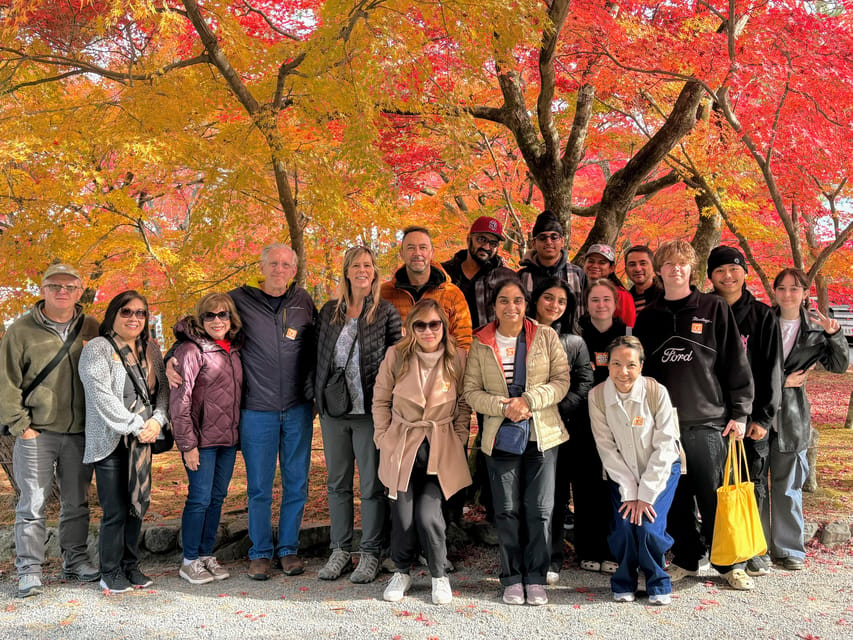
The English-speaking guide is a major part of the experience. Guides such as At-Chan, Rina, Mai, Nanami, Aoi, Tsubasa, Yuta, and Den have been praised for explaining Japanese customs, teaching simple words and numbers, and helping people stay on track. Your guide will vary, but the format is designed to give you more than a bus ride and a list of photo stops.
More Local Culture and Traditions Tours in Japan
- Kyoto Gion: 2-Hour Geisha Culture & History Walking Tour
★ 5.0 · 1,186 reviews - Nara: Half-Day UNESCO Heritage & Local Culture Walking Tour
★ 4.8 · 250 reviews - Tokyo: The Best of Izakaya in Shinjuku Food & Cultural Tour
★ 4.9 · 221 reviews
Meeting the bus near Kyoto Station
The meeting point is in front of Tully’s Coffee at the Kyoto Avanti Store, 31 Higashikujo Nishisannocho. Check-in is at 7:50 AM, with departure at 8:00 AM.
Look for the green and white Japan Panoramic Tours flag. Kyoto Station is large, and crossing through it can take longer than expected, so I would arrive with time to spare rather than aim for the last minute. Latecomers and no-shows do not receive refunds or changes.
Once aboard, you travel in an air-conditioned coach with free Wi-Fi. The route passes Fushimi Castle and the former Heijokyo palace area on the way toward Nara. Traffic can change the order or length of stops, so treat the published schedule as a guide rather than a promise down to the minute.
The tour also provides multilingual audio commentary in French, German, Italian, Portuguese, Spanish, and Ukrainian. The live guide speaks English. This arrangement is useful if your group has different language needs, though the personal explanations and questions come from the English-speaking guide.
Kasuga Taisha and Nara’s lanterns
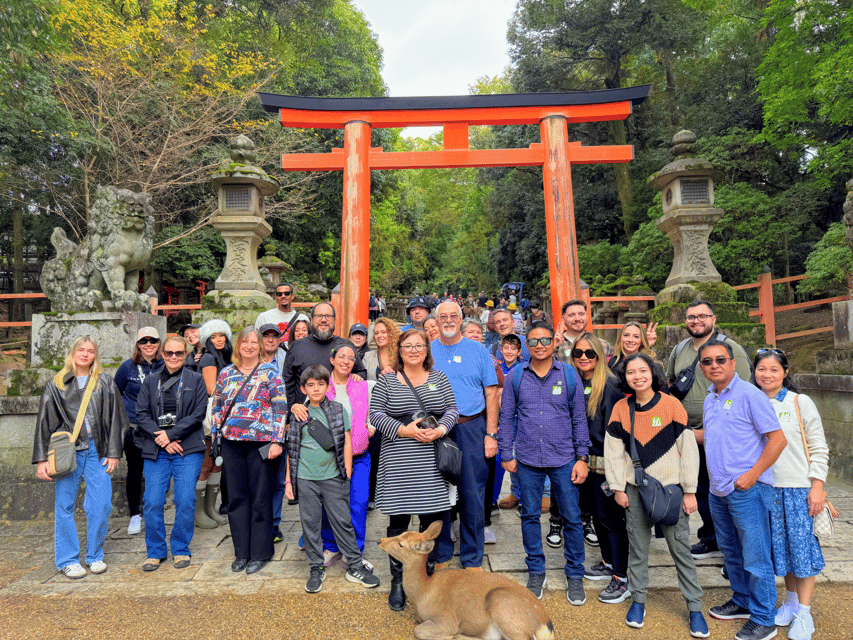
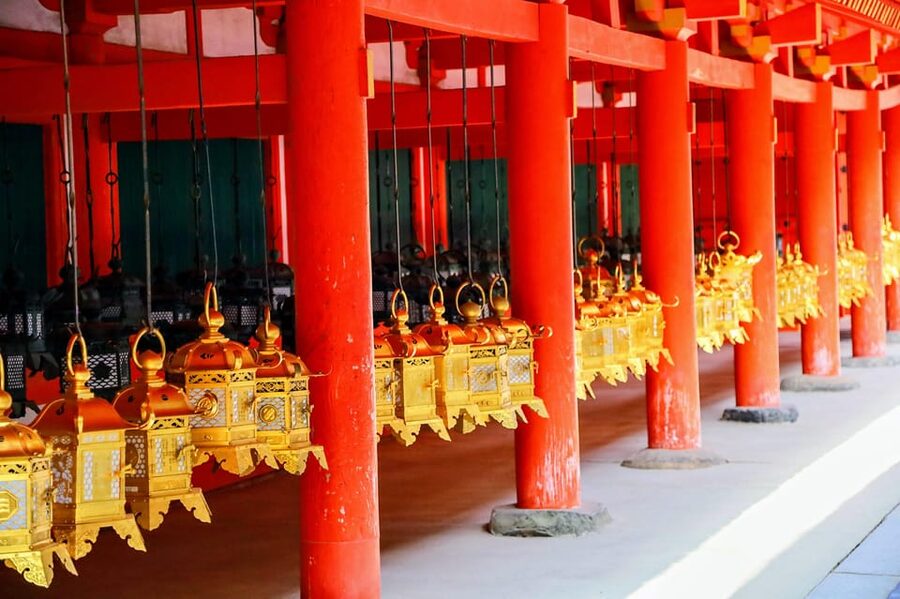
Kasuga Taisha is the first listed stop, with about 30 minutes to see the shrine area. Its most memorable feature is the huge collection of stone lanterns. The lanterns line the approach and help give the shrine a quiet, slightly mysterious feel, especially among the trees.
Thirty minutes is enough for a focused visit, but not for a slow exploration of every path. I would listen carefully to the guide’s explanation, take your main photos, and avoid wandering too far from the meeting point.
You should wear shoes that are comfortable for uneven ground. The tour includes walking up stairs and hills, and shrine approaches can be tiring if you have already spent several days touring Kyoto on foot.
Feeding deer in Nara Park
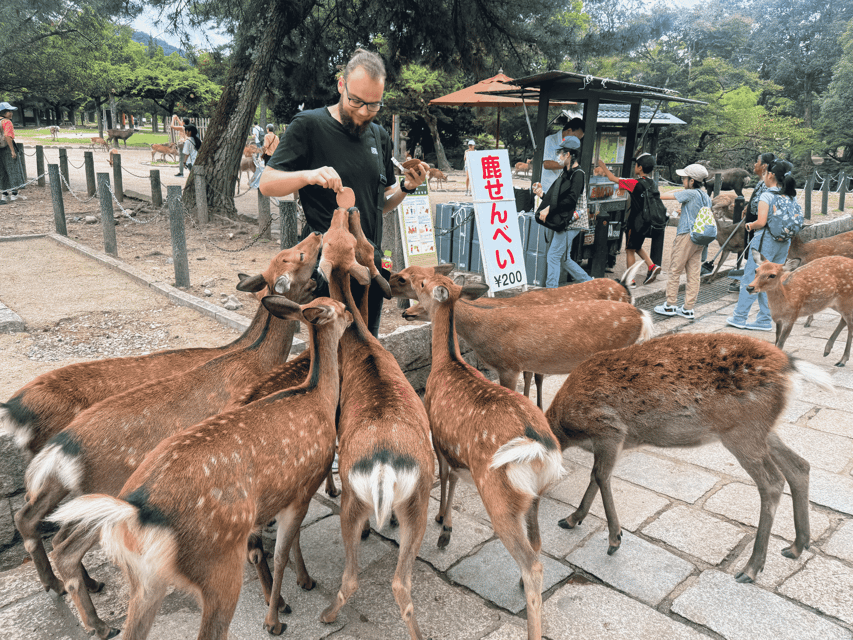
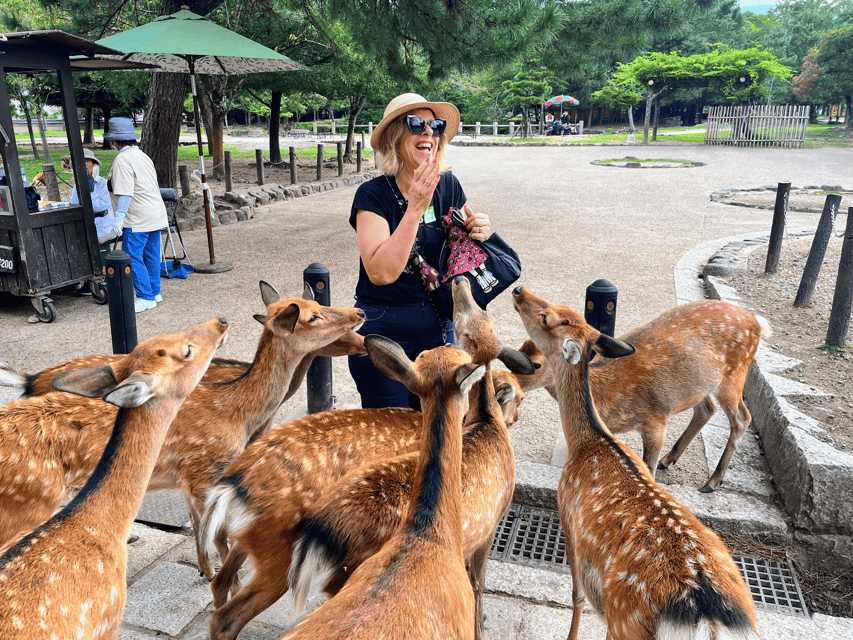
Nara Park is next, with roughly 30 minutes set aside for the deer. The animals roam freely around the park and temple area, so this is not a zoo visit. You can buy rice crackers from roadside stalls and offer them to the deer.
The famous bowing behavior is charming, but do not treat the deer like plush toys. They may crowd around you when you have food, and one guide specifically warned that they can bite. Feed carefully, keep fingers away from their mouths, and show empty hands once the crackers are gone.
The short stop works well for a first encounter, especially if you mainly want photos and a chance to feed the deer. If you hope to stroll widely through all of Nara Park, you may find the time tight. The schedule is built around seeing several major sites, not spending half a day with the animals.
Same city, a different century:
- Kyoto: Fushimi Inari, Kinkakuji, Bamboo Grove 1 Day Bus Tour
★ 4.8 · 4,316 reviews - World Heritage Shirakawa-go and Experience Tours from Kanazawa
★ 5.0 · 4,049 reviews - Tokyo: Imperial Palace and Shogun Historical Walking Tour
★ 5.0 · 2,251 reviews - World Heritage Kyoto & Nara Uji Authentic Matcha Experience
★ 5.0 · 1,573 reviews
Entering Todaiji’s Great Buddha Hall
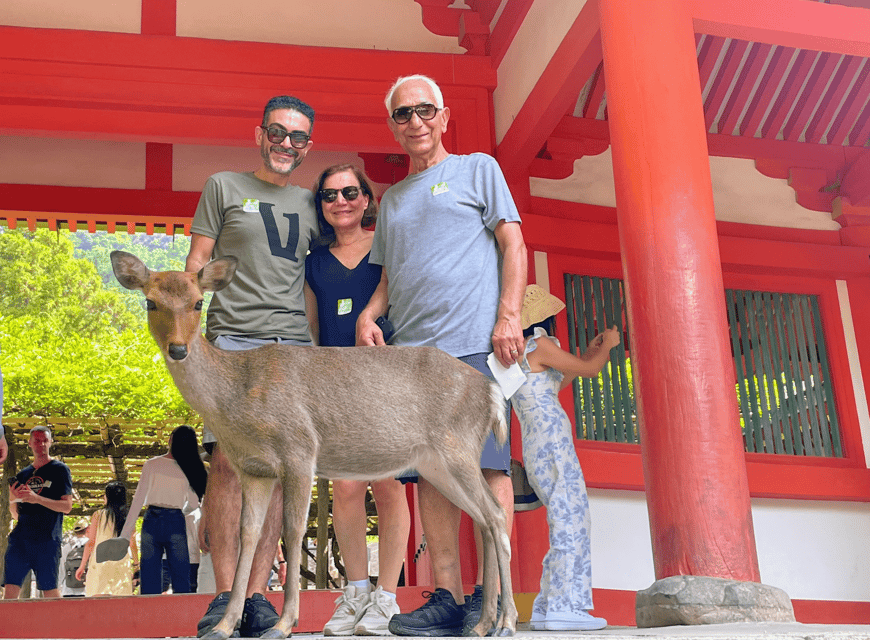
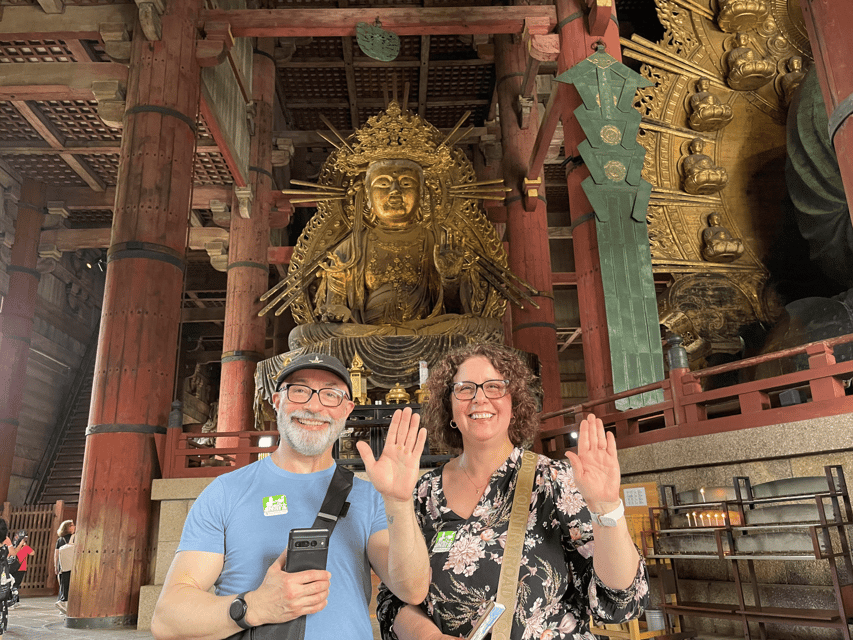
Todaiji receives about 50 minutes, making it the central Nara stop. The temple’s Daibutsuden Hall houses the Great Buddha of Nara, a huge bronze statue that immediately gives the visit its scale. The hall itself is one of the world’s largest wooden buildings.
This is the place where a guide adds real value. A good explanation helps you understand why the hall and Buddha matter, instead of leaving you with only an impressive interior and a few photos. Guides have also used simple visual aids and language lessons to make the historical details easier to follow.
Admission to Todaiji is included. You will still need to keep an eye on the time because this is a group tour. I would enter the hall first, see the Buddha, and then use any remaining minutes for the surrounding grounds.
The temple, park, and shrine are close enough to combine efficiently, but the walking adds up. Anyone with knee, balance, or stamina concerns should think carefully before booking. The tour is specifically not suitable for wheelchair users or people with mobility impairments.
Lunch between Nara and Uji
After Nara, the coach heads toward Uji, with about an hour of travel before lunch. The lunch break lasts around 50 minutes at a local restaurant.
You can book the tour with a Japanese lunch option. A traditional meal has been described as tasty and suitable for people who want the day’s food arranged for them. Additional food and drinks are not included, so bring cash for anything beyond the selected meal.
Vegetarian arrangements must be made at least two days before the tour date. Last-minute bookings receive the regular meal, so do not wait until the morning of the tour to mention dietary needs.
The lunch break is practical rather than leisurely. Fifty minutes gives you time to eat, but this is not a long restaurant stop. If you prefer choosing your own meal, select the option without lunch and use the break according to the tour’s arrangements.
Byodoin and the Phoenix Hall on the 10 yen coin
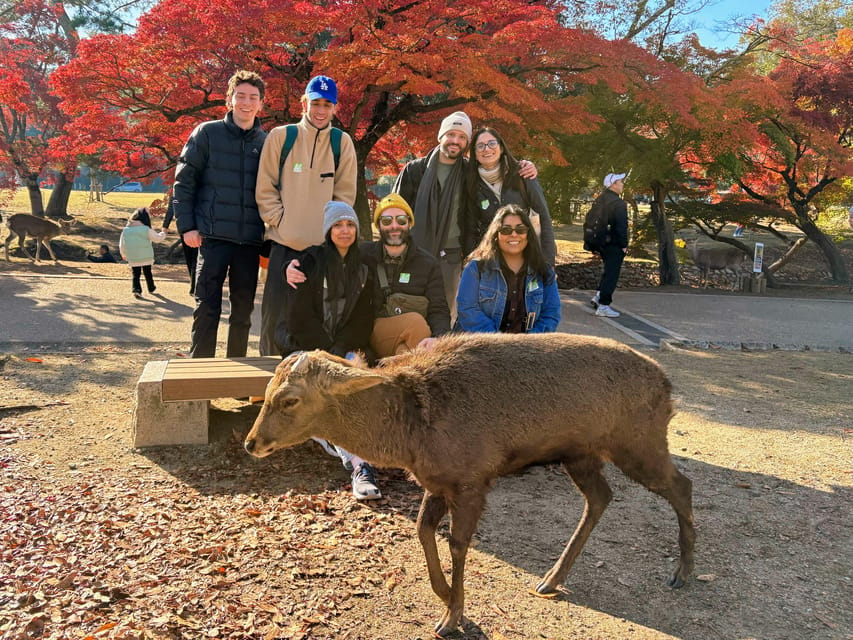
Byodoin Temple is the main Uji sight, with about an hour to explore. Its Phoenix Hall is one of Japan’s most recognizable temple buildings, and you may know it from the image on the 10 yen coin.
The temple offers a different mood from Todaiji. Todaiji is enormous and imposing, while Byodoin is more refined, with the Phoenix Hall set beside a pond. The contrast helps make the day feel varied rather than like a repeat of one temple after another.
Admission is included, and the guide provides context about the temple and its place among the Historic Monuments of Ancient Kyoto, a UNESCO World Heritage Site. An hour lets you see the main grounds and take photographs without turning the stop into a rushed dash.
The order of the stops can change due to traffic, weather, or operating conditions. If a listed site closes, the operator may substitute another location. That flexibility is useful on a busy sightseeing day, but it means you should not plan a separate reservation immediately after a particular stop.
Making matcha in Uji
The final major activity is a 70-minute visit in Uji, the area most closely associated with matcha on this tour. You learn that matcha is powdered green tea made from finely ground tea leaves. It is used not only in tea gatherings but also in sweets and cooking.
The key difference here is participation. You make the matcha yourself rather than simply drinking a prepared cup. That gives you a better sense of the care involved in producing the powder and preparing the drink.
This is also the most relaxed part of the day. After temples, walking, and the deer park, the tea activity gives you time to slow down and ask questions. Some guides have added cultural explanations and helped visitors understand the customs around tea.
The surrounding area has small shops, restaurants, and places to buy tea souvenirs. You receive free time as part of the Uji visit, but do not expect an open-ended shopping afternoon. The coach leaves after the matcha experience and returns you to the Kyoto Station meeting area.
What the $122 price really covers
At $122 per person, this is not the cheapest way to visit Nara. You are paying for convenience and structure as much as for admission tickets.
The price includes:
- Air-conditioned coach transportation
- Free Wi-Fi on the bus
- English-speaking guide
- Todaiji admission
- Byodoin admission
- Matcha-making fee
- Multilingual audio headsets
- Japanese lunch, only if you select that option
You avoid planning separate train journeys, finding the correct local buses, and working out how to connect Nara with Uji in one day. For a first visit to the region, that can be worth a lot.
The tradeoff is control. You cannot linger at Todaiji for several hours, alter the route at will, or spend the whole afternoon shopping in Uji. If you already know Nara well or prefer independent travel, the fixed schedule may feel restrictive.
For many visitors, the strongest value is the combination of three major cultural sites, the deer encounter, and a hands-on tea activity in one outing. You also get a driver and guide handling the long transfers. I consider the price fair for a first-time visitor who wants a broad introduction without managing the logistics alone.
The guide can shape the whole day
The guide’s role goes beyond pointing out buildings. Several guides on this tour have taught basic Japanese phrases and counting during bus rides. That is a small touch, but it makes the travel time useful and helps you interact more comfortably during the rest of your Japan trip.
Mai has used handmade visual materials to explain the stops. At-Chan has helped people find specific tea shops during free time and even assisted with future travel planning. Other guides, including Nanami, Yuta, Aoi, Tsubasa, Den, Rina, Harry, and Sakura, have been praised for clear explanations, care, humor, and good pacing.
You should not book expecting a specific person unless the operator confirms one. Still, the pattern is clear: the guide is central to the experience. If you value cultural context, simple language help, and someone keeping an eye on the group, this is a strong reason to choose the coach over an unaccompanied day trip.
Who should book this day tour
I would recommend it to first-time visitors staying in Kyoto who want to see Nara’s main sights and add Uji without changing hotels or planning several train connections. Families can benefit from the clear structure, though children should be comfortable with a long day and plenty of walking.
It also suits people who like a mix of grand architecture, animals, food, shopping, and a practical cultural activity. You get more variety than on a temple-only tour.
I would hesitate if you use a wheelchair, have serious mobility limits, or dislike fixed schedules. The day includes stairs, hills, walking between sites, and a long return journey. It is also less suitable if your priority is a slow, meditative visit to one temple.
Bring comfortable shoes, water, and cash. Wear clothing suitable for walking and changing weather, and keep your schedule after the tour flexible in case traffic affects the return.
Should you book the Nara and Uji tour?
Book it if you want an efficient, well-supported day that combines Nara’s biggest sights with a genuine matcha activity. The deer, Todaiji, and Kasuga Taisha provide the visual highlights, while Byodoin and the tea lesson keep the day from feeling one-note.
I would choose this tour over a simple Nara shuttle because it adds Uji and the matcha-making session. I would skip it only if you want full independence, more time at each temple, or a slower pace. For most first-time visitors based in Kyoto, the included transport, admissions, guide, and tea activity make $122 a sensible purchase.
FAQ
Where does the tour begin?
The meeting point is in front of Tully’s Coffee at the Kyoto Avanti Store, 31 Higashikujo Nishisannocho, Minami Ward, Kyoto. Check-in is at 7:50 AM, and departure is at 8:00 AM.
How long does the tour last?
The stated duration is 510 minutes, or about eight and a half hours. The coach returns to the Tully’s Coffee meeting area near Kyoto Station.
What languages are available?
The live tour guide speaks English. Audio guides are available in French, German, Italian, Portuguese, Spanish, and Ukrainian.
Is lunch included?
Lunch is included only if you select the lunch option when booking. Additional food and drinks are not included.
Can vegetarian meals be arranged?
Yes. Vegetarian meal arrangements can be made up to two days before the tour date. Last-minute bookings receive the regular meal.
Are temple admission fees included?
Yes. Admission to Todaiji and Byodoin Temple is included in the tour price.
Is the matcha experience included?
Yes. The fee for the matcha experience in Uji is included, and you will make matcha yourself.
Is the tour suitable for wheelchair users?
No. The tour is not suitable for wheelchair users or people with mobility impairments. You will need to manage stairs and hills.
What should I bring?
Bring comfortable shoes, water, and cash. Pets are not allowed on the tour.
Just added around Japan
- Private sake pairing@ancient underground★ 5.0 · 27 reviews
- Tokyo: Asakusa & Sensoji ー Oldest Temple Walking Tour (2hrs)★ 5.0 · 213 reviews
- [30 minutes] Rickshaw tour around Asakusa [History, sightseeing, Tokyo Skytree]★ 5.0 · 38 reviews
- Tokyo: Imperial Palace, the history of Japan (ENGLISH GUIDE)★ 5.0 · 77 reviews
- Tokyo: Customized Private Historical Guided Photoshoot Tour★ 5.0 · 25 reviews
- Tokyo: Edo Castle & East Garden of the Imperial Palace Tour★ 4.7 · 112 reviews
- Osaka: Dark Side of Osaka Night Walking Tour★ 4.9 · 89 reviews
- Osaka: Osaka Castle & Historical Museum Guided Tour★ 4.8 · 28 reviews
Kyoto History Tours, compared.
Kyoto: Fushimi Inari, Kinkakuji, Bamboo Grove 1 Day Bus Tour
Read our review →
Kyoto Gion: 2-Hour Geisha Culture & History Walking Tour
Read our review →
Kyoto Early Bird English Tour: Fushimi-Inari and Arashiyama
Read our review →
Browse the lists this tour appears in