Review · POMPEII
Pompeii: 2-Hour Guided Tour with an Archaeologist
Pompeii is not a tidy collection of ruins. It is a buried Roman town, with streets, bakeries, baths, shops, theaters, and private homes still arranged much as they were before Vesuvius erupted in 79 AD. This two-hour private tour with an archaeologist guide gives you a clear route through the western part of the site instead of leaving you to puzzle over broken walls and faded mosaics alone.
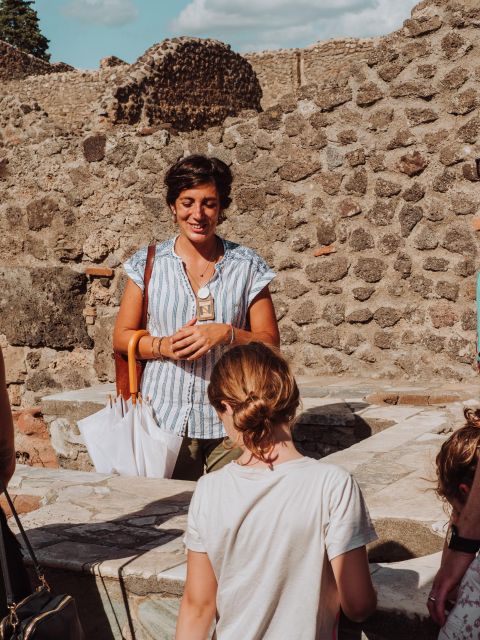
I like the way the tour joins famous sights with ordinary details, such as bakery tools, food remains, and the small rooms of the Lupanar. I also like the guide-led pace. Guides including Paola, Giancarlo, Enzo, Tonia, Sergio, and Rosalina have been praised for turning Pompeii into a human story, not just a long walk among stones.
The main drawback is time. Pompeii is huge, and two hours gives you a strong introduction rather than a complete visit. At $175.74 per person, the price makes the most sense for people who value a private guide and focused interpretation. Also, confirm accessibility before booking, since the information provided describes the tour as both wheelchair accessible and not suitable for wheelchair users.
Key points to know before booking
- A fast route through Pompeii’s essential western sights: The tour covers the Porta Marina, Temple of Apollo, Forum, Basilica, baths, brothel, major houses, theaters, and amphitheater.
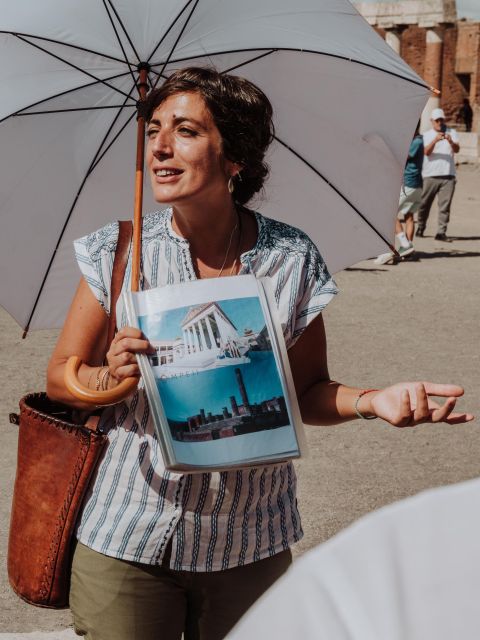
- Archaeologist-led interpretation: Your guide explains not only what you are seeing, but how Pompeii was excavated and what the remains reveal about Roman life.
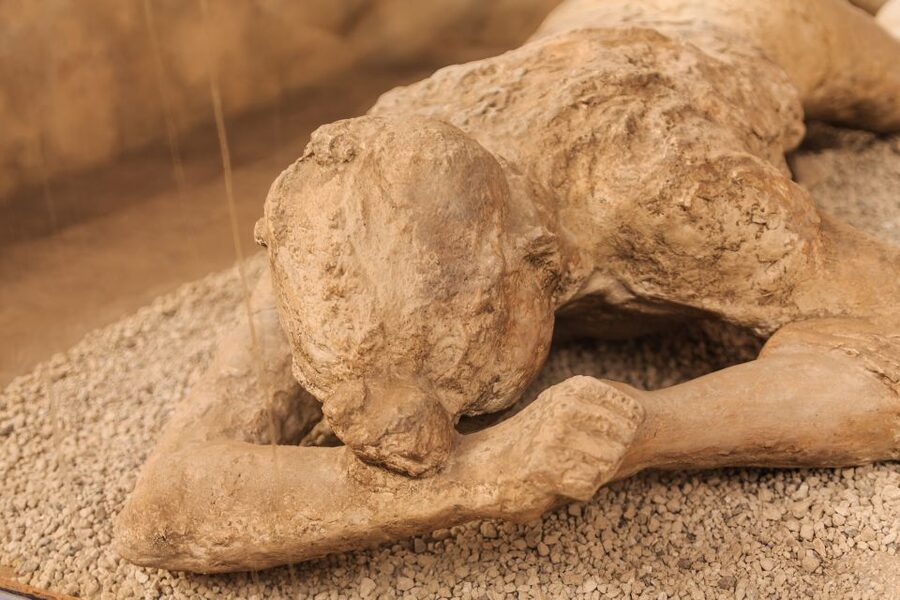
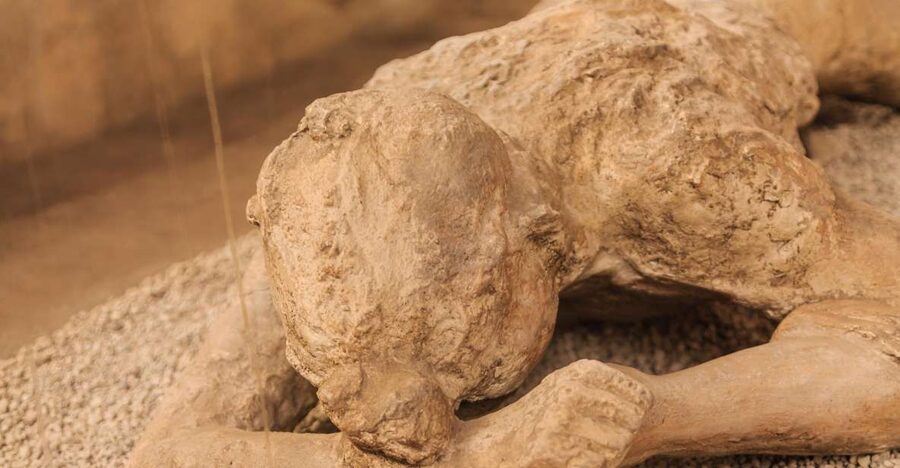
- Plaster casts make the disaster personal: Human and animal casts show the final moments of people caught by the eruption.
- Private touring keeps the experience focused: You can ask questions and adjust the pace more easily than on a large group outing.
- Two hours is useful but tight: You get the main story and key monuments, but not every corner of the archaeological site.
- Wear practical clothing: Comfortable shoes, water, sunglasses, and a sun hat matter on Pompeii’s exposed, uneven streets.
Why an archaeologist changes the Pompeii experience
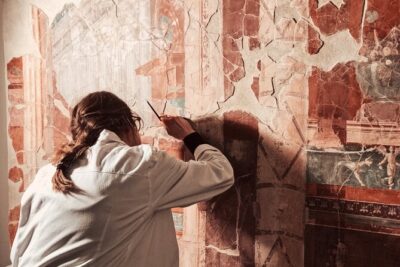
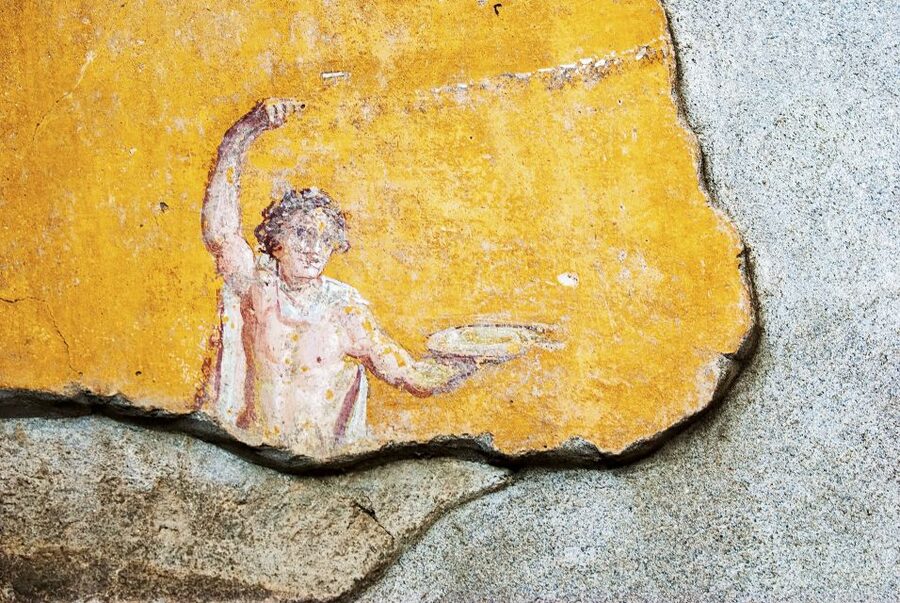
Pompeii can be confusing without context. A column may look like a column, a counter may look like a stone bench, and a faded wall painting may seem like decoration until someone explains its purpose. An archaeologist guide gives those fragments a place in the larger story.
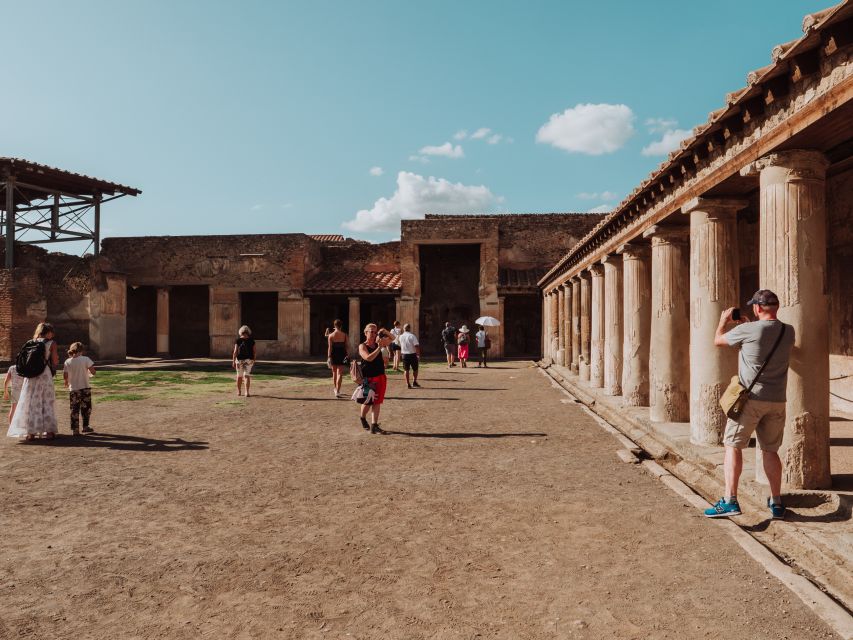
The tour begins near Porta Marina Superiore, one of the old entrances to Pompeii. From there, you walk through the western section, where many of the city’s most important public buildings, homes, and shops are concentrated.
I like this starting point because it quickly puts you on the same streets used by Roman citizens. You are not simply looking at a distant monument. You are following the practical routes people once used to reach the Forum, baths, theaters, stores, and houses.
Guides named in guest feedback include Paola, Giancarlo, Enzo, Tonia, Sergio, Rosalina, Alessandro, Ana, Felicia, and Chiara. The praise is consistent on several points: clear explanations, strong storytelling, patience with questions, and a real interest in Pompeii’s archaeology. Several guides were also able to keep the tour engaging while covering a great deal in a short time.
More Ancient History Tours in Italy
- Pompeii: Entry Ticket and Guided Tour with an Archaeologist
★ 4.8 · 19,459 reviews - Pompeii: Small Group Tour with an Archaeologist
★ 4.8 · 12,264 reviews - Pompeii Small Group Tour with an Archaeologist
★ 5.0 · 6,593 reviews
Porta Marina and the Temple of Apollo
Porta Marina is the natural opening chapter. Your guide can explain how the gate connected Pompeii with the area outside the city and how the layout of the streets helped organize movement through town.
The nearby Temple of Apollo introduces the religious side of Pompeii. It is one of the older and more important sacred spaces in the city, and its position near the Forum helps show how religion, politics, business, and public life sat close together.
This is where a guide becomes especially useful. Pompeii’s ruins do not always announce what they were used for. The tour helps you read the surviving foundations, columns, and open spaces as parts of a working city.
The Forum and Basilica: Pompeii’s public center
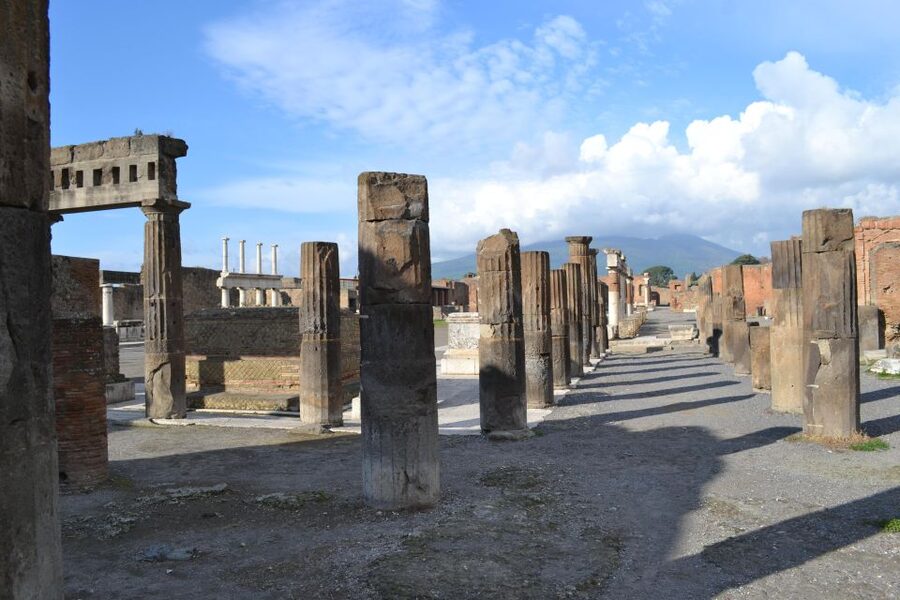
The Foro Civile di Pompei was the city’s main public square. It served as a setting for political activity, commerce, ceremonies, and public gatherings. With Vesuvius looming beyond the ruins, it is also one of the places where the scale of the disaster becomes easiest to grasp.
The Basilica, described as the old courthouse, stood along the Forum. Its remains help explain how legal and civic business took place in Pompeii.
I like this part of the route because it gives you the city’s public face before the tour moves into private homes. You can compare the grand scale of the Forum with the smaller, more personal spaces that come later.
The open Forum is also one of the more exposed areas of Pompeii. On a hot day, the sun can be tiring, so bring water and a hat. Some guides have been praised for choosing quieter routes and managing the pace on busy days, but you should still expect heat and a lot of walking.
House of Menander and the Roman home
The House of Menander is one of Pompeii’s impressive private residences. Its rooms, decoration, and layout offer a look at how a wealthy household was arranged.
A house in Pompeii was not simply a place for sleeping. It could include reception spaces, courtyards, service areas, storage rooms, and rooms decorated to make an impression on visitors. Your guide can point out the difference between spaces meant for display and those used for everyday work.
This stop helps balance the Forum. Public monuments tell you how the city functioned as a community. A house shows how status, family life, servants, guests, and domestic routines fit together behind the street front.
More Ancient History Tours in Pompeii
- Discover the Ancient Ruins of Pompeii: Day Trip from Rome
★ 3.5 · 2,247 reviews - Pompeii and Herculaneum Small Group Tour with an Archaeologist
★ 5.0 · 1,350 reviews - Skip the Line Guided Tour of Pompeii led by an Archaeologist
★ 5.0 · 703 reviews - Pompeii: Tour with Archaeologist Guide & Skip-the-Line Entry
★ 4.5 · 623 reviews
Forum Baths and the Lupanar
The Forum Baths show how central bathing was to Roman urban life. These were social and practical spaces, not just places to wash. The surviving rooms and heating arrangements help you see how Roman engineering supported daily routines.
The Lupanar, Pompeii’s old brothel, is one of the most talked-about stops. Its small rooms and surviving imagery reveal a less polished side of Roman life. It can be an awkward stop for some families, but it is also part of the city’s real social record.
I like that the tour does not limit Pompeii to temples and grand houses. The baths and Lupanar show how people spent time, sought services, and used public and commercial spaces. They make the site feel less like a museum and more like a functioning town.
House of the Faun and House of the Vettii
The House of the Faun is among Pompeii’s grandest residences. Its size helps you understand the gap between wealthy homeowners and ordinary residents. Even in ruin, the house conveys status through its scale, decoration, and formal spaces.
The House of the Vettii offers another look at elite domestic life. A guide can explain the role of wall paintings, courtyards, and reception rooms, along with the way a Roman home communicated wealth to visitors.
These houses are valuable stops, but two hours means you will not have time to examine every room at length. If mosaics, frescoes, and Roman architecture are your main interests, you may wish you had longer. The trade-off is that this tour also reaches public buildings, commercial spaces, theaters, and the amphitheater.
The bakery, shops, and the city’s ordinary life
One of the most useful details on the tour is the bakery, where you can still see utensils and traces of food. These remains bring Pompeii down to street level.
The Termopolium Capuano, an ancient food and drink shop, adds another everyday detail. A stop like this helps you picture how residents bought meals, stored goods, and handled routine errands.
I often find these modest places more memorable than the grand monuments. A forum tells you about power. A bakery tells you what people did before work, during a lunch break, or while feeding a household.
Your guide may also help you read the streets themselves. The worn paving, shop fronts, entrances, and house plans reveal how people moved through the city. Without explanation, many of these features are easy to miss.
Theaters and amphitheater
The Large Theatre shows Pompeii’s love of public entertainment. Theater was part of civic life, and the surviving structure gives you a sense of how performances fitted into the city.
The Amphitheater of Pompeii is another major stop. It was built for large public spectacles and could hold crowds far beyond the scale of a private home or neighborhood shop.
These buildings add energy to the tour because they show Pompeii as a city that gathered for entertainment as well as politics, religion, shopping, and bathing. They also make clear why Pompeii was more than a small village caught by a volcano.
The route ending at the amphitheater gives the visit a broad finish. You have moved from the city gate through religion, politics, law, homes, commerce, baths, entertainment, and disaster.
The plaster casts and the human cost
The plaster casts of people and animals are among the most difficult sights at Pompeii. They were made from cavities left in the hardened ash where bodies decomposed. The casts preserve the positions and shapes of victims at the moment they died.
Your guide should handle this part with care, and the tour is described as presenting the tragedy with respect. That matters. The casts are not a dramatic prop. They are evidence of individual lives interrupted in an instant.
For many people, this is the moment Pompeii changes from an archaeological site into a human story. The houses and streets show how people lived. The casts show what the eruption cost.
What the two-hour format does well
Two hours is enough to build a strong mental map of Pompeii. You see the essential public center, several major houses, the baths, Lupanar, bakery, theaters, amphitheater, and plaster casts. A guide can also connect the eruption, excavation, Roman society, and modern archaeology into one clear narrative.
A private group is useful here. You can ask why a building mattered, pause for an explanation, or request help understanding a confusing area. One guide was praised for adjusting the pace for a group that included a wheelchair user, though the published accessibility details are contradictory and should be confirmed before you reserve.
The short format also works well if Pompeii is part of a larger Campania day. You do not spend the whole day on site, and you finish at Pompeii Scavi, Villa dei Misteri.
The limitation is obvious: Pompeii is too large to see fully in two hours. If you want a slow look at wall paintings, inscriptions, gardens, or less famous streets, plan more time at the archaeological site beyond this guided route, if your schedule and ticket arrangements allow.
Price, group format, and practical value
At $175.74 per person, this is not a budget entrance ticket. The value comes from the private format, included Pompeii admission, and a guide who can organize the site for you.
I would consider the price easier to justify for first-time visitors, families, couples, or anyone with only a short window in Pompeii. It is also useful if you want to ask questions rather than listen passively in a large crowd.
The price is harder to justify if you already know Roman archaeology well or prefer to wander independently. Pompeii rewards slow exploration, and an independent visit gives you more freedom to linger.
Disposable earphones are included for bigger groups. That is a practical touch, since the site is open and voices can disappear among crowds and stone walls.
Free cancellation is available up to 24 hours before the tour, and you can reserve now and pay later. Starting times depend on availability. The meeting point may vary by the option selected, so check the exact location carefully. One practical warning is especially important: a meeting point near Porta Marina can be difficult to locate in GPS systems, so allow extra time.
Who should book this Pompeii tour?
I would choose this tour if you want the major sights explained by an archaeologist and do not want to spend your first visit figuring out the site map. It suits people who enjoy history through stories, buildings, and daily details rather than through plaques alone.
It is a good match for families, private groups, and visitors arriving from a cruise or making a short stop in Campania. The two-hour length keeps the visit manageable, though you should expect steady walking over ancient streets.
You may prefer a longer or independent visit if you want every house, painting, and inscription, or if Pompeii is your main purpose in Italy. Two hours gives you a sharp introduction, not the final word.
FAQ
How long does the Pompeii guided tour last?
The guided visit lasts two hours. Starting times depend on availability when you book.
What sights are included?
The route includes Porta Marina, the Temple of Apollo, the Forum, Basilica, House of Menander, Forum Baths, Lupanar, House of the Faun, Large Theatre, House of the Vettii, and Amphitheater. It also includes a bakery, the Termopolium Capuano, and plaster casts of people and animals.
Is the Pompeii entrance ticket included?
Yes. Pompeii entry tickets are included in the activity price.
Which languages are available?
Live guiding is available in English, Italian, Spanish, French, and German.
Is this a private tour?
Yes. The activity is described as a private group experience. Disposable earphones are provided for bigger groups.
Is the tour wheelchair accessible?
The information provided is conflicting. It describes the activity as wheelchair accessible but also says it is not suitable for wheelchair users. Contact the provider to confirm current access conditions before booking.
Should you book it?
Book this tour if you want Pompeii explained rather than simply entered. The strongest reason to choose it is the guide: people such as Paola, Giancarlo, Enzo, Sergio, Rosalina, and Tonia have been praised for making the city clear, engaging, and human.
The tour is expensive for two hours, and Pompeii is too large to cover in full. Still, the route reaches the Forum, homes, baths, brothel, bakery, theaters, amphitheater, and plaster casts in a focused visit. For a first trip, a short schedule, or a private group that wants expert help, that organization can be worth the cost.
More Two-Hour Tours in Pompeii
- Berlin’s Best: 2 Hour Walking Tour Third Reich and the Cold War
★ 5.0 · 5,486 reviews - 2-Hour Gettysburg Battlefield Guided History Bus Tour with a National Park Guide
★ 4.5 · 2,201 reviews - Kyoto Gion: 2-Hour Geisha Culture & History Walking Tour
★ 5.0 · 1,186 reviews - 2 Hour LoDo Historic Walking Tour in Denver
★ 5.0 · 1,106 reviews
More Archaeological Site Tours in Pompeii
- Pompeii Private Tour with an Archaeologist and Skip The Line – 3 hours
★ 5.0 · 564 reviews - Pompeii Skip-the-line Tour with Archaeologist Guide
★ 5.0 · 559 reviews - Explore Pompeii with an Archaeologist
★ 5.0 · 511 reviews - Pompeii 3hours Villa of Mysteries tour with an Archaeologist
★ 4.8 · 486 reviews
Just added around Pompeii
- Pompeii and Herculaneum: Guided Tour with an Archaeologist★ 5.0 · 164 reviews
- Pompeii Guided Tour with Archaeologist★ 4.6 · 27 reviews
- Pompeii: Guided Tour with Archaeologist with max. 12 People★ 5.0 · 155 reviews
- Pompeii Small Group Tour – Tickets Included★ 4.7 · 72 reviews
- PompeiI Exclusive Tour with your Archaeologist in a Small Group★ 4.5 · 363 reviews
- Pompeii Private Tour with an Archaeologist Guide★ 5.0 · 184 reviews
- Pompeii Private Tour with an Archaeologist and Skip The Line★ 5.0 · 391 reviews
- Pompeii 3hours Villa of Mysteries tour with an Archaeologist★ 4.8 · 486 reviews
Pompeii History Tours, compared.
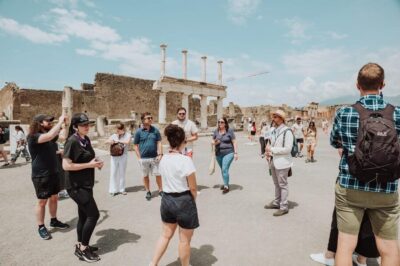
Pompeii: Entry Ticket and Guided Tour with an Archaeologist
Read our review →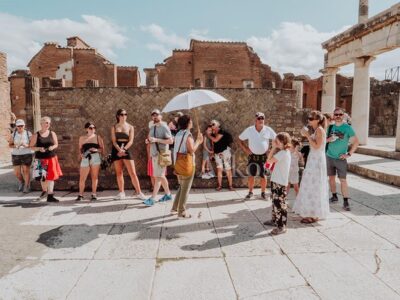
Pompeii: Small Group Tour with an Archaeologist
Read our review →Pompeii Small Group Tour with an Archaeologist
Read our review →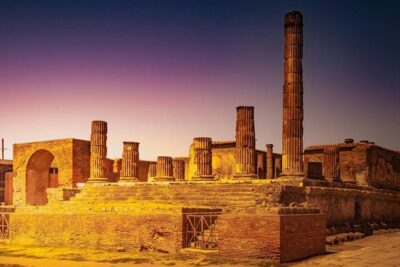
Discover the Ancient Ruins of Pompeii: Day Trip from Rome
Read our review →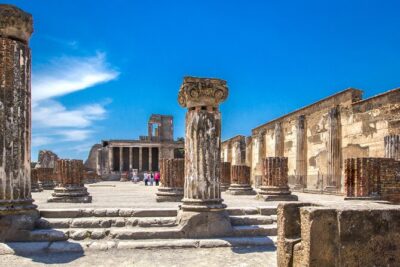
Pompeii and Herculaneum Small Group Tour with an Archaeologist
Read our review →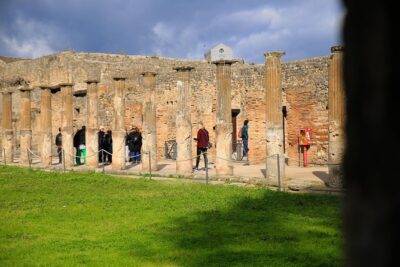
Skip the Line Guided Tour of Pompeii led by an Archaeologist
Read our review →
Pompeii: Tour with Archaeologist Guide & Skip-the-Line Entry
Read our review →