
Review · HIROSHIMA
Hiroshima: Miyajima Half-day Historical Walking Tour
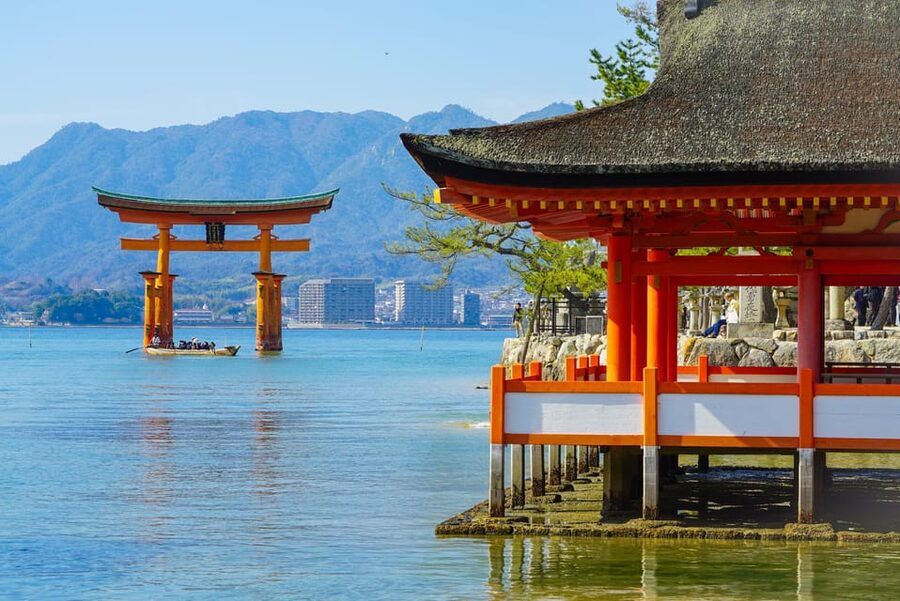
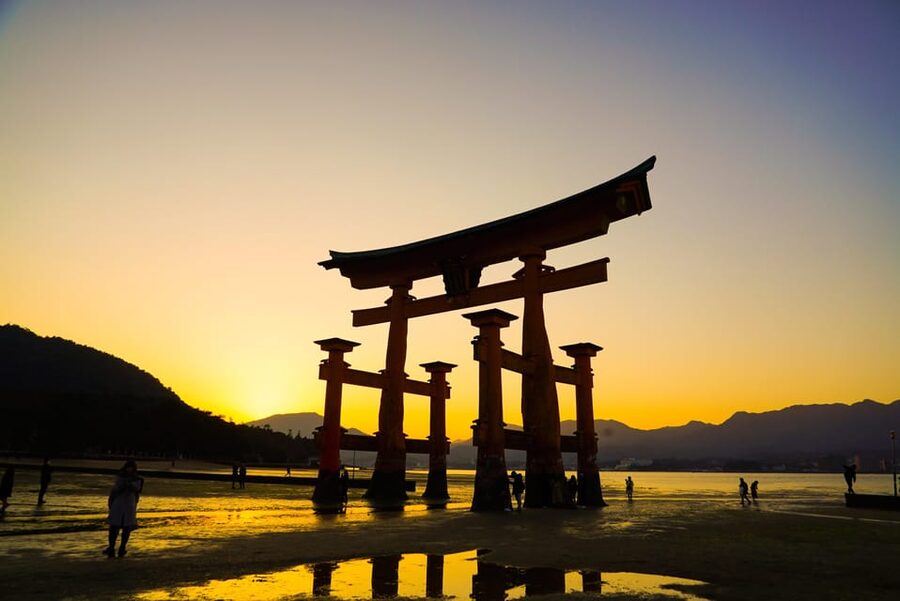
Miyajima packs sacred shrines, mountain paths, deer, seafood, and centuries of island life into one very walkable outing. The highlight is seeing the Grand Torii Gate from the ferry, then reaching it on foot before visiting Itsukushima Shrine and Daisho-in.
I like the small groups, limited to seven people, and the way the tour links famous sights with everyday details from the Edo period to today. I also like the local lunch, especially the chance to try Hiroshima oysters and fried momiji dumplings. The main drawback is the amount of walking, with some uphill and uneven sections that may not suit everyone.
Key points at a glance
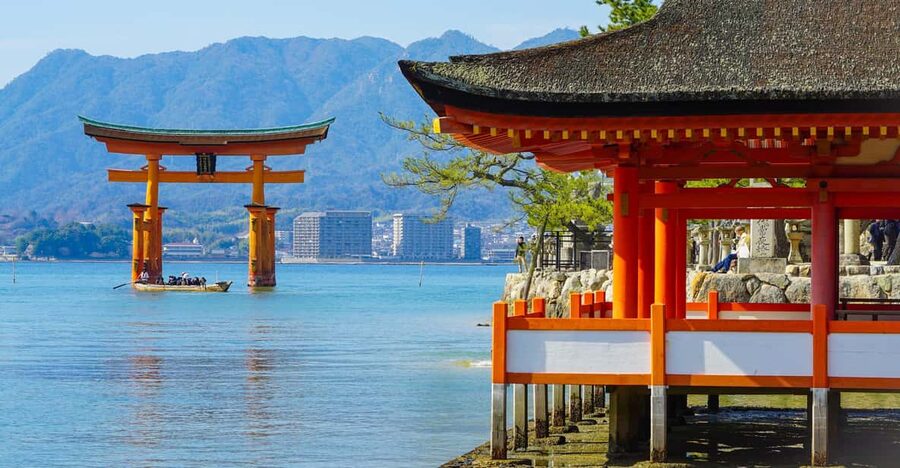
- A ferry ride begins the day: Travel from Miyajimaguchi across the Seto Inland Sea, with views of the O-Torii.
- Two major sacred sites: See Itsukushima Shrine and Daisho-in, with entrance fees included.
- Local food matters here: Lunch uses ingredients from Hiroshima Prefecture, with oysters and regional snacks available.
- Small groups help: With no more than seven people, you can ask questions and move at a sensible pace.
- The route goes beyond the postcard view: Expect a museum, Momijidani, Senjokaku Pavilion, traditional streets, and quieter corners.
- Plan for a real walk: Bring water, wear good shoes, and be ready for heat, humidity, steps, and some rougher paths.
Why Miyajima works so well as a half-day outing
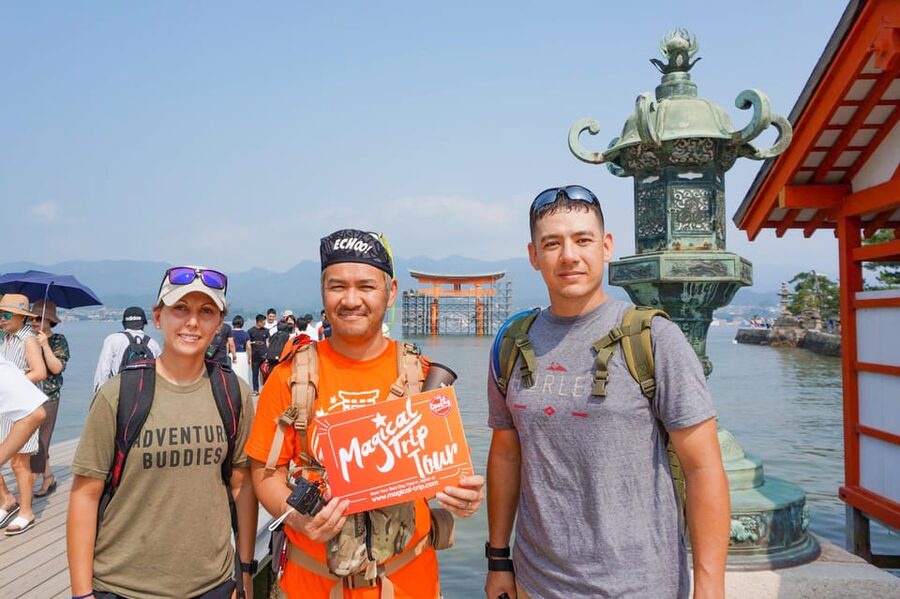
Miyajima is often pictured as one thing: a red torii gate floating in the sea. That view is worth the trip, but the island offers more when you understand how its religious sites, forests, food stalls, and old streets fit together.
This tour gives you that wider picture in 330 minutes, or about five and a half hours. You cross from Miyajimaguchi, follow the coast toward the shrine, stop for food and local culture, then continue toward Daisho-in and the wooded foothills. It is a full schedule, but the small group format makes it easier to pause for questions or brief rest stops.
I especially like that the day is not built around one photo stop. You see the famous gate and shrine, but you also get a museum visit, temple grounds, traditional architecture, local crafts, and a look at how people have lived on the island. That makes the outing useful for a first visit, particularly if you want context without spending a full day planning your own route.
More History Walking Tours in Japan
- Tokyo: Imperial Palace and Shogun Historical Walking Tour
★ 5.0 · 2,251 reviews - Kyoto Gion: 2-Hour Geisha Culture & History Walking Tour
★ 5.0 · 1,186 reviews - Tokyo Castle & Imperial PalaceーShogun Walking Tour
★ 4.7 · 1,068 reviews
Ferry views and the first look at the O-Torii
You meet outside the coin-operated lockers at JR Miyajimaguchi Station, in front of the station. From JR Hiroshima Station, the train ride to Miyajimaguchi takes about 30 minutes on the JR Sanyo Line. Your guide carries a MagicalTrip sign, which helps at a busy transport point.
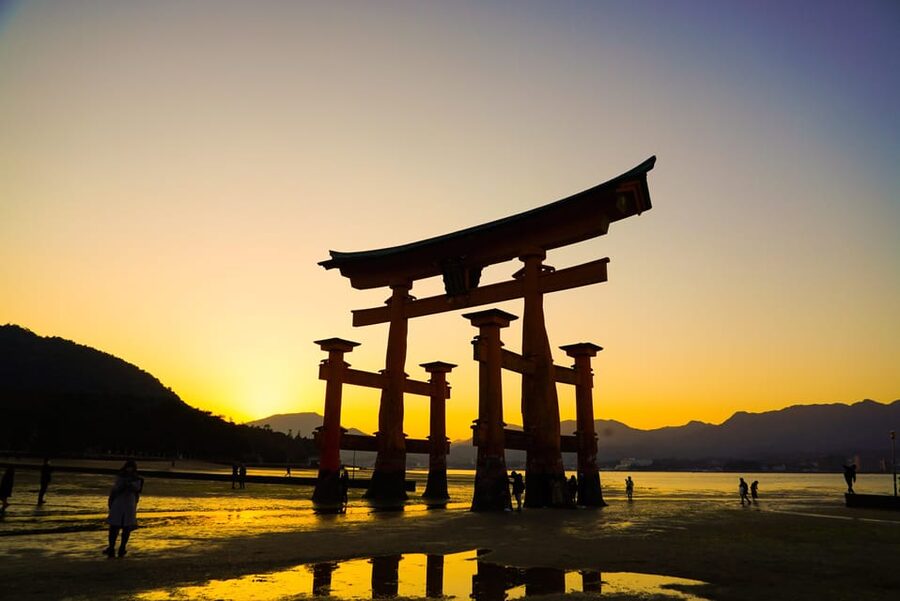
The ferry ticket is not included. The supplied details give two different prices, JP¥360 and JP¥500, so check the current fare and carry cash. The ferry crossing is short, but it is an important part of the experience. From the water, you get a changing view of the Seto Inland Sea and the O-Torii Gate, the symbol most closely linked with Miyajima.
The gate looks different depending on the tide. At higher water, it appears to float offshore. At low tide, you may be able to walk toward it along the exposed shore. The timing of the day can allow you to see both conditions, though that depends on the schedule and tide.
On arrival, deer greet you around the island. They are accustomed to people, but you should treat them as wild animals and keep food and loose paper away from them. The first stretch follows the coast, giving you time to get your bearings before the main shrine visit.
Itsukushima Shrine and a building made for the tides
Itsukushima Shrine is the religious heart of the visit and a UNESCO World Heritage Site. Its architecture dates to the Heian period, from 794 to 1192, and was designed around the movement of the sea.
That design is the key lesson here. The shrine buildings are raised above the water and connected by covered walkways. Rather than placing the sacred complex on land and treating the sea as scenery, the builders made the tides part of the setting. Your guide can explain how the structure works and why its appearance shifts throughout the day.
Allow about 40 minutes at the shrine. That is enough time to see the main features and hear the story, though it is not an unhurried architectural study. During busy periods, the walkways can feel crowded, and your pace may depend on other groups moving through the complex.
The value of a guide is clear here. Without context, you see red columns, water, roofs, and the gate. With explanation, you begin to understand the relationship between Shinto practice, the island, and the sea. Guides such as Yuji, Eri, Shun, Hika, and Kiki have received especially warm praise for explaining religion, history, customs, and daily life in clear English. Guide assignments vary, so you should not assume a particular person will lead your departure.
Food from Hiroshima Prefecture, not just a quick snack
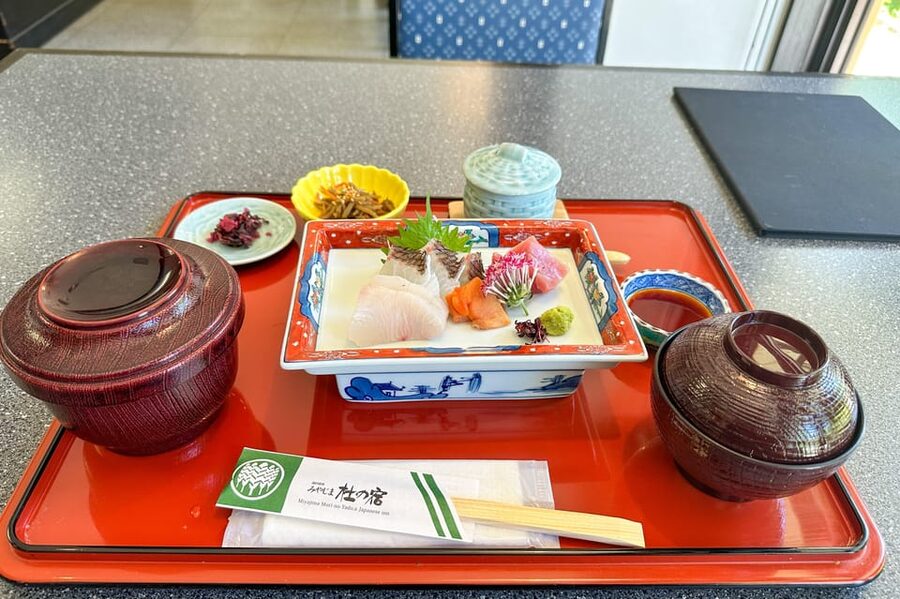
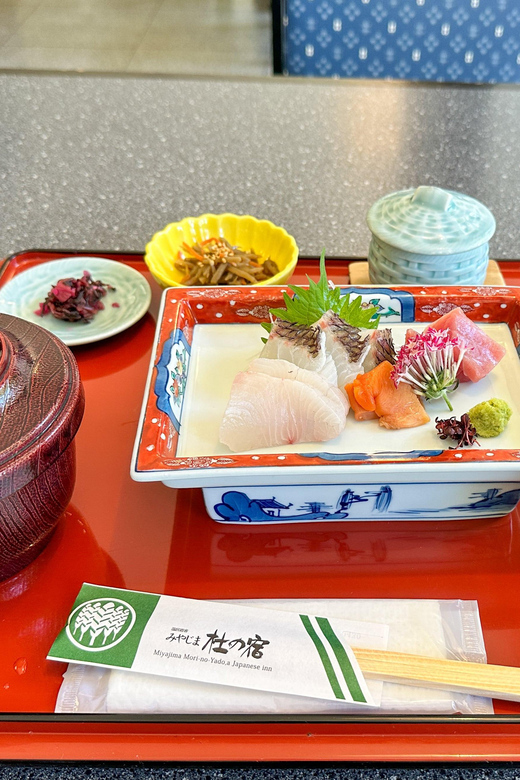
Lunch is included, which adds real value to the $106 price. The meal uses ingredients from Hiroshima Prefecture, and the day includes opportunities to try Miyajima specialties such as fresh oysters and fried momiji dumplings.
Oysters are a natural choice here, and several menu examples in the supplied details include grilled oysters, including oysters with butter and soy. Fried momiji dumplings offer a sweeter, crisp snack shaped around the island’s maple leaf symbol. Some outings have also included ice cream or a lemon drink, but extra items can vary.
A shared meal is useful beyond the food itself. Your guide can show you local eating customs and explain how to finish a meal properly. One particularly practical detail is that some guides use lunch as a relaxed time for questions about Japanese culture and everyday manners.
Food service can sometimes take longer than expected. Staffing shortages in the restaurant industry may extend the tour beyond its planned finish, so do not schedule a tight connection immediately afterward.
Vegetarian and vegan choices are available, but limited. The operator cannot guarantee an allergy-free meal because the food is prepared in outside kitchens, and substitutions may not always be possible. If you have serious dietary needs, this is a point to consider carefully before booking. Gluten intolerance is specifically listed among conditions for which the tour is not suitable.
Same city, a different century:
- Kyoto: Fushimi Inari, Kinkakuji, Bamboo Grove 1 Day Bus Tour
★ 4.8 · 4,316 reviews - World Heritage Shirakawa-go and Experience Tours from Kanazawa
★ 5.0 · 4,049 reviews - World Heritage Kyoto & Nara Uji Authentic Matcha Experience
★ 5.0 · 1,573 reviews - Kanazawa: World Heritage Shirakawa-go Morning Guided Tour
★ 4.9 · 988 reviews
Miyajima Museum and everyday island life
The museum portion helps shift the focus from grand monuments to ordinary people. You learn about the life and culture of Miyajima, including how island life developed from the Edo period to the present.
That context gives the streets more meaning. Traditional buildings, craft shops, gardens, and food stalls are not just attractive scenery. They connect to the island’s work, faith, and local customs. The tour does not treat Miyajima as a theme park built around one gate. It presents a place where residents have lived, worked, worshipped, and welcomed visitors for generations.
The museum visit is one of the quieter parts of the day, which is welcome after the shrine and food stops. It also gives you a chance to ask your guide about details you might miss while walking through the town.
Daisho-in, the island’s oldest major temple
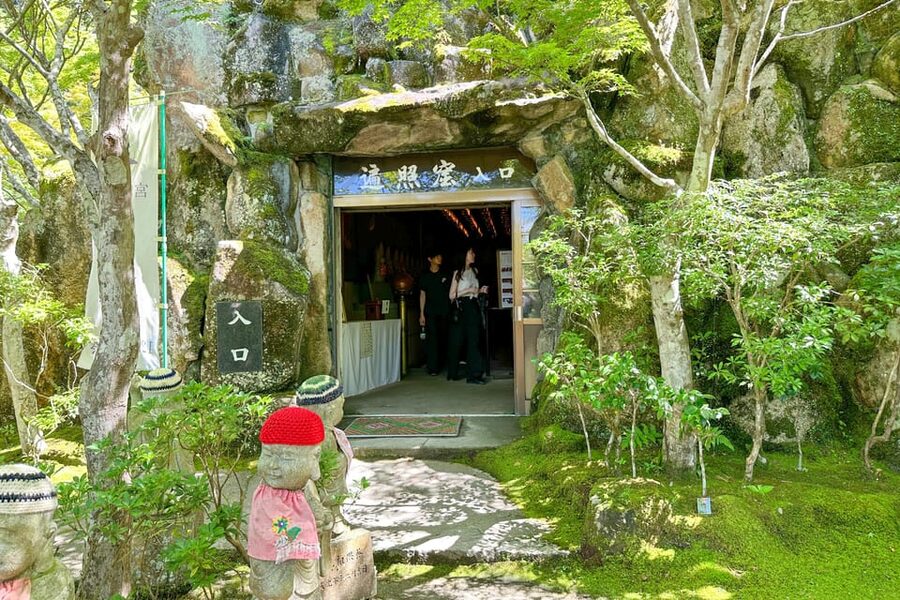
The route continues along a picturesque mountain path to Daisho-in, a temple complex with about 1,200 years of history. Set near the wooded slopes, it feels different from the open, water-facing shrine.
Plan on about an hour here. Daisho-in includes several halls, statues, and religious features, so this is not a quick photo stop. Your guide explains the temple’s past and the changing forms of faith on Miyajima, including the relationship between Buddhism and Shinto practice.
This was one of the strongest parts of the day for me because the site rewards slow looking. Small statues and details can be easy to pass without explanation. The grounds also provide a calmer setting than the main shopping streets, although the route to the temple includes uphill walking and may be tiring in hot weather.
The tour is not suitable for people with a low level of fitness, back problems, heart problems, high blood pressure, or a strong tendency toward seasickness. Seasickness may be less of a concern on a short crossing than on a long boat trip, but it is still listed as a restriction. Babies under one year are also not considered suitable for this activity.
Momijidani, Senjokaku, and the quieter parts of the island
Momijidani receives a short visit of about 10 minutes. The name refers to a maple-filled area, and the stop gives you a taste of the island’s wooded side. In autumn, seasonal color can make this section especially appealing, while spring brings the possibility of cherry blossoms. The timing of flowers and leaves is never guaranteed, but the route gives you scenery beyond the shrine district.
Senjokaku Pavilion receives around 20 minutes. The large wooden pavilion has a different feel from the compact shrine buildings, and its setting helps show how religious and cultural sites are spread across the island.
The schedule also includes about an hour at a less-publicized location. Exact details may vary, which is part of the point: your guide can take the group away from the most obvious route and show you a side of Miyajima you might miss while following the busiest shopping street.
The final stretch includes tea or coffee in a peaceful forest setting before the tour ends near a souvenir shop street. That closing pause is a good counterweight to the morning’s sightseeing. You can sit, review the day, and decide what you want to revisit on your own.
How the small group changes the day
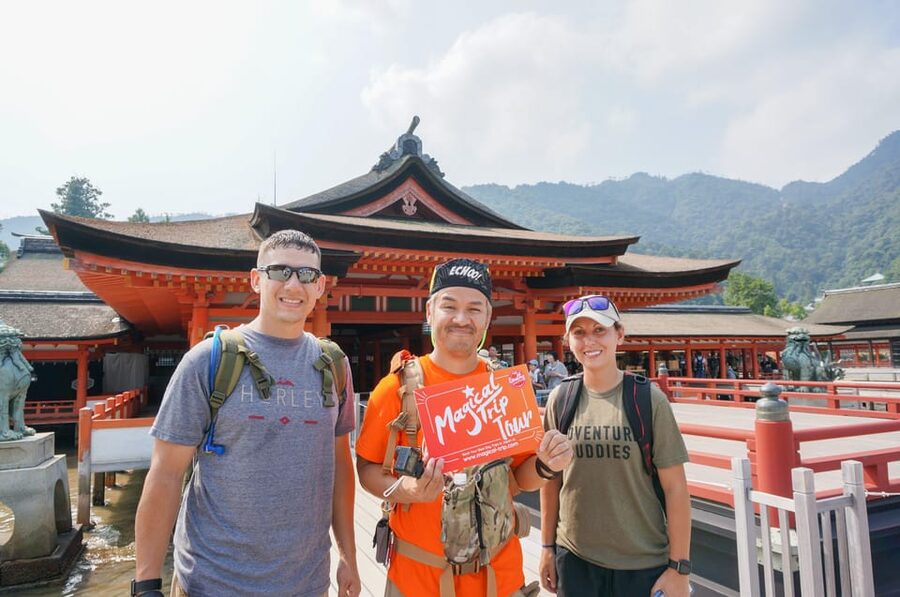
The group limit is seven people. That is large enough for a social outing but small enough for direct conversation with the guide. Several departures have been even smaller, including a group of six and a private-feeling outing with only one participant.
A small group also helps with practical matters. You can hear explanations more easily, ask about Japanese religion or food, and request a short pause if the pace is brisk. Guides including Kaz, Yuji, Hika, Hikaru, Shun, Eri, Kiki, and Tommy have been praised for being friendly, flexible, and willing to answer questions about local customs and daily life.
Do not expect a completely private tour unless your departure happens to have no other participants. The route still follows a planned schedule, and the island can be crowded at popular sights. But the group size makes it much more personal than a large coach excursion.
Is $106 a fair price?
At $106 per person, the tour is not the cheapest way to reach Miyajima. You still pay for the ferry, and you may want extra snacks and drinks. The ferry price should be checked before departure because the supplied information lists both JP¥360 and JP¥500.
The value comes from what is bundled into the day: an English-speaking local guide, shrine, temple, and museum entrance fees, local lunch, and tour photos. You are also paying for route planning and interpretation, which matters on an island where the most important details are not always obvious.
If you are comfortable exploring independently, you can visit the main shrine and temple for less. But you would need to arrange the route, decide where to eat, understand the religious sites, and find the quieter corners yourself. For a first visit from Hiroshima, the added cost is reasonable if you want a guided cultural overview rather than a simple transport-and-photo trip.
Practical details for a comfortable day
Wear supportive shoes. The route includes a long walk, mountain paths, possible uneven ground, stairs, and some locations that are not suitable for wheelchairs or strollers.
Summer can be very hot and humid. Bring water and wear a hat, especially because the day combines open coastal sections with uphill walking. Rain can make paths muddy, so footwear suited to changing weather is sensible.
Carry cash for the ferry and extra food or drinks. Lunch is included, but additional snacks are not. If you want to buy local sweets, crafts, or souvenirs, budget for those separately.
Free cancellation is available up to 24 hours before departure for a full refund, and you can reserve now and pay later. Starting times vary, so check the available departure before booking, especially if you have a train or flight later that day.
Who should book this Miyajima tour?
I would choose this tour if you have one day in Hiroshima and want Miyajima to feel like more than a quick shrine stop. It suits first-time visitors, couples, families with older children, and solo visitors who prefer company and clear explanations.
It is also a good fit if you care about food, local customs, and the difference between Shinto and Buddhist sites. The guides are a major part of the experience, and the strongest outings combine accurate historical background with easy conversation.
I would think twice if you dislike group schedules, need fully accessible routes, have serious dietary restrictions, or want a slow day with very little walking. The itinerary covers a lot of ground in five and a half hours.
For most reasonably fit visitors, I think the tour is worth booking. You get the famous gate and shrine, but also Daisho-in, local food, museum context, forest scenery, and a guide who can turn a beautiful island into a place you understand.
FAQ
How long does the Miyajima walking tour last?
The tour lasts 330 minutes, or about five and a half hours. Food service or other delays may make the day run longer than planned.
Where does the tour begin?
Meet in front of the coin-operated locker outside JR Miyajimaguchi Station. The guide carries a board marked MagicalTrip.
Is the ferry ticket included?
No. The ferry ticket is separate. The supplied information lists a fare of JP¥360 in one place and JP¥500 in another, so check the current price and bring cash.
What food is included?
A local lunch made with ingredients from Hiroshima Prefecture is included. The food experience can include Miyajima specialties such as fresh oysters and fried momiji dumplings. Extra food and drinks cost more.
Is the tour suitable for vegetarians and vegans?
Vegetarian and vegan lunch options are available but limited. Allergy-free meals and all dietary substitutions cannot be guaranteed because the food comes from outside kitchens.
Is the tour suitable for wheelchairs or strollers?
Not completely. Some places on the route are not accessible by wheelchair or stroller, and the day includes walking paths and mountain sections.
More Half-Day Trips in Japan
- Miyajima Half-day Trip Historical Walking Tour
★ 5.0 · 284 reviews - Nara: Half-Day UNESCO Heritage & Local Culture Walking Tour
★ 4.8 · 250 reviews - Shirakawa-go UNESCO Half-Day Tour from Takayama
★ 4.6 · 47 reviews - Normandy Beaches Half-Day Afternoon Trip from Bayeux (A2)
★ 4.5 · 1,116 reviews
Just added around Japan
- Private sake pairing@ancient underground★ 5.0 · 27 reviews
- Tokyo: Asakusa & Sensoji ー Oldest Temple Walking Tour (2hrs)★ 5.0 · 213 reviews
- [30 minutes] Rickshaw tour around Asakusa [History, sightseeing, Tokyo Skytree]★ 5.0 · 38 reviews
- Tokyo: Edo Castle & East Garden of the Imperial Palace Tour★ 4.7 · 112 reviews
- Tokyo: Imperial Palace, the history of Japan (ENGLISH GUIDE)★ 5.0 · 77 reviews
- Tokyo: Customized Private Historical Guided Photoshoot Tour★ 5.0 · 25 reviews
- Osaka: Dark Side of Osaka Night Walking Tour★ 4.9 · 89 reviews
- Osaka: Osaka Castle & Historical Museum Guided Tour★ 4.8 · 28 reviews
Hiroshima History Tours, compared.
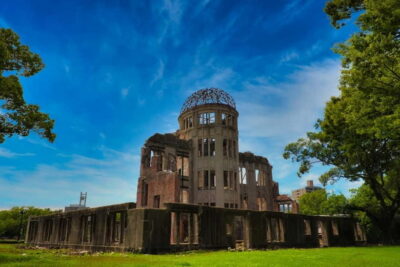
Hiroshima Historical Walking Tour – Why A-Bomb was Dropped
Read our review →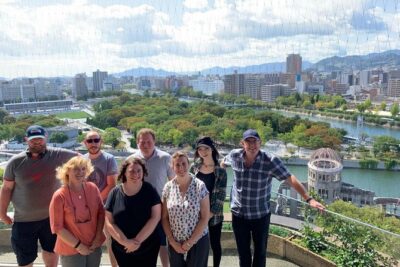
Hiroshima Peace (Heiwa) Walking Tour at World Heritage Sites
Read our review →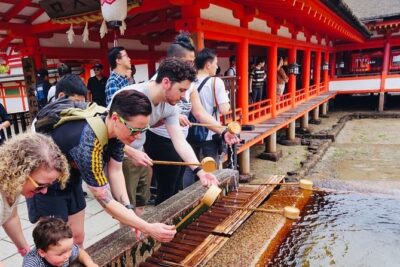
Miyajima Half-day Trip Historical Walking Tour
Read our review →
Hiroshima: History of Hiroshima Group Walking Tour
Read our review →
Hiroshima: Peace Walking Tour of World Heritage Sites
Read our review →
Hiroshima & Miyajima Island Private Tour: History & Culture
Read our review →Browse the lists this tour appears in